Minimizing Environmental Waste by Recycling Used Brake Fluid Through Filtration Units
You can minimize environmental waste by recycling used brake fluid through filtration units that remove contaminants and restore performance. These units use dual-stage filters-10-micron screens and desiccant media-to reduce moisture and debris. Recycled fluid meets DOT 3, 4, and 5.1 standards, with boiling points restored above 400°F. One quart can pollute over 250,000 gallons of water, but recycling prevents this runoff and cuts CO₂ emissions by 1.5 pounds per gallon. Systems with stainless steel tanks, sub-1-micron filtration, and moisture sensors guarantee reliability. Properly maintained units can process fluid safely up to three times, keeping contaminant levels below 50 ppm. Key features like high flow rates and HDPE storage extend fluid life and compliance. There’s more to optimizing your system’s efficiency and longevity.
Notable Insights
- Recycling brake fluid through filtration prevents hazardous contaminants from polluting soil and water sources.
- Multi-stage filters remove moisture and debris, restoring fluid to DOT-compliant performance standards.
- Filtration reduces the need for virgin brake fluid production, lowering environmental impact and resource use.
- Properly recycled fluid can save up to 1.5 pounds of CO₂ per gallon compared to new manufacturing.
- Regular maintenance of recyclers ensures effective contaminant removal and prevents environmental discharge of degraded fluid.
Why Used Brake Fluid Is an Environmental Hazard
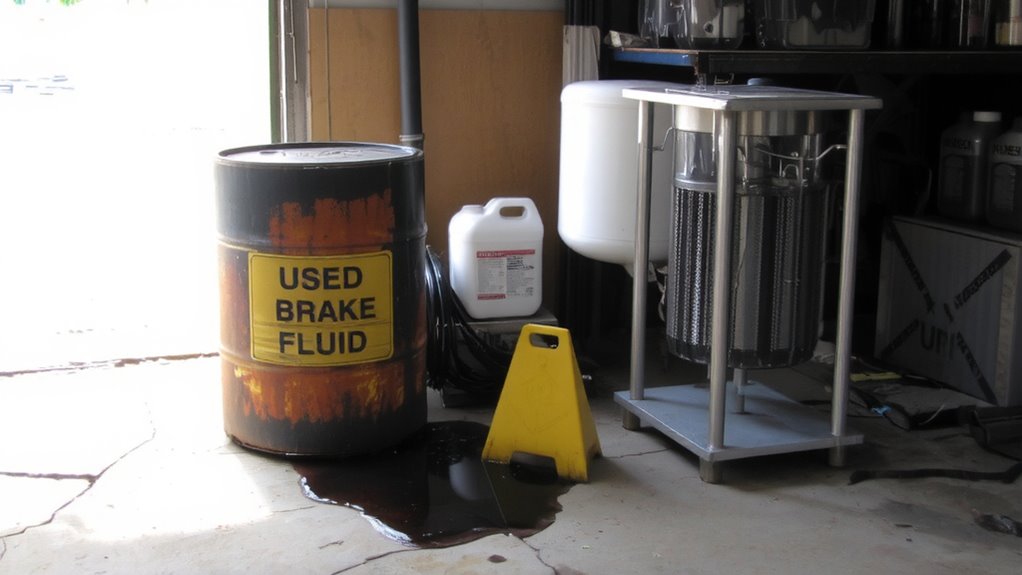
What happens when brake fluid leaks into the soil or water supply? You risk toxic runoff and groundwater contamination. Brake fluid contains glycol ethers, which degrade slowly and are highly soluble in water. When spilled, these chemicals infiltrate soil, migrating up to 10 feet per year depending on soil permeability. This leads to groundwater contamination, threatening wells and aquifers. A single quart of contaminated fluid can pollute over 250,000 gallons of water-equivalent to 10 standard swimming pools. Toxic runoff enters storm drains, reaching rivers and lakes with no natural filtration. Exposure harms aquatic life; LC50 levels for fish are as low as 50 mg/L over 96 hours. Soil pH shifts occur at concentrations above 100 ppm, reducing microbial activity. These compounds persist, bioaccumulating in food chains. There’s no safe discharge threshold under EPA guidelines. Proper containment isn’t optional-it’s a technical necessity to prevent irreversible environmental damage.
How Brake Fluid Recycling Works (And Why It Matters)
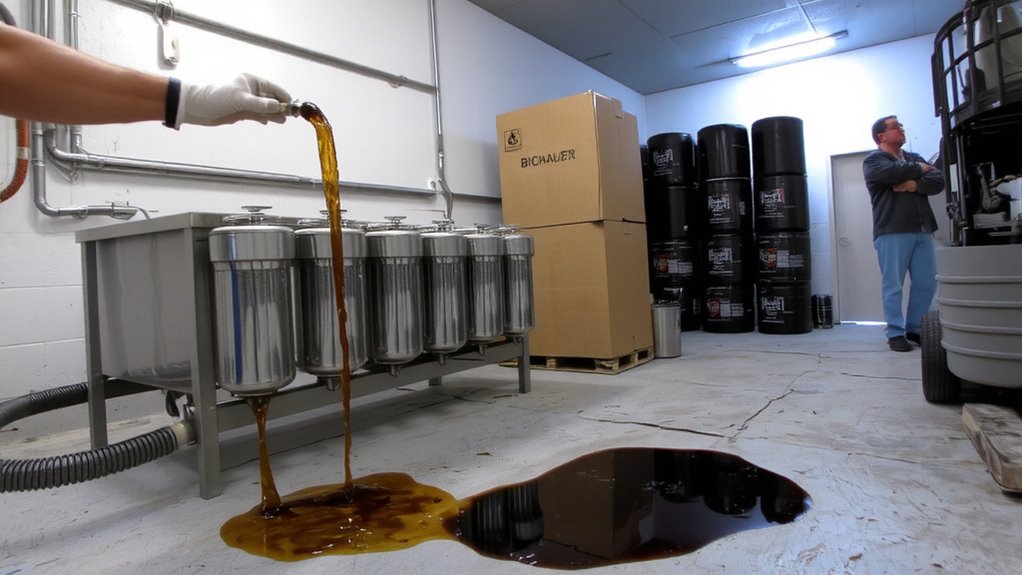
You can stop environmental harm from used brake fluid by recycling it the right way. Brake fluid color indicates its condition-dark hues signal degradation and contaminants. When you recycle, filtration units remove particles and traces of metal. Moisture contamination is a critical issue; brake fluid absorbs water, reducing its boiling point from 400°F to under 200°F, risking brake failure. Recycling restores performance by eliminating moisture and impurities. Units use dual-stage filters: first, a 10-micron screen traps debris; next, desiccant media absorb water. Recycled fluid meets DOT 3, 4, and 5.1 standards, ensuring safety and consistency. This process cuts waste and preserves resources. Proper recycling prevents soil and water pollution, supporting environmental compliance. Each gallon reused keeps harmful chemicals out of landfills. You help lower demand for virgin fluid production. It’s a small step with measurable impact on sustainability and vehicle safety.
Step-by-Step: How to Recycle Brake Fluid
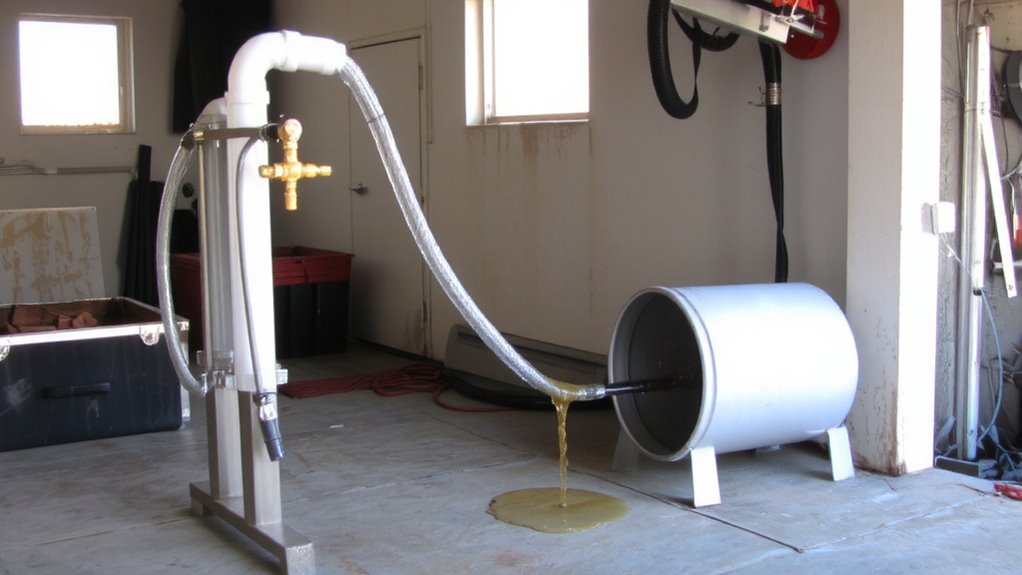
While proper recycling begins with recognizing when brake fluid needs reprocessing, the actual procedure relies on following a precise sequence to guarantee safety and performance. First, drain used fluid from the vehicle’s master cylinder into a clean, sealable container to preserve brake fluid composition. Impurities like water, metal particles, and dust compromise functionality. Next, pour the fluid into a filtration unit rated for hydraulic fluids. The system should use multi-stage filters-typically 1 to 5 microns-to maximize filtration efficiency. Silica gel cartridges remove moisture, while particulate filters trap debris. Run the fluid through the unit twice to guarantee contaminants drop below 50 ppm. Test pH and boiling point afterward; reprocessed fluid should exceed 284°F (140°C) dry boiling point. Finally, store in HDPE containers away from light and heat. Do not mix with other fluid types.
Environmental Benefits of Recycled Brake Fluid
Recycling brake fluid doesn’t just restore performance-it actively reduces environmental harm. You prevent hazardous waste from entering landfills and water systems, where it can contaminate soil and groundwater. Properly recycled brake fluid has a reduced carbon footprint because it cuts the need for new fluid production, which requires energy-intensive refining and transportation. Each gallon recycled saves up to 1.5 pounds of CO₂ emissions compared to manufacturing new fluid. The filtration process removes water, particulates, and metals, restoring fluid to DOT 3, 4, and 5.1 specifications. This means you’re reusing a stable, high-performance product. Reclaimed fluid degrades slower, reducing disposal frequency. You also contribute to improved air quality-fewer trucks on the road mean lower emissions from transport and production. Recycling supports compliance with EPA and DOT regulations. It’s a practical step toward sustainable shop operations and long-term environmental protection.
How Recycling Brake Fluid Saves Shops Money
A single gallon of new brake fluid can cost shops between $8 and $15, and frequent replacements add up quickly. Recycling brake fluid delivers significant cost savings by reducing your need to purchase new fluid. A typical shop uses 20 to 30 gallons annually, meaning potential savings of $160 to $450 per year just on fluid replacement. Filtration units clean used fluid to meet or exceed DOT 3 and DOT 4 moisture and particulate standards, removing water down to 0.01% and filtering contaminants as small as 1 micron. This process maintains fluid integrity and guarantees reliable brake performance. Reusing fluid also reduces disposal fees, which average $1.50 per gallon. Operational efficiency improves with faster service times-no waiting for deliveries or inventory restocking. The recycler pays for itself in under 12 months with regular use. You maintain compliance while cutting recurring costs and streamlining workflow.
Must-Have Features in a Brake Fluid Recycler
You’ve seen how recycling brake fluid cuts costs and keeps your shop running efficiently-now it’s time to choose the right recycler for the job. Filter efficiency is critical: look for units with multi-stage filtration down to 1 micron or less. This removes moisture, debris, and metal particles that compromise brake performance. A high-efficiency filter guarantees fluid meets DOT 3, 4, and 5.1 specifications after recycling. Unit durability matters just as much. Opt for recyclers built with stainless steel tanks and sealed industrial-grade pumps. Units should handle continuous daily use without overheating or leakage. Models with vibration-resistant fittings and overpressure shutoffs increase reliability. Look for a minimum 3-year warranty as proof of longevity. Digital fluid clarity sensors help monitor output quality in real time. Choose a recycler with quick-connect fittings and a compact footprint-ideally under 24 inches wide. These features guarantee long-term performance, minimal downtime, and consistent fluid purity.
Solving Common Brake Fluid Recycling Problems
Why do some brake fluid recyclers fail to deliver clean, DOT-compliant fluid after repeated use? Brake fluid contamination from moisture, metal particles, and degraded additives accumulates over time, overwhelming units with low filtration efficiency. You need recyclers with dual-stage filtration: a 1-micron absolute filter removes particulates, while molecular sieves extract water down to 35 ppm or less. Without these specs, recycled fluid exceeds DOT 3 or DOT 4 moisture limits-usually 0.2% max. High filtration efficiency, measured at 98.7% beta ratio (β≥1), guarantees consistent purity. Also, check the unit’s flow rate; models above 2 liters per minute maintain performance without channeling. If your recycler lacks real-time moisture sensors or automatic shutoff at threshold levels, contamination risk increases. Regular filter changes, every 20 to 30 cycles, prevent breakthrough. Choose systems with visible contamination indicators so you see degradation before reuse. Protect system integrity-don’t recycle beyond three passes, even with efficient filtration.
On a final note
You reduce hazardous waste by recycling brake fluid on-site. Modern recyclers restore fluid to DOT specifications, removing moisture and contaminants. Units with 99.9% filtration efficiency and molecular filtration extend fluid life. This lowers disposal costs and conserves resources. A single recycler processes up to 5 gallons per hour. You maintain brake performance while meeting environmental regulations. Recycling is precise, cost-effective, and technically sound.