The Importance of Using a Clean Drying Towel for Each Wash Session
Using a clean drying towel every time prevents scratches caused by embedded contaminants like sand and brake dust. Dirty towels act like sandpaper, creating swirl marks on your paint. High-quality microfiber (70/30 polyester/polyamide, 300 GSM) lifts water safely when clean. Contaminated fibers increase friction and leave streaks. Replace towels every 6–12 months or after 30 washes. Rotate at least three color-coded towels per vehicle. Proper care guarantees peak performance and protection-discover how to maintain their effectiveness over time.
Notable Insights
- Contaminated towels harbor abrasive particles that scratch clear coats like sandpaper during drying.
- Clean microfiber minimizes friction and prevents swirl marks with soft, densely woven fibers.
- Dirty towels smear minerals and oils, causing visible streaks on painted surfaces.
- Towels lose absorption efficiency over time; clean ones ensure complete, even drying.
- Rotating clean towels prevents cross-contamination and extends overall lifespan.
Why Dirty Drying Towels Scratch Your Paint
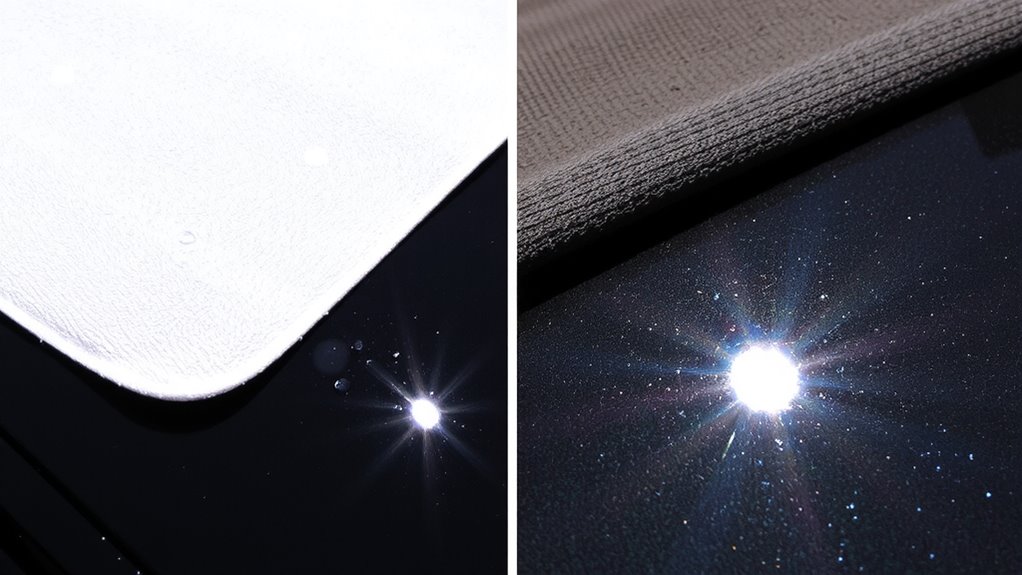
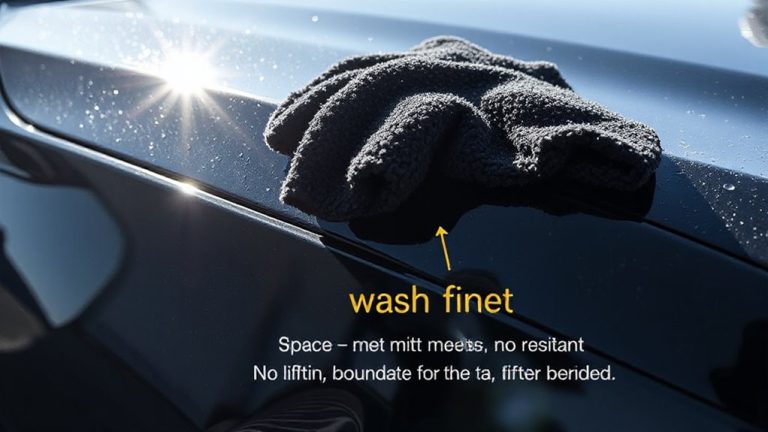
Grit is the enemy of finish. When you use a dirty drying towel, abrasive particles cling to the fibers and transfer to your paint. These contaminants-like sand, brake dust, and road grime-become embedded contaminants after prior use. Once lodged, they don’t rinse out easily, especially in towels left damp or improperly laundered. Microscopic debris acts like sandpaper during drying, scratching clear coat with every stroke. Standard microfiber towels contain split polyester and polyamide fibers, typically 0.5–1.2 denier. When clean, they’re soft and non-abrative. But when contaminated, their effectiveness reverses. Even lightweight pressure spreads grit across the surface, generating fine swirls and holograms. The coefficient of friction increases dramatically when particles are present. Always assume a used towel holds abrasive particles unless washed at 105°F with microfiber-safe detergent. Reusing a towel without proper cleaning risks paint damage you can’t see until it’s too late. Choosing the right towel matters, and top-performing best car drying towels are engineered to minimize lint and maximize water absorption while maintaining a scratch-free finish.
How Clean Microfiber Prevents Swirl Marks
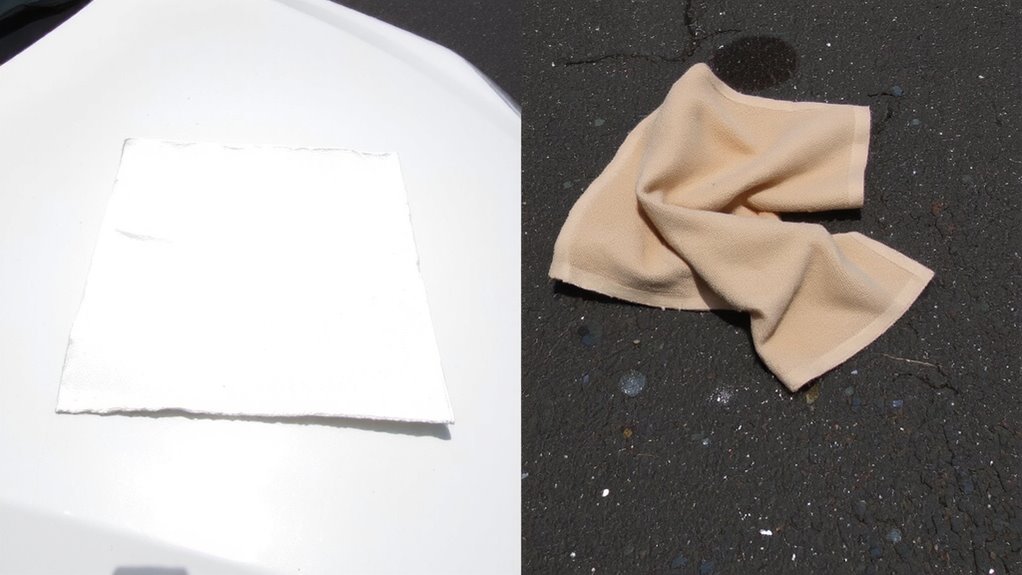
When properly maintained, your microfiber drying towel becomes a critical defense against swirl marks. High fiber quality guarantees each strand is soft enough to avoid marring delicate clear coats. Combined with maximum weave density, clean microfiber lifts water without dragging contaminants across the surface. Poor-quality towels with loose weaves trap grit, increasing abrasion risk. A clean, dense microfiber towel minimizes contact friction, preventing microscopic scratches. For optimal performance, choose best microfiber towels for car care that meet stringent standards for absorbency and softness.
| Condition | Swirl Risk | Paint Feel |
|---|---|---|
| Clean, High-Quality | Low | Smooth, Glass-Like |
| Used, Unwashed | High | Rough, Dull |
| Low Fiber Quality | Severe | Scratched |
| Properly Washed | Minimal | Like New |
Maintain fiber quality by washing after each use with no fabric softener. Weave density of 70/30 (polyester/polyamide) at 300 GSM offers ideal absorption and safety. Replace towels showing fraying or reduced water pickup.
How Drying Towels Eliminate Streaks
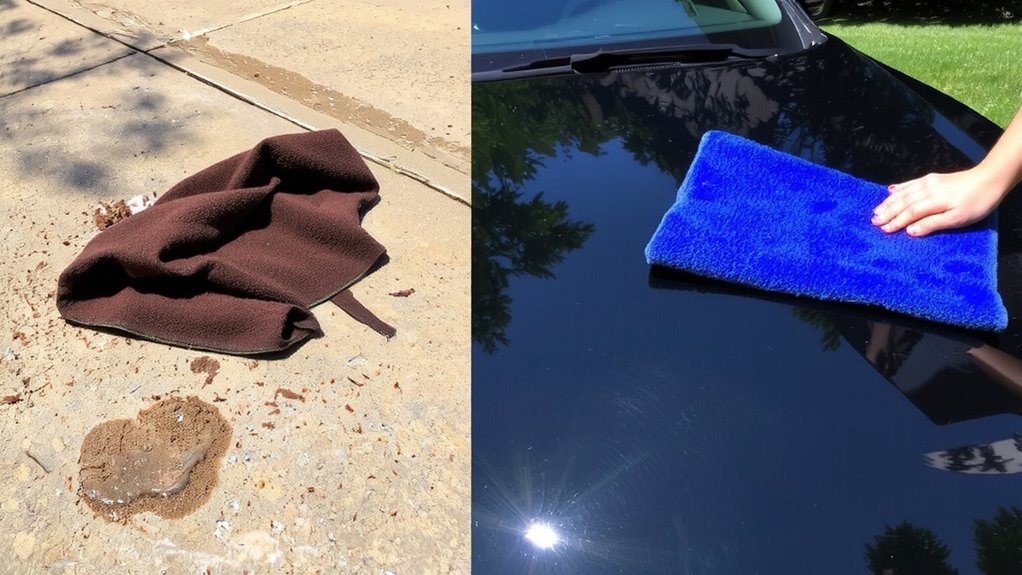
A clean microfiber drying towel doesn’t just protect your paint-it also guarantees a flawless, streak-free finish. When you use a fresh towel, its dense pile lifts and locks away water without dragging residue. Contaminated towels smear minerals and oils, causing visible streaks under sunlight. Clean microfiber has a split-fiber construction-typically 80% polyester and 20% polyamide-that increases surface area for superior moisture absorption. This secures water beading disappears evenly across the panel. The fabric softness prevents fiber linting, which can scatter light and mimic streaks. High-quality towels measure 16×24 inches with 300–400 g/m² density, offering ample coverage and plushness. You’ll notice a glass-smooth result because the fibers wick liquid through capillary action without disturbing wax or sealants. Always use a folded towel in sections to maximize dry surface area. A single clean pass beats multiple wipes with a saturated or dirty one. For best results, choose from the best car drying towels based on absorbency, size, and fiber quality.
When to Replace Your Drying Towel
How do you know when a drying towel’s lifespan has ended? Look for clear signs of wear, such as frayed edges, thinning fibers, or a gritty texture. These indicate degraded microfiber construction, which can scratch surfaces. Absorption loss is another key indicator-when the towel no longer pulls water efficiently, it retains less than 60% of its original capacity, a standard benchmark for functional microfiber. A quality drying towel should hold up to 8 times its weight in water; once performance drops below this, effectiveness diminishes. Inspect your towel after 6 to 12 months of regular use, depending on wash frequency. Towels washed more than 30 times often show measurable degradation. Continued use beyond peak performance risks transferring contaminants and reduces drying efficiency. Replace it to maintain best results.
How to Rotate Your Drying Towels
Replacing your drying towel at the right time maintains performance, but managing multiple towels extends their overall effectiveness. Towel rotation prevents cross-contamination and preserves fiber integrity. Use at least three microfiber towels per vehicle to guarantee one is always clean and dry. Rotate them systematically after each wash session. Assign specific tasks-glass, paint, wheels-and stick to the schedule. Implement color coding to avoid mistakes. For example, use blue for windows, grey for interiors, and red for wheels. Microfiber towels should be washed after every three uses at 30°C (86°F) with mild detergent-no fabric softener. Dry them on low heat. Proper storage in labeled, ventilated bins prevents moisture buildup and bacterial growth. Effective towel rotation improves drying precision, reduces swirl marks, and prolongs material lifespan by up to 500 washes when maintained correctly.
On a final note
You must use a clean drying towel every wash session. Contaminated towels harbor embedded grit that scratches clear coats. High-quality microfiber towels with an 80/20 polyester/polyamide blend and 300–400 GSM weight trap particles, reducing swirl marks. A single towel lasts 3–5 uses if machine-washed with no fabric softener. Replace towels when linting or reduced absorbency occurs. Rotate multiple towels to preserve effectiveness and maintain paint integrity.