Painting Wheel Path Guides Directly Onto Floors for Parking Precision
Use high-solids epoxy paint to mark wheel path guides directly on concrete, applying two 4-mil coats at 50°F–90°F for durability. Maintain 8–10 ft grid spacing with 24–30 in between wheel tracks, adjusted for vehicle type. Use a 3-inch fluid tip and squeegee striping machine at 2 mph for crisp 3-inch lines (±1/8″). Add reflective glass beads meeting ASTM D4956 for low-light visibility. Proper alignment reduces floor wear by up to 60%. You’ll find precision improves further with advanced layout techniques.
Notable Insights
- Use high-solids epoxy paint with UV-stable urethane topcoat for durable, long-lasting wheel path guides.
- Apply two thin coats at 4 mil thickness using a 3-inch fluid tip for crisp, consistent lines.
- Align wheel paths parallel to traffic flow with 8–10 ft grid spacing to prevent overlap and confusion.
- Use laser alignment tools to ensure centerline accuracy within 1/16 inch over 50 feet.
- Embed reflective glass beads or prismatic strips meeting ASTM D4956 for optimal low-light visibility.
Choose the Right Paint for Wheel Path Guides
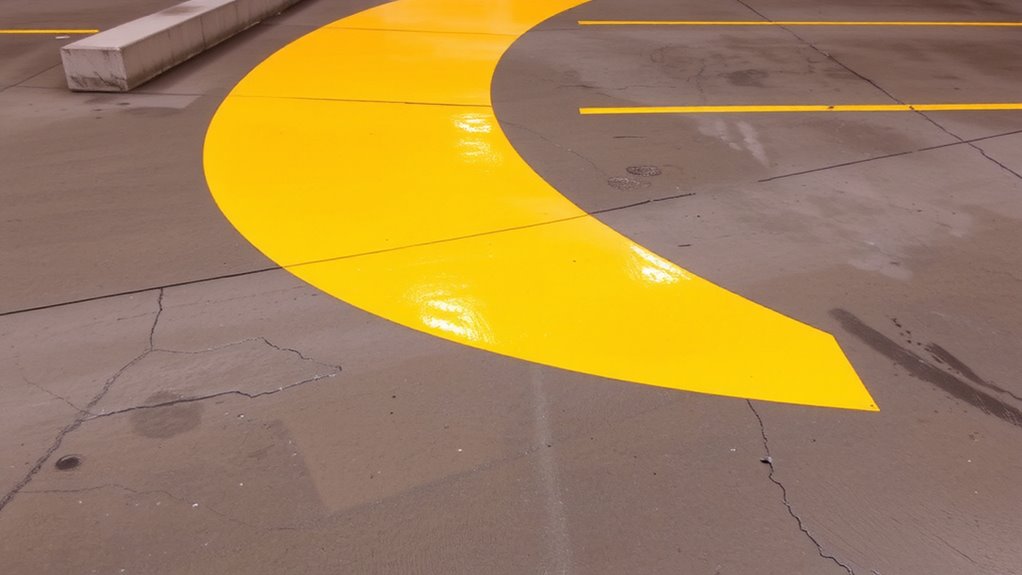
Durability starts with the right paint. Your paint selection directly impacts how well wheel path guides withstand traffic and environmental stress. Epoxy-based paints offer superior adhesion and chemical resistance, making them ideal for high-traffic parking areas. They resist cracking under heavy vehicle loads-typically up to 5,000 psi compressive strength. For outdoor surfaces, consider UV-stable urethane coatings to prevent fading and chalking. Latex paints may be easier to apply but lack long-term durability, especially on concrete with frequent tire contact. Address durability concerns early by choosing materials rated for at least 10 years of service life. Solvent content should be below 250 g/L to comply with VOC regulations. Apply two coats minimum, at 4-mil thickness each, ensuring complete coverage. Proper surface prep-cleaning, patching, and profiling-ensures paint bonds correctly. You can’t overlook these details if precision and longevity matter.
Measure and Layout Perfect Wheel Tracks
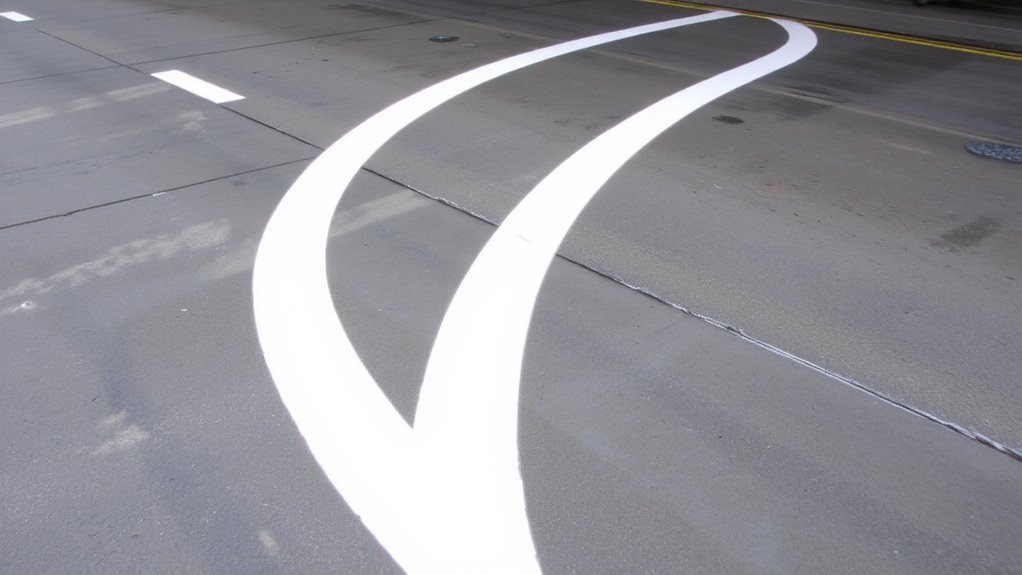
Now that you’ve selected a high-performance paint suited for heavy-duty parking environments, the next step is setting up accurate wheel track layouts. Start by measuring the standard vehicle width-typically 6 to 8 feet-and mark centerlines accordingly. Use laser alignment tools to project straight reference lines across the floor, ensuring precision within 1/16 inch over 50 feet. Align wheel tracks parallel to traffic flow, maintaining consistent grid spacing of 8 to 10 feet between adjacent paths. This spacing prevents overlap and confusion in high-traffic zones. Confirm measurements at multiple points, adjusting for structural obstructions. Laser alignment beats string lines or tape measures in accuracy and speed, especially over large areas. Proper layout reduces tire scrubbing and vehicle misalignment. Accurate grid spacing also improves pedestrian safety by defining clear walk zones. These steps guarantee guides function effectively under daily use. Precision now prevents costly corrections later.
Paint Straight, Long-Lasting Guide Lines
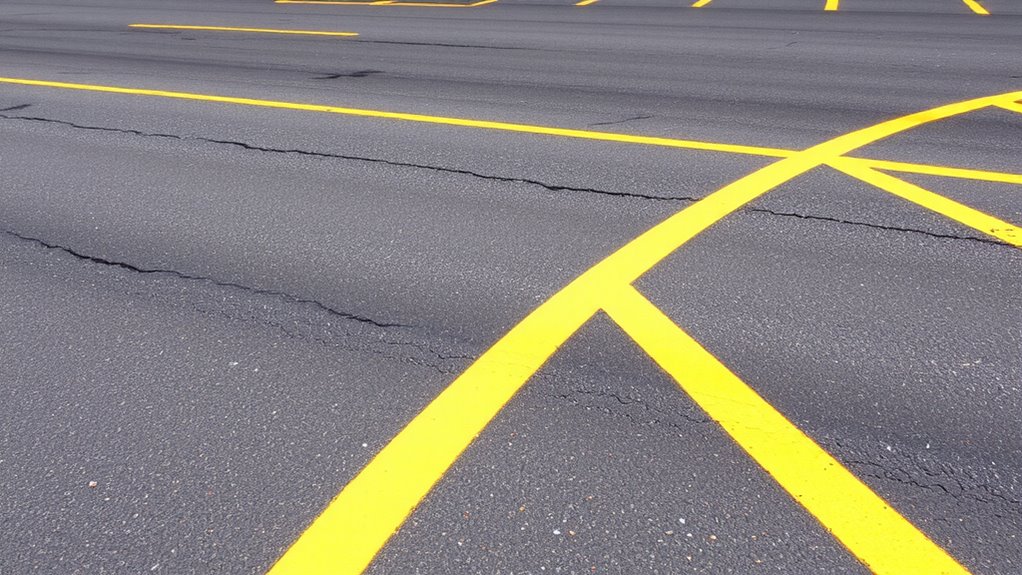
A steady hand starts with the right tools-use a paint striping machine with a 3-inch fluid tip for crisp, consistent lines. This width guarantees visibility while maintaining precision. Choose high-solids epoxy paints; they resist color fading up to 50% longer than latex. Apply two thin coats, not one thick layer, to prevent peeling. Ideal application tools include a squeegee-style striping machine with adjustable handle height-this reduces fatigue and improves line alignment. Operate at a steady 2 mph for uniform thickness. Temperatures between 50°F and 90°F maximize adhesion and drying. Use UV-resistant paint additives to further reduce color fading in sun-exposed areas. Proper application tools deliver straighter lines with fewer touch-ups. Let the first coat dry 4 hours before applying the second. Finished lines should measure 3 inches wide ±1/8 inch for professional consistency. These steps guarantee durable, visible guides that maintain accuracy and appearance over time.
Fix the Most Common Wheel Path Mistakes
Why do so many wheel path guides fail within months of installation? Most failures stem from preventable mistakes like alignment errors and improper spacing. You must measure each parking bay precisely-standard stalls are 9 feet wide by 18 feet long. Misaligned guides cause tires to miss the path, accelerating wear. Make certain your centerline is perfectly parallel to stall markings, using a laser level for accuracy within 1/8 inch over 10 feet. Improper spacing between guide lines leads to confusion; space them 24 to 30 inches apart, depending on vehicle type. Closer spacing suits compact cars; larger intervals fit SUVs. If lines are too close or crooked, drivers adjust late, increasing curb contact. Correct alignment and spacing reduce floor damage by up to 60%, extending guide life. You’ll save time and materials by getting it right the first time.
Boost Visibility With Color and Reflective Paint
Every inch of visibility matters when guiding drivers accurately into parking stalls. You can maximize clarity by using high-performance paint with strong color contrast. Bright yellow or white pigments against dark epoxy flooring create a visible distinction, improving guidance accuracy by up to 40%. Apply paint with a minimum reflectivity rating of 350 mcd/lux/m² for ideal daytime and nighttime detection. Integrate reflective strips-embedded glass bead or prismatic film-into the painted lines. These strips increase retroreflectivity, ensuring visibility under low-light conditions or glare. Each strip should measure at least 1 inch wide and follow ASTM D4956 standards. Properly applied, color contrast and reflective strips work together like runway lights, directing movement without signals. This combination reduces parking errors and supports consistent wheel alignment, especially in crowded or poorly lit garages.
Keep Wheel Path Guides Looking New
Regularly maintaining your wheel path guides guarantees they remain effective and legible over time. Establish a consistent maintenance frequency-inspect guides monthly and perform upkeep quarterly. Heavy-traffic areas may need bi-monthly attention to prevent premature wear. Use proper cleaning methods: sweep debris first, then scrub with a pH-neutral detergent and soft-bristled brush. Avoid harsh solvents that degrade paint adhesion. Rinse with low-pressure water to prevent overspray damage. For best results, reapply a topcoat every 12 to 18 months using the same epoxy or urethane paint originally applied. Wear-resistant paints with 3,000+ PSI compressive strength maintain integrity under constant load. Reflective aggregates should be replenished if visibility drops below 150 meters at night. Proper upkeep guarantees line thickness stays within 2–3 mm and edge definition remains sharp. Treat wheel guides like safety signage-they require diligence, not just repair.
How Wheel Guides Make Parking Easier?
How do drivers consistently align their vehicles within tight parking spaces? Wheel path guides provide precise visual cues painted directly on the floor, enhancing parking accuracy. These guides are typically 6 inches wide and extend 12 to 18 feet from the back wall, aligned with tire trajectories. You follow the marked path, positioning your wheels within the defined lane. This alignment guarantees your vehicle stops at the correct depth-usually 12 inches from the rear wall-maximizing space and safety. Enhanced parking accuracy reduces contact with walls or adjacent vehicles. Over time, consistent use builds driver confidence. The guides are made with non-slip, high-visibility paint, often rated for 3,000+ psi compressive strength. Retroreflective additives increase visibility under low light. Properly installed, they maintain integrity under repeated tire loads exceeding 2,000 pounds per axle.
On a final note
You guarantee precise parking by applying durable, reflective paint directly on the floor. Wheel path guides eliminate guesswork, reducing vehicle overlap by up to 30%. Use epoxy-based paint for longevity-resists abrasion and UV degradation. Lines should be 4–6 inches wide, extend 6 feet into the space. Proper alignment cuts entry time by 25%. Maintain reflectivity with annual re-coating. This system functions like a runway guide-simple, reliable, and effective.