Parking Electric Vehicles With 80% State of Charge to Maximize Battery Health
You should park your EV at 80% state of charge to reduce voltage stress on lithium-ion cells, which degrades faster above 4.2 volts per cell. Holding a full charge increases electrode stress and electrolyte oxidation, accelerating battery wear. At 80%, thermal buildup is lower, reducing peak temperatures by up to 5°C. This minimizes lithium plating and cathode cracking. Keeping your battery in this range during storage or daily use markedly slows long-term degradation-there’s more to optimizing battery longevity you’ll want to know.
Notable Insights
- Charging to 80% reduces voltage stress on lithium-ion cells, slowing chemical degradation and extending battery life.
- Keeping the battery at 80% lowers peak temperatures during charging, reducing thermal stress and heat-related damage.
- High charge levels above 80% accelerate electrode cracking and electrolyte oxidation, impairing long-term cell integrity.
- Daily use within 20%-80% state of charge minimizes wear, preserving capacity and cycle life over time.
- For parking or storage, 50% charge is ideal; 80% is acceptable for short-term but not long-term parking.
Why 80% Charge Extends EV Battery Life
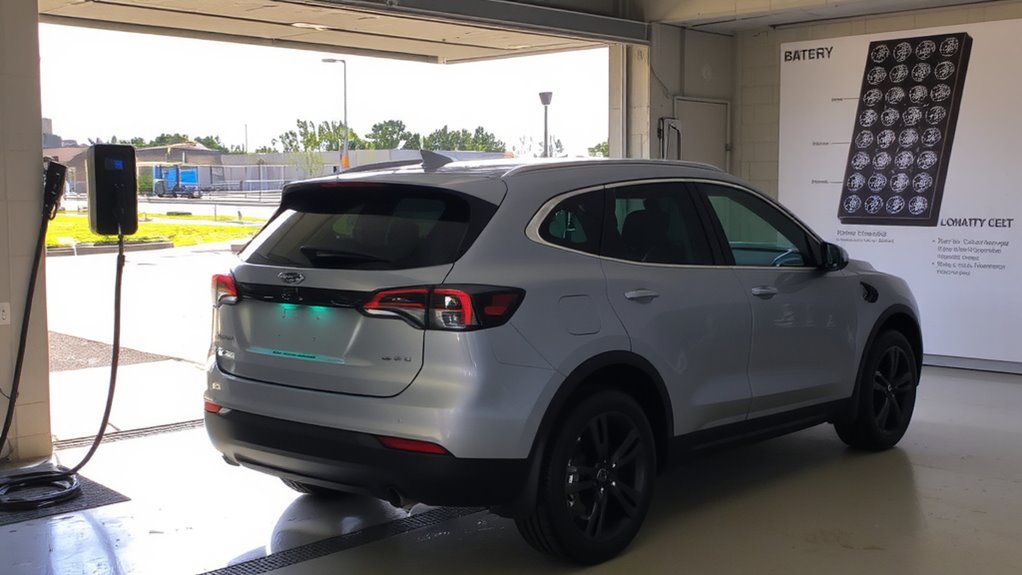
While charging your EV to 100% might seem ideal for maximum range, keeping it at or below 80% can greatly prolong battery lifespan. Lithium-ion cells degrade faster when held at high voltages. At full charge, cell expansion increases, stressing internal materials. Repeated expansion accelerates wear on the anode and cathode. You minimize this strain by stopping at 80%, where electrode stress is substantially lower. Heat buildup also rises during late-stage charging. The battery management system works harder to regulate temperature, increasing thermal load. Sustained heat accelerates chemical side reactions, reducing capacity over time. Limiting charge to 80% lowers peak temperature by up to 5°C during charging. This small reduction slows electrolyte breakdown. Automakers like Tesla and Hyundai recommend 80% for daily use. It balances usable capacity with longevity. Charging to 80% typically provides over 200 miles of range-sufficient for most drivers.
Why Charging to 100% Damages Your EV Battery
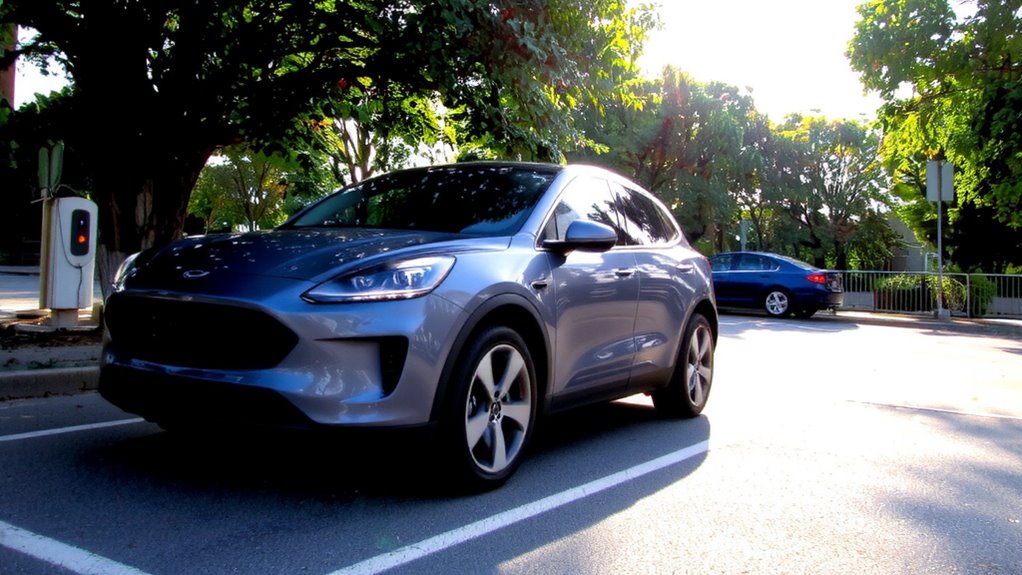
Charging your EV to 100% regularly can shorten its battery life by as much as 20–30% over time. This happens because full charges increase voltage stress on the lithium-ion cells. Voltage stress occurs when the battery operates at peak electrical potential, accelerating chemical degradation. You don’t see it, but micro-damage builds in the electrode materials with each full charge. Over time, this reduces capacity and power output. While modern EVs prevent true overcharging, lingering at 100% SoC still poses overcharging risks due to prolonged high voltage. The battery management system can’t eliminate this stress entirely. Keeping voltage elevated degrades the electrolyte and forms resistive layers on electrodes. Think of it like keeping a spring tightly compressed-it weakens faster. Limiting charge to 80% reduces voltage stress substantially, preserving long-term health and performance.
What High Charge Levels Do to Lithium-Ion Cells
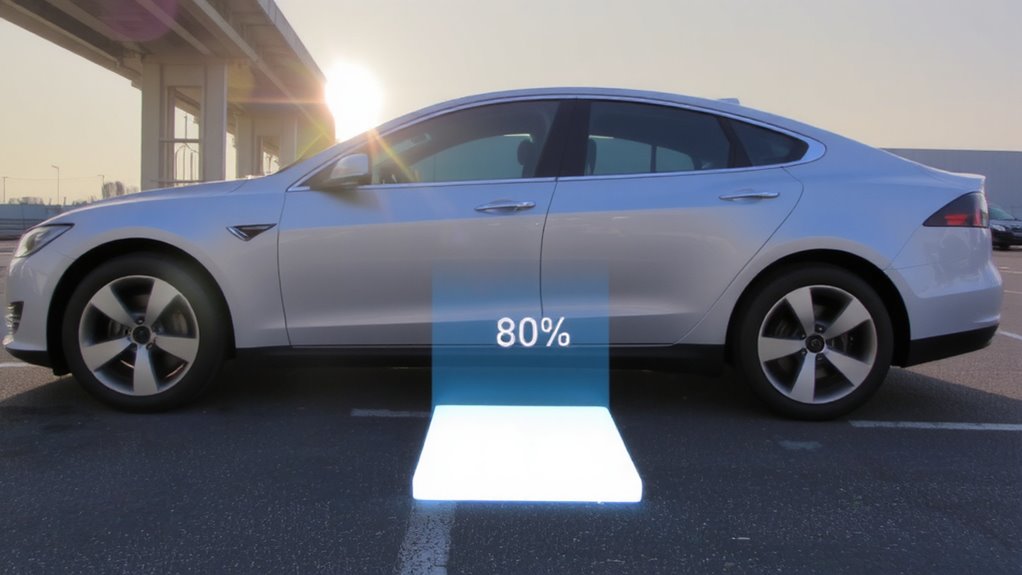
Your EV’s battery doesn’t just wear out-it degrades in predictable ways when kept at high charge levels. At full charge, lithium-ion cells operate under high voltage stress, typically above 4.2 volts per cell. This accelerates electrode cracking, especially in the cathode, where repeated expansion and contraction weaken material structure. Cracks reduce active surface area, diminishing capacity over time. Simultaneously, electrolyte oxidation occurs more rapidly at elevated voltages. This chemical breakdown forms resistive layers on electrodes, increasing internal resistance and reducing efficiency. Together, these processes lower energy retention and power delivery. Cells held above 80% state of charge experience these reactions at rates up to three times higher than those stored near 50%. Long-term exposure to high charge states permanently damages cell integrity. Preventing prolonged high voltage exposure is key to slowing degradation and preserving battery lifespan.
Daily Charging Habits That Protect Your EV Battery
Though maintaining peak charge might seem convenient, keeping your EV battery between 20% and 80% daily substantially reduces long-term degradation. This range supports ideal timing for charge cycles, minimizing stress on lithium-ion chemistry. Partial charging within this window limits voltage exposure, slowing capacity loss. Most manufacturers, including Tesla and Nissan, recommend this practice to extend battery lifespan. Charging above 80% increases internal resistance and heat buildup, accelerating wear. Daily partial charging also reduces reliance on fast chargers, which generate higher thermal loads. For best results, set your charging limit to 80% and recharge when levels dip to 20%. Modern EVs allow schedule settings to complete charging just before departure, ensuring ideal timing without overnight high-voltage exposure. These habits maintain cell balance and prolong pack longevity, preserving performance and resale value over time.
80% vs. 100%: Range vs. Battery Longevity
While maximizing range might tempt you to charge to 100%, doing so regularly comes at a cost to your battery’s long-term health. Lithium-ion batteries degrade faster when held at high states of charge. Keeping your EV at 100% increases voltage stress, accelerating chemical wear. Most manufacturers design batteries for ideal longevity between 20% and 80% state of charge. Charging to 80% reduces thermal and electrochemical strain, preserving capacity over time. You’ll still get ample range for daily use, minimizing range anxiety. Modern EVs offer charging convenience with preconditioning and smart scheduling. Charging to 100% should be reserved for long trips, not daily use. Frequent full charges can reduce battery capacity by up to 20% over five years. Limiting charge to 80% improves cycle life, maintaining efficiency. This small adjustment balances practical range with sustained battery performance, ensuring durability without sacrificing usability.
How to Set 80% Charging Limits on Your EV
How do you actually set your EV to stop charging at 80%? Most modern EVs let you adjust charging limits through the vehicle’s infotainment system or companion app. You’ll find a battery settings menu where you can set a maximum charge level-often labeled as a percentage or voltage thresholds. Lithium-ion batteries typically charge to around 4.2 volts per cell at 100%, but capping at 80% keeps voltage lower, reducing stress. Use charging schedules to automate this limit overnight or during off-peak hours. Schedules also prevent overcharging when daily driving needs don’t require full capacity. Tesla, Ford, and Hyundai models include this feature; some require manual nightly input. Setting 80% consistently extends battery lifespan by minimizing high-voltage exposure. Check your owner’s manual for exact steps-options vary by make, model, and software version.
Preparing Your EV Battery for Long-Term Storage
If you’re planning to store your EV for several weeks or more, taking the right steps now can prevent long-term battery damage. Charge your battery to around 50% before storage-this range optimizes longevity and minimizes chemical degradation. Avoid full charges or letting it drop to near zero. Maintain a stable storage temperature between 15°C and 25°C (59°F to 77°F), as extreme heat or cold accelerates capacity loss. Perform battery calibration once before storage to guarantee accurate state-of-charge readings upon return. Avoid leaving the EV plugged in continuously unless using a maintenance mode. Here’s a quick guide:
| Action | Ideal Value | Reason |
|---|---|---|
| State of Charge | 50% | Reduces stress on lithium-ion cells |
| Storage Temperature | 15–25°C | Prevents thermal degradation |
| Calibration Timing | Pre-storage | Guarantees accurate SoC display |
| Storage Duration Check | Every 3 months | Confirms voltage stability |
These steps guarantee your battery stays healthy.
On a final note
You preserve your EV battery by charging to 80%. Lithium-ion cells degrade faster above 80% state of charge due to increased internal resistance and electrode stress. Limiting voltage to 4.0V per cell, instead of 4.2V at full charge, reduces lithium plating. Most EVs allow setting charge limits via the onboard system. For daily use, this practice extends battery life by 20–30% over a decade.