Replacing Rear Brake Rotors on a 2017 Ford Edge With Hub Cleaning Steps
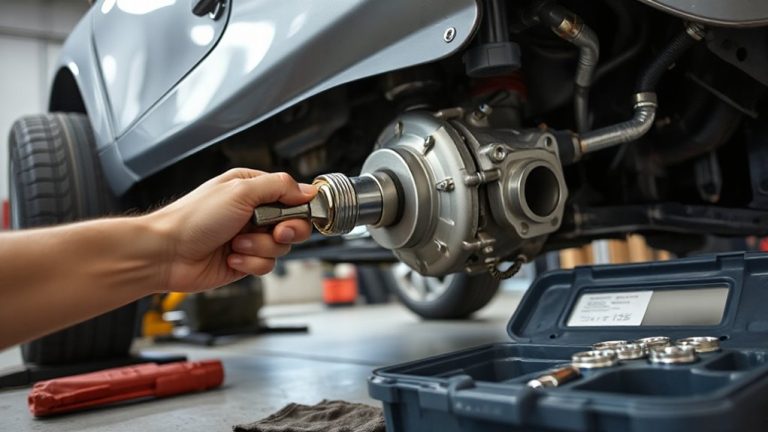
You’ll need a floor jack, jack stands, 14mm and 18mm sockets, and a torque wrench to replace rear brake rotors on your 2017 Ford Edge. Lift the vehicle, remove the wheel, then unmount the caliper using two 14mm bolts. Slide off the old rotor and inspect the hub for cracks, warping, or grease leaks near the studs. Clean the hub surface thoroughly with a wire brush and brake cleaner, removing all rust and debris. Check hub runout with a dial indicator-stay under 0.002 inches for safe operation. Make certain the mating surface is flat and free of contamination to prevent rotor wobble. Install the new rotor, confirm it seats flush without gaps, then reinstall the caliper. Torque bracket bolts to 95 ft-lbs and guide pins to 35 ft-lbs for proper alignment. Check brake pads for wear below 3mm and lubricate slide pins with silicone grease to prevent sticking. A smooth, clean hub interface makes certain even braking and longer rotor life. Next steps include reassembly and brake system verification.
Notable Insights
- Remove the rear wheel after loosening lug nuts with the vehicle on a level surface and secured on jack stands.
- Take off the brake caliper by removing two 14mm mounting bolts and hang it securely without straining the brake hose.
- Slide the old rotor off the hub, using a rubber mallet or two 8mm bolts if stuck due to corrosion.
- Clean the hub surface thoroughly with a wire brush and brake cleaner to ensure proper rotor seating and minimal runout.
- Install the new rotor, confirm it sits flush, and torque caliper bracket and guide pin bolts to specifications.
Gather Your Tools and Prepare the 2017 Ford Edge
Before you begin, make sure you have all the necessary tools and safety equipment on hand to avoid delays. You’ll need a floor jack, jack stands, lug wrench, C-clamp, 14mm and 18mm sockets, torque wrench, and a brake caliper hanger. Always use safety glasses and mechanic’s gloves. Park on a level surface and apply the parking brake securely. Chock the front wheels to prevent movement. Proper preparation guarantees a safe, efficient job. During brake pad inspection, note pad thickness-replace if under 3mm. This step helps prevent rotor damage. Caliper slide lubrication is critical; use silicone-based lubricant on slide pins to guarantee smooth movement and even pad wear. Dry or corroded slides cause dragging and noise. Verify that your replacement rotors match OEM specs: 328mm diameter, 22mm thickness, with a minimum usable thickness of 18mm.
Remove the Rear Wheel and Brake Caliper
Start by loosening the lug nuts on the rear wheel while the vehicle is still on the ground-use the lug wrench and turn counterclockwise to break resistance, but don’t remove them yet. Raise the vehicle with a floor jack and secure it on jack stands. Remove the lug nuts completely, then pull off the wheel. Locate the brake caliper, fastened by two bolts. Remove the caliper mounting bolts using a 14mm socket. Carefully hang the caliper aside with a wire or bungee-don’t let it dangle by the hose. This is a good time for a brake pad inspection. Check pad thickness; replace if under 3mm. Examine caliper slide pins for corrosion or seized movement. Clean and lubricate them with silicone-based grease to guarantee smooth operation.
| Component | Function | Maintenance Tip |
|---|---|---|
| Caliper slide pins | Allow caliper movement | Lubricate for even pad wear |
| Brake pads | Create friction | Inspect thickness during removal |
| Caliper bolts | Secure caliper | Torque to 25 lb-ft when reinstalling |
Take Off the Old Rotor and Check Hub for Damage
Your rear brake rotor slides right off the hub once the caliper’s out of the way, but don’t be surprised if it’s stuck-rust and corrosion often bond the rotor to the hub flange over time. For rotor removal, tap the edge with a rubber mallet or use two 8mm bolts in the rotor’s threaded holes to push it free evenly. Never force it with metal prying tools that could damage the hub. Once removed, perform a thorough hub inspection. Check the hub surface for scoring, cracks, or warping. The mounting flange must be flat within 0.002 inches runout. Look for grease leaks around the wheel stud holes, indicating potential bearing failure. Confirm all wheel studs are secure and undamaged. Proper rotor removal and hub inspection guarantee the new rotor seats correctly and functions safely.
Clean the Hub Before Installing the New Rotor
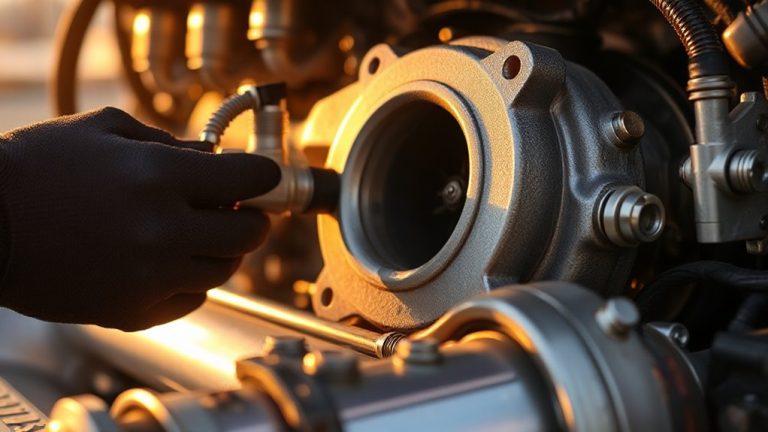
A clean hub surface is critical for proper rotor alignment and long-term performance. Any rust, debris, or old mounting residue can cause rotor runout, leading to vibration and premature wear. Use a wire brush or sanding disc to remove corrosion from the hub’s mating surface, guaranteeing full contact with the new rotor. Brake pad inspection is recommended during this process-check for uneven wear or contamination while the caliper is dismounted. For superior rotor surface prep, avoid touching the friction area with bare hands; skin oils can create hot spots. Clean the hub with brake cleaner to remove fine particles, then verify flatness using a dial indicator if available. The hub should have less than 0.001 inches of runout. A smooth, flush fit between hub and rotor prevents noise and enhances braking efficiency. This step guarantees accurate rotor installation and supports maximum brake system reliability.
Install the New Rotor and Reassemble the Brake System
Precision alignment begins the moment you place the new rotor onto the hub. Make sure the rotor sits flush, with no gaps or wobble. Before reassembly, perform a brake pad inspection-confirm the pads aren’t cracked, glazed, or worn beyond the manufacturer’s minimum thickness, typically 3mm for the 2017 Ford Edge. Slide the caliper bracket back into position, threading bolts by hand first. Use a torque wrench to tighten to factory torque specifications: 95 ft-lbs for the bracket bolts. Compress the caliper piston fully before reinstalling. Position the caliper over the rotor and pads, then secure with guide pin bolts-torqued to 35 ft-lbs. Reconnect the brake hose and fasten the mounting clip. Verify the parking brake is properly adjusted. Finally, double-check all connections and components for correct seating and tightness.
On a final note
You’ve completed the rear brake rotor replacement on your 2017 Ford Edge. The new rotors should measure 12.8 inches in diameter with a minimum thickness of 0.84 inches. Proper hub cleaning guarantees a smooth, secure fit. Reassembled components must be torqued: caliper bolts to 25 ft-lbs, lug nuts to 100 ft-lbs. This maintains braking efficiency and safety.