Selecting Breathable Fabric Covers That Resist Mold Yet Still Shield Paintwork
Choose a breathable car cover with a microporous membrane that allows vapor to escape while blocking liquid water. Look for ≥3,000 g/m²/24hr breathability and a hydrostatic head of at least 1,500 mm. These specs prevent trapped moisture, reducing mold risk and paint damage. A multi-layer, tightly woven fabric with UV-resistant, light-colored material enhances durability and climate adaptability. Antimicrobial treatments and moisture-wicking liners add protection. Higher denier shells (500–800) balance toughness and airflow. Coastal or humid areas need even greater vapor transmission. Proper maintenance preserves performance. You’ll find optimized solutions based on specific environmental demands and long-term wear resistance.
Notable Insights
- Choose covers with a breathability rating of at least 1,500–5,000 g/m²/24hr to prevent moisture buildup and mold growth.
- Opt for microporous membranes or woven polypropylene that block liquid water while allowing vapor to escape.
- Select multi-layer fabrics with hydrophobic outer shells and antimicrobial treatments to resist mold and protect paint.
- Prefer light-colored covers to reflect UV rays and reduce heat absorption, slowing fabric and paint degradation.
- Clean covers every 2–3 weeks and inspect for wear to maintain breathability, mold resistance, and protective performance.
Why Breathability Stops Paint Damage
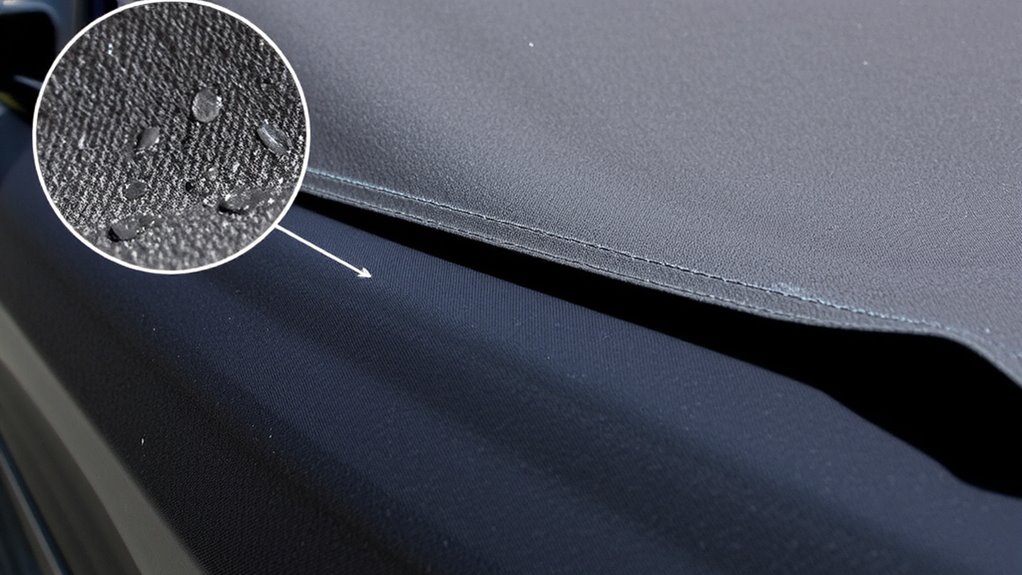
While trapped moisture can silently destroy paint over time, breathable fabric covers prevent this damage by allowing water vapor to escape. You need effective air circulation to maintain long-term paint preservation. Non-breathable materials trap humidity against the surface, creating microclimates that degrade clear coats. In contrast, polypropylene or polyester fabrics with a permeability rating of at least 1.5 g/m²/24hr let moisture diffuse safely. These fabrics use microporous membranes that block liquid water yet permit vapor transmission. Air circulation beneath the cover reduces osmotic blistering and intercoat delamination. Independent tests show paint degradation slows by up to 70% under breathable covers in humid environments. The ideal cover combines 3–5 ounces per square yard fabric weight with UV-resistant, non-abrasive lining. This balance guarantees protection without scratching. For maximum effectiveness, choose covers with elastic hems and adjustable gussets to maintain airflow while securing fit.
How Trapped Moisture Causes Mold on Cars
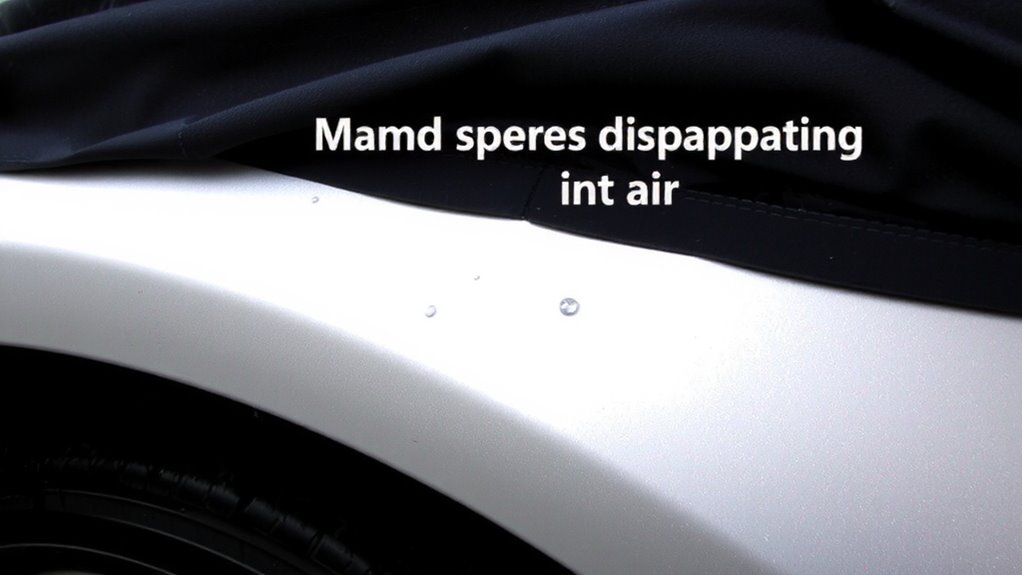
When moisture gets trapped under a car cover, it creates the perfect environment for mold to grow. Condensation buildup occurs when warm, humid air contacts cooler surfaces, especially overnight. Without breathable fabric, this moisture can’t escape, leading to damp conditions. Poor ventilation exacerbates the issue, allowing water to linger against your car’s finish. Mold spores thrive in these dark, moist spaces, often developing within days.
| Factor | Effect |
|---|---|
| Condensation Buildup | Traps water vapor against paint |
| Poor Ventilation | Prevents air exchange under cover |
| Non-Breathable Fabric | Blocks moisture evaporation |
| Extended Cover Use | Increases mold risk over time |
| Temperature Shifts | Triggers repeated condensation |
These conditions compromise both cover performance and paint integrity. A non-porous cover acts like plastic wrap-sealing in humidity. Consistent exposure to trapped moisture deteriorates clear coats and promotes biological growth. Preventing this requires materials engineered for vapor transmission, not just waterproofing.
5 Breathable Materials That Block Moisture and Mold
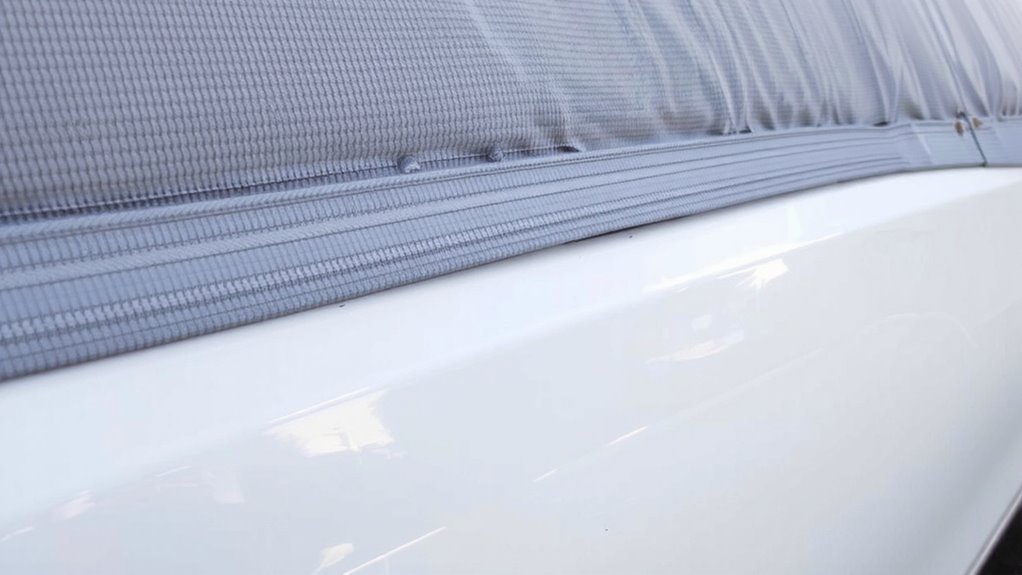
If you want to protect your car’s paint without encouraging mold, choose a cover made from breathable yet moisture-resistant fabric. These materials allow moisture transfer while blocking liquid water. Look for multi-layer textiles with a hydrophobic outer shell and a soft inner lining. The outer layer should have a hydrostatic head rating of at least 1,500 mm to resist rain penetration. Micro-porous membranes or woven polypropylene enable air circulation by permitting vapor to escape. Fabrics with a breathability rating of 3,000–5,000 g/m²/24hr facilitate effective moisture transfer. This reduces condensation buildup under the cover. Good air circulation prevents trapped humidity from contacting the paint. Avoid non-porous materials like vinyl-they trap moisture and promote mold. Instead, opt for engineered synthetics that balance protection and breathability. These fabrics maintain a dry microclimate over time. Proper breathability preserves finish integrity during storage.
What Makes a Car Cover Actually Resist Mold?
A truly mold-resistant car cover relies on a precise balance of breathability and water resistance. You need fabric that allows trapped moisture to escape while blocking external water. Micro-porous membranes let vapor pass but repel liquid-measured at 3,000 mm hydrostatic resistance or higher. A tightly woven fabric texture prevents mold spores from taking hold and reduces surface abrasion. Smooth textures discourage dust and organic debris buildup, which can retain moisture and encourage mold. The cover color matters: light colors reflect UV radiation, reducing heat buildup that degrades fabric and promotes microbial growth. Dark covers absorb up to 70% more solar energy, accelerating material breakdown. UV inhibitors in the fibers extend longevity but work best when paired with reflective coloring. Breathable, multi-layer fabrics with 500–800 denier outer shells provide durability without sacrificing airflow. You’re not just shielding paint-you’re controlling microclimate. Top snow car covers combine these features with custom-fit designs to prevent flapping and moisture trapping, making best snow car covers essential for winter protection.
Wet or Dry Climates? How Environment Changes Your Cover Needs
Your car cover’s performance hinges on matching material properties to environmental conditions. In coastal humidity, moisture permeates the air, demanding a highly breathable cover with a vapor transmission rate above 1,000 g/m²/24hr to prevent mold. Look for multi-layer fabrics with hydrophobic inner linings that wick condensation away from the surface. These shields minimize trapped moisture, which fosters mildew in damp settings. Conversely, in desert temperature extremes, UV resistance is critical-choose materials with UPF 50+ and thermal reflectivity to shield paint from thermal expansion and sun damage. Woven polypropylene or reflective polyester blends handle intense solar radiation without degrading. Covers must also resist abrasion from wind-driven sand. A tightly woven, non-woven fabric with a thickness of at least 3.0 oz/yd² offers durability. Match your cover’s specs to your climate-coastal humidity demands breathability; desert temperature demands reflectivity and strength. For reliable protection, consider top-performing models from the best outdoor car covers list, designed to meet these exacting standards.
Breathable Car Covers Compared: Top Picks by Price and Performance
When selecting a breathable car cover, balancing performance metrics with budget constraints guarantees long-term paint protection without overspending. Lightweight options, at 3–4 oz/yd², offer basic UV resistance and breath combustibility for covered parking; they’re ideal if you’re on a tight budget. Mid-range picks, around 5–6 oz/yd², use multi-layer polypropylene or polyester with 99% UV resistance, suitable for daily outdoor exposure. These maintain ideal airflow while blocking debris. Premium covers reach 7–8 oz/yd², integrating advanced microporous film technology that balances fabric weight with maximum breathability. They deliver 1,500+ hours of UV resistance under ASTM testing. Fit matters-semi-custom provides decent stretch; full custom uses precise measurements for aerodynamic sealing. Higher fabric weight doesn’t mean better unless paired with calibrated porosity. Always verify manufacturer breathability specs in perms (ideally 15–30).
How to Care for Your Cover to Prevent Mold and Wear
What happens if you neglect your breathable car cover’s maintenance? Mold takes hold, fabric weakens, and paint protection drops dramatically. Regular cleaning frequency-every two to three weeks-is critical for cover longevity. Dirt and moisture trapped under the cover create a breeding ground for mold, especially in humid climates. Use a mild detergent and lukewarm water; scrub gently with a soft brush to avoid damaging the breathable membrane. Rinse thoroughly to remove residue that can clog micro-pores responsible for airflow. Always let the cover dry completely before storage or reuse. Avoid bleach or abrasive cleaners-they degrade UV-resistant coatings and reduce tear strength. Inspect seams and elastic hems monthly for wear. Proper care maintains breathability (rated at 0.8–1.2 CFM) and guarantees your cover shields paintwork efficiently for up to six years.
On a final note
You need a cover that balances breathability and moisture resistance. High thread-count polyester with polyurethane coating blocks rain yet allows vapor to escape. Look for 2,000 mm water resistance and permeability of at least 3,000 g/m²/24hr. Multi-layer microfibers reduce abrasion. Anchored elastic hems guarantee a snug 360° fit. Proper ventilation prevents condensation buildup, which cuts mold risk by up to 70%. Clean annually with pH-neutral detergent to maintain performance.