Step-by-Step Alignment of Slip Yoke Splines to Prevent Premature U-Joint Failure
Align your slip yoke splines properly to prevent premature u-joint failure. Clean splines with a wire brush and degreaser, then inspect for wear, corrosion, or damage. Apply moly-based lubricant to the transmission output shaft. Align splines carefully-use a slight twist when engaging to avoid cross-threading. Confirm driveshaft angle stays under 3 degrees and check for at least 1/4-inch u-joint clearance. Rotate the shaft by hand; it should move smoothly with no binding or lateral play over 0.010 inches-further details on maintaining long-term driveline health follow.
Notable Insights
- Ensure spline surfaces are clean and free of corrosion or wear before alignment.
- Lubricate output shaft splines evenly with moly-based grease for smooth engagement.
- Align internal yoke splines with external shaft splines before inserting to prevent cross-threading.
- Use a slight twisting motion while pushing to achieve full and proper spline seating.
- Verify driveshaft angle is within 3° and check for binding or excessive play after installation.
Why Slip Yoke Spline Alignment Prevents U-Joint Failure
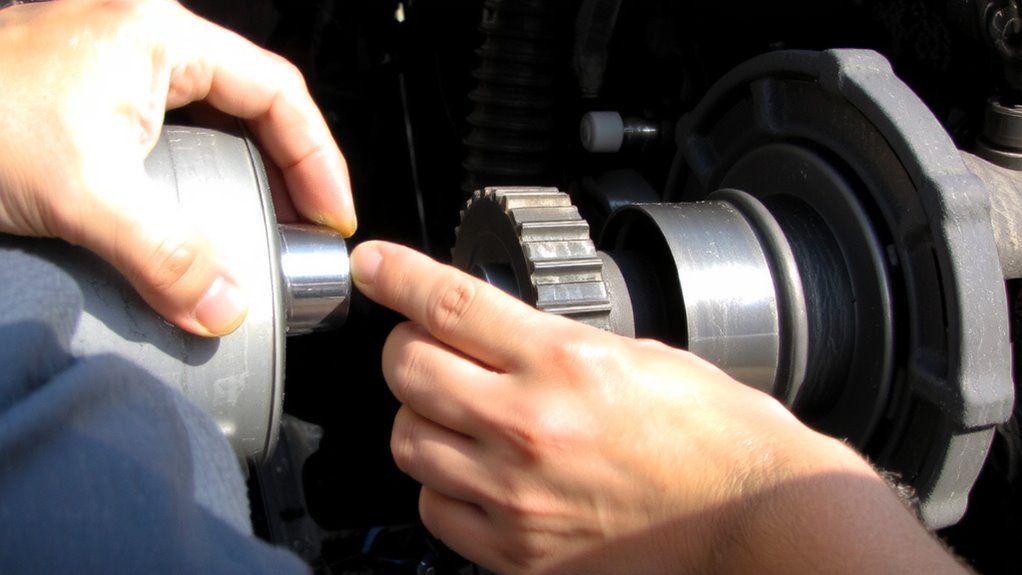
Misalignment is the silent killer of u-joints. You subject u-joints to uneven stress when slip yoke splines are out of alignment. This imbalance disrupts smooth torque transfer from the transmission to the driveshaft. Uneven load distribution accelerates spline wear, particularly at contact points between the yoke and output shaft. Over time, excessive play develops, leading to vibration and premature u-joint fatigue. Proper spline alignment guarantees consistent engagement across all teeth, typically measured within 0.005 inches of runout tolerance. You maintain peak torque transfer efficiency, reducing shock loading during acceleration or deceleration. Misaligned splines induce angular deflection, increasing u-joint operating angles beyond recommended 3-degree limits. This amplifies wear and reduces service life by up to 50%. Correct alignment minimizes friction and heat buildup, preserving lubricant integrity. You prevent collateral damage to seals and bearings. Spline wear resistance depends on alignment-maintain it to protect drivetrain performance and reliability.
Spot Symptoms of Spline Misalignment Early
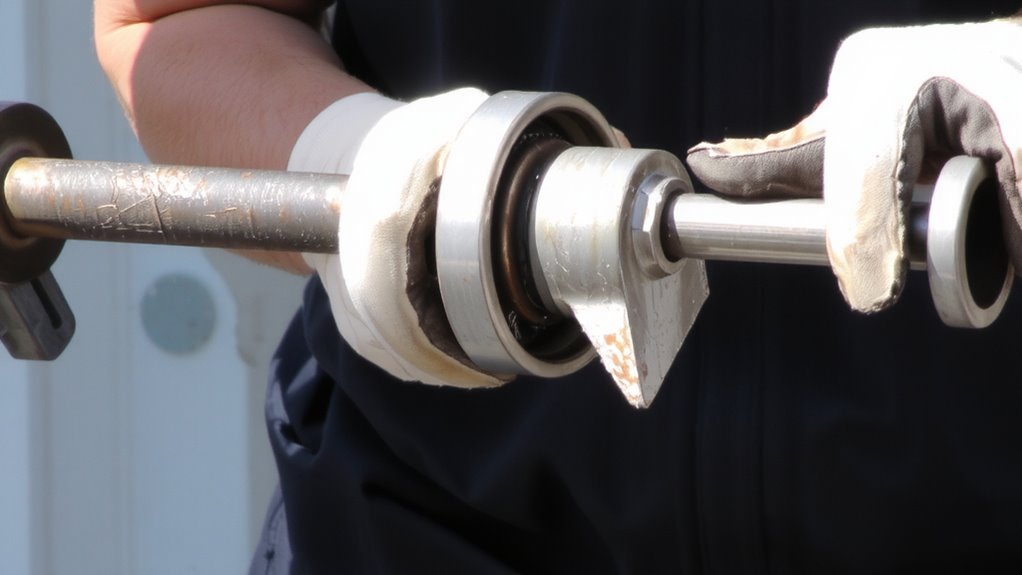
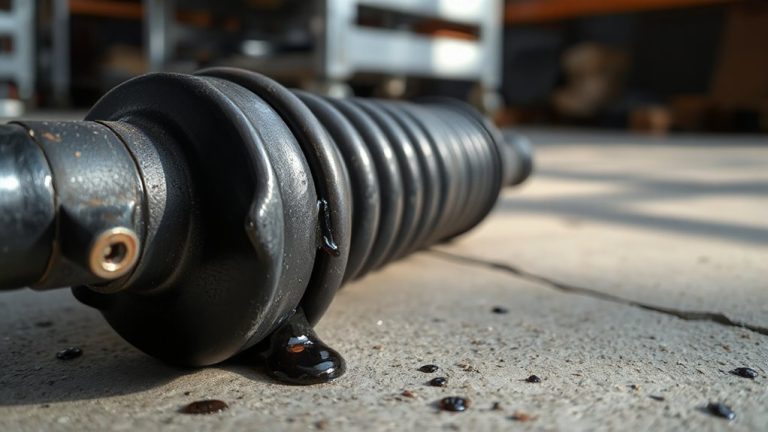
How do you know when something’s off without waiting for failure? You notice vibration noises under acceleration or at cruising speed. These aren’t subtle hums-they’re rhythmic shudders felt through the floorboard, often at 35–45 mph. That’s a red flag. Misaligned splines cause uneven engagement, creating harmonic imbalances in the driveline. You might also see grease leakage behind the transmission seal or around the yoke. Excessive seepage indicates improper spline meshing, letting differential pressure force lubricant past seals. U-joints then lose protection, accelerating wear. Grease spots aren’t just messes-they’re early failure indicators. Ignoring them risks catastrophic joint breakage. Check for spline bind during driveshaft rotation-resistance means misalignment. Catch these signs early: vibration noises and grease leakage mean the yoke isn’t seated correctly, threatening driveline integrity and safety.
Clean and Inspect Slip Yoke Spline Surfaces
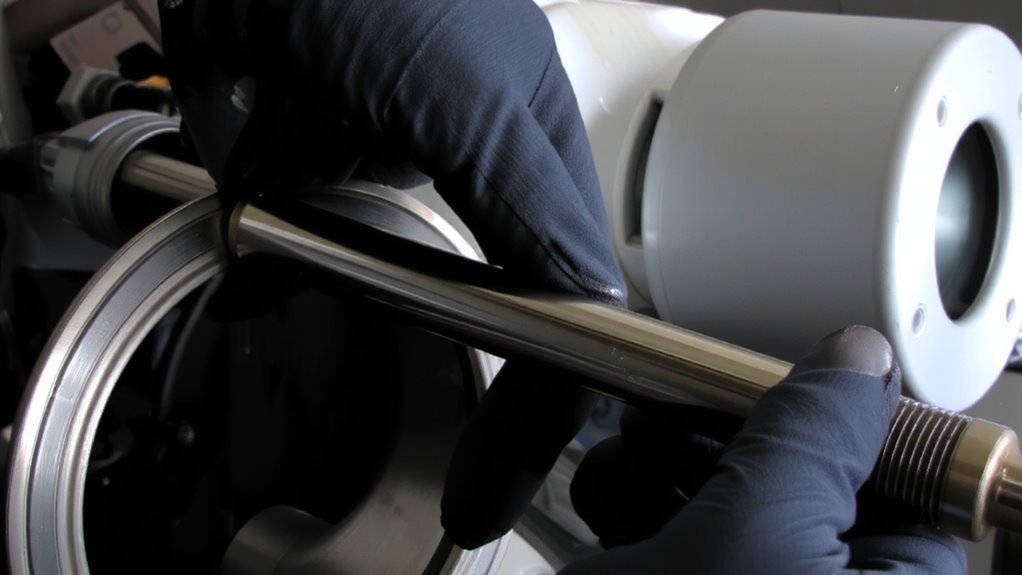
You’ve spotted the symptoms-vibration at highway speeds, grease weeping from the rear of the transmission, resistance when turning the driveshaft. Now, pull the slip yoke and clean the spline surfaces thoroughly. Use a wire brush and degreaser to remove built-up grime. Inspect each spline for signs of damage. Surface corrosion eats into metal, weakening engagement. Spline wear reduces torque transfer efficiency and increases lash. Even minor pitting or flattening can lead to premature u-joint failure. Check for uniform contact across all teeth. Measure spline depth with a micrometer; compare to OEM specs-typically 0.125”–0.135” for most OEMs.
| Condition | Visual Sign | Action Needed |
|---|---|---|
| Surface corrosion | Rust or pitting | Wire brush or replace |
| Spline wear | Flattened peaks | Replace yoke |
| Excessive grease | Black, gritty residue | Clean and re-lube |
| Galling | Shiny, torn metal | Replace both parts |
| Misshapen splines | Bent or chipped edges | Replace immediately |
Align Slip Yoke and Transmission Splines Smoothly
Why do some slip yokes bind when sliding into the transmission output shaft? Misaligned splines or insufficient spline lubrication are usually to blame. You must apply a thin, even layer of high-quality moly-based lubricant to the transmission output shaft splines before insertion. This reduces friction and prevents galling during engagement. Proper yoke positioning guarantees the slip yoke enters straight, without angular force. Tilt or offset causes cross-threading and spline damage. Hold the driveshaft steady, align the yoke’s internal splines with the output shaft’s external splines, and start straight. Use a slight twisting motion as you push-this helps the splines seat fully. Never force it; binding means realignment is needed. Correct yoke positioning and thorough spline lubrication guarantee smooth engagement, protect components, and maintain driveline integrity.
Check Driveshaft Angle and U-Joint Clearance
Even when splines engage smoothly, improper driveshaft angles or restricted U-joint clearance can lead to vibration, accelerated wear, or premature failure. You must verify the driveshaft angle is within 3° of the engine output and pinion angles to prevent driveshaft vibration. Mismatched angles cause harmonic imbalance, especially at high RPM. U-joint operating angles over 3° increase stress and reduce lubrication efficiency. Check for u joint binding by rotating the driveshaft by hand; it should move freely through its entire arc. Obstructions from frame brackets, exhaust, or floor pans restrict movement and create binding. Confirm at least 1/4-inch clearance around the U-joint caps and straps. Misalignment forces components to work harder, generating heat and accelerating wear. Proper clearance and alignment guarantee even load distribution across cross bearings. These checks prevent premature failure and maintain smooth, reliable power delivery.
Test for Binding After Spline Engagement
How smoothly do the slip yoke splines engage under real-world conditions? After full spline engagement, rotate the driveshaft by hand to assess rotational smoothness. You should feel consistent motion without grinding, sticking, or sudden resistance. Any noticeable torque resistance indicates misalignment, contamination, or damaged splines. Rotational smoothness is critical-uneven turning effort can lead to premature u-joint wear. Verify the slip yoke moves freely through at least two full rotations. If binding occurs, disengage and recheck spline alignment. Do not force rotation, as this may damage mating components. Properly engaged splines exhibit uniform, fluid movement with no lateral play exceeding 0.010 inches. Make sure no contact between the yoke and transmission seal or tailshaft housing during rotation. Confirm there’s no harmonic distortion or vibration onset, which suggests internal driveline stress. This test confirms correct assembly before operation.
Inspect Slip Yokes in Routine Drivetrain Maintenance
A routine drivetrain inspection keeps your vehicle’s power transfer reliable and efficient. You should examine the slip yoke material closely scheduled intervals-typically steel or ductile iron-for cracks, warping, or corrosion. These structural flaws compromise spline integrity and increase failure risk. Inspect spline wear patterns thoroughly; uniform contact indicates proper alignment, while uneven grooving or peening suggests misalignment or inadequate lubrication. Look for wear beyond 0.015 inches deep, which exceeds acceptable tolerance and demands replacement. Spline wear patterns also reveal drivetrain binding or angular mismatch. Use a magnifying glass and caliper to measure spline thickness and detect subtle degradation. The slip yoke material must maintain minimum hardness ratings-typically 38–42 HRC for chromoly steel. Catching issues early prevents u-joint stress, driveline vibration, and sudden failure. Stay consistent with inspections every 15,000 miles or after severe-duty use.
On a final note
You now understand how proper spline alignment protects u-joints. Misalignment induces stress, accelerating wear. Align slip yoke and transmission splines exactly-use 0.005″ tolerance for best fit. Check driveshaft angles; stay within ±3° to prevent binding. Confirm smooth rotation after installation. Routine inspection every 15,000 miles catches early wear. Clean splines prevent contamination. Correct alignment extends u-joint life by up to 50%. Precision matters-exact fit guarantees durability and driveline balance.