Test Charging System Voltage: 12.6V, 13.8-14.4V Ranges Explained
Check your charging system voltage with a digital multimeter. Turn the engine off, measure battery voltage first-it should be 12.6V or higher. Start the engine and run it at 2,000 RPM. Test at the battery terminals: a healthy system reads 13.8–14.4 volts. Verify at the alternator’s output terminal; voltage should match within 0.2 volts. Sustained readings below 13.5V or above 15V indicate charging issues. Further diagnostics clarify the fault source.
Notable Insights
- Turn off the engine and measure battery voltage; a reading below 12.4 volts indicates a weak charge before testing the charging system.
- Start the engine and check voltage at the battery terminals; a healthy system shows 13.8–14.4 volts with no load.
- Apply electrical load (e.g., headlights, heater) and verify voltage stays above 13.5 volts to confirm adequate charging under demand.
- Measure voltage directly at the alternator’s output terminal while engine runs at 2,000 RPM; normal range is 13.8–14.7 volts.
- Compare readings: voltage over 15 volts indicates overcharging; below 13.5 volts suggests alternator or regulator issues.
What Should Your Charging System Voltage Be?

A healthy charging system keeps your vehicle running smoothly. You should expect a charging system voltage between 13.8 and 14.4 volts with the engine running and no accessories on. This range maintains battery charge without overvoltage damage. Battery age affects charging efficiency-older batteries may require higher initial voltage to accept a charge, but sustained high voltage can indicate regulator issues. Under increased alternator load, like when headlights, AC, and heated windows are on, voltage may briefly dip but should stabilize above 13.5 volts. Exceeding 15 volts signals overcharging, risking electronic damage. Voltage below 13.2 volts under load suggests undercharging, often due to a failing alternator or wiring issues. Monitor voltage at the battery terminals for accurate readings. Consistent voltage within spec guarantees longevity of both the battery and electrical components, even as battery age progresses.
How to Test Battery Voltage With a Multimeter
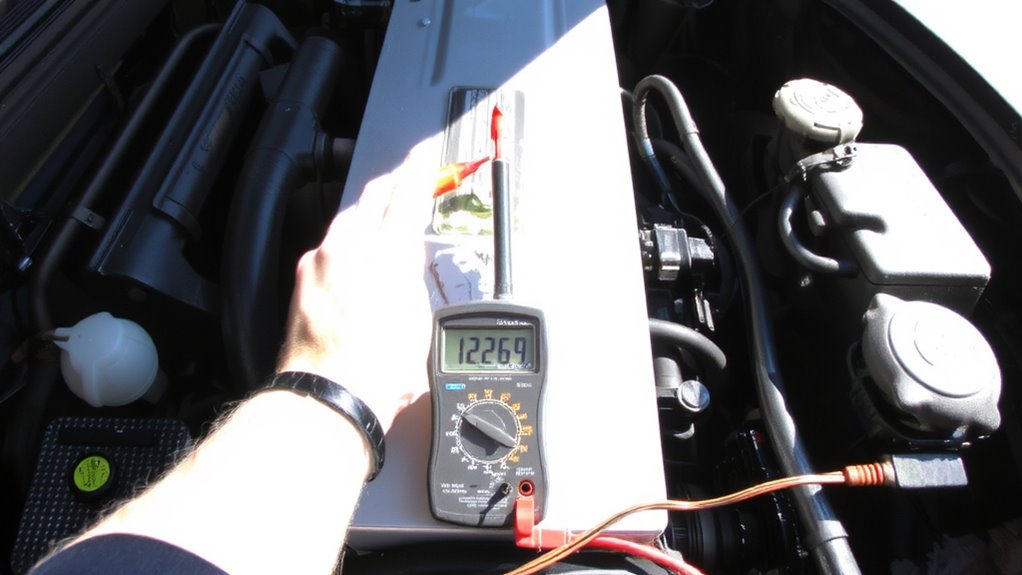
How do you know if your battery is holding the charge it should? Test it with a multimeter. Turn off the engine and all accessories. Set your multimeter to DC voltage. Connect the red probe to the positive terminal and the black probe to the negative. A fully charged battery reads 12.6 volts or higher. Below 12.4 volts indicates a weak charge.
Battery age and corrosion buildup can greatly reduce performance. Corrosion limits conductivity; clean terminals guarantee accurate readings. Older batteries struggle to hold voltage due to internal wear.
For reliable diagnostics, using a high-quality car multimeter can make a significant difference in accuracy and ease of use.
| Voltage Reading | Battery State |
|---|---|
| 12.6V+ | Fully charged |
| 12.4V | 75% charged |
| 12.2V | 50% charged |
| 12.0V | 25% charged |
| Below 12.0V | Discharged or faulty |
Check consistently for reliable results.
How to Test Alternator Output Voltage
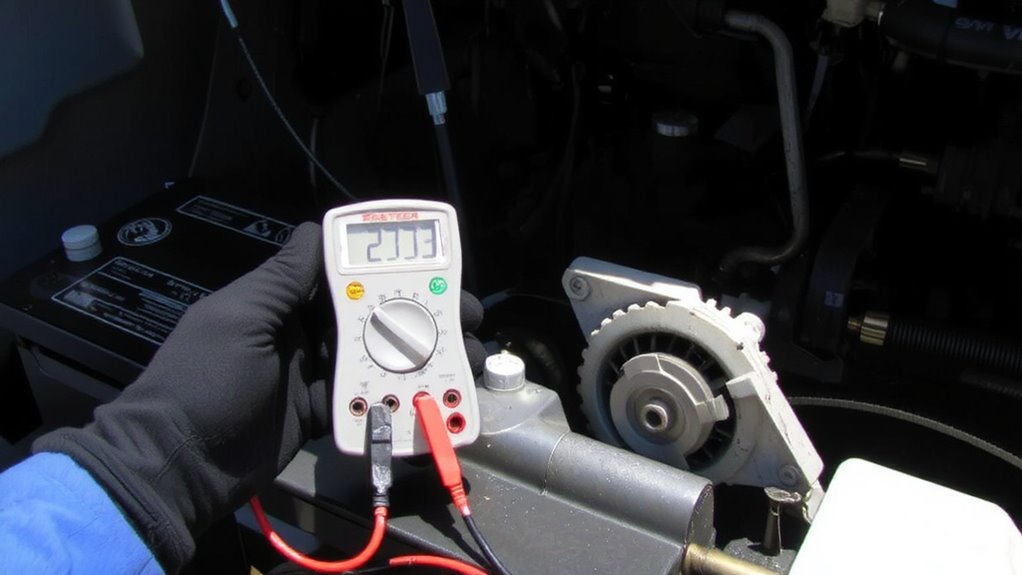
What happens when your battery shows a good charge but still dies overnight? The issue might not be the battery-it could be poor alternator output. To test alternator output voltage, start the engine and let it run at 2,000 RPM with electrical loads off. Use a digital multimeter to measure voltage at the alternator’s output terminal and ground. A healthy alternator should produce between 13.8 and 14.7 volts. This range guarantees proper voltage regulation and reflects solid alternator efficiency. If voltage stays below 13.5 volts, the alternator isn’t charging effectively. Readings above 15 volts suggest overcharging, which can damage the battery. Consistent output within spec means the alternator maintains stable voltage under varying loads. Always test at the source-voltage at the alternator should match battery readings closely, confirming minimal circuit loss. For accurate results, consider using a Fluke multimeter known for durability and precision in automotive diagnostics.
What Voltage Readings Reveal About Your System
Your alternator’s voltage output isn’t just a number-it’s a direct window into the health of your entire charging system. A steady reading between 13.8 and 14.4 volts at idle indicates proper operation. Voltage fluctuations outside this range suggest issues with voltage regulation or diode failure. With increased electrical load-like headlights, A/C, and heated windows-you should see the alternator respond by maintaining voltage within tolerance. If voltage drops below 13.5 volts under load, the alternator can’t keep up. If it climbs above 15 volts, the regulator may be overcharging. Consistent fluctuations point to a failing alternator or poor connections. These readings help pinpoint whether the system delivers stable power. You’re not just measuring volts-you’re evaluating real-time performance under demand.
When to Replace the Battery or Alternator
You’ve checked the voltage, and now it’s time to decide what’s failing-battery or alternator. If your battery is over five years old, battery age alone makes replacement likely, even with proper voltage. A fully charged battery should read 12.6 volts at rest; anything below 12.4 indicates reduced capacity. If the engine runs and voltage stays below 13.5 volts, the alternator isn’t charging properly. You may also hear alternator noise, like whining or grinding, signaling worn bearings or a failing rotor. This noise typically increases with engine speed. Alternators should output 13.8–14.4 volts under load. If voltage sags or spikes outside this range, the alternator is faulty. Test current draw: a healthy alternator supplies 10–50+ amps, depending on electrical load. When voltage regulation fails or alternator noise persists, replacement is necessary. Don’t wait-both components affect overall system reliability. For accurate diagnostics, using a reliable battery tester can help confirm charge levels and overall health.
On a final note
Your charging system should measure 12.6 volts at rest and 13.7 to 14.7 volts running. Check battery voltage with a multimeter on DC scale, leads on correct terminals. Test alternator output at its terminal under load. Low voltage suggests weak battery; over 15 volts indicates overcharging. Replace battery if below 12.4 volts; replace alternator if output exceeds 15 volts or drops under load. Always verify connections and belt tension first.