Anti-Corrosion Grease on Steering Components: NLGI No. 2 Guide
You need to grease your steering column’s splined shafts and pivot points with NLGI No. 2 lithium-based grease, rated for -40°F to 350°F. Use a high-pressure grease gun with a 90-degree coupler and 18-inch flexible hose to reach zerk fittings on tie rods and the steering rack. Clean fittings with isopropyl alcohol first-clogged zerks block lubrication. Pump slowly to deliver 0.125 cubic inches per stroke without exceeding 1,500 psi. Inspect for rust, especially on lower joints and steering gear. Apply rust inhibitor where needed. Proper greasing every 6,000 to 10,000 miles guarantees long-term protection-especially in salty or humid conditions. There’s more to mastering your steering system’s longevity.
Notable Insights
- Inspect and clean all zerk fittings, removing dirt and grime to ensure unobstructed grease flow.
- Use a high-pressure grease gun with a flexible hose to access hard-to-reach steering rack and tie rod zerks.
- Apply NLGI No. 2 lithium-based anti-corrosion grease in steady pump strokes, avoiding pressure above 1,500 psi.
- Seat the grease gun nozzle fully on each zerk to prevent leaks and ensure complete lubricant delivery.
- Recheck seals and boots after greasing, and clean excess grease to prevent debris accumulation.
What Steering Parts Need Anti-Corrosion Grease?
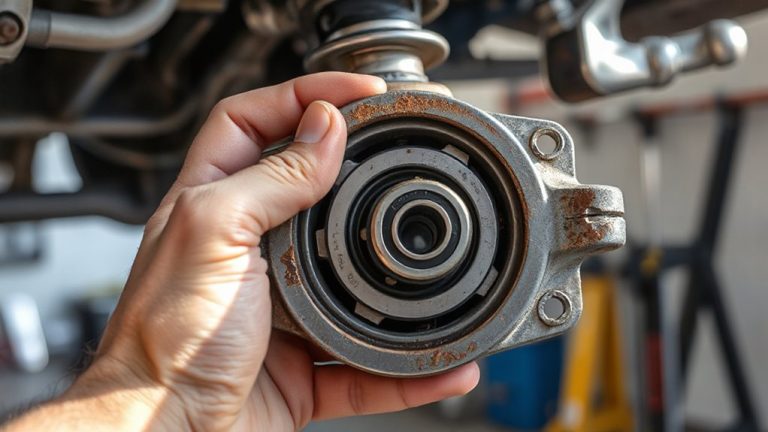
Corrosion is the silent killer of steering systems, creeping in where metal meets moisture and wreaking havoc over time. You must protect vulnerable components with anti-corrosion grease to maintain reliability and longevity. The steering column requires thorough lubrication to prevent binding and metal degradation, especially at pivot points and splined shafts. Use a lithium-based grease with a penetration grade of 265–295 (NLGI No. 2) for ideal performance. Ball joints demand consistent protection; apply a high-viscosity, water-resistant grease with rust inhibitors to seal out contaminants. These joints operate under high stress and cyclic motion, making proper ball joint protection essential to avoid premature wear. Zerk fittings should be used to inject grease under pressure, ensuring deep saturation. Seals must remain intact to retain lubricant and exclude debris. Regular reapplication extends service life and sustains steering precision under harsh conditions. A properly maintained suspension system can also benefit from the use of a leveling kit to ensure even weight distribution and optimal alignment.
Gather Your Greasing Tools and Supplies
A well-stocked grease kit is your first line of defense against steering system degradation. You’ll need a high-pressure grease gun with a 90-degree coupler for tight spaces and compatibility with NLGI #2 grease. Use a flexible hose at least 18 inches long to reach steering rack and tie rod fittings. Carry lithium-based anti-corrosion grease in temperature-resistant cartridges rated from -40°F to 350°F. Proper grease storage prevents contamination-keep tubes sealed and cool, away from moisture and UV exposure. Include lint-free rags, safety glasses, and nitrile gloves. Inspect your grease gun regularly for leaks or worn parts to guarantee consistent pressure delivery. Tool maintenance extends equipment life and guarantees precise application. A malfunctioning gun can under-grease, risking wear, or over-grease, damaging seals. Keep spare fittings and O-rings on hand. Organize all supplies in a portable, labeled case for efficiency and protection. For cleaning residual grease and contaminants before application, consider using a high-quality degreaser or solvent, and dispose of waste properly. Some advanced maintenance setups include integrating a best oil extractors system to recycle used lubricants and maintain a cleaner workspace.
Clean Fittings on Tie Rods and Steering Rack
Now that your tools and grease are prepped and within reach, it’s time to focus on the fittings you’ll be servicing. Start by inspecting each tie rod end and steering rack fitting for dirt, grime, or old grease buildup. Clean fittings guarantee effective grease application and prevent contaminant intrusion. Use a clean lint-free cloth and a mild solvent like isopropyl alcohol to wipe away debris. Avoid harsh chemicals that can damage rubber boots. Pay close attention to the grease zerks-these small fittings are critical for proper lubrication. Clogged or dirty zerks hinder fitting maintenance and reduce component lifespan. A clean zerk allows smooth, uninterrupted flow during the upcoming pumping phase. Take time to verify all fittings are intact and undamaged. Worn or cracked fittings compromise system integrity. Proper cleaning now directly supports long-term steering performance and corrosion resistance.
Pump Anti-Corrosion Grease With a Grease Gun
Grab the grease gun firmly in your hand-this is your primary tool for delivering anti-corrosion grease precisely where it’s needed. Apply steady grease gun pressure by squeezing the trigger smoothly to avoid bursts. Use a consistent pump technique: one full stroke delivers approximately 0.125 cubic inches of grease, enough for most steering fittings. Over-pressurizing can damage seals, so limit pressure to 1,500 psi max. Seat the nozzle firmly onto the zerk fitting to prevent leaks and guarantee full delivery. You’ll feel resistance when the cavity is full-stop pumping then. A pulsing motion improves flow in tight zones. Most greases operate effectively from -40°F to 350°F, maintaining viscosity under stress. Proper technique guarantees complete displacement of moisture, forming a protective barrier. Never mix grease types unless specified. This step seals out water and salts, reducing long-term corrosion risk in critical steering joints. For extended reach and reduced hand fatigue, consider using a cordless grease gun with adjustable pressure settings.
Inspect for Rust-Prone Steering Zones
You’ve applied the anti-corrosion grease using controlled pressure and proper zerk fitting engagement-this seals internal joints against moisture intrusion. Now, inspect for rust-prone steering zones. Focus on areas with prior moisture exposure, like lower tie rod ends and steering gear housing. Check metal surfaces for flaking, discoloration, or pitting-early signs of rust detection. Exposed joints and seals near the front wheels are vulnerable due to road spray and freeze-thaw cycles. Use a flashlight and mirror to examine tight spaces. If you spot rust, clean the area with a wire brush and apply a penetrating rust inhibitor before re-greasing. Stainless steel components resist corrosion but aren’t immune. Zinc-plated fittings offer mild protection but degrade over time. Address flaws immediately-rust spreads quickly in high-friction zones. Proper inspection prevents component failure and maintains steering responsiveness.
How Often to Grease for Longest Life
Regularly greasing your steering components extends their service life by maintaining a protective barrier against moisture and contaminants. For maximum performance, follow a consistent grease frequency-typically every 6,000 to 10,000 miles or during routine maintenance checks. High-quality anti-corrosion grease, such as lithium-based or marine-grade formulations, resists washout and maintains viscosity across extreme temperatures (-40°F to 350°F). Apply enough grease to see slight purging at seals, ensuring complete displacement of old material. Over-greasing can rupture seals; under-greasing leaves metal exposed. Use a precision grease gun with a foot-pound calibrated pump for accurate delivery. Longevity tips include inspecting zerk fittings before each service and cleaning grease nipples with a lint-free cloth. Environmental exposure-like salt, mud, or high humidity-may require doubling your grease frequency. Document each application to track maintenance intervals and enhance component reliability over time.
On a final note
You’ve protected critical steering components with anti-corrosion grease. Apply lithium-based or marine-grade grease (NLGI #2 consistency) every 12 months or 15,000 miles. Effective protection requires full seating of grease at zerk fittings-typically 3–5 pumps per joint. Inspect boot seals regularly; compromised rubber invites moisture and accelerates corrosion. Proper lubrication reduces friction in tie rod ends and rack interfaces by up to 70%, extending service life. Maintenance prevents rust, ensuring reliable steering response and safety.