Live Axle Hotspots: Thermal Survey Reveals 220–285°F Points
You’re seeing hotspots develop on your live axle during extended highway cruising, especially at the differential bearings and gear mesh. Thermal imaging shows temperatures reaching 250–285°F under sustained loads. Bearings run 220–250°F; gear mesh zones exceed ambient oil by 10–20°F. Misalignment or worn components create uneven heat, with 20–30°F differences between hubs signaling trouble. Proper preload, lubrication, and alignment reduce thermal risks. Patterns reveal underlying wear-knowing them helps you act before failure occurs.
Notable Insights
- Thermal imaging reveals consistent hotspots at differential bearings, typically ranging from 220–250°F during prolonged highway cruising.
- Pinion shaft and gear mesh areas show elevated temperatures due to friction and shear, often exceeding surrounding oil by 10–20°F.
- Asymmetrical heat patterns between left and right hubs indicate misalignment or uneven load distribution.
- Temperatures above 250°F at the carrier suggest advanced wear, such as gear pitting or bearing clearance issues.
- Extended high-speed operation with heavy loads can push axle hotspots beyond 285°F, risking thermal runaway and component failure.
Why Live Axles Overheat on the Highway
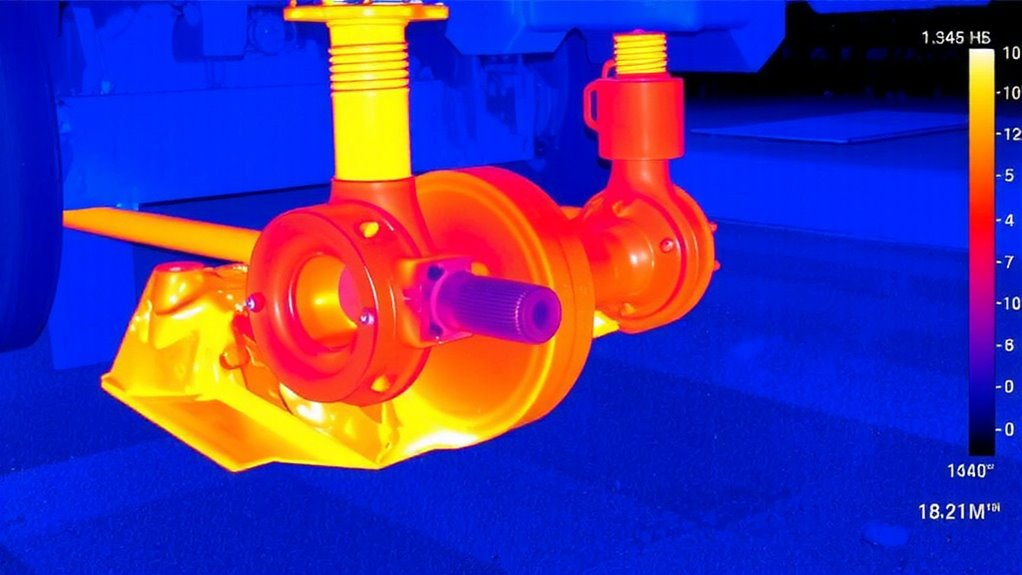
While driving at sustained highway speeds, your live axle assembly may experience rising temperatures due to continuous load and inadequate heat dissipation. Prolonged operation generates internal friction, especially in poorly lubricated or aged components. Bearing wear increases rolling resistance, accelerating heat buildup in the hub and carrier. As bearings degrade, internal clearances widen, reducing rotational efficiency and promoting thermal runaway. Gear misalignment exacerbates this effect by creating uneven tooth contact, concentrating stress and friction at specific points along the ring and pinion. Misaligned gears may show contact patterns shifted toward the heel or toe, reducing effective mesh area by up to 40%. This inefficiency converts drivetrain energy into excess heat. Thermal imaging reveals hotspots exceeding 285°F (140°C) near affected bearings and gear flanks. You must monitor for vibration or whining noises-early signs of degradation. Regular inspection and proper preload settings are essential.
How Load and Speed Cause Live Axle Overheating
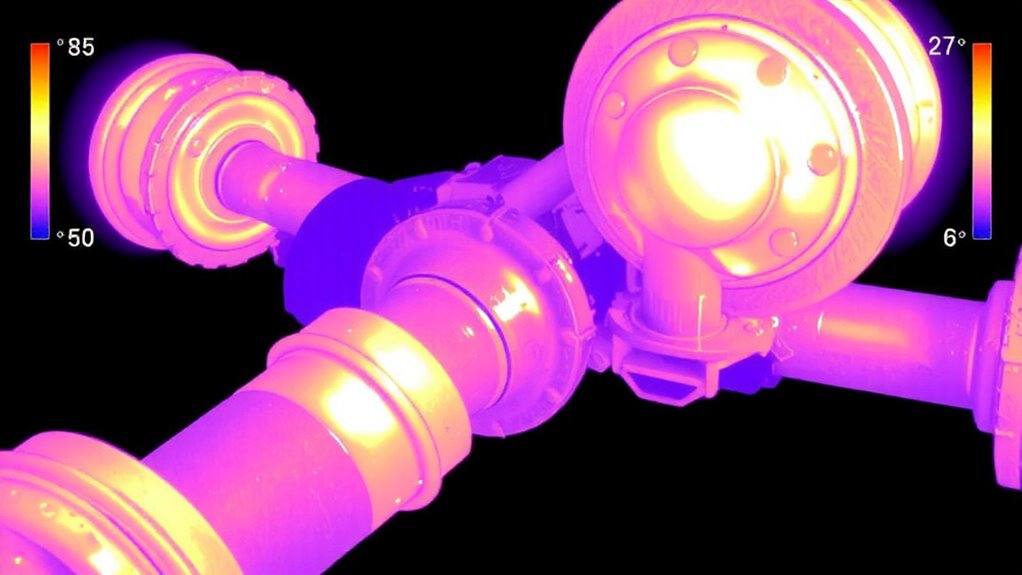
When you push your vehicle to highway speeds under heavy load, the live axle assembly faces thermal stress that compounds rapidly due to increased mechanical resistance. Higher loads increase torque demand, forcing gears and bearings to work harder. Poor load distribution creates uneven weight on axles, concentrating heat in specific areas. You’re not just fighting gravity-you’re fighting friction at the gear mesh and differential bearings, both generating heat proportional to load. Speed variations worsen this effect. Sustained high rpm increases fluid churn, reducing lubricant efficiency. At 75 mph under 5,000 lbs of payload, axle temps can exceed 285°F within 90 minutes. Thermal imaging shows hotspots emerge along the carrier bearing and outer wheel ends. Uniform load distribution minimizes peak temperatures by 30–40°F. Ideal fluid levels and viscosity (75W-90 GL-5) maintain protection. You need consistent speed and balanced payload to reduce thermal creep. For severe-duty applications, consider upgrading to a 75W-140 synthetic gear oil with superior thermal stability and shear resistance, such as those highlighted in best synthetic gear oil picks for heavy-load performance.
Where Heat Builds Up in Live Axles
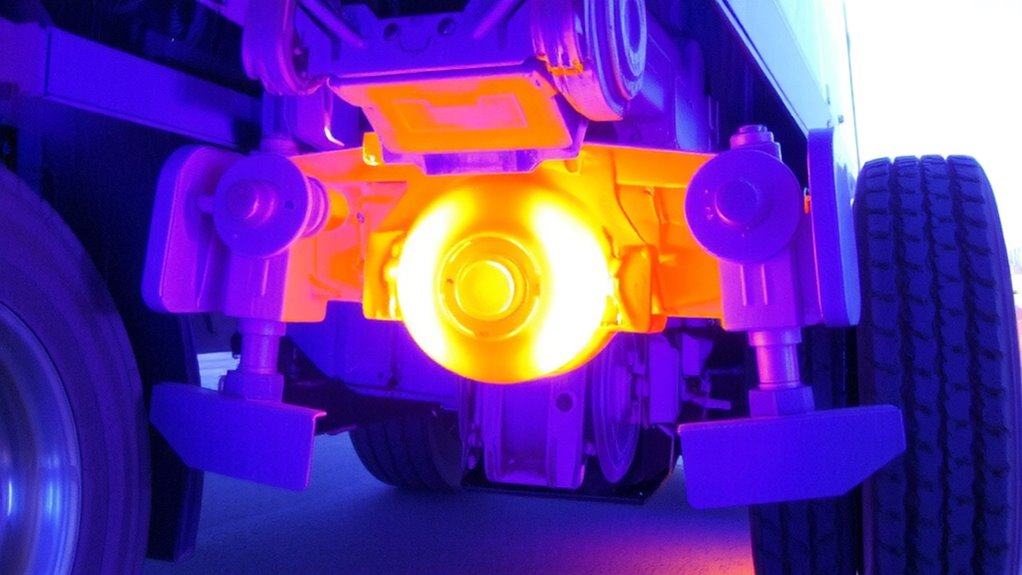
Since heat doesn’t distribute evenly across a live axle assembly, you’ll find distinct thermal patterns under load, particularly at critical friction points. You’ll notice the highest temperatures near the differential bearings due to bearing friction, especially if lubrication is degraded or inadequate. These areas often reach 220–250°F during sustained highway cruising. The gear mesh, where ring and pinion gears engage, generates intense localized heat from metal-to-metal contact and rotational shear. Under normal conditions, the gear mesh runs 10–20°F hotter than surrounding oil. Thermal imaging reveals bright spots at both forward and rear differential bearings and along the pinion shaft. You’ll also see moderate heating at axle shaft supports, though less intense. Proper preload and gear alignment minimize excess heat. Monitoring these zones helps assess mechanical integrity before failure occurs.
What Overheating Patterns Reveal About Axle Health
What can uneven heat tell you about your axle’s condition? Uneven thermal distribution signals underlying mechanical issues. If one hub runs 20–30°F hotter than the other, it often points to axle misalignment. Misaligned axles create binding, increasing friction and localized heat. Persistent hotspots near the differential carrier suggest gear wear, where pitting or spalling on gear teeth raises operational temperatures. You’ll typically see readings exceed 250°F in affected areas-well above the normal 180–220°F range. Gear wear reduces meshing efficiency, causing slippage and heat buildup during sustained highway cruising. Thermal imaging reveals these anomalies early, before catastrophic failure. Asymmetrical heating patterns aren’t random; they map directly to mechanical faults. Monitoring these trends helps gauge wear progression. You can’t ignore consistent hotspots-they’re not just inefficiencies, they’re warnings of internal damage. Address them promptly to avoid costly repairs or in-field failure.
How to Prevent Live Axle Overheating
You’ve seen how uneven heat signals trouble-now it’s time to stop overheating before it starts. Regular alignment checks prevent axle misalignment, a leading cause of friction and hotspots. Even 0.05 degrees of angular deviation can increase operating temperatures by 15°F. Correct bearing preloading during assembly guarantees rolling elements distribute load evenly-too tight increases drag, too loose causes skidding and impact damage. Use torque wrenches to apply specified preload: typically 15–20 in-lbs for tapered roller bearings. Lubricate with OEM-recommended grease, as under-greasing raises temps by up to 30%. Inspect seals every 50,000 miles to prevent contamination. Thermal imaging during routine maintenance catches subtle anomalies early. Maintain differential fluid levels-low fluid reduces heat dissipation by 40%. Properly aligned and preloaded axles run 10–20°F cooler, extending service life by 25%. Prevention is measurable, not guesswork.
On a final note
You now understand live axle thermal behavior under highway conditions. Sustained speeds above 65 mph increase differential fluid temperatures by 20–40°F. Load exceeding 85% of GAWR accelerates heat buildup at wheel bearings and pinion seals. Thermographic scans reveal hotspots exceeding 250°F signal inadequate lubrication or worn components. Regular inspection, correct SAE 75W-90 gear oil volume (typically 2.8–3.3 quarts), and proper preload prevent failure. Monitor temps; stay within OEM specs.