Using DryGas Additives to Combat Moisture Buildup in Stored Vehicle Fuel Systems
You should use isopropanol-based DryGas to prevent moisture damage in stored vehicle fuel systems. Just 0.5% water by volume can cause phase separation in E10 gasoline, reducing octane and corroding injectors. DryGas binds water with isopropyl alcohol, keeping it suspended in fuel so it burns safely. Add one ounce per five gallons at storage start-ideal for tanks full to minimize condensation. Over-treatment won’t help, but correct dosing protects for up to six months. Longer storage or high humidity may require a second dose. Choosing the right formula guarantees compatibility and effectiveness across different engines and fuels.
Notable Insights
- DryGas prevents moisture-related fuel damage by absorbing water through isopropyl alcohol, which binds water into the fuel stream.
- Add DryGas at the start of storage, especially for periods exceeding 90 days, to prevent phase separation in ethanol-blended fuels.
- Use one ounce of DryGas per five gallons of fuel, or a 12-ounce bottle for 20 gallons, for effective moisture control.
- Pour DryGas into the tank before refueling to ensure uniform mixing and run the engine for 5–10 minutes afterward.
- Store vehicles with a full tank to reduce condensation, and avoid over-treating, as reapplication beyond six months is rarely needed.
How Water Ruins Stored Engines (And How DryGas Helps)
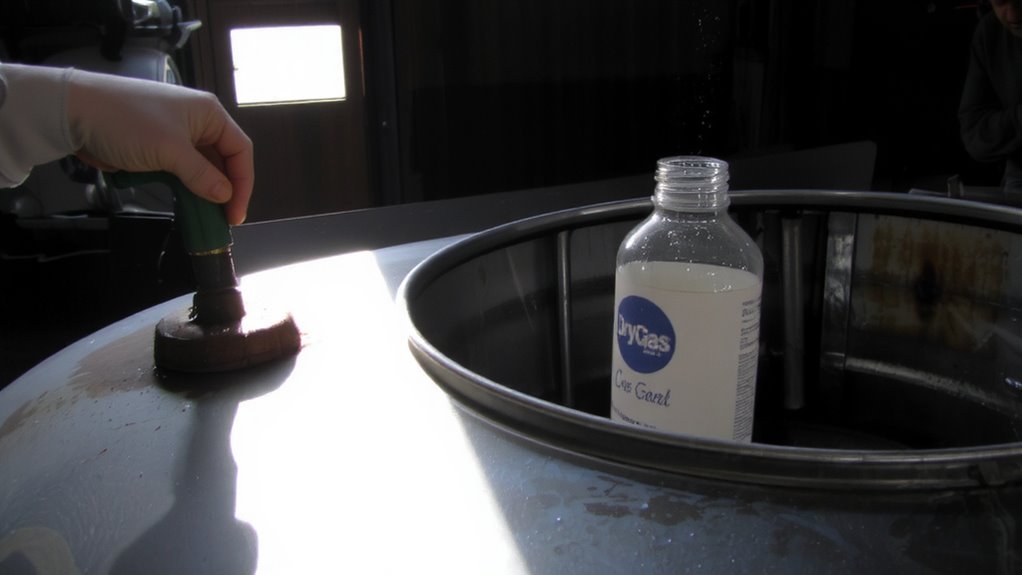
While moisture might seem harmless at first, it’s one of the biggest threats to engines in long-term storage. Water accumulates in fuel tanks through condensation, especially in unused vehicles. When mixed with ethanol-blended gasoline, it separates the ethanol, lowering the fuel’s octane rating and promoting fuel corrosion. Corrosion damages metal components like fuel lines, pumps, and injectors, leading to costly repairs. Microbial growth in water-contaminated fuel also clogs filters and degrades fuel quality. Over time, this contamination causes incomplete combustion, resulting in rough idling or engine stalling upon startup. Even small amounts-just 0.5% water by volume-can trigger phase separation in E10 fuel. You’ll face poor drivability and potential startup failure after only a few months of storage. Preventing moisture-related damage early guarantees reliable engine performance and extends component life without unexpected breakdowns. DryGas addresses these issues directly.
How DryGas Absorbs Moisture in Fuel Tanks
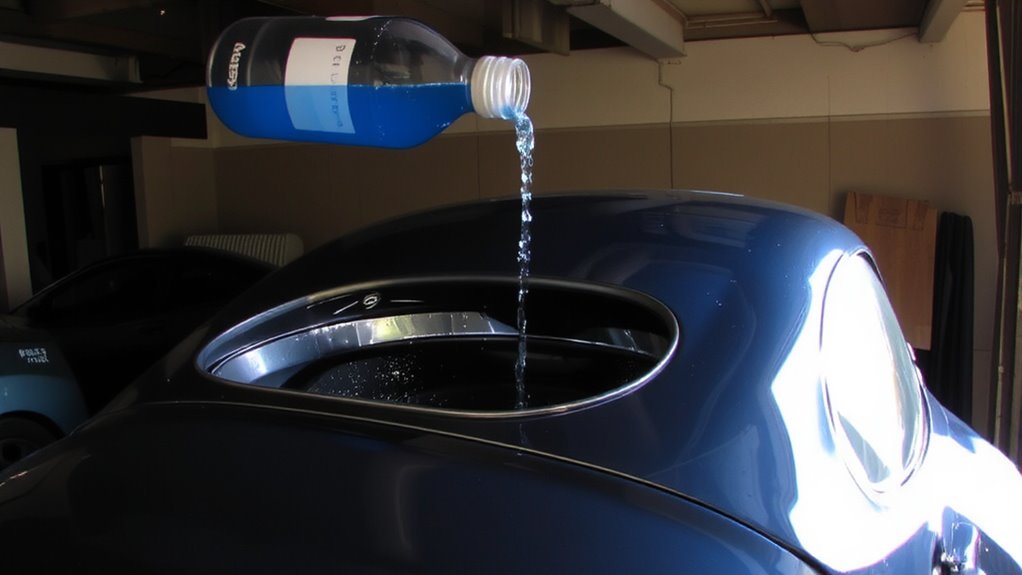
When moisture sneaks into your fuel tank during storage, DryGas goes to work immediately by dissolving water into the fuel stream through chemical absorption. The active ingredient, typically isopropyl alcohol, bonds with water molecules, allowing them to mix uniformly within the gasoline. This process prevents phase separation, where water settles at the tank bottom and causes corrosion. Chemical absorption guarantees water is carried through the system and safely burned during combustion. One ounce of DryGas treats up to 20 gallons of fuel, maintaining a 0.5% alcohol concentration-optimal for moisture control. Unlike simple water filters, DryGas alters water’s physical state. It doesn’t remove water mechanically but integrates it into the fuel. This method is especially effective in ethanol-blended fuels, which are more prone to phase separation. DryGas keeps your fuel homogenous and your engine protected.
DryGas Frequency: When to Use It for Storage
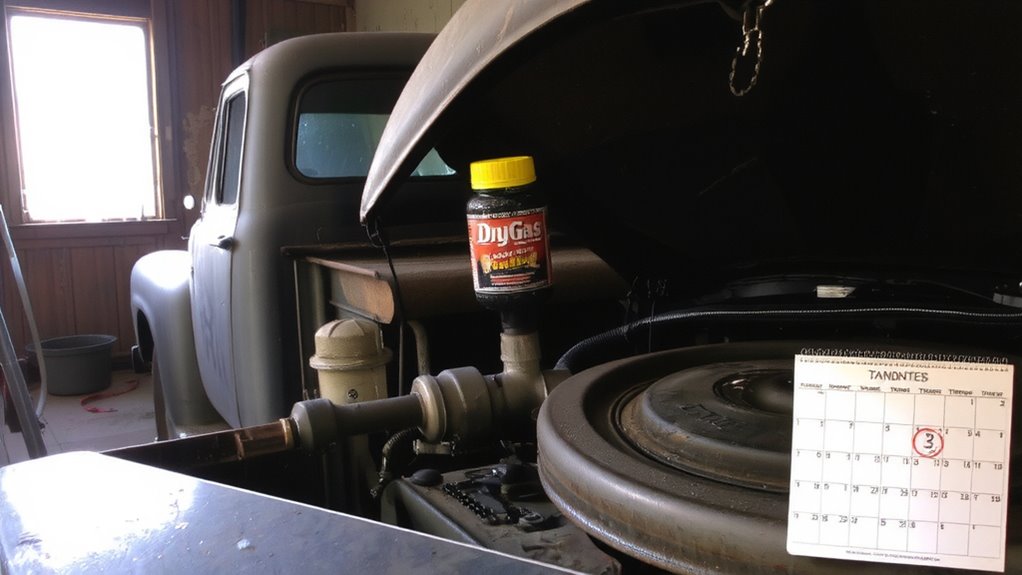
You already know DryGas keeps water out of phase separation by mixing it into the fuel, but how often should you use it during storage? For short-term storage-up to 3 months-tight fuel caps and a full tank often suffice. For longer storage duration, especially beyond 90 days, moisture intrusion rises markedly. Use DryGas at the start of storage to guarantee water remains emulsified. Add it at the manufacturer’s recommended additive concentration, typically one ounce per five gallons of fuel. This ratio maintains effective ethanol co-solvency and prevents phase separation. If you’re storing fuel for more than six months, consider a second treatment only if the fuel is exposed to high humidity or temperature swings. Reapplication isn’t routine-it depends on environmental exposure. Always follow label instructions to avoid over-treatment, which provides no added benefit. Proper use guarantees your fuel remains stable and combustion-ready.
Choose the Right DryGas for Cars, Boats, or Equipment
Since different engines face unique fuel challenges, picking the right DryGas formula matters for long-term storage. Always check fuel compatibility-ethanol-blended fuels in cars require a DryGas with isopropanol to resist moisture absorption. Marine engines in boats use different fuel systems and often sit in humid conditions; choose a marine-grade DryGas designed for ethanol fuels and extended storage duration. Small equipment like lawnmowers or generators usually run on non-ethanol gasoline, so use a methanol-based additive to prevent phase separation. Standard automotive DryGas typically treats up to 20 gallons and lasts three to six months. For storage durations beyond six months, use double the recommended dose to maintain fuel integrity. Always verify label specs-using the wrong formula risks poor combustion or tank corrosion. Matching your DryGas to your engine type guarantees moisture stays out and startup remains reliable.
How to Add DryGas Before Storing Your Vehicle
Selecting the correct DryGas formula sets the foundation for effective fuel stabilization, but proper application guarantees full protection during storage. For best fuel preparation, add DryGas before filling the tank. Use one 12-ounce bottle per 20 gallons of gasoline to guarantee complete moisture dispersion. Pour the additive directly into the fuel tank during refueling to promote thorough mixing. This step is critical for storage maintenance, especially for ethanol-blended fuels that attract water vapor over time. Run the engine for 5 to 10 minutes after refueling to circulate the treated fuel through the entire system. Doing so prevents phase separation and protects sensitive components like fuel injectors and pumps. Always store your vehicle with a full tank to minimize air space and reduce condensation. Properly applied, DryGas maintains fuel integrity for up to 12 months.
Signs Your Fuel Has Water: and How DryGas Fixes It
What happens when water sneaks into your fuel system? You’re likely facing fuel contamination, which can trigger engine corrosion over time. Water in gasoline disrupts combustion, leading to rough idling, stalling, or failure to start. Since water doesn’t combust, it dilutes fuel efficiency and harms injector performance. More critically, moisture promotes rust in metal fuel tanks and lines-especially during vehicle storage. That’s where DryGas comes in. Each ounce treats up to 20 gallons, using isopropyl alcohol to absorb water and safely burn it in the combustion chamber. DryGas prevents phase separation in ethanol-blended fuels, maintaining fuel integrity. Regular use reduces corrosion risk by eliminating free water. It’s a proven, EPA-compliant solution for stored vehicles. Applying DryGas before storage prevents long-term damage, ensuring your fuel stays clean and your engine protected from moisture-related failure.
On a final note
You protect stored fuel systems by using DryGas with isopropanol, which binds to water and prevents phase separation. A single 12-ounce bottle treats up to 20 gallons of gasoline. It lowers water concentration to less than 0.02% by volume, reducing corrosion risk. Apply DryGas before storage and in damp conditions. It maintains fuel stability for up to 12 months. Use ethanol-compatible formulas for E10 fuels.