Why Vinyl Car Covers Trap More Moisture Than Breathable Cotton Alternatives
Your vinyl car cover traps moisture because it’s non-porous, allowing less than 0.1 g/m²/day of vapor transmission. This seals in humidity, especially during temperature swings. Condensation builds up with no escape, creating a damp environment. Cotton breathes at 10–15 CFM, letting moisture escape through its open weave. Its hygroscopic fibers absorb and release humidity naturally. This airflow prevents pooling and reduces mold risk. You’ll see why material choice matters for long-term protection.
Notable Insights
- Vinyl car covers lack breathability due to their non-porous structure, trapping moisture inside.
- Cotton covers allow vapor escape through natural fiber permeability and open weave design.
- Trapped humidity under vinyl promotes condensation during temperature fluctuations.
- Cotton absorbs slight moisture and releases it, preventing dampness buildup.
- Vinyl’s low vapor transmission (<0.1 g/m²/day) vs. cotton’s higher air flow (10–15 CFM) increases moisture retention.
Why Vinyl Car Covers Trap Moisture
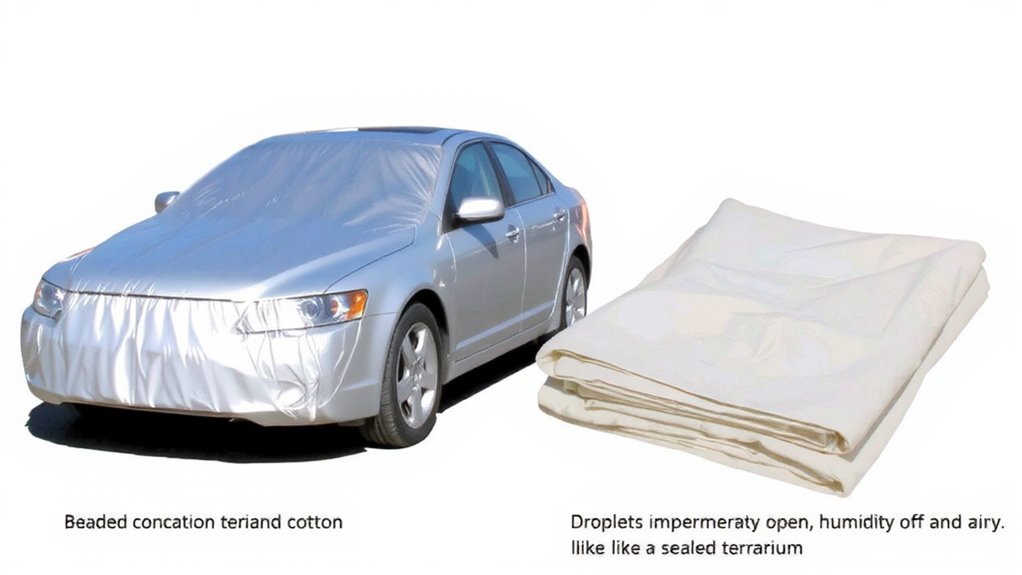
While vinyl car covers may seem like a durable and weather-resistant choice, they often trap moisture due to their non-porous nature. This lack of breathability prevents internal humidity from escaping, creating a microenvironment where condensation accumulates. Trapped moisture fosters mold growth and accelerates vinyl degradation, especially under UV exposure. Over time, plasticizers leaching from the material weaken the cover’s structural integrity, reducing elasticity and increasing brittleness. These chemical compounds migrate to the surface, leaving residue on paint. A typical vinyl cover measures 0.5 to 0.7 mm thick, offering impact resistance but minimal vapor transmission-usually less than 0.1 g/m²/day. In contrast, non-breathable barriers like vinyl act like plastic wrap, sealing in dampness. This sustained exposure promotes corrosion on metal surfaces and deteriorates paint finishes. You should consider these long-term risks when selecting a cover. Effective moisture management is crucial, and materials like best oil absorbents can help mitigate trapped humidity in enclosed spaces.
How Cotton Prevents Condensation Under Car Covers
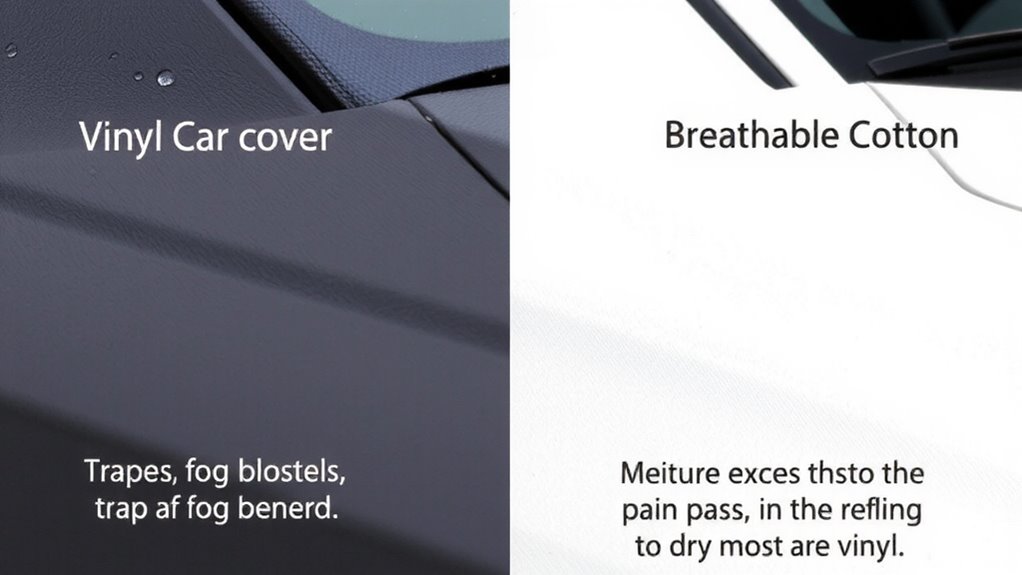
A cotton car cover helps prevent condensation by allowing moisture vapor to escape, thanks to its naturally breathable fabric structure. This breathability supports consistent air circulation, reducing the likelihood of trapped humidity. Unlike vinyl, cotton offers high fabric permeability, letting water vapor pass through instead of condensing underneath. Your car stays drier because temperature shifts don’t cause moisture buildup.
| Feature | Cotton Cover |
|---|---|
| Breathability | High |
| Air Circulation | Continuous |
| Fabric Permeability | 4.2 g/m²/h (standard test) |
| Condensation Risk | Low |
| Material Type | Natural fiber |
Engineered for climate responsiveness, cotton reacts to ambient changes without sealing in dampness. You get reliable protection without suffocating your vehicle’s surface. The fabric’s open weave enables passive ventilation, critical for long-term outdoor storage. Cotton’s hygroscopic nature also absorbs minor surface moisture, releasing it gradually.
How Breathable Fabrics Stop Moisture Buildup
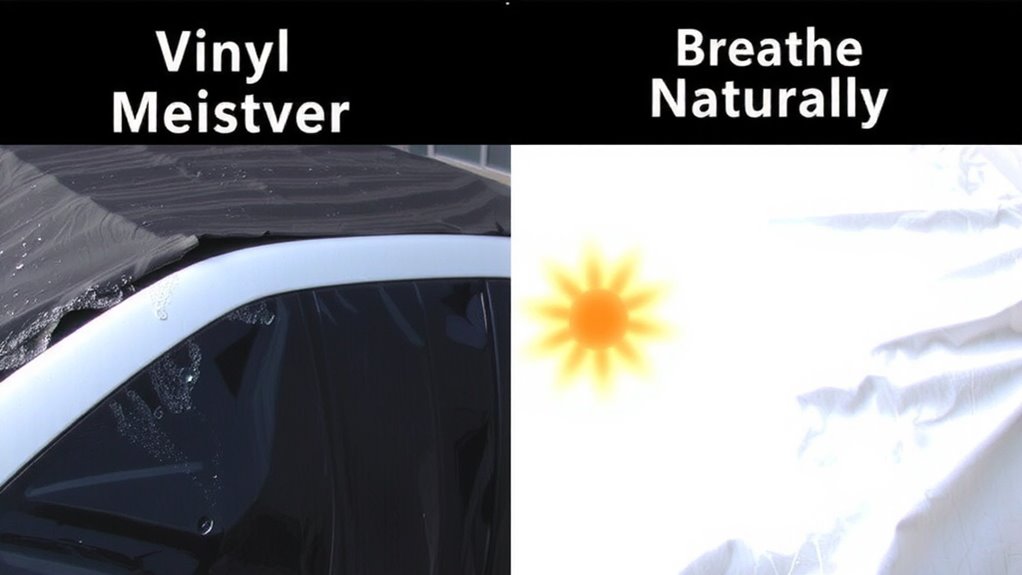
Breathable fabrics prevent moisture buildup by enabling continuous vapor transfer through the material. Your car’s surface emits heat and humidity, especially after driving. Cotton covers allow this vapor to escape due to their low fiber density and open weave structure. The weave structure creates microscopic channels that move moisture outward via passive diffusion. Unlike vinyl, which has a solid, non-porous surface, breathable textiles maintain equilibrium between inside and outside humidity. Fiber density in cotton is typically 1.3–1.5 g/cm³, light enough to permit airflow but sufficient to block debris. Air permeability rates for cotton covers range from 15 to 25 CFM (cubic feet per minute), far exceeding vinyl’s near-zero rating. This controlled exchange stops dampness from pooling. You stay protected from trapped moisture without sacrificing ventilation. Engineering the fabric this way guarantees consistent performance in fluctuating temperatures. It’s physics-friendly protection your car actually needs. Some of the best snow car covers utilize breathable cotton materials to combine moisture management with winter protection.
Mold, Mildew, and Rust: Risks of Trapped Moisture
Trapped moisture creates the perfect environment for mold, mildew, and rust-three threats that compromise both your car’s appearance and structural integrity. Vinyl covers don’t breathe, so condensation accumulates against the paint and seams. This sustained exposure leads to water damage, especially around wheel wells and door seals where moisture pools. Mold and mildew spores thrive at relative humidity above 60%, a threshold easily exceeded under non-breathable covers. Rust initiates when metal surfaces remain damp for over 48 hours, accelerating in salt-heavy regions. You also risk fabric degradation; trapped moisture weakens adhesives and stitching, reducing cover lifespan. Cotton-based alternatives, with permeability rates of 10–15 CFM (cubic feet per minute), allow vapor transmission, minimizing surface dampness. These natural fibers resist microbial growth better than synthetic laminates. Proper moisture management prevents long-term water damage and preserves both cover and vehicle.
When Vinyl Works: Short-Term or Rainy Conditions
While vinyl covers aren’t ideal for long-term use, they excel in short-term protection or heavy rain. Their waterproof advantage makes them reliable when quick coverage is needed. You get dependable temporary protection during storms or sudden downpours. Vinyl’s non-porous surface blocks 100% of rainfall, unlike fabric alternatives that absorb moisture under saturation. This impermeability limits airflow, increasing condensation risk over time. Yet for temporary protection-under 48 hours-vinyl prevents water intrusion effectively. Use it when rain is forecast, but switch to breathable materials afterward. The waterproof advantage matters most in acute exposure, not storage. Prioritize function: vinyl shields fast, but breathability sustains safety. Upgrading your vehicle’s interior protection can complement high-quality audio upgrades like a double DIN head unit, ensuring both comfort and functionality during short-term weather events.
Best Car Covers for Climate and Storage Type
If you’re storing your car long-term or facing extreme weather, matching the cover to your climate and storage environment is critical. For hot, sunny climates, choose a cover with maximum UV protection to prevent paint fading and material degradation. Multi-layer polypropylene or breathable polyester blends reflect solar radiation and resist thermal expansion. In humid or coastal areas, breathable cotton or non-woven fabric offers moisture escape, reducing mold risk. Indoor storage demands lightweight material with high dust resistance to guard against particulates without scratching paint. For outdoor use, opt for elasticized, full-coverage designs with padded inner linings and wind-resistant hems-these maintain seal integrity at wind speeds up to 55 mph. Look for 360-degree elasticity and mirror-pocketing for precise fitment. Covers with six layers and hydrophobic coatings offer balanced UV protection and water resistance without trapping condensation. Select based on environment, not price.
On a final note
You should choose breathable covers for long-term protection. Vinyl traps moisture because it lacks permeability, creating a sealed environment where condensation accumulates. Cotton and polyester blends allow vapor transmission, reducing humidity buildup underneath. Look for materials with a breathability rating above 0.5 cubic feet per minute (cfm). These prevent mold, mildew, and corrosion. Vinyl works short-term when waterproofing is essential. Always match cover choice to climate and storage conditions for best results.