The Correct Way to Wash a Car With Recently Applied PPF Edges
Wait 48 hours after PPF installation before washing-this guarantees full adhesive curing, critical for edge retention. Use only pH-neutral soap (6.5–7.5) to prevent chemical degradation. Avoid brushes; use a clean microfiber mitt with 0.3 denier fibers to prevent scratching. Keep pressure washers at least 12 inches away and below 1,200 psi. Rinse at wide angles to protect high-stress edges. Dry with a 70/30 microfiber blend towel (≥300 g/m²). A proper wash preserves self-healing performance and long-term adhesion. Details follow.
Notable Insights
- Wait at least 48 hours before washing to ensure proper adhesive curing and prevent edge lifting.
- Inspect edges, seams, and contours after curing for bubbles, lifting, or trapped moisture.
- Use only pH-neutral soap (6.5–7.5) to avoid film degradation and maintain self-healing properties.
- Wash with a clean microfiber mitt (≤0.3 denier) using light pressure to prevent scratches.
- Dry with a clean microfiber towel; keep pressure washer nozzle ≥12 inches away from edges.
Wait 48 Hours After PPF Installation
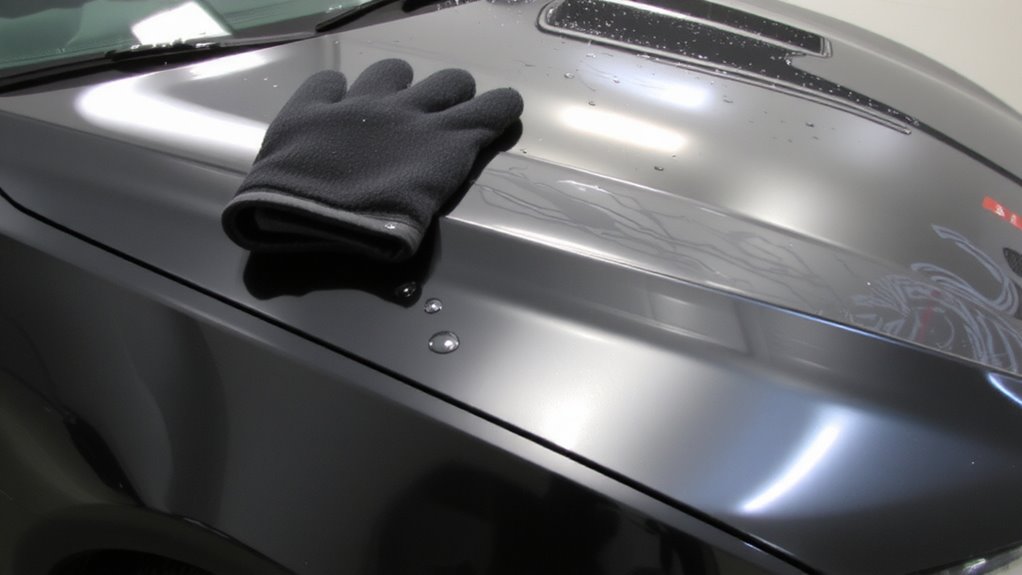
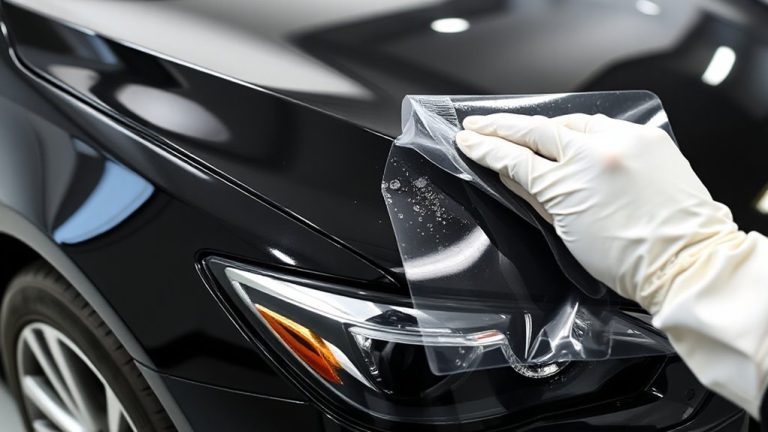
Wait at least 48 hours before washing your car after PPF installation-this curing window is critical. It allows sufficient time for adhesive curing, the chemical process where the film’s bonding layer securely adheres to the paint. Without this, premature washing risks lifting edges or creating gaps. During this period, avoid moisture, pressure, or debris contact. After 48 hours, perform an installation inspection: examine edges, seams, and high-contour areas like headlights or mirrors. Look for lifting, bubbling, or trapped moisture-signs of improper adhesion. Proper adhesive curing guarantees long-term durability, resisting impacts up to 30 mils and maintaining optical clarity. The inspection confirms full surface contact, essential for defending against rock chips and UV degradation. Skipping either step compromises protection. Temperature impacts curing; ideal conditions range from 60°F to 80°F. Humidity below 60% accelerates bond strength. Follow this protocol to maximize film performance and warranty compliance.
Wash With pH-Neutral Soap for PPF Safety
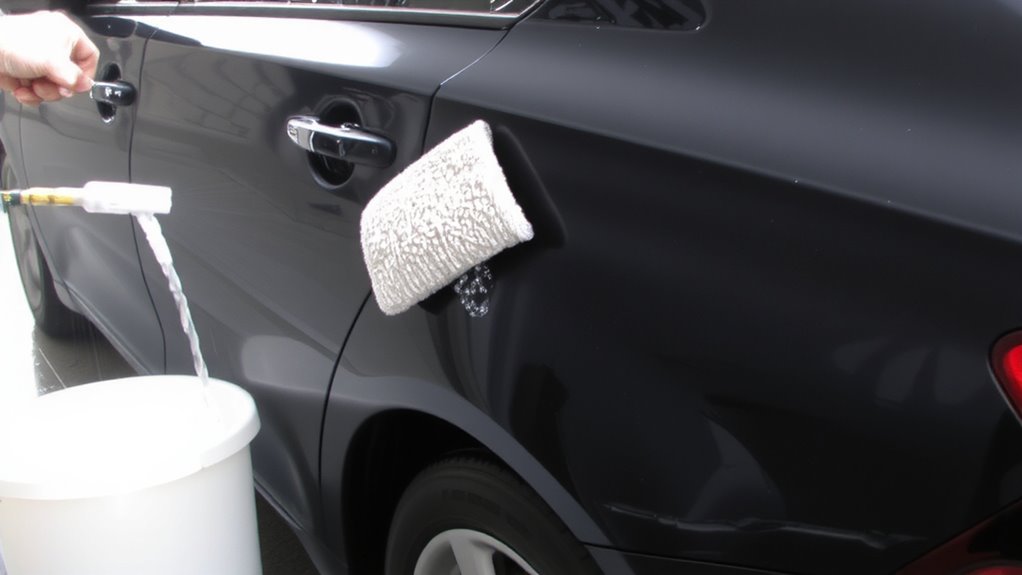
Always use a pH-neutral soap when washing your car’s PPF-this simple step prevents film degradation and preserves its protective qualities. pH-neutral soaps maintain chemical compatibility with thermoplastic urethane films, avoiding hydrolysis and delamination. Most PPFs perform ideally within a pH range of 6.5 to 7.5; anything outside risks breaking down polymer chains. Using non-neutral cleaners can compromise surface integrity, leading to hazing, cracking, or adhesive failure. These changes reduce impact resistance and self-healing functionality. Opt for soaps labeled “PPF-safe” or “paint protection film compatible,” with no sulfates, solvents, or waxes. They’re engineered for chemical compatibility, ensuring the film’s surface remains stable. Harsh detergents strip protective coatings and erode the topcoat layer. This weakens the film’s ability to resist abrasion and UV damage. Preserving surface integrity means long-term clarity and performance. Choose wisely-your PPF’s lifespan depends on it. For optimal results, consider using one of the best car wash soaps recommended for use on sensitive automotive films.
Skip Brushes: Use a Microfiber Mitt
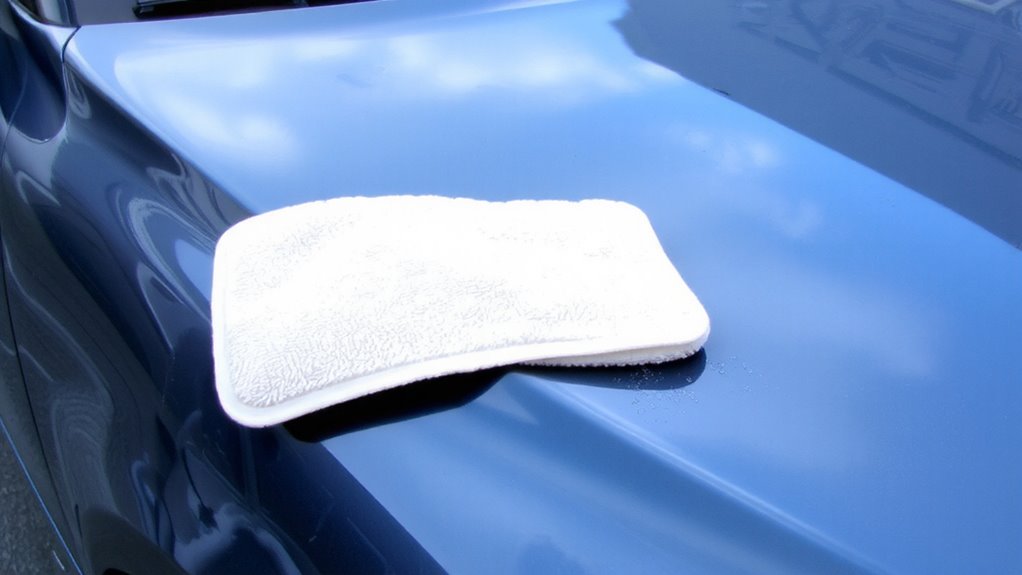
You’ll get better results-and avoid damaging your PPF-by skipping traditional brushes and using a clean microfiber mitt instead. Traditional brushes harbor grit and use stiff bristles that can scratch the PPF’s surface, compromising its clarity and integrity. A microfiber mitt, with fibers measuring 0.3 denier or less, lifts dirt gently without marring the film. High-quality mitts have a plush, dual-loop weave that traps contaminants, reducing swirl marks. For superior car care, rinse the mitt frequently in a separate bucket using the two-bucket method with grit guards. This minimizes abrasive particles contacting the surface. Microfiber is non-abrasive and specifically engineered for sensitive surface protection like PPF. Use light pressure-let the mitt’s fibers do the work. After washing, inspect the mitt for debris and wash it after every use. Proper maintenance guarantees peak performance. For the best results, consider using one of the best car wash mitts recommended for achieving a flawless shine without risking damage to protective films.
Avoid High-Pressure Water at Edges
While effective for general vehicle cleaning, high-pressure water can compromise the integrity of PPF edges if applied too closely or at acute angles. You should keep the nozzle at least 12 inches away and use a low-pressure setting below 1,200 psi. High-pressure streams near the film’s perimeter increase the risk of edge lifting, where the PPF detaches from the painted surface. Once lifting occurs, moisture seeps beneath the evolve, leading to water damage, bubbling, or delamination. Think of it like probing a sticker’s edge with a jet of water-it’ll peel fast. Factory-taped edges are especially vulnerable during the first 72 hours post-installation. Always rinse at a wide angle-never direct the stream parallel to the edge. Use gentle, flowing water to remove suds without stressing the bond. Preventing edge lifting safeguards long-term protection and preserves the film’s optical clarity and adhesion strength. For safer cleaning, consider using a car pressure washer kit designed with adjustable nozzles and pressure controls to maintain safe operating levels.
Dry With a Clean Microfiber Towel
After rinsing away soap residue with low-pressure water, the next step is drying the surface properly to maintain the integrity of the PPF edges. Use a clean, plush microfiber towel with a minimum pile height of 300 g/m² to avoid trapping contaminants. Your drying technique should involve light, overlapping passes-never rubbing-to prevent friction damage to lifting film edges. Poor towel quality introduces grit, risking micro-scratches and adhesive compromise. Fold the towel frequently to expose dry sections, improving absorbency and reducing particle transfer. A 70/30 polyester-polyamide blend offers ideal moisture wicking and lint-free performance. Apply minimal pressure; let the towel’s capillary action draw water away. Never let the vehicle air-dry-this promotes water spotting and mineral deposits near seams. Proper technique guarantees the PPF maintains adhesion and optical clarity during the critical post-installation phase.
On a final note
Wait 48 hours before washing to let the adhesive fully cure. Use only pH-neutral soap-never alkaline or acidic cleaners-to protect the polyurethane film. Wash with a microfiber mitt, not brushes, to avoid swirls. Avoid high-pressure nozzles within 2 inches of edges to prevent lifting. Dry with a clean, plush microfiber towel using light pressure. This prevents water spots and guarantees edge adhesion.