Using Electric Bypass Valves to Maintain Idle Stability in Blown Street Cars
You keep your supercharged street car’s idle stable by installing an electric bypass valve that actively manages intake pressure. The blower creates vacuum imbalance and boost creep at idle, disrupting air-fuel ratios. The valve opens in under 50 milliseconds when vacuum drops to 1–2 psi, recirculating air from the compressor outlet back to the inlet. It connects to your ECU via a stepper motor for precise control. Proper plumbing and tuning guarantee smooth 780–820 RPM operation. Results improve driveability and protect vacuum-sensitive components. Further optimization depends on correct setup and sensor feedback.
Notable Insights
- Superchargers disrupt idle vacuum, causing unstable RPM and air-fuel imbalances.
- Electric bypass valves relieve excess intake pressure by redirecting air from the compressor outlet to the inlet.
- They activate within 50ms at low vacuum levels, maintaining stable idle conditions.
- Recirculating bypass designs prevent compressor surge and avoid inaccurate MAF readings.
- Proper ECU tuning after installation ensures optimal idle RPM and fuel delivery.
Why Blown Street Cars Struggle With Idle
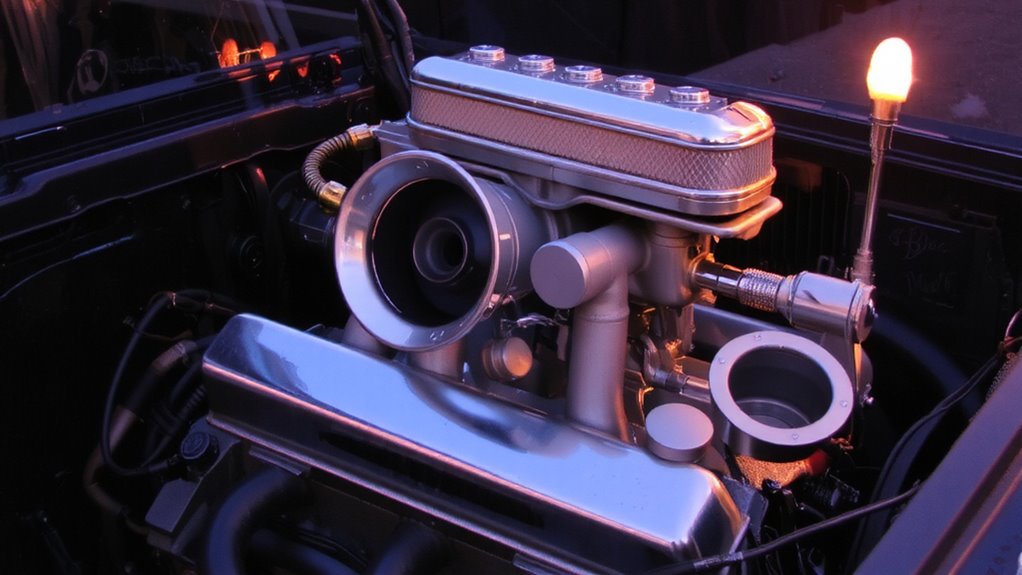
Why does your blown street car sputter and surge at idle?
Your supercharged engine struggles at idle due to a vacuum imbalance caused by the belt-driven blower constantly drawing air. Even at idle, the blower generates some pressure, disrupting the engine’s ability to maintain a stable vacuum signal. This leads to irregular air-fuel ratios and unstable combustion. Boost creep often occurs when excess pressure builds in the intake tract, even without throttle input. Without proper bypass management, this pressure has nowhere to go, forcing the engine to work harder and creating erratic idle behavior. The crankcase and intake system rely on consistent pressure differentials, and when boost creeps into the system uninvited, vacuum-operated components fail to function correctly. You end up with surging RPMs and poor drivability. Traditional bypass valves can’t precisely regulate pressure, worsening the vacuum imbalance. That instability undermines fuel metering and ignition timing, critical for smooth idle.
How Electric Bypass Valves Fix Rough Idle
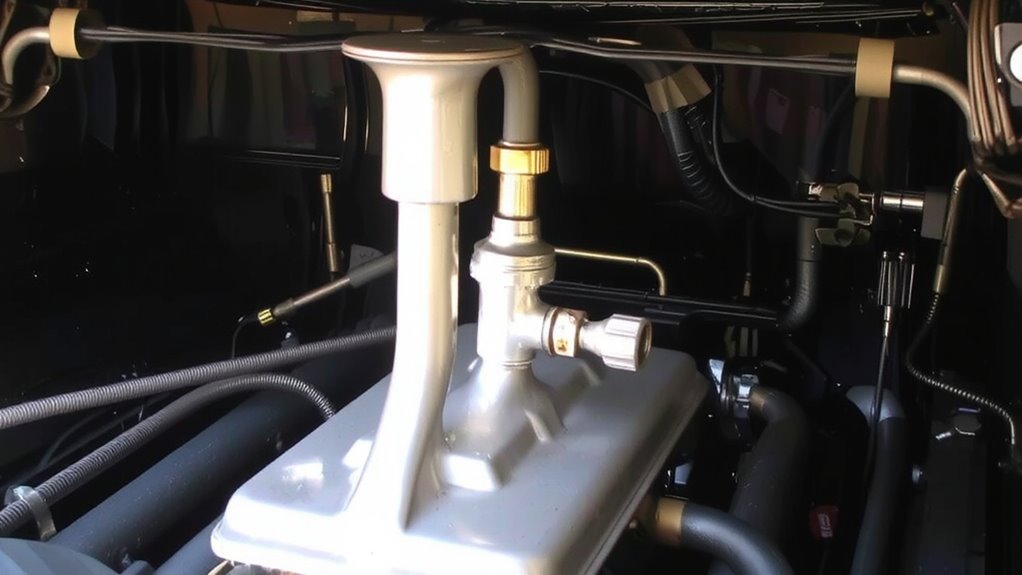
Electric bypass valves restore stable idle by actively managing intake pressure in supercharged street engines. You experience smoother idle quality because these valves instantly redirect excess boost from the compressor outlet back to the inlet. When the throttle closes, vacuum fluctuations spike, disrupting air-fuel balance and destabilizing combustion. The electric bypass valve detects pressure changes via an integrated sensor, typically activating at 1–2 psi vacuum. It responds in under 50 milliseconds, maintaining consistent airflow. Unlike mechanical valves, electric units use stepper motors or solenoids for precise control. They integrate with your ECU, allowing custom tuning for different operating conditions. This prevents pressure spikes and stalls, especially at warm restarts or deceleration. By stabilizing pressure, the engine avoids surging and hesitation. The result? A factory-like idle quality even with a large supercharger online. You get reliable, predictable performance without drivability compromises.
Recirculate or Vent? Best Setup for Street Cars With a Bypass Valve
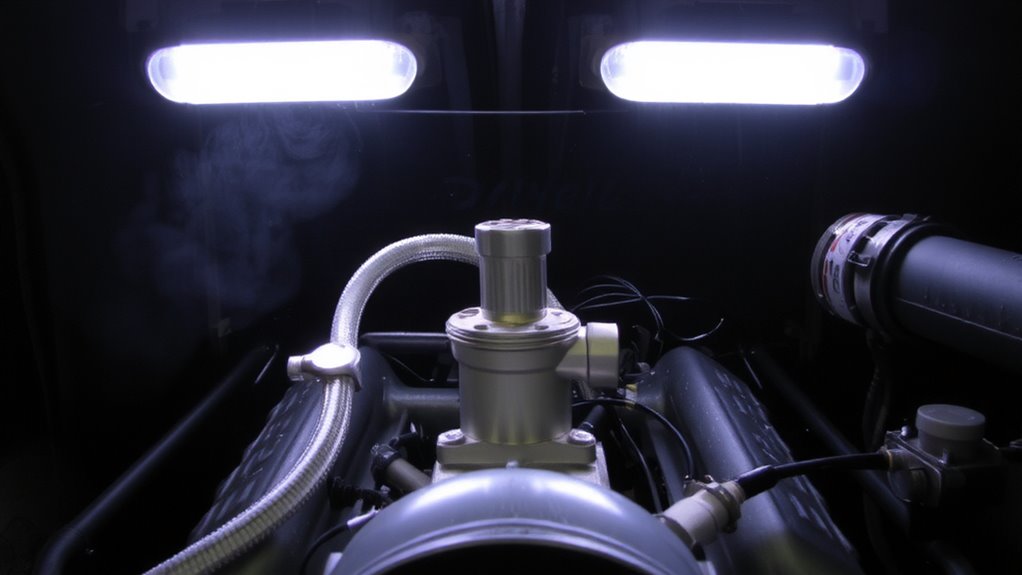
Where should the bypassed grinding air go-back into the intake or out into the atmosphere? For street cars, recirculating the air back into the intake stream is the better blow off technique. Venting to atmosphere creates noise but can trigger compressor surge when the turbo re-engages, disrupting airflow and stressing the compressor wheel. Recirculation prevents this by maintaining pressure stability across the throttle body. Most factory turbo systems use recirculation for this reason. A properly plumbed recirculation setup routes bypassed air upstream of the mass airflow sensor, preventing false metering. This minimizes surge risk and guarantees smoother shifts during gear changes. While atmospheric venting sounds aggressive, it offers no performance benefit on the street and may violate noise ordinances. Recirculation is quieter, cleaner, and keeps your system operating within safe parameters. Choose recirculation for reliable, daily-driven performance.
Wiring and Plumbing Your Bypass Valve
Now that you’ve chosen recirculation for smoother, street-friendly operation, it’s time to install the bypass valve correctly. Mount the valve in the intake tract between the turbo compressor and throttle body, ensuring proper valve alignment with the flow direction arrow pointing toward the engine. Misalignment causes turbulence and restricts airflow, reducing efficiency. Use 1/8-inch NPT tap ports for sensor connections if monitoring boost differential. Secure all clamps to OEM torque specs-typically 5–7 ft-lbs-to prevent leaks. For wiring, connect the valve’s power supply to a switched 12V source capable of 3–5 amps peak draw. Use #16 gauge wire and fuse within 12 inches of the battery. Ground the control module to bare metal on the chassis to avoid signal noise. The ECU triggers the valve via PWM signal; verify wiring integrity with a multimeter before startup.
How to Tune Your ECU After Installation
Why do some street builds run rough after adding a bypass valve? Because the ECU doesn’t automatically adjust for the new airflow dynamics. You’ll need to perform idle tuning and update your fuel mapping to account for the valve’s open/closed states. Ignoring this causes lean dips or surging at idle. Start by logging intake manifold pressure and AFR data with the valve both open and closed. Use that data to tweak your base idle settings and fuel tables.
| Valve State | Target RPM | Fuel Adjustment |
|---|---|---|
| Closed | 850 | +5% injector pulse |
| Open | 750 | -8% injector pulse |
| Switching | 800 | Smoothen PID values |
| Idle Stable | 780–820 | Fine-tune O2 feedback |
Adjust idle tuning first, then refine fuel mapping. Your engine expects consistent vacuum signals-don’t let the bypass disrupt that.
Smoother Traffic Driving and Throttle Response With a Bypass Valve
A well-tuned electric bypass valve can make your street-driven supercharged car far more manageable in stop-and-go traffic. It maintains consistent idle quality by redirecting excess boost away from the intake manifold when the throttle is closed. Without this, pressure buildup causes rough idling and surging. Modern electric valves respond in under 50 milliseconds, adjusting flow based on real-time MAP and throttle position readings. This improves throttle precision, giving you smoother, more predictable acceleration from idle. Unlike mechanical bypass systems, electric units integrate directly with your ECU for closed-loop control. You’ll notice reduced turbo lag and fewer idle fluctuations, especially when the A/C cycles on. Proper calibration guarantees the valve opens only when needed, minimizing vacuum leaks. With accurate feedback and quick actuation, your car behaves more like a daily driver and less like a track sled.
On a final note
You maintain stable idle with an electric bypass valve by rerouting pressurized air. It prevents surge and hesitation in supercharged engines. The valve opens at idle, diverting airflow around the throttle body. Use a recirculating setup for street cars-keeps the intake tract sealed and emissions-compliant. A 38mm bore handles up to 800 hp. Wire it to the ECU via a relay for precise actuation. Tuning adjusts duty cycle and response timing.