Valve Spring Retainer Wear Inspection During Top-End Rebuild Planning
You must inspect valve spring retainers for cracks, pitting, or groove wear exceeding 0.002 inches using a magnifier and flashlight. Measure retainer-to-valve stem clearance with feeler gauges-never exceed 0.003 inches. Check for uneven wear with a micrometer at multiple points. Replace any retainer showing deformation or wear beyond spec. Cracked or worn retainers risk keeper failure, leading to a dropped valve and severe engine damage. Proper inspection now prevents catastrophic failure later-you’ll see exactly how in the next steps.
Notable Insights
- Inspect retainers for cracks, pitting, or groove deformation using a flashlight and magnifier during disassembly.
- Measure retainer wear with a micrometer, replacing any with over 0.002 inches of taper or groove depth loss.
- Check retainer-to-valve stem clearance with feeler gauges, ensuring it does not exceed 0.003 inches.
- Verify material hardness (45–50 HRC) and look for surface pitting that may indicate premature wear.
- Replace damaged or worn retainers to prevent valve float, dropped valves, or engine damage at high RPM.
Inspect Valve Spring Retainers for Cracks and Wear
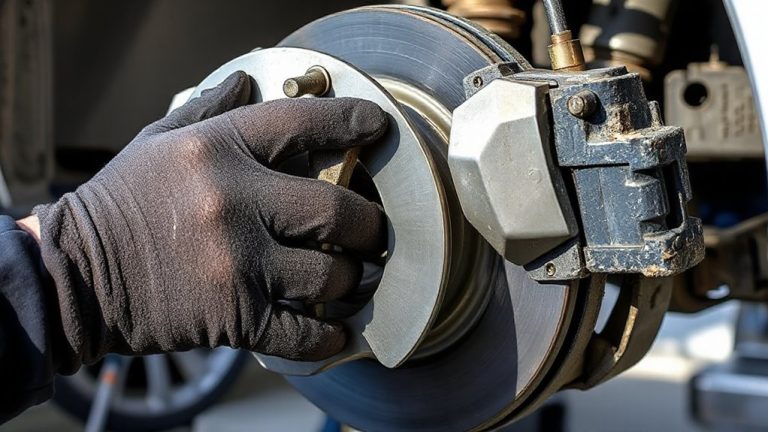
While you’re checking the valvetrain components, inspect the valve spring retainers closely for any signs of cracks or wear. Look for visible fractures, pitting, or distorted grooves where the keeper locks in. Even small cracks can lead to sudden failure under high RPM. Damaged retainers compromise spring seating, which contributes to spring tension loss and misalignment. That reduced tension affects valve control and may cause valve float. If you notice inconsistent spring height or wobbling, suspect retainer damage. While you won’t see valve seat erosion directly here, poor retainer performance accelerates it by allowing improper valve seating. Aluminum retainers are lighter but more prone to wear than steel. Always replace cracked or deformed retainers immediately-don’t risk downstream damage. Use a flashlight and magnifier to spot hairline fractures. Any sign of deformation means the retainer can’t maintain proper spring force, threatening engine reliability and performance.
Measure Retainer Wear With a Micrometer and Gauges
Precision measurement is your best defense against hidden retainer wear. Use a micrometer to check the retainer’s contact surfaces for taper or groove depth beyond 0.002 inches. Compare each measurement to OEM specs-deviations affect valve control. Use feeler gauges between the retainer and valve stem to confirm clearance; most accept up to 0.003 inches, but more indicates wear. Examine surface finish closely-pitting or roughness disrupts load transfer and accelerates spring fatigue. A poor surface finish can mimic low material hardness, even if base hardness (typically 45–50 HRC) remains acceptable. Material hardness guarantees wear resistance; if it’s compromised, the retainer deforms under spring pressure. Always measure multiple points, as wear isn’t uniform. Consistent dimensions and smooth surface finish confirm structural integrity. Micrometers and gauges offer the repeatability needed for accurate comparisons across all retainers.
When to Replace Valve Spring Retainers for Safety
Replace valve spring retainers when wear exceeds safe limits-don’t wait for failure. Excessive wear compromises the entire valve train. Inspect each retainer for cracks, grooves, or deformation, especially at the contact points with the valve stem and spring. If wear exceeds 0.002 inches, replacement is mandatory. Retainer material matters-most OEMs use hardened steel or maraging alloy for durability under high stress. Aftermarket performance retainers often use titanium to reduce weight without sacrificing strength. If the material shows signs of fatigue or pitting, replace it immediately. Improper installation torque on valve spring caps can distort the retainer, leading to uneven load distribution. Always follow factory specs-over-torquing stresses the retainer, while under-torquing risks cap loosening. Proper torque guarantees consistent clamping force, maintaining retainer integrity across engine cycles. Safety depends on precision.
How Worn Retainers Cause Dropped Valves and Damage
When a valve spring retainer wears beyond acceptable limits, it can no longer hold the valve assembly securely in place under high-speed operation. Cracks or grooves in the retainer groove allow the keeper to loosen, leading to a dropped valve. Once that happens, you’re risking catastrophic engine failure. Valve float occurs when the valve train can’t keep up, and worn retainers make it worse. Spring surge-the violent oscillation of the spring-adds stress, accelerating fatigue. You might not hear it at idle, but under load, the damage multiplies fast.
| Consequence | Emotional Impact | Real-World Result |
|---|---|---|
| Dropped valve | Panic mid-ride | Destroyed piston |
| Valve float | Frustration & fear | Loss of power, misfire |
| Spring surge | Dread of costly repair | Broken springs, bent rods |
| Engine seizure | Helplessness | Total rebuild needed |
Prevent Engine Failure With Smart Retainer Checks
A cracked retainer won’t last under high RPM. You risk valve float and spring surge, both leading to catastrophic engine failure. At over 6,500 RPM, valve springs experience extreme stress. A weak or damaged retainer can’t maintain proper spring control. This leads to spring surge-uncontrolled oscillations that reduce valve closure speed. When the valve doesn’t seal, compression drops and piston-to-valve contact becomes likely. You’re not just losing power-you’re one misfire from severe internal damage. Inspect each retainer under magnification. Look for cracks, discoloration, or wear deeper than 0.002 inches. Measure retainer groove wear with a micrometer; exceeding 0.003 inches calls for replacement. Use chrome-moly retainers rated for high-lift cams and aggressive profiles. Don’t assume used parts are safe. Smart checks now prevent expensive rebuilds later.
On a final note
You must inspect valve spring retainers closely during top-end rebuilds. Cracks or wear exceeding 0.005 inches indicate replacement is critical. Use a micrometer to measure taper and groove depth-uneven wear affects valve control. Worn retainers compromise spring tension, raising the risk of valve float or drop. This leads to catastrophic engine damage. Replace them alongside valvesprings or every two rebuilds for reliability. Treat them as sacrificial components-like tires on a race car-to prevent costly internal failure.