When to Upgrade From Basic Tarp Covers to Rigid Shell Enclosures Outdoors
You should upgrade from basic tarp covers to rigid shell enclosures when facing winds over 50 mph or snow loads above 30 psf. Standard tarps tear under stress and degrade within 2–3 years due to UV exposure. Rigid shells withstand harsh conditions with 0.25-inch UV-stabilized walls, sealed seams, and sloped roofs that shed water. They resist theft with locking hasps and durable materials. Built to last 10–15 years, they cut long-term costs. A proper fit includes 6 inches of overhang on all sides-and there’s more to optimizing protection than just weather resistance.
Notable Insights
- Upgrade when frequent wind exceeds 50 mph, as tarps fail and rigid shells withstand higher gusts if properly anchored.
- Replace tarps if UV exposure causes brittleness within a year, as rigid shells offer 500+ hours of tested UV resistance.
- Switch to rigid shells when snow loads exceed 10 psf, as they support up to 50 psf with proper framing and slope.
- Upgrade if theft or tampering is a concern, since rigid shells have locks and materials that deter quick, silent breaches.
- Choose rigid enclosures when long-term cost and durability matter, as they last 10–15 years versus tarps needing replacement every 2–3.
When Does a Tarp Stop Working in Bad Weather?
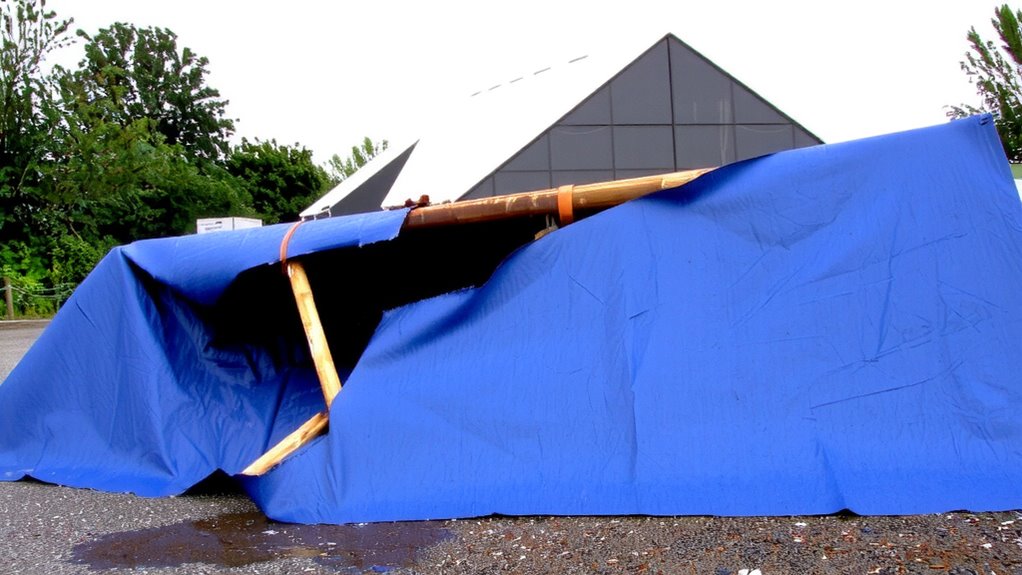
When does a tarp fail you in a downpour or gale? It happens when wind resistance falls below 50 mph sustained gusts. Standard polyethylene tarps flap and tear at high speeds, losing structural integrity. Reinforced PVC-coated fabric models withstand up to 70 mph-but only when properly anchored. Once wind resistance is overwhelmed, flapping causes stress fractures along seams and grommets. UV degradation accelerates this damage, breaking down polymer chains even during calm periods. Prolonged sun exposure cuts lifespan by up to 50%, especially in zones with high solar irradiance. Tarps rated below 1,000 hours UV resistance show brittleness and discoloration within a year. You need at least 2,000 hours of UV protection for reliable performance. When tarp material tears easily or grommets pull out under mild stress, it’s no longer weatherproof. These are clear signs it’s time to upgrade. Failure means exposure-not just inconvenience.
How Much Rain or Snow Can a Rigid Shell Handle?
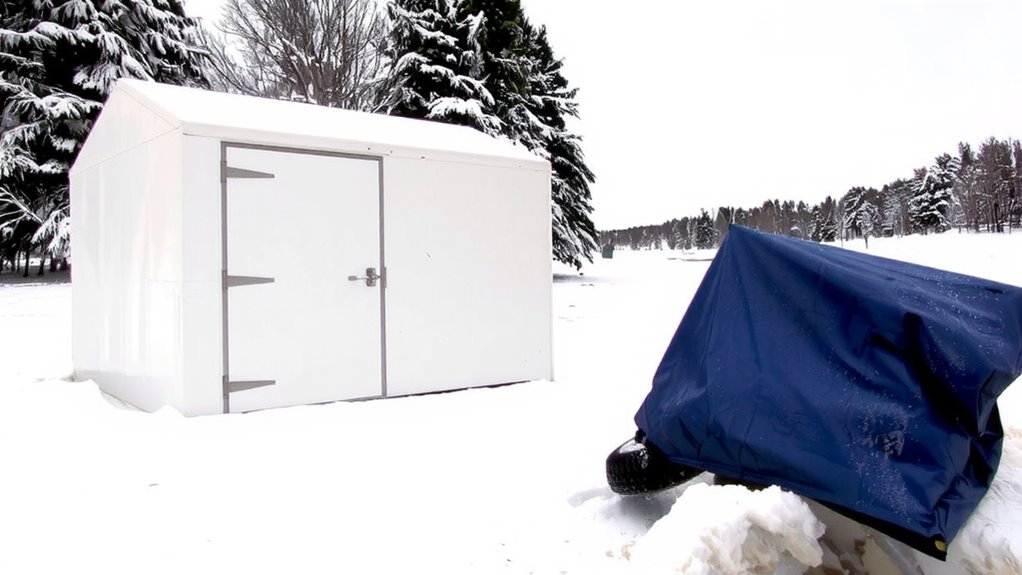
Rigid shell enclosures outperform tarps when weather demands serious protection. They’re engineered to handle heavy rain and substantial snow loads. Most models support a weight capacity of 30 to 50 pounds per square foot, far exceeding standard tarps. This strength comes from materials like high-density polyethylene or galvanized steel framing, which maintain structural integrity under stress. Unlike tarps that flap and tear, rigid shells distribute load evenly across their frame. Snow can accumulate several inches without deformation. For example, a 2-inch layer of wet snow exerts about 10 psf-well within most shells’ limits. Integrated sloped roofs shed rain efficiently, preventing pooling. Sealed seams and reinforced joints block water intrusion. These design features guarantee reliable performance in storms where tarps fail. Your gear stays dry not by chance, but by calculated engineering precision built into every panel and support.
Are Rigid Shells Worth It Long-Term?
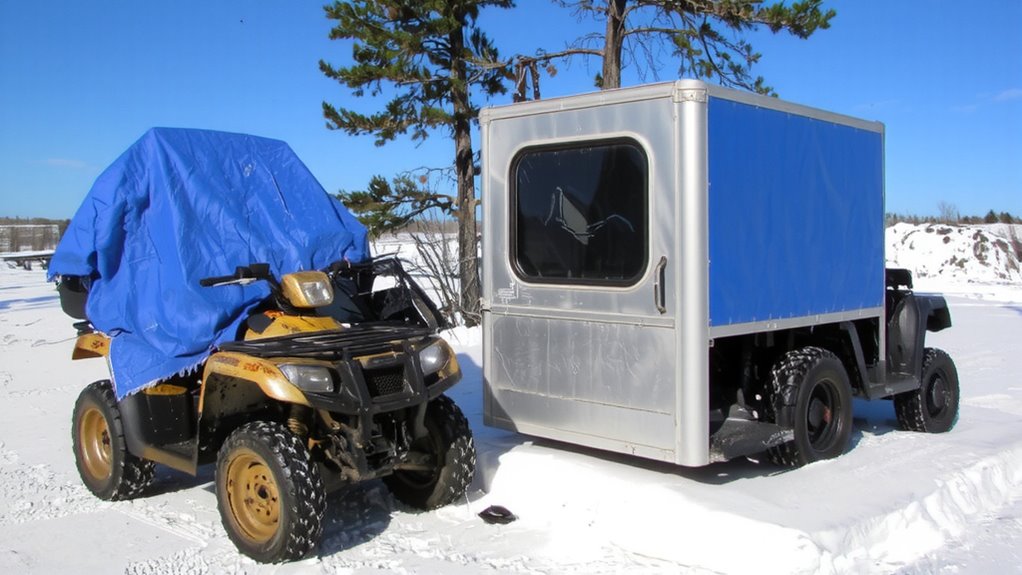
Durability isn’t just a claim with rigid shell enclosures-it’s a measurable outcome of design and material choice. You get UV-stabilized polyethylene or reinforced copolymer construction, engineered to last 10–15 years. A proper durability analysis shows tarps degrade within 2–3 years under the same conditions. For long-term savings, a cost comparison favors rigid shells despite higher upfront pricing. They resist warping, cracking, and wind uplift better than flexible alternatives.
| Factor | Tarp Cover | Rigid Shell |
|---|---|---|
| Avg. Lifespan | 2–3 years | 10–15 years |
| Wind Rating | Up to 40 mph | Up to 100 mph |
| UV Resistance | Moderate | High (500+ hrs lab tested) |
| Maintenance | Frequent re-securing | Minimal |
You’ll replace tarps 4–5 times over one shell’s life. That adds cost and labor. Rigid shells pay for themselves.
Do Rigid Shells Prevent Theft Better Than Tarps?
While a tarp may shield your gear from rain, it won’t stop a determined thief. Rigid shell enclosures provide superior tamper resistance due to their construction from high-impact polymers or powder-coated steel. Unlike tarps, which rely on straps or bungees, rigid shells integrate locking mechanisms-like padlock-compatible hasps or keyed latches-that secure panels tightly. These locking points are reinforced to resist prying, cutting, or forced entry. Tamper resistance is further enhanced by seamless welds and concealed fasteners, making disassembly difficult without tools. Tests show rigid enclosures withstand 300+ pounds of pull force on access points, versus minimal resistance from tied-down tarps. A thief can slice through a tarp in seconds; breaching a rigid shell takes minutes of noisy effort, deterring most attempts. Your gear stays hidden and locked-no flapping fabric hinting at contents. For theft prevention, rigid shells outperform tarps markedly.
How to Pick the Right Rigid Shell for Your Gear
You’ve got your gear secured from theft with a rugged enclosure, but now comes the real question-does it actually fit what you’re trying to protect? Size matters, but material durability matters more. Look for shells made from UV-stabilized polyethylene or powder-coated aluminum-these resist corrosion, impact, and extreme temperatures. A 0.25-inch wall thickness provides solid defense against dents and punctures. Check load ratings: high-end models withstand 50+ psf snow loads. Installation complexity varies. Bolt-together kits take 2–4 hours with basic tools; permanent mounts may require concrete footings and professional help. Match the shell’s dimensions to your equipment, adding 6 inches on all sides for airflow. Ventilation slots prevent condensation. Locking hinges and tamper-resistant fasteners boost security. Choose a design with modular access panels for maintenance. Don’t overlook drainage-integrated channels prevent water pooling. Pick right, and your investment lasts 15+ years.
On a final note
You need a rigid shell when tarps fail under heavy snow or wind. Tarps tear at 20+ mph gusts; rigid shells withstand 70 mph winds. They handle 30+ inches of snow with proper pitch. Steel models resist pry attacks; tarps offer minimal theft protection. Choose UV-stabilized polyethylene or galvanized steel. Measure equipment height plus 12″ clearance. A 10′ x 20′ shell costs $1,200–$2,500, lasting 20+ years.