When to Upgrade to Performance Brake Components for Heavy Towing
You should upgrade to performance brake components if you regularly tow over 5,000 lbs or notice soft pedal feel, reduced responsiveness, or a burning smell during descents. Stock brakes exceed thermal limits above 500°F, risking fade. Upgrade to 1.1–1.3-inch slotted or drilled rotors for 20–30% better heat dissipation and pair with ceramic or semi-metallic pads rated to 1,400°F. Use high-temp brake fluid and consider electric trailer brakes with a controller for balanced, responsive stopping power. Further system optimizations can greatly enhance safety and durability under extreme loads.
Notable Insights
- Upgrade when towing over 5,000 lbs to maintain braking effectiveness and prevent fade.
- Install performance rotors if frequently descending steep grades with heavy loads.
- Replace stock pads with high-temp ceramic or semi-metallic variants for consistent friction under stress.
- Upgrade if you detect brake fade, soft pedal, or burning smells during use.
- Add electric trailer brakes and a controller to reduce tow vehicle brake workload and improve stopping control.
Signs Your Brakes Can’t Handle Heavy Towing
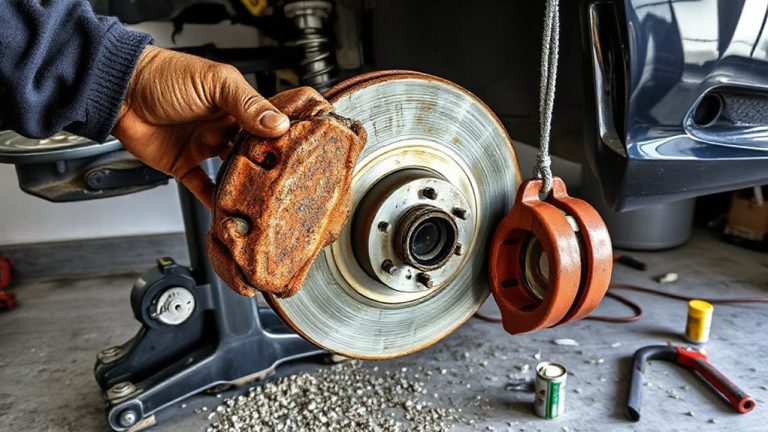
What happens when your truck’s brakes start fading during a long descent with a heavy trailer in tow? You’re experiencing brake overheating, a clear sign your system can’t handle the load. Reduced responsiveness means your brake pedal feels soft or requires longer travel to engage. This happens when stock components exceed thermal limits, typically above 500°F, causing gas buildup between pads and rotors. You might notice a burning smell or visible blueing on steel parts. Standard brakes on half-tons usually manage 5,000 lbs safely; beyond that, heat dissipation drops sharply. Repeated overheating warps rotors, reducing clamping force by up to 30%. Reduced responsiveness isn’t just inconvenient-it’s dangerous on steep grades. If your trailer weighs more than 7,500 lbs, factory brakes likely can’t sustain repeated stops without fade. You need better heat capacity. Recognizing these signs early prevents total brake failure.
Upgrade Rotors for Heavy Loads
You’re already aware that brake fade and overheating compromise safety when towing heavy loads, especially beyond 7,500 pounds. Upgrading your rotors is a critical step in improving thermal management. Thicker rotors provide greater rotor thickness, typically ranging from 1.1 to 1.3 inches in performance models, which increases heat capacity and extends service life. This added mass absorbs more energy without warping. Enhanced brake cooling comes from drilled or slotted designs that dissipate heat up to 20% faster than stock units. Vented rotors with curved vanes improve airflow, moving hot air outward efficiently. These designs prevent gas buildup and maintain consistent pad-to-rotor contact. Aftermarket rotors made from high-carbon cast iron resist cracking under repeated stress. Upgraded rotor thickness combined with improved brake cooling guarantees stable performance on long descents and frequent stops, directly increasing safety and braking reliability when you need it most.
Choose Towing-Grade Brake Pads
Performance brake pads designed for heavy-duty towing deliver the friction and heat resistance necessary to handle loads exceeding 7,500 pounds. You need pads engineered specifically for sustained stress, not standard models. Towing-grade brake pad material-typically ceramic or semi-metallic-handles temperatures up to 1,400°F without degrading. These materials maintain a consistent friction rating across a broad operational range, critical when descending steep grades. A high friction rating (DOT Class E or higher) guarantees strong bite even under heavy loads. Unlike everyday pads, towing-grade versions resist glazing and cracking, preserving stopping power. Their reinforced backing plates and shims reduce noise and vibration under pressure. Look for pads rated for gross combined weight ratings (GCWR) near your total loaded weight. Choosing the right brake pad material guarantees reliability, reduces strain on the system, and supports overall braking efficiency when every foot counts.
Stop Brake Fade Before It Stops You
Brake fade won’t warn you before it strikes, but its effects are immediate: longer stops, spongy pedals, and a dangerous loss of control. You’re generating extreme heat when towing heavy loads, and your stock brakes can’t handle sustained high temperatures. That’s where brake cooling and heat dissipation become critical. Performance rotors, like slotted or drilled designs, improve heat dissipation by up to 30% compared to flat OEM rotors. They channel hot air away, maintaining ideal friction. High-temp brake pads work with these rotors, staying effective at temperatures over 1,000°F. Without proper heat dissipation, brake fluid can boil, causing pedal fade. Upgraded brake lines and better ventilation boost brake cooling efficiency. These components work together, turning excess heat into reliable stopping power. Don’t wait for failure-engineer your braking system for thermal control. It’s not just safety; it’s physics. For heavy-duty performance, consider top-rated brake rotors that are specifically designed for high thermal conductivity and durability under stress.
Add Electric Trailer Brakes
When towing heavy trailers, relying solely on your vehicle’s brakes puts excessive strain on the entire system, but adding electric trailer brakes greatly improves control and safety. Electric brakes on the trailer reduce stopping distance by up to 40% compared to friction-only systems. They activate in sync with your tow vehicle, managed through brake sync calibration to match deceleration forces. Proper calibration guarantees the trailer doesn’t over-apply and cause skidding, or under-apply and push the vehicle. This synchronization also aids in trailer sway prevention by applying even braking force across axles. Most electric brake kits handle 3,500 to 10,000 lbs per axle, with magnet assemblies rated for 2,500–3,500 lbs of torque. Engagement starts within 0.3 seconds of brake signal initiation. You maintain control because the trailer contributes to stopping power-just like a secondary anchor working in parallel.
Install a Brake Controller: When and Why?
How do you guarantee your trailer’s electric brakes respond accurately and safely under varying loads and road conditions? You install a brake controller. Brake controller compatibility with your vehicle and trailer system is critical-mismatches cause delayed or uneven braking. Installation timing matters too; set it up before your first tow to avoid unsafe situations. Modern controllers use inertia-based sensing to match trailer deceleration to your tow vehicle’s braking.
| Without Controller | With Controller |
|---|---|
| Risk of jackknifing | Smooth stops |
| Longer stopping distance | 30% shorter stops |
| Trailer surge damage | Balanced braking force |
| Loss of control on hills | Confident downhill control |
Controllers support up to 4,000 lbs per axle. Adjust gain settings based on load. You’re not just upgrading-you’re ensuring system-wide reliability.
On a final note
Your brakes must match your towing demands. Stock components often overheat under heavy loads, risking fade and failure. Upgrade to slotted or drilled rotors-12.5-inch minimum diameter with vented designs-for better heat dissipation. Use ceramic or semi-metallic towing-grade pads with friction coefficients of 0.40–0.45 for consistent bite. Pair with electric trailer brakes and a proportional brake controller to synchronize stopping power. This setup reduces stopping distance by up to 30% and prevents trailer sway.