Why Trailer Towing Requires Upgraded Suspension Components
Towing stresses your suspension beyond factory limits, causing rear sag and frame flex. Stock shocks and springs aren’t built for constant heavy loads, especially over 1,000 lbs of tongue weight. Upgraded components like heavy-duty leaf springs, rated for 2,000+ lbs per axle, resist deformation. Performance shocks with nitrogen-charged monotube designs reduce fade and control sway. Air suspension systems offer real-time adjustment, supporting up to 5,000 lbs while maintaining alignment. You’ll learn how each part improves safety and control under load.
Notable Insights
- Stock suspensions lack the capacity to handle sustained trailer towing loads and may exceed design limits.
- Increased rear axle load causes rear sag, reducing ride height and altering vehicle alignment.
- Trailer weight shifts balance forward, lightening the front axle and diminishing steering control.
- Upgraded shocks provide better damping for squat, dive, and trailer sway during towing.
- Heavy-duty springs or air suspension maintain level ride height and support higher tongue weights.
How Towing Stresses Your Vehicle’s Suspension
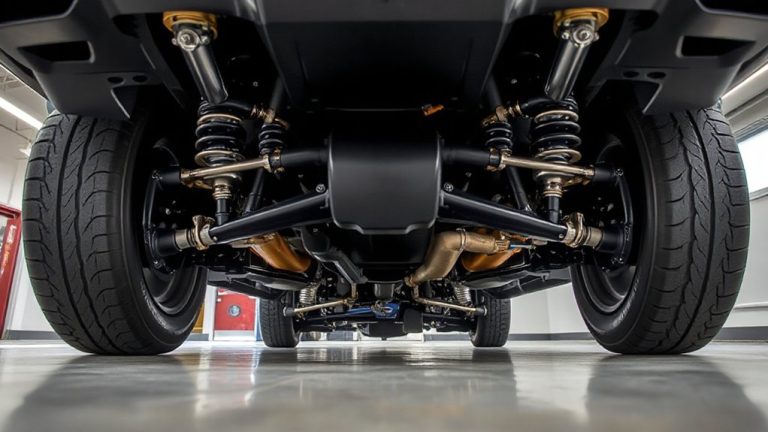
When you tow a trailer, the added weight substantially increases the load on your vehicle’s suspension system, especially at the rear axle. This extra force compresses the rear springs, reducing ride height and altering alignment. As rear sag increases, frame flex becomes more pronounced, stressing structural joints and reducing stability. Uneven weight distribution worsens this effect, transferring excessive load to the rear while lightening the front axle, diminishing steering control. The chassis can twist under dynamic loads, especially on uneven terrain, amplifying frame flex and reducing handling precision. Over time, metal fatigue develops at mounting points and control arm brackets. Improved weight distribution hitches and reinforced suspension components help balance the load across axles, minimizing frame flex and restoring proper geometry. These changes maintain tire contact, improve braking efficiency, and reduce wear. Upgraded systems enhance rigidity and load management, preserving vehicle dynamics under heavy towing demands.
Why Stock Suspension Fails Under Trailer Loads
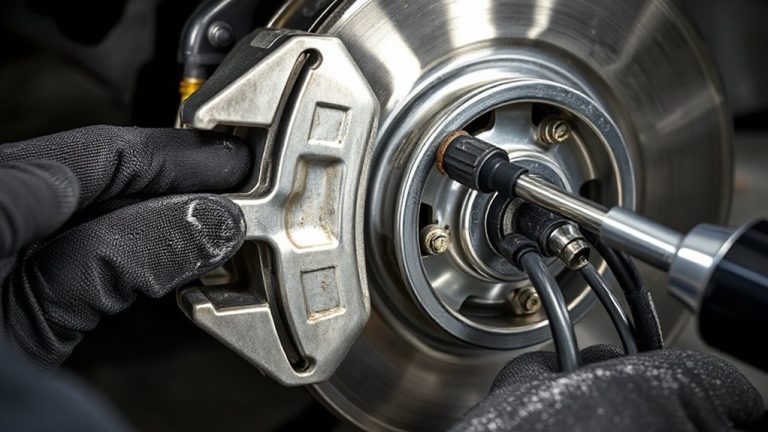
Though designed for everyday driving, your vehicle’s stock suspension isn’t built to handle the sustained stresses of trailer towing. It quickly struggles under added weight, leading to compromised control and uneven wear. Frame flex increases as the chassis twists beyond design limits, reducing structural integrity and alignment stability. This distortion affects handling, especially on uneven terrain or during sharp maneuvers. Axle wrap becomes common under acceleration or braking, where leaf springs deform and lose traction, causing driveline shock and uneven tire wear. The stock system uses softer bushings and smaller dampers not rated for prolonged heavy loads. Without upgraded components, energy dissipation is inefficient, accelerating fatigue in springs and shocks. OEM-rated towing capacities assume ideal conditions, but real-world demands exceed those limits. Upgraded suspension systems correct these issues with reinforced mounts, stiffer springs, and performance dampers engineered for consistent load management and reduced dynamic stress. For optimal performance, consider selecting from the best shocks for every ride that are specifically designed to handle heavy-duty towing demands.
7 Warning Signs You Need a Suspension Upgrade
How’s your vehicle handling when the trailer’s hooked up? If it feels unstable, you may already have suspension issues. Worn bushings reduce control by allowing excess movement in control arms and sway bars. These rubber components degrade over time, especially under added towing stress. You’ll notice imprecise steering and increased body roll. Loose joints in tie rods, ball joints, or track bars create clunking noises and uneven tire wear. They compromise alignment and reduce towing safety. Sagging rear end height indicates failing springs, reducing weight distribution efficiency. You might see your headlights pointing upward when loaded. Premature brake wear and trailer sway are common signs too. If your vehicle dives excessively during braking or sways in crosswinds, the suspension can’t manage the load. These symptoms mean factory parts aren’t cutting it. Upgrading now prevents damage and improves control. For Ram 1500 owners, installing a lift kit can significantly enhance towing stability and ground clearance.
Upgraded Shocks: Better Stability When Towing
If your trailer adds significant weight behind the bumper, stock shocks may no longer provide sufficient damping control. Upgraded shocks improve ride comfort and enhance sway control under load. They’re engineered with advanced valving to manage rear-end squat during acceleration and dive when braking. High-performance models use twin-tube or monotube designs filled with nitrogen to reduce fade.
| Feature | Stock Shocks | Upgraded Shocks |
|---|---|---|
| Damping Control | Basic | Progressive, load-specific |
| Ride Comfort | Adequate unloaded | Optimized under load |
| Sway Control | Minimal | Enhanced via firmer rebound |
Upgraded units often support 1,000+ lbs of tongue weight. They react faster to road imperfections, stabilizing both trailer and tow vehicle. You’ll feel less body roll in corners and reduced trailer push in crosswinds. Many top-performing options come from best shock brands, known for durability and advanced damping technology.
Heavy-Duty Springs for Towing Trailers
When you’re hauling heavy loads, stock springs can sag under pressure, compromising both safety and performance. Upgrading to heavy-duty leaf springs increases load capacity and maintains proper ride height. Leaf springs consist of multiple steel layers bound together, designed to handle vertical loads without bottoming out. They’re common in trucks and trailers due to their durability and high weight ratings-some models support over 2,000 lbs per axle. Coil springs, found in many modern suspensions, offer a smoother ride but may require a higher spring rate for towing. Heavy-duty coil springs are shorter and thicker, resisting compression under strain. Both types improve stability by reducing body roll and maintaining alignment. Upgraded springs also prevent uneven tire wear and keep headlights aimed correctly. Choose leaf springs for maximum load support or performance coil springs for balanced handling. Don’t exceed your vehicle’s gross combined weight rating.
Air Suspension for Dynamic Load Balancing
Air suspension systems offer a smarter way to manage changing loads by replacing traditional steel springs with adjustable air springs. You get dynamic load balancing that adapts in real time. These systems use load sensing technology to monitor weight distribution and automatically adjust air pressure. That means consistent ride leveling, whether you’re hauling heavy or running empty. Sensors detect changes in vehicle height and send data to an onboard compressor, which inflates or deflates the air springs within seconds. Most kits support up to 5,000 lbs of additional capacity and maintain a factory-like ride height within ±0.5 inches. Unlike fixed springs, air suspension prevents sagging and reduces rear-end roll during cornering. The result is improved stability, tire wear, and braking performance. You maintain control and safety, no matter the payload.
How to Choose Towing Suspension Parts
What makes one towing suspension setup better than another? It comes down to how well it manages load distribution and towing dynamics. You need components rated for your trailer’s gross weight-never exceed the manufacturer’s GVWR. Leaf springs with higher tensile strength, like 180,000 psi, resist sag under heavy loads. Upgrade to air helper springs with dual-path air chambers for dynamic load balancing. They adjust psi in real time, typically 5 to 100 psi, maintaining level ride height. For improved towing dynamics, choose a weight distribution hitch with sway control. These systems reduce lateral movement by up to 75%, especially at highway speeds. Look for spring bars made from forged steel, rated at least 1,200 lbs tongue weight. Proper load distribution prevents axle overloading-ensure front and rear axles stay within 10% of unladen camber. Always match suspension parts to your truck’s OEM specifications.
On a final note
Your vehicle’s suspension must handle increased weight and forces when towing. Stock components often lack the capacity, leading to sag, instability, or premature wear. Upgraded shocks with twin-tube design and gas charging reduce heat buildup and improve damping. Heavy-duty coil or leaf springs increase load capacity by up to 1,000 lbs. Air suspension kits allow adjustable ride height and PSI tuning between 5–100 psi.