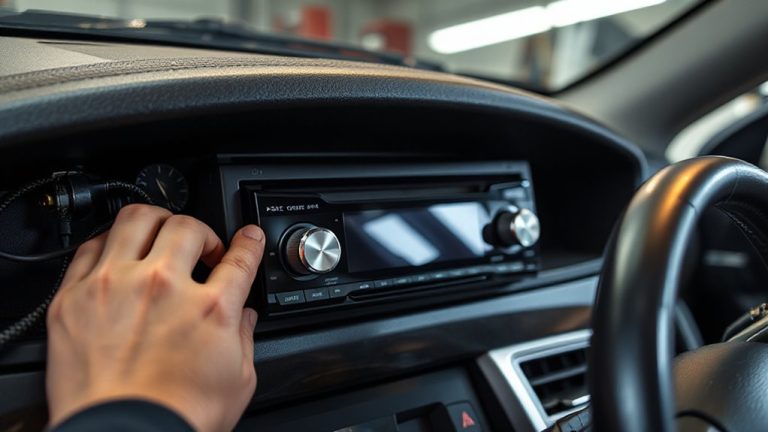
Why Used Car Buyers Should Check for Airbag Deployment History
You should check a used car’s airbag deployment history because undetected prior crashes can compromise safety. Airbags deploy once and must be replaced, not repaired, per federal standards. Replacements may lack OEM timing, inflating in 20–30 milliseconds or not at all. Crash data stored in the airbag module can reveal impact speed, seatbelt use, and deployment status. Mismatched emblems, spliced wires, or unexplained SRS codes like B1200 signal tampering. Frame deviations over 3/16 inch or uneven panel gaps indicate hidden structural damage. Knowing this helps guarantee the car protects you as designed-next comes how to verify it.
Notable Insights
- Deployed airbags must be replaced, not repaired, and improper replacements can compromise safety in future crashes.
- Prior airbag deployment may indicate severe collision damage that affected structural integrity or safety systems.
- Crash data stored in the airbag module reveals impact speed and seatbelt use, helping assess past crash severity.
- Fake or reset airbag systems may not deploy properly, increasing injury risk during subsequent accidents.
- Discrepancies between OBD2 readings and VIN history can expose hidden damage or tampering with safety components.
Why Airbag Deployment History Matters
Even though airbags are designed to deploy only once during a collision, knowing whether they’ve deployed in the past can make or break your decision to buy a used car. Airbag functionality is critical to occupant protection, and prior deployment may indicate compromised system integrity. Manufacturers calibrate sensors to trigger based on crash severity, typically at impacts exceeding 9 to 15 mph for frontal collisions. Once deployed, airbag modules must be replaced, not repaired, per federal safety standards. A vehicle with unreported deployment could have improperly reinstalled or counterfeit components. Crash severity data is stored in the airbag control module, accessible via diagnostic tools. This data log includes impact speed, seatbelt use, and deployment timing. Confirming this history ensures all safety systems function as designed. Ignoring it risks driving a car with latent electronics faults or undetected structural damage. Always check the airbag module’s data before purchase.
How Deployed Airbags Affect Safety and Reliability
You can’t assume a car is safe just because the airbags were replaced after a crash. Airbag effectiveness isn’t guaranteed even with new modules. Factory-installed airbags are calibrated to deploy within 20–30 milliseconds of impact at precise velocities. Replacements may not match OEM timing or inflation pressure, reducing protection. Sensors and control units can retain crash data that affects system response. Structural integrity is often compromised after severe collisions-bent frames or misaligned crumple zones alter how force transfers during another crash. Even professionally repaired frames rarely regain full tensile strength, typically restoring only 80–90% of original rigidity. These hidden flaws increase injury risk despite visible repairs. You’re relying on systems designed for a structurally sound chassis. Once that integrity is breached, safety margins decrease. A car with a deployment history carries inherent reliability concerns-its passive safety systems and underlying frame may not perform as tested. Always treat replacement parts and repairs as potential deviations from original safety standards.
How to Check Airbag Deployment History
How can you be sure a used car hasn’t hidden a crash? Check the airbag deployment history before buying. Start with OBD2 scanning-plug a compatible scanner into the diagnostic port under the dash. This reads fault codes from the airbag control module, revealing if SRS (Supplemental Restraint System) triggers were activated. Codes like B1200 indicate prior deployment. OBD2 scanning works only if the module hasn’t been reset or replaced. Next, use VIN decoding. Enter the vehicle’s 17-digit VIN into a trusted database to access crash and repair records. Some services pull data from insurers and body shops, confirming whether airbags were replaced. Cross-reference both results. Discrepancies suggest tampering. Always verify through a certified mechanic. This two-step process-OBD2 scanning and VIN decoding-gives you objective, technical insight into a car’s hidden past.
Signs of Hidden Frame Damage After an Accident
A misaligned frame can compromise a vehicle’s structural integrity and safety, even if the exterior looks flawless. You should inspect for crumpled metal beneath the car, especially near the front rails or rear subframe. Frame deviations greater than 3/16 inch affect alignment and tire wear. Misaligned panels often reveal gaps over 3mm between doors, fenders, and bumpers. These inconsistencies suggest previous collision damage. Check the unibody measurement points using a tram gauge; factory specs allow only minimal variance. Uneven door heights or sagging trunks are red flags. Hidden damage may also warp suspension mounting points, altering camber angles beyond ±0.5 degrees. A compromised frame reduces crash energy absorption. It can impair handling, increase stopping distances, and risk component failure. Even if airbags weren’t deployed, crumpled metal in structural zones means the car endured significant force. Always get a qualified inspection before buying.
Red Flags of Airbag Tampering
Even if frame damage isn’t visible, signs of airbag tampering can reveal a deeper history of crash involvement. Look closely at the steering wheel emblem; a steering wheel emblem mismatch suggests the original airbag unit was replaced, often without proper recalibration. Factory-installed emblems align precisely with the wheel’s centerline and use model-specific molds. Aftermarket or swapped units frequently show slight angular or depth discrepancies. Check for airbag wiring irregularities under the dash or near seat belts. Factory harnesses are uniform, color-coded, and secured with locking clips. Spliced, frayed, or taped wires indicate possible deactivation or improper reuse. Tampered systems may lack crash sensors or use dummy modules, disabling airbag deployment. These modifications compromise safety and violate federal standards. Always verify airbag status through dealer records or diagnostic scans. Don’t rely on visuals alone-hidden faults won’t trigger dashboard warnings.
On a final note
You must verify airbag deployment history before buying a used car. Deployed airbags indicate prior crashes, potentially compromising structural integrity. Sensors trigger deployment at 8–14 mph in frontal impacts, signaling significant force. Replacements should match OEM specs: 60–90 psi inflation pressure, 30–40 milliseconds deployment time. Tampered systems may disable supplemental restraint function. Always obtain a CARFAX report and inspect SRS codes with an OBD-II scanner. Safety depends on unaltered crash protection systems.