Understanding Ceramic Coating Chemistry and Its Benefits for Automotive Finishes
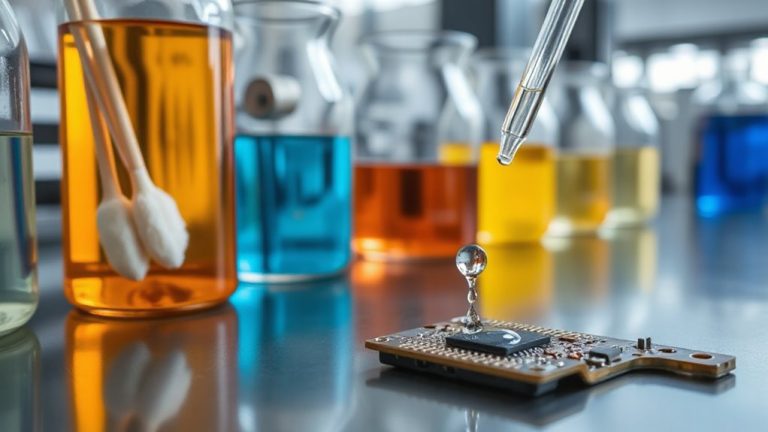
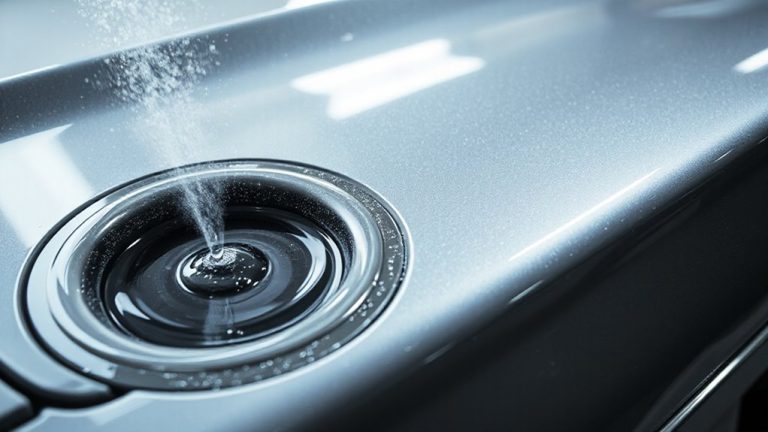
Your car’s paint gets a durable, semi-permanent shield through ceramic coating. It bonds at the molecular level using silica, forming a cross-linked SiO₂ layer 3–6 microns thick. This layer hits 9H hardness, resists UV, chemicals, and heat up to 600°F. It’s hydrophobic, with water contact angles over 110°, reducing dirt buildup. Unlike wax, it lasts years, not months. You’ll see how each property directly protects and enhances your finish.
Notable Insights
- Ceramic coatings form a semi-permanent, cross-linked silica layer that chemically bonds to paint for superior durability.
- Silica creates a 3–6 micron thick, 9H hardness shield resistant to UV, heat, acids, and chemical degradation.
- Unlike wax, ceramic coatings bond at the molecular level, lasting years instead of months.
- Hydrophobic properties create water beading with contact angles over 110°, enhancing self-cleaning and dirt resistance.
- Coatings block 98% of UV rays, prevent oxidation, and increase gloss by up to 30% for long-term aesthetic protection.
How Ceramic Coating Protects Your Car’s Paint
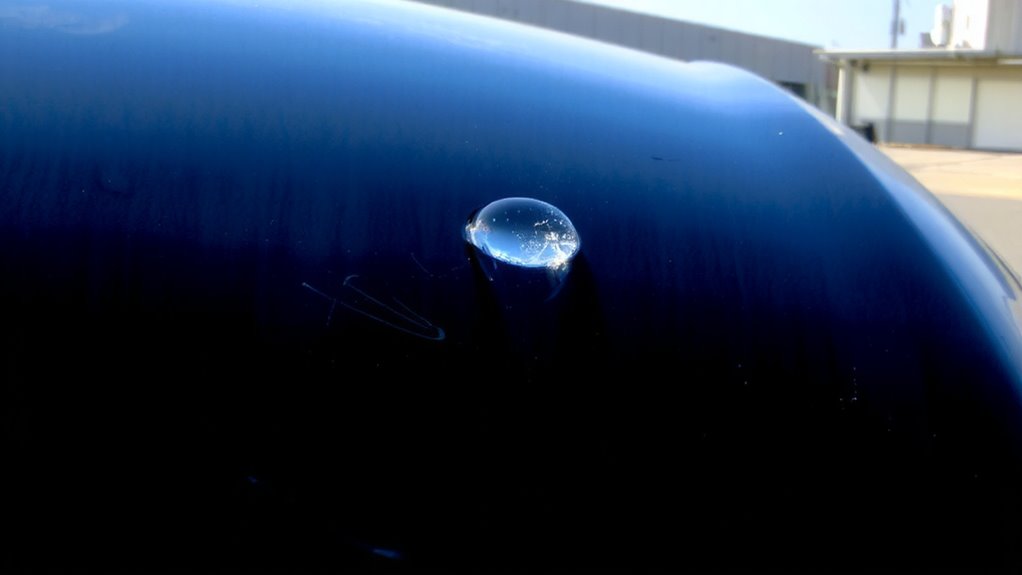
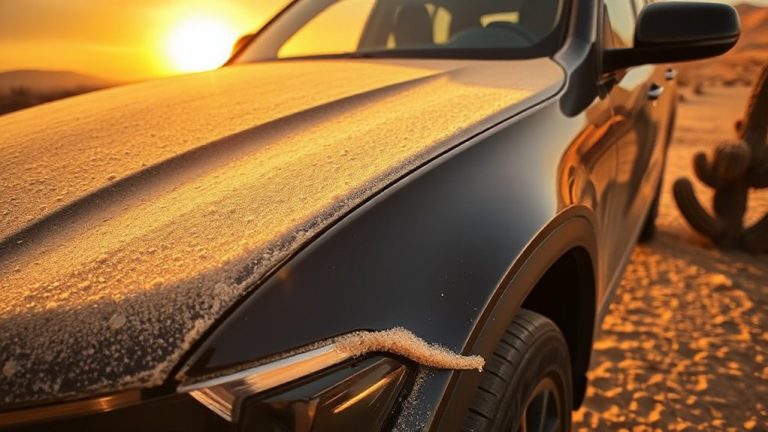
While your car’s paint may seem durable, it’s actually vulnerable to environmental contaminants, UV radiation, and chemical damage. A ceramic coating forms a protective layer that bonds directly to your paint surface. This protection begins with strong chemical bonding between silica molecules in the coating and the factory paint. The result is exceptional paint adhesion, creating a uniform, cross-linked shield. Unlike waxes or sealants, this bond resists breakdown from heat, detergents, or acid rain. The coating’s hardness reaches 9H on the pencil hardness scale, far exceeding standard paint. It reduces surface friction by up to 67%, making it harder for dirt and grime to stick. This hydrophobic effect simplifies cleaning while maintaining gloss. The coating also blocks 98% of UV rays, preventing oxidation. All these factors work together to preserve your finish, keeping it smooth, shiny, and protected for years. Many of the top-performing products achieve these results through advanced ceramic coating kits designed for long-lasting protection.
Why Silica Makes Ceramic Coating Last for Years
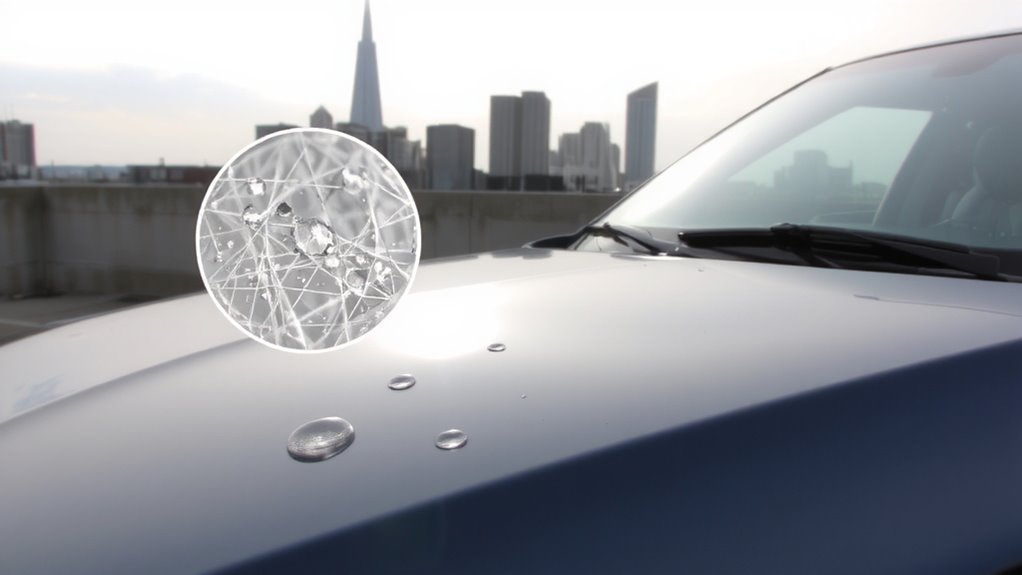
Silica is the backbone of long-lasting ceramic protection. Its exceptional silica durability stems from a dense network of silicon dioxide (SiO₂) that forms a hard, cross-linked layer on your vehicle’s surface. When applied, the coating cures through hydrolysis and condensation reactions, creating irreversible molecular bonding between the coating and the paint. This covalent bond exceeds the strength of physical adhesion used by waxes or sealants. The resulting layer measures 3–6 microns thick, with hardness ratings of 9H on the pencil hardness scale. It resists UV degradation, chemical etching, and thermal shock up to 600°F. Because silica doesn’t oxidize like organic compounds, the coating maintains integrity for years. Regular maintenance won’t break the molecular bonding. This permanent fusion is why properly applied ceramic coatings last 3–7 years without degradation, outperforming traditional finishes markedly. Top-tier professional-grade coatings offer enhanced resilience and longevity, making Expert Picks a valuable resource for selecting high-performance options.
Ceramic Coating vs. Wax: What’s the Real Difference?
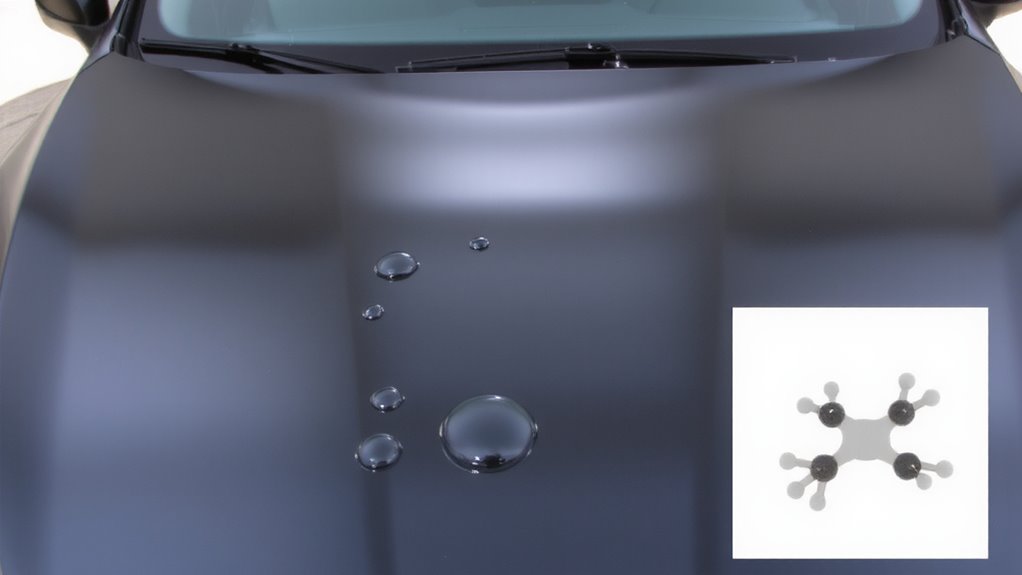
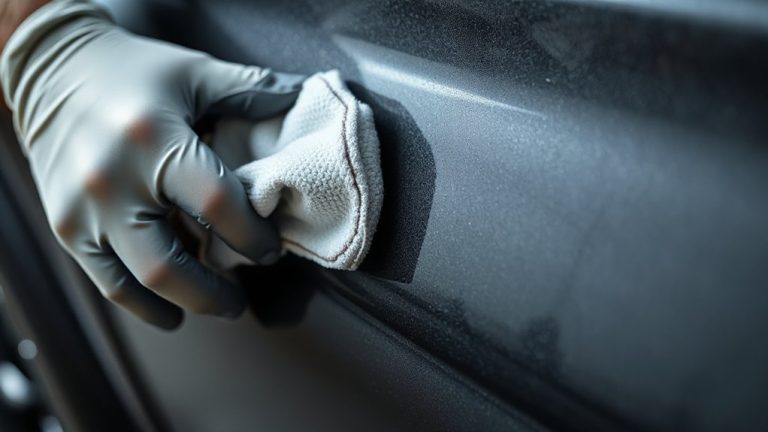
What if your car’s finish could resist scratches, chemicals, and UV rays for years instead of months? Ceramic coatings offer exactly that, thanks to their silica-based cross-linked layer bonding permanently to your paint. In durability comparison, wax lasts 3–6 months, while ceramic coatings endure 2–5 years under normal conditions. Wax sits on the surface, washing or wearing away easily. Ceramic forms a semi-permanent shield at 3–7 microns thick, resisting abrasion and pH fluctuations. The application method differs markedly: wax spreads by hand or machine and buffs off. Ceramic requires precise paint decontamination, followed by flawless layering in small sections, with 12–24 hours of drying per coat. Improper application leads to hazing or premature failure. You’ll need isopropyl alcohol wipes and lint-free applicators for streak-free results. Though labor-intensive, the payoff is long-term protection wax simply can’t match.
How UV Resistance and Hydrophobicity Work Together
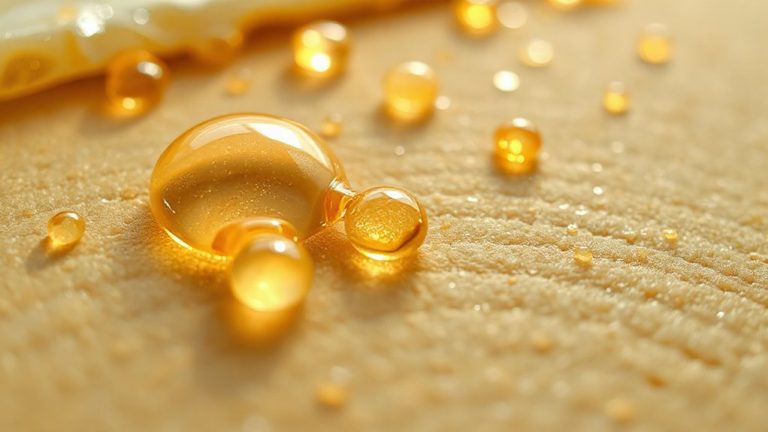
A ceramic coating does more than just shield your car from scratches and chemical damage-it actively fights environmental degradation through two core properties: UV resistance and hydrophobicity. The coating’s UV stability prevents oxidation and paint fading caused by prolonged sun exposure. Silica-based nanoparticles form a dense, cross-linked layer that blocks harmful UV rays, preserving your paint’s original color and gloss. At the same time, hydrophobic molecules orient outward, repelling water and contaminants. This results in strong water beading, where droplets form tight spheres and roll off easily, taking dirt with them. The contact angle of water on a coated surface typically exceeds 110°, enhancing self-cleaning behavior. UV stability and hydrophobicity work in tandem-by minimizing water contact and blocking UV damage, the coating maintains long-term surface integrity, protecting your vehicle’s finish more effectively than wax or sealants. For optimal results, applying the coating using a ceramic coating kit ensures proper bonding and coverage.
Less Washing, More Shine: Real Benefits of Ceramic Coating
That glossy finish you love isn’t just for show-it’s a sign of a durable, chemically bonded shield protecting your paint. Ceramic coatings form a cross-linked silicon dioxide (SiO₂) layer, typically 2 to 4 microns thick, that resists contaminants. This enhances gloss enhancement by increasing surface reflectivity up to 30% compared to uncoated clear coat. You’ll notice improved water beading, where droplets form near-perfect spheres with contact angles exceeding 90°, rolling off dirt and grime. This hydrophobic behavior reduces organic buildup, limiting the need for frequent washing. Fewer washes mean less exposure to abrasive towels and chemicals, preserving your finish. Coatings last 2 to 5 years with proper care, depending on formulation and environmental exposure. Maintenance is simpler-just rinse and occasionally wipe with a pH-neutral soap. The protection is measurable, not just visual. You’re not buying shine alone-you’re investing in long-term surface defense.
On a final note
You get long-term protection with ceramic coating because it bonds chemically to your car’s clear coat. A cured layer measures 2–5 microns thick, resisting UV degradation and thermal shock up to 600°F. It repels water (contact angle >90°) and reduces washing by 50–70%. Unlike wax, which lasts 3–6 months, ceramic coatings last 2–5 years. Silicon dioxide (SiO₂) forms a covalent bond, creating a harder, more durable matrix than polymers or carnauba.