Clear Coat Chemistry: Thickness, Hardness & Lifespan Explained
Your clear coat is a 1.5 to 2.5 mils (38–63 micron) transparent polymer layer that shields paint from UV rays, chemicals, and weathering. It typically uses polyurethane or acrylic resins with pencil hardness from 2H to 4H. UV absorbers like benzotriazoles convert harmful rays into heat, while hindered amine stabilizers preserve molecular integrity. Ceramic coatings, with SiO2 or quartz, offer 6–9H hardness and last over five years. Proper thickness and chemistry prevent oxidation, etching, and gloss loss-key to maintaining finish durability and appearance over time. More details on optimizing protection follow.
Notable Insights
- Clear coats use UV absorbers like benzotriazoles to convert harmful UV rays into heat, preventing paint oxidation and degradation.
- Polyurethane clear coats offer superior durability, with 3–5 years of protection and excellent resistance to chemicals and chipping.
- Ceramic clear coats contain silica or quartz, forming a glass-like layer that lasts 5+ years and has extreme hardness (6–9H).
- Adequate film thickness (1.5–2.5 mils) ensures effective protection; below 1.5 mils, the clear coat fails to shield the basecoat.
- Regular maintenance with pH-neutral washes, clay decontamination, and SiO2 sealants preserves clear coat integrity and appearance.
What Is Clear Coat and Why It Matters
Think of clear coat as invisible armor-its job is to shield your car’s paint from UV rays, chemicals, and environmental wear. The clear coat definition is a transparent, polymer-based layer applied over the base paint, typically 1.5 to 2.5 mils thick. It serves a critical protective function by forming a hard, cross-linked resin surface resistant to abrasions and solvents. Most modern clear coats use polyurethane or acrylic resins, with pencil hardness ratings between 2H and 4H for durability. This layer doesn’t add color but enhances gloss and depth, commonly achieving 85–90 gloss units at 60°. It withstands pH variations from acid rain to alkaline cleaning agents. Without this barrier, pigmented paint degrades rapidly. The clear coat’s molecular stability guarantees extended lifespan and appearance retention-directly impacting vehicle value.
How UV Protection Works in Clear Coat
While sunlight enhances a car’s appearance, it also delivers ultraviolet (UV) radiation that degrades paint over time-this is where your clear coat steps in. Your clear coat contains additives designed for UV absorption, converting harmful rays into harmless heat. These UV stabilizers, like benzotriazoles, penetrate the polymer matrix to guarantee molecular stability. Without this protection, oxidation and hazing would compromise gloss and integrity. Below is how key components function:
| Component | Role | Effect on Clear Coat |
|---|---|---|
| UV absorbers | Absorb UV photons | Prevents bond degradation |
| Hindered amines | Boost stability | Enhances molecular stability |
| Polymer matrix | Host structure | Enables uniform UV absorption |
These systems work together, shielding the basecoat. The clear coat’s film thickness-typically 30–50 microns-optimizes protection without brittleness. You rely on this invisible barrier daily, even if you don’t see it.
Acrylic vs. Urethane vs. Ceramic: What Lasts Longest
Of the three, ceramic clear coats typically last the longest, often maintaining peak performance for up to five years or more with proper care. Their exceptional longevity stems from a unique chemical composition rich in silica (SiO₂) or quartz, forming a cross-linked glass-like layer. This structure provides superior environmental resistance against UV rays, acid rain, and chemical contaminants. Ceramic coatings measure 6–9H on the pencil hardness scale, far exceeding acrylics. Urethane clear coats last 3–5 years and offer strong chemical composition with excellent elasticity and chip resistance. They resist oxidation better than acrylics. Acrylic clear coats, with a simpler chemical composition based on acrylic resins, last 1–3 years. They offer moderate environmental resistance but degrade faster under UV exposure and weather fluctuations. While cost-effective, their protection is short-term. Consider your needs: ceramic wins in lifespan and defense.
Is Your Clear Coat Failing? 3 Warning Signs?
How can you tell if your clear coat is losing its battle against the elements? First, you’ll notice oxidation spots-dull, chalky patches where UV exposure and oxygen have degraded the polymer matrix. These commonly appear on horizontal surfaces like hoods and roofs. Second, chemical etching occurs when acidic contaminants like bird droppings or industrial fallout bond to the surface, creating permanent, web-like scars in the coating. This damage penetrates through ester groups in the resin, weakening structural integrity. Third, micro-cracking becomes visible under direct light, signaling embrittlement from thermal cycling and loss of plasticizers. Clear coat thickness below 1.5 mils (38 microns) offers inadequate protection and accelerates substrate exposure. These signs confirm degradation at a molecular level. Ignoring them increases vulnerability to corrosion and diminishes gloss retention. Your clear coat isn’t just fading-it’s failing chemically.
Clear Coat Care Tips That Actually Work
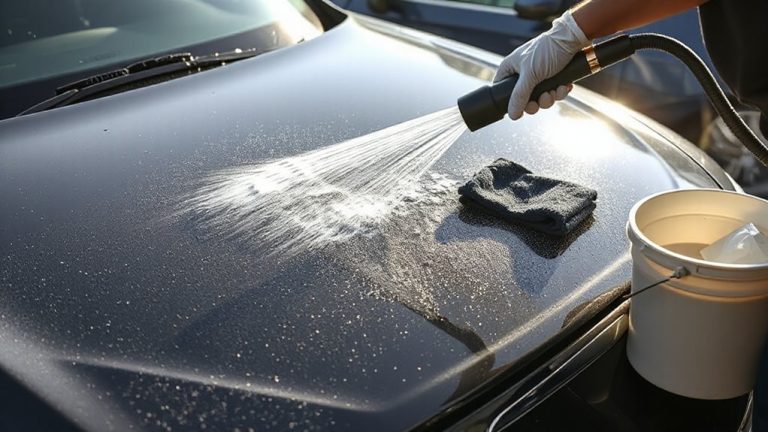
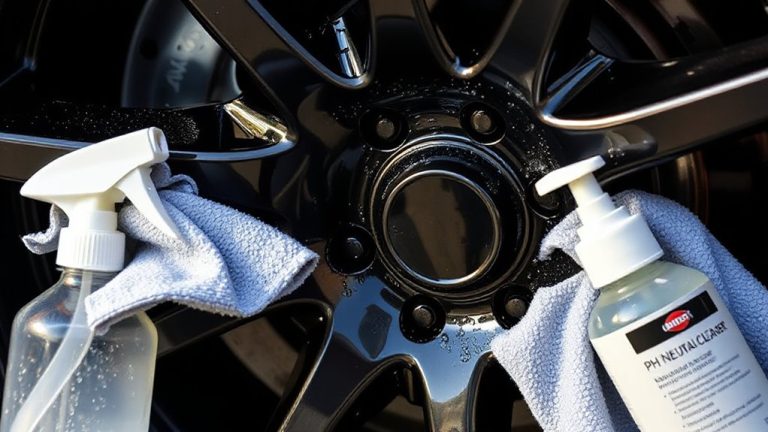
Since your clear coat serves as the primary barrier against environmental degradation, maintaining its integrity requires consistent, science-backed care. Use proper washing techniques to prevent micro-scratches-always use pH-neutral car shampoo and a two-bucket method with grit guards to minimize contamination. Wash every two weeks to remove surface contaminants before they bond to the surface. Perform paint decontamination twice yearly using a clay bar or chemical decontaminant to remove bonded pollutants like rail dust, sap, and industrial fallout. This step guarantees your wax or ceramic coating bonds directly to clean paint. Avoid abrasive polishes unless necessary. Instead, apply a SiO2-based ceramic sealant every six months for enhanced UV and chemical resistance. Proper care preserves gloss and film thickness, extending clear coat life up to 10 years under average conditions. For long-lasting protection, consider investing in a high-quality car paint sealant kit that combines advanced SiO2 technology with user-friendly application.
When to Repair or Replace Your Clear Coat
You can follow all the recommended care steps and still face situations where your clear coat shows signs of irreversible damage. Deep scratches that penetrate beyond 50 microns in depth typically compromise the protective layer permanently. Light surface damage may only require polishing, but extensive UV-induced hazing or chemical etching demands more advanced repair methods. Once oxidation reaches the primer, replacement becomes necessary. Evaluate each case with a cost analysis: spot repairs cost $50–$150, while full-panel refinishing ranges from $300–$800. Factory-quality clear coats are 30–40 microns thick; anything below 15 microns offers negligible protection. Professional wet-sanding and respraying restore film thickness and gloss retention up to 90% when done correctly. Consider vehicle age and resale value before investing in major refinishing.
On a final note
Your clear coat is your vehicle’s primary defense against environmental degradation. Modern formulations use UV absorbers and hindered amine light stabilizers (HALS) to resist photodegradation. Ceramic coatings offer the longest protection-up to 5 years-due to SiO₂ content (70–95%) and superior hardness (6–9H pencil test). Acrylics last 1–2 years; urethanes, 3–5. Inspect annually. Proper maintenance doubles lifespan.