Understanding Anti-Lock Brake System Maintenance Beyond Basic Pad Changes
Your anti-lock brake system relies on more than new pads-it needs clean sensors, fresh fluid, and intact wiring. Wheel speed sensors generate 0.5 to 12-volt AC signals; corrosion or debris disrupts this, triggering ABS faults. Brake fluid absorbs moisture, dropping boiling points to 284°F after two years-flush every 24,000 miles with DOT 3, 4, or 5.1. Voltage drops or damaged tone rings cripple system response. Maintaining proper tire pressure and alignment guarantees accurate wheel speed data. System longevity starts with these overlooked steps.
Notable Insights
- Inspect wheel speed sensors regularly for corrosion, debris, and proper signal output to ensure accurate ABS operation.
- Flush brake fluid every 24 months to prevent moisture-related corrosion in ABS valves and maintain optimal hydraulic performance.
- Check wiring harnesses and connectors for damage, corrosion, or voltage drops that can disrupt ABS sensor signals.
- Monitor ABS warning light promptly and use a scan tool to diagnose trouble codes and underlying electrical issues.
- Maintain proper tire pressure and alignment to support uniform wheel speed readings and effective ABS functionality.
What Is ABS and Why It Matters for Safety
An anti-lock brake system, or ABS, keeps your wheels from locking up during hard braking. This feature maintains steering control and reduces stopping distances on slippery surfaces. ABS is a critical element of modern brake design, relying on sensors to monitor wheel speed. When a wheel is about to lock, the system modulates hydraulic pressure to that brake circuit. It does this rapidly-up to 15 times per second-using valves in the brake lines. Typical operating pressure ranges from 400 to 1,200 psi, depending on vehicle weight and tire grip. By preventing skidding, ABS lets you steer while braking hard, much like how traction control prevents wheel spin during acceleration. It enhances safety in emergency situations. Your vehicle’s stability and control improve markedly under panic braking conditions. This system works silently in the background, ensuring best brake performance when you need it most.
Why Your ABS Warning Light Comes On (And What to Do)
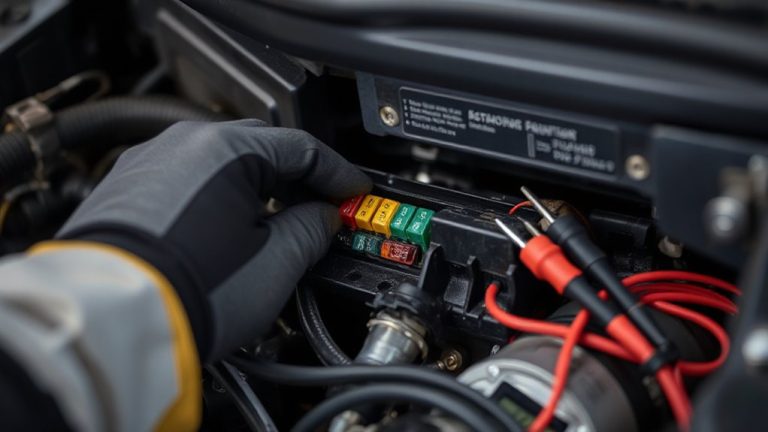
Why does your dashboard suddenly show the ABS warning light? This indicator activates when the system detects a malfunction, often due to electrical faults or wheel speed errors. Electrical faults-like damaged wiring, corroded connectors, or failing control modules-interrupt signal transmission between sensors and the ABS computer. Even a small voltage drop can disable the system. Wheel speed errors occur when sensor data doesn’t match expected parameters; for example, if one wheel reports 30 mph while others report 45 mph during braking, the ABS module flags a discrepancy. These errors prevent proper modulation of brake pressure during skids. When the light appears, don’t ignore it. Your vehicle may still brake normally, but without ABS functionality, stopping distances increase on slippery surfaces. Use a scan tool to retrieve diagnostic trouble codes. Address electrical faults first-check fuses, wiring harnesses, and ground connections-since they commonly trigger false wheel speed errors.
How Dirty or Failed Sensors Break Your ABS
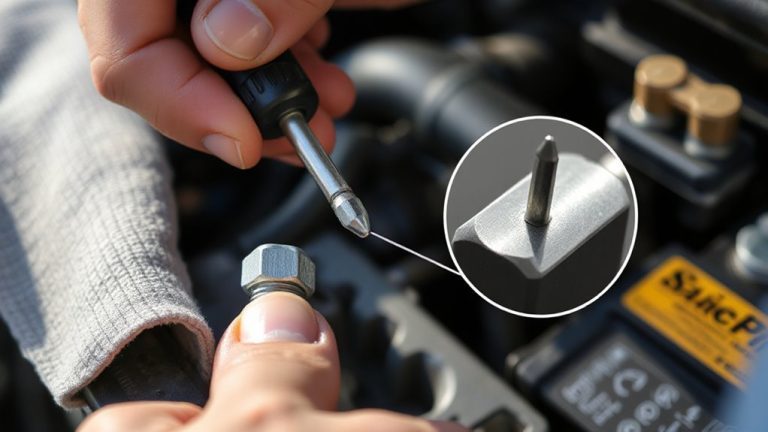
If you’ve ever had your ABS warning light come on during wet or icy conditions, a dirty or failed wheel speed sensor might be the real culprit behind the fault. These sensors monitor wheel rotation speed and send data in real time to the ABS control module. Even minor Sensor corrosion from road salt or moisture can distort readings. A corroded sensor may still conduct but deliver inconsistent voltage signals-typically varying outside the expected 0.5 to 12-volt AC range. Electrical interference from damaged wiring or nearby high-current systems can also mimic failure. Modern ABS relies on precise input; a deviation of just 5% between wheels triggers error codes. You’ll lose anti-lock function, increasing skid risk. Sensors are sealed, but connectors degrade. Most failures occur at the sensor tip or harness-check resistance (usually 800–1,200 ohms) and inspect for metallic debris or cracked shielding. Including a car safety tool kit in your vehicle can help you promptly address such issues during roadside diagnostics.
When to Change Brake Fluid to Protect ABS Function
Ever wonder why your ABS fails on a damp morning even though the sensors seem clean? The culprit is likely brake fluid degradation due to moisture contamination. Brake fluid is hygroscopic, meaning it absorbs water from the air over time. After two years, fluid can contain up to 3% water, reducing its boiling point from 446°F (dry) to as low as 284°F (wet). This increases vapor lock risk during heavy braking. Moisture also corrodes ABS valves and modulators, impairing function. Manufacturers recommend flushing brake fluid every 24 months or 24,000 miles. Use only DOT 3, 4, or 5.1 fluid meeting ISO 4925 standards. Visible darkening or a spongy pedal are warning signs. Prevent internal ABS damage-maintain clean, fresh fluid.
Simple Habits That Prevent ABS Problems
While small changes in driving behavior may seem minor, they can substantially extend the life and reliability of your Anti-Lock Brake System. Avoiding sudden stops reduces stress on ABS sensors and hydraulic actuators, preserving calibration. You should perform a brake inspection every 12,000 miles to check sensor wiring, rotor thickness, and fluid contamination. Worn sensors or damaged tone rings disrupt ABS signal accuracy, triggering false fault codes. Maintaining proper wheel alignment prevents uneven brake wear and minimizes lateral load during braking-excessive toe or camber angles can cause premature pad taper and sensor misalignment. Misaligned wheels also increase slip ratio variance between tires, confusing the ABS control module. Keep tire pressures at OEM specs (usually 32–35 psi) to guarantee uniform rolling diameters, aiding ABS performance. These habits sustain system integrity, guaranteeing full functionality when traction loss occurs. Regular maintenance prevents costly repairs and keeps ABS operating within design parameters.
On a final note
You should check your ABS regularly, not just when the warning light appears. Faulty sensors or contaminated brake fluid degrade system response. Most manufacturers specify brake fluid replacement every 24 months or 30,000 miles to maintain hydraulic integrity. ABS relies on wheel speed sensors, typically accurate to within ±1% of actual rotation. Clean sensors guarantee proper signal transmission. Ignoring maintenance risks system failure. Proper care keeps your ABS effective during hard braking.