A Guide to Choosing Surfactant-Enhanced Soaps for Efficient Auto Exterior Maintenance
Choose surfactant-enhanced car soaps with a 60:40 blend of anionic and nonionic surfactants for maximum cleaning. These formulas reduce surface tension to below 30 dynes/cm, improving water sheeting and grime removal. Look for sulfate-free ingredients like sodium C14-17 alkyl ethoxy sulfate and alcohol ethoxylates. Maintain paint safety with pH-neutral balance (6.5–8.0). Micelles lift dirt without scratching. Proper selection guarantees efficient, safe cleaning-knowing the right specs opens the door to better wash results.
Notable Insights
- Choose surfactant-enhanced soaps with a 60:40 ratio of anionic to nonionic surfactants for optimal cleaning efficiency.
- Select pH-neutral formulas (6.5–8.0) to safely protect automotive clear coats and preserve wax layers.
- Look for sulfate-free anionic surfactants and alcohol ethoxylates to ensure effective dirt removal and low surface tension.
- Opt for soaps with 3–5% betaines to boost foam stability and enhance suds cling on vertical surfaces.
- Use high micelle concentration (8% or more) in formulations to effectively lift heavy grime without abrasive scrubbing.
What Are Surfactant-Enhanced Car Soaps?
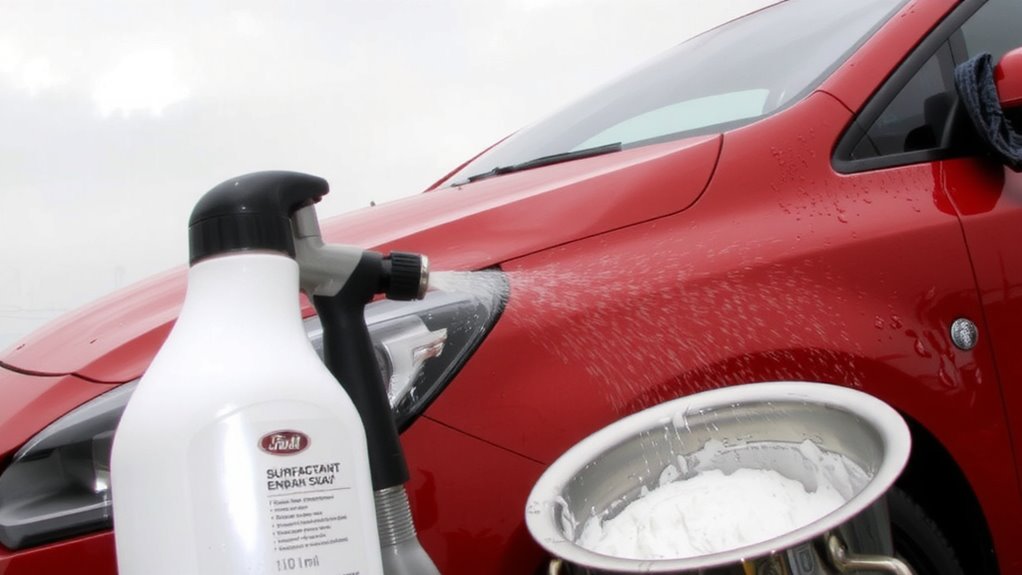
While traditional car wash soaps rely on basic detergents, surfactant-enhanced car soaps use specially engineered molecules to improve cleaning efficiency. You’ll find that surfactant chemistry manipulates molecular polarity, allowing the soap to interact with both water and oil. These surfactants have hydrophilic heads and hydrophobic tails, enabling them to surround and lift contaminants. The result is superior cleaning efficiency compared to conventional soaps. Most formulations contain anionic and nonionic surfactants in balanced ratios-typically 60:40-for peak performance. They reduce surface tension to as low as 30 dynes/cm, improving water spread and contact with grime. This science-backed approach guarantees more effective soil removal without increasing soap concentration. You don’t need extra product to achieve thorough results. Surfactant-enhanced soaps are designed for precision, offering consistent performance across varying water hardness levels.
How Surfactants Remove Grime Without Hurting Your Paint
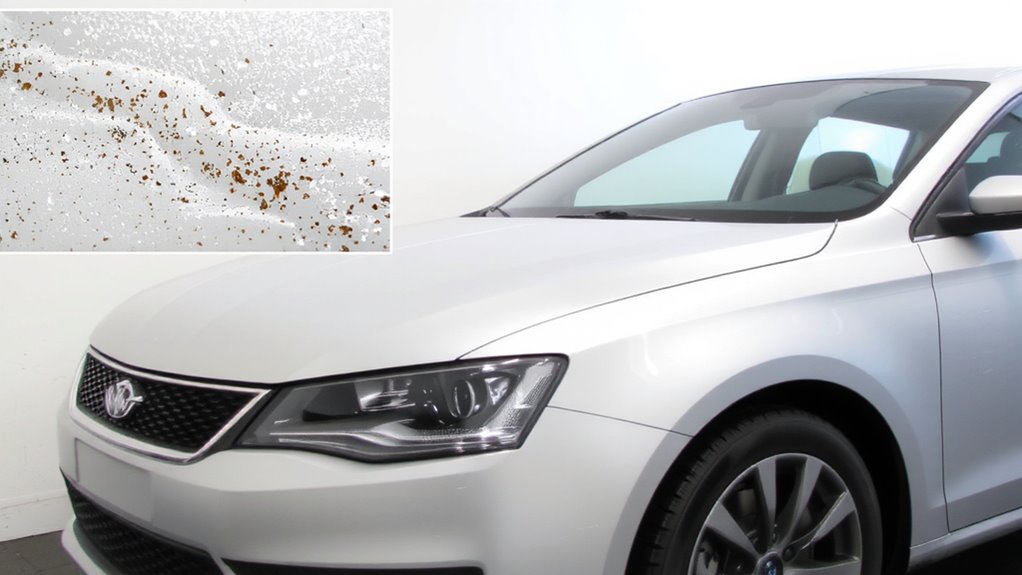
Surfactant-enhanced soaps lift grime efficiently because of how their molecules are structured, and that same design protects your car’s paint. Each molecule has a hydrophilic head and a hydrophobic tail. The tail attaches to oil and dirt through chemical bonding while the head bonds with water. This dual action breaks surface tension, allowing water to spread evenly and penetrate grime layers. Reduced surface tension-typically from 72 mN/m to below 30 mN/m-means water sheeting improves, lifting contaminants off the surface. The chemical bonding is selective, targeting organic residues without attacking wax or clear coat. Surfactants encapsulate grime into micelles, suspending them in water so they rinse away cleanly. Your paint isn’t abraded because no scrubbing force is needed. This process works at neutral pH levels, usually between 6.5 and 8.0, ensuring compatibility with automotive finishes. For optimal results, choose a car wash soap that balances surfactant strength with paint-safe ingredients.
Key Ingredients in High-Performance Surfactant Formulas
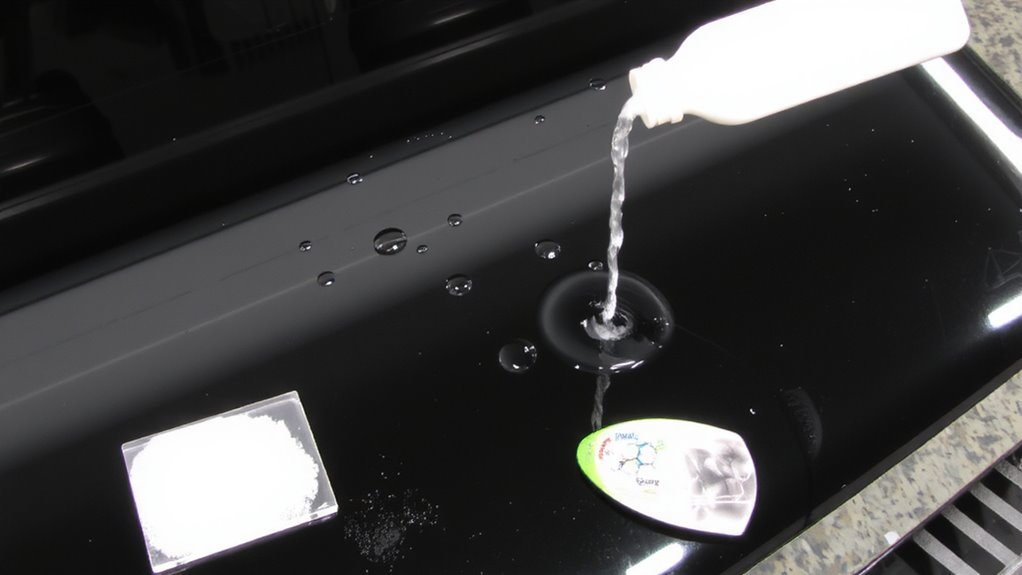
Performance starts with formulation. You need surfactants that balance cleaning power with safety. Look for sulfate-free anionic surfactants like sodium C14-17 alkyl ethoxy sulfate-they’re less aggressive than traditional sulfates but still generate rich lather. These compounds enhance foam stability, ensuring suds cling to vertical surfaces for 8–12 minutes, giving you time to agitate and lift contaminants. Pair them with nonionic surfactants such as alcohol ethoxylates, which improve rinsing efficiency by reducing surface tension to under 30 dynes/cm. That means water sheets off cleanly, minimizing water spots and drying time. High-performance formulas also include betaines for viscosity control and foam boosting, typically at 3–5% concentration. Avoid soaps with high pH; ideal range is 6.5–8.5 to protect clear coats. Each ingredient must serve a measurable function-no fillers. You’re not just washing; you’re optimizing for residue-free results and system compatibility.
Best Soaps for Heavy Grime, Wax Protection, and Quick Washes
Dirt loves to cling-especially when it’s caked-on grime from road salt, brake dust, or dried bug splatter. You need a surfactant-enhanced soap with high micelle concentration (at least 8%) to lift stubborn contaminants without scratching. Look for pH-neutral formulas (6.5–7.5) that preserve wax layers while cutting through oil. Products with ethoxylated alcohols and alkyl sulfates offer superior emulsification, ensuring grime washes away cleanly. Top options include Chemical Guys Mr. Pink and Meguiar’s Gold Class, both delivering excellent car shine and wax protection. They contain conditioning polymers that bond to paint, enhancing gloss and repelling water. For time efficiency, use a 2:1 water-to-soap ratio in your foam cannon-this generates dense suds that cling, allowing faster coverage and fewer rinses. These soaps rinse residue-free in under 60 seconds per panel, minimizing water spotting. Choose concentrates with biodegradable surfactants for eco-safe, high-performance results.
How to Wash Your Car the Right Way With Surfactant Soap
Why do some car washes leave streaks or swirl marks despite using premium soap? You’re likely overlooking key factors in your car care routine. Start by rinsing your vehicle with lukewarm water-ideal water temperature is between 80°F and 100°F. This range activates surfactants without baking soap onto the surface. Use a pH-neutral, surfactant-enhanced soap at a 1:10 dilution ratio. Apply with a lambswool wash mitt using straight-line motions to prevent micro-scratches. Work from the top down, allowing suds to encapsulate grit before it contacts paint. Rinse immediately after washing each section. Never let soap dry in direct sunlight. Finish with a microfiber drying towel rated at 300 GSM or higher. Proper technique maximizes surfactant efficiency, lifting contaminants without damaging wax layers. This method guarantees a smear-free, swirl-free finish every time-precision cleaning at its most effective. A crucial yet often overlooked tool is the two-bucket method, which helps prevent recontamination by keeping your wash mitt grit-free.
On a final note
You get superior cleaning with surfactant-enhanced soaps because they lower water’s surface tension to 30–35 dynes/cm, allowing deeper penetration into grime. These formulas lift dirt efficiently without stripping wax, typically containing 5–15% anionic surfactants like sodium lauryl sulfate. Correct dilution-usually 1:200 to 1:400-ensures ideal performance. Use pH-neutral variants (6.5–7.5) to protect clear coats. High-sudsing types signal effective soil suspension.