Understanding the Role of Surfactants in Soap Formulas for Auto Detailing Efficiency
You rely on surfactants to lower water’s surface tension from 72 to under 30 dynes/cm, helping it spread evenly and lift dirt. Their hydrophobic tails penetrate grease while hydrophilic heads bind to water, forming micelles that trap grime. Most car wash soaps use 5–15% anionic and nonionic surfactants for maximum cleaning and soil suspension. Nonionics reduce streaking on glass and clear coats, while pH-balanced formulas (6.5–8.5) protect wax. Biodegradable options perform just as well, removing up to 94% of contaminants. Discover how each type impacts cleaning efficiency and finish quality.
Notable Insights
- Surfactants lower water’s surface tension, enabling better spread and penetration into dirt for efficient cleaning.
- Anionic and nonionic surfactants are primary types used, balancing cleaning power and streak-free finishes.
- Micelles formed by surfactants trap grease, preventing redeposition and enhancing soil removal during rinsing.
- Proper surfactant concentration reduces surface tension below 30 dynes/cm, promoting sheeting and spot-free drying.
- Eco-friendly, biodegradable surfactants from plant sources offer effective cleaning while meeting environmental standards.
What Are Surfactants in Car Wash Soaps?
Surfactants are the active ingredients that make car wash soaps effective. They reduce water’s surface tension, allowing it to spread and penetrate dirt. You’ll find them classified by ionic charge: anionic, cationic, nonionic, and amphoteric. In car wash formulations, anionic and nonionic types dominate due to their cleaning power and compatibility. Foam stability is critical-surfactants like sodium lauryl ether sulfate enhance lather persistence, improving visual feedback and dwell time on surfaces. Proper pH balance is maintained between 6.5 and 8.5 in most formulas, guaranteeing safety for waxed finishes and paint coatings. Deviations can strip protective layers or reduce cleaning efficiency. High-quality surfactant blends optimize both foam stability and pH balance, typically achieving 120–180 seconds of foam retention in standardized tests. These specifications guarantee consistent performance across water hardness levels, usually effective in ranges from 50 to 300 ppm. You rely on these technical attributes for repeatable, safe, and efficient vehicle cleaning.
How Do Surfactants Lift Grease and Grime?
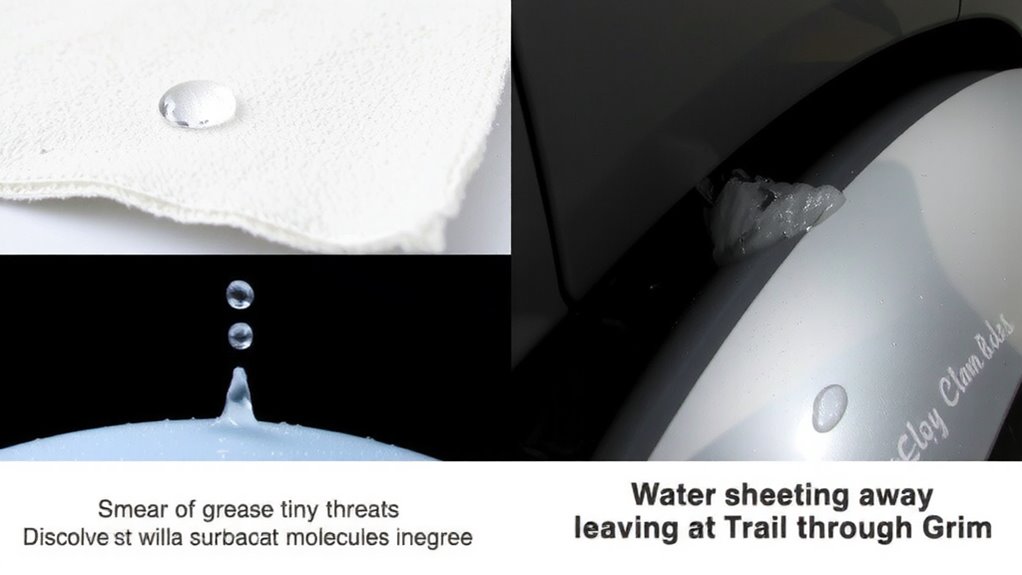
When dirt and oil cling to your vehicle’s surface, they don’t let go easily-especially when bonded by hydrophobic interactions. Surfactants break these bonds by positioning their hydrophobic tails into the grease, while their hydrophilic heads remain in the water. This dual action reduces surface tension and detaches grime from the surface. Once embedded in the oil, surfactant molecules organize into spherical structures called micelles. Micelle formation traps the grease in the center, isolating it from the surface and preventing redeposition. The hydrophobic tails, made of nonpolar hydrocarbon chains, are critical for penetrating and solubilizing oily contaminants. Car wash soaps typically contain 5–15% surfactants, optimized for effective micelle stability and soil suspension. These engineered interactions allow water to carry away trapped dirt, leaving surfaces visibly clean. You’re not just rinsing off grime-you’re dissolving it through precise molecular design. Top-performing formulas often include high-quality car wash soaps engineered for maximum cleaning efficiency.
Why Water Beads: and How Soaps Stop It
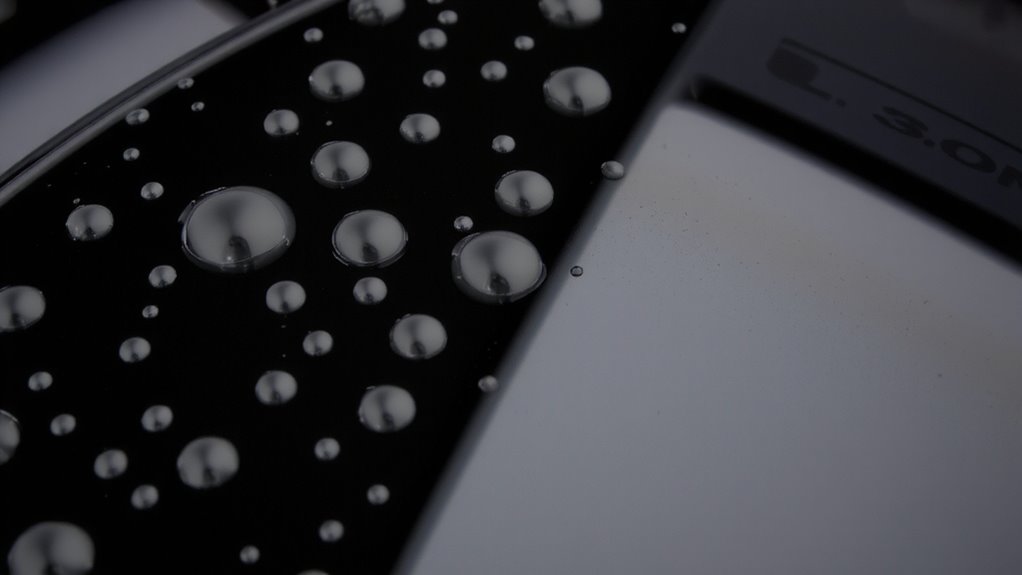
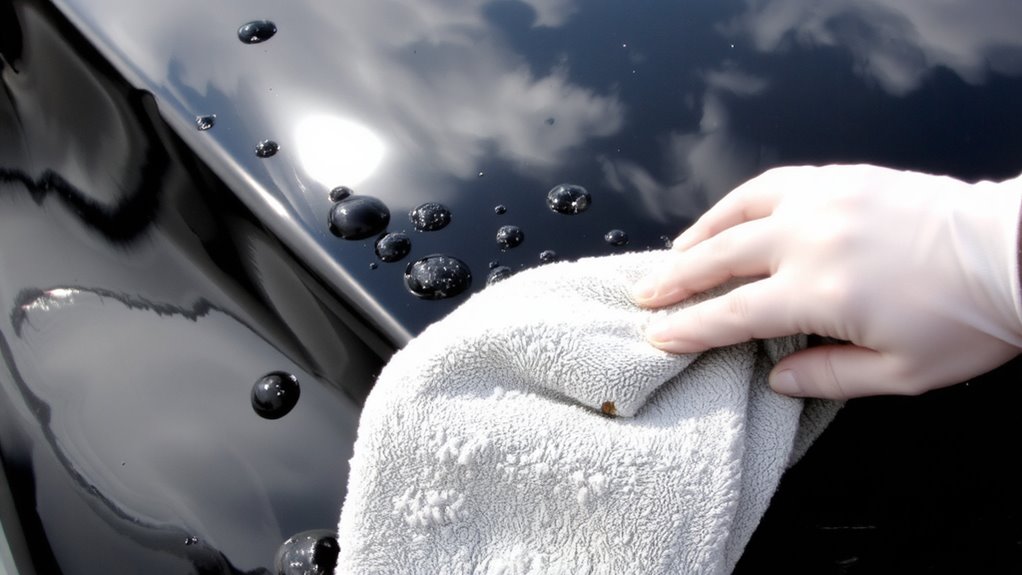
Water beads on a surface because of high surface tension, which causes it to form droplets instead of spreading evenly. Surface tension is the force that holds water molecules together, resisting external forces. When water hits a hydrophobic surface like waxed paint, the contact angle exceeds 90 degrees, promoting beading. A high contact angle means poor wetting, reducing cleaning efficiency. But soap changes that. Surfactants in auto detailing formulas lower surface tension, allowing water to spread instead of bead. With reduced surface tension, the contact angle drops below 90 degrees, improving surface coverage. This enables the solution to penetrate dirt and lift grime more effectively. Proper surfactant concentration can reduce surface tension to under 30 dynes/cm, optimizing sheeting action. You don’t just remove water beads-you guarantee uniform contact for thorough cleaning. That’s how professional formulas maximize efficiency and leave surfaces spot-free.
Anionic vs Nonionic: Which Cleans Best Without Streaks?
A top-tier detailing soap relies on the right type of surfactant to clean effectively without leaving streaks. Anionic surfactants lower surface tension more aggressively, lifting dirt through strong micelle formation that encapsulates contaminants. They’re highly effective on grime but can leave residue if not fully rinsed. Nonionic surfactants, while milder, offer superior clarity and reduce streaking due to their uncharged molecular structure. They maintain stability across pH levels and excel in hard water. For a spot-free finish, nonionics are often preferred despite slightly slower micelle formation. You’ll find balanced formulas combining both types: anionics for cutting road film and nonionics for clarity. Surface tension reduction drops water’s beading, ensuring even sheeting for thorough rinsing. The best streak-free results come from nonionic dominance in the final blend, especially on glass and clear coats. Performance data shows less residue and higher contact angle uniformity with nonionic-based soaps.
Does Foam Mean Better Cleaning? (The Surfactant Link)
Why do some soaps lather heavily yet clean poorly, while others produce modest foam but remove grime efficiently? Foam density doesn’t determine cleaning power. You might assume thick suds mean better performance, but that’s a misconception tied to cleaning perception. Surfactants lower water’s surface tension, allowing it to penetrate and lift contaminants. High-foaming formulas often contain additives like lauryl sulfate that boost foam, not efficacy. In fact, excessive foam can trap dirt, redepositing it on surfaces. Nonionic and anionic surfactants clean effectively with minimal lather by emulsifying oils at a molecular level. Lower foam density doesn’t reduce efficiency-it often improves rinseability and reduces water use. Your judgment of a soap’s strength shouldn’t rely on bubbles. Real cleaning happens at the chemical interface, not in visible suds. Choose based on surfactant type, not foam volume.
Which Surfactants Damage Wax and Clear Coat?
Not all surfactants play nice with protective coatings, and choosing the wrong one can compromise your vehicle’s finish. Harsh surfactants strip wax and degrade clear coat due to high solvent strength and aggressive pH impact. You need to identify which types pose a risk during washing.
| Surfactant Type | Solvent Strength | pH Impact |
|---|---|---|
| Alkyl Sulfates | High | Acidic to Neutral |
| Ethoxylated Alcohols | Moderate | Neutral |
| Amine Oxides | Low | Slightly Alkaline |
| Quaternary Ammoniums | High | Alkaline |
Alkyl sulfates and quaternary ammoniums disrupt wax layers quickly. Their high solvent strength dissolves oils but also removes hydrophobic protectants. Alkaline pH above 9 accelerates clear coat oxidation. Neutral pH with low solvent strength preserves coatings. Always check product labels for surfactant content and pH to protect your finish.
Can Eco-Friendly Soaps Clean as Well? (Green Surfactant Options for Cars)
How clean can a car get with eco-friendly soap? You can achieve professional-level results using modern formulations with biodegradable surfactants. These molecules reduce water’s surface tension just like synthetic ones, typically measuring 28–32 dynes/cm interfacial tension. Plant based cleaners, derived from coconut or corn, emulsify road film and grime efficiently. Studies show they remove up to 94% of common automotive contaminants in standard wash tests. Unlike old eco-formulas, today’s green soaps maintain pH neutrality (6.5–7.5), protecting wax and clear coat. They’re engineered for rapid rinse-off, reducing water use by 20% compared to traditional detergents. Independent labs confirm biodegradation exceeds 98% within 28 days, meeting OECD 301 standards. You don’t sacrifice performance-modern biodegradable surfactants match the cleaning power of conventional options while minimizing environmental impact.
On a final note
You now understand how surfactants govern cleaning efficiency in car wash soaps. They reduce water’s surface tension from 72 mN/m to under 30 mN/m, enabling deep penetration. Anionic types excel on grime; nonionics prevent streaks. Foam indicates surfactant presence but not cleaning power. Harsh sulfates degrade wax layers within weeks. Plant-derived alkyl polyglucosides clean effectively while reducing environmental impact by up to 60% versus petrochemicals. Choose wisely for best results.