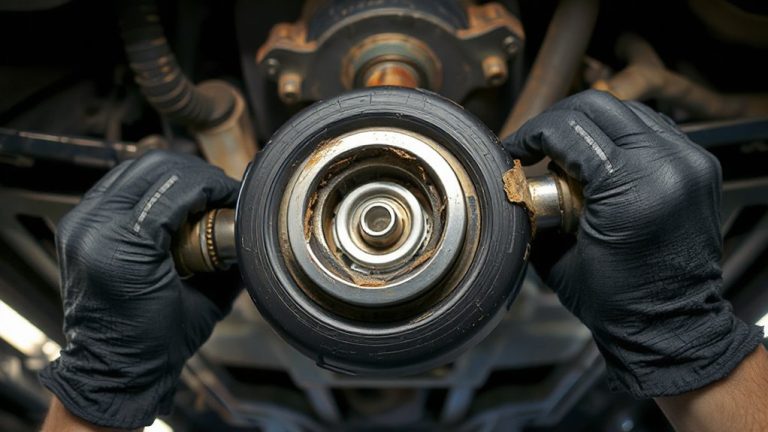
The Role of Suspension Lift in Enabling Larger Wheel and Tire Setups
You need a suspension lift to fit larger wheels because stock clearances restrict tires over 33 inches. Raising the chassis increases space between the axles and body, preventing rub during articulation or turns. Lift kits include longer shocks, extended control arms, and revised mounting points to maintain proper geometry. A 2-inch lift fits 33-inch tires; 4 inches allows 35s with minimal trimming. You’ll also need to take into account backspacing, gearing, and braking upgrades as tire size increases-factors that affect both performance and safety when pushing beyond factory limits.
Notable Insights
- Suspension lifts raise the vehicle’s chassis to create clearance for larger wheels and tires.
- Increased height prevents tire-to-body contact during steering and suspension articulation.
- Lift kits often include longer shocks and extended control arms for proper fitment.
- Larger tires add rotational mass, requiring upgraded brakes and drivetrain components.
- Negative offset wheels may extend beyond fenders, necessitating flares to comply with legal limits.
Why Larger Wheels Need a Suspension Lift
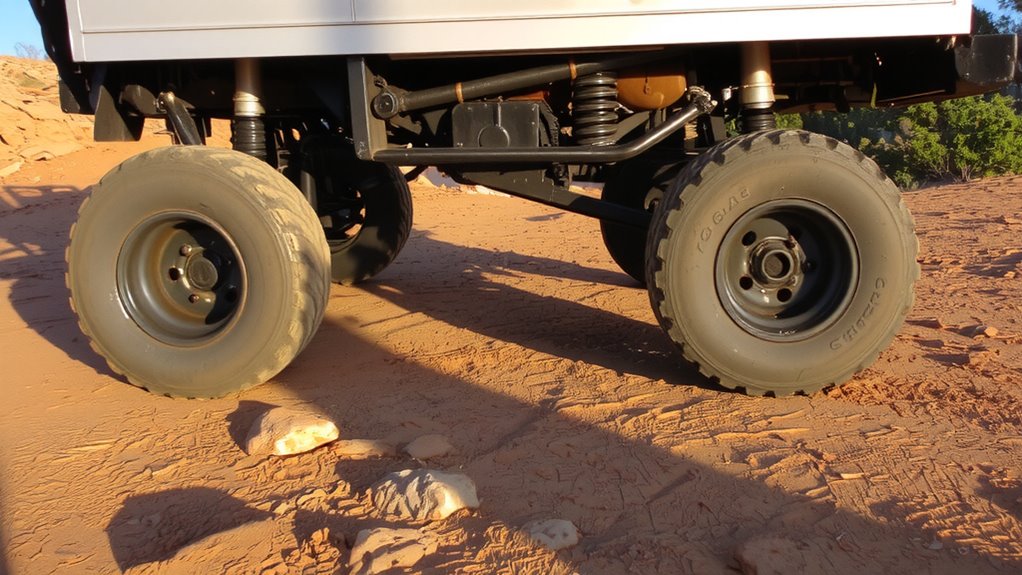
While your stock suspension may work fine with factory wheels, it’s not designed to handle larger diameters-typically 33 inches or more-without modifications. Increased wheel diameter reduces axle clearance, raising the risk of tire-to-chassis contact during compression. You’ll notice rubbing on suspension components, fenders, or control arms, especially at full lock or full articulation. Larger wheels also affect brake compatibility. Many aftermarket wheels have unique backspacing or hub bore requirements that don’t align with stock brake calipers or rotors. This mismatch can cause binding, uneven wear, or failure to fit entirely. The added rotational mass strains factory brakes, reducing stopping power and increasing fade. Proper axle clearance and brake compatibility are critical for safety and performance. Without verifying these factors, even a minor wheel upgrade can compromise handling, durability, and control-making suspension modifications not just beneficial, but necessary. Installing a lift kit for Ram 1500 can effectively address these clearance and compatibility challenges while enhancing off-road capability.
How a Lift Kit Makes Room for Bigger Tires
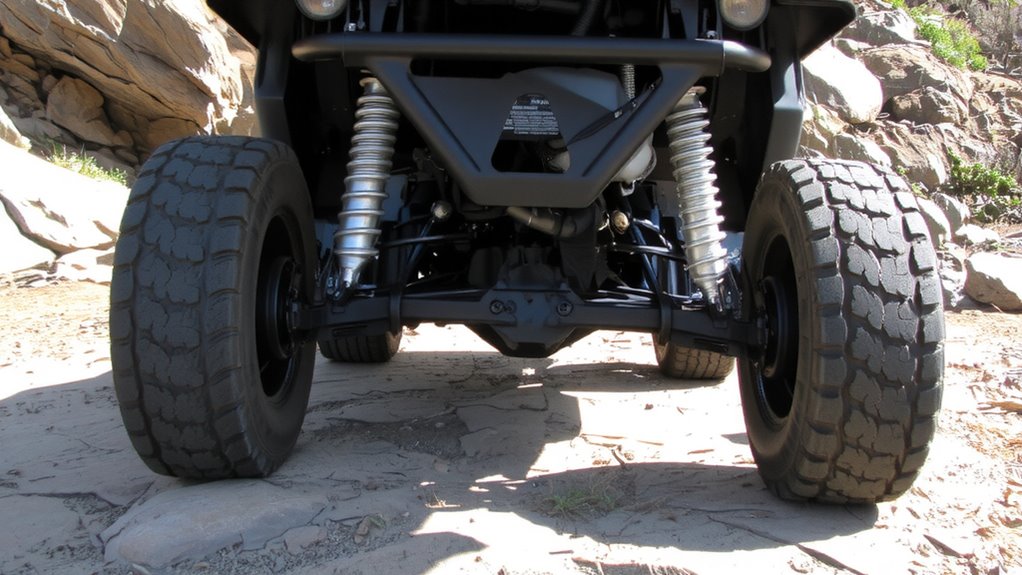
A lift kit gives your vehicle the physical clearance needed to fit larger tires by altering the suspension geometry. It raises the chassis, increasing the distance between the axles and the body. This added height directly improves tire clearance, preventing rub during articulation or steering. Without sufficient clearance, larger tires contact the fender liners, frame, or suspension components, causing damage and unsafe handling. Most lift kits include extended control arms, longer shocks, and repositioned mounting points to maintain proper alignment and travel. Some setups require wheel well modifications, such as trimming plastic liners or installing aftermarket fenders, especially beyond 3 inches of lift. These changes allow full tire rotation and compression without interference. A typical 2-inch lift accommodates tires up to 1 inch larger in diameter, while a 4-inch lift may allow increases of up to 2 inches. When selecting the right upgrade, it’s essential to consider compatibility with models like the Ford F-150 and choose from top-performing options such as Best Suspension Lift Kits.
Common Lift Kit Types and Their Tire Capacity
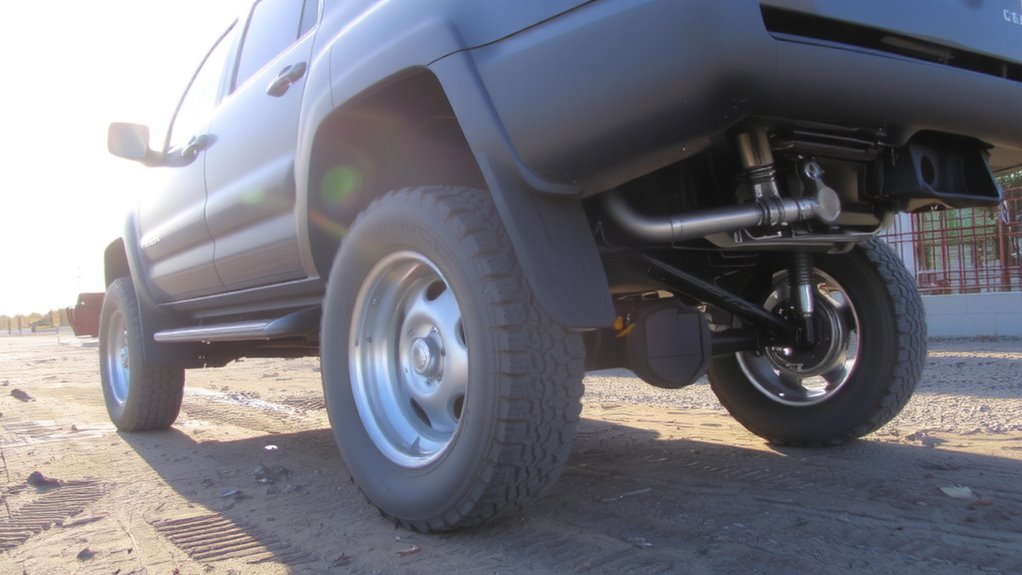
Lift kits come in several types, each designed to deliver specific gains in ride height and tire clearance. You’ll need to match the kit type to your off-road goals and vehicle model. Each kit increases lift height differently, directly affecting how much tire clearance you gain.
| Kit Type | Lift Height (in) | Max Tire Clearance (in) |
|---|---|---|
| Stock | 0 | 31 |
| Body Lift | 1–3 | 32–33 |
| Leveling Kit | 0.5–2 | 32 |
| Suspension Lift | 2–6 | 33–37 |
| Hybrid Lift | 4–8 | 35–40 |
Larger lift height usually means better off-road performance. However, excessive lift without proper geometry adjustments may reduce stability. Suspension lifts modify key components like control arms and shocks. Body lifts raise the frame alone, offering modest tire clearance gains. Choose based on your intended tire size and driving conditions. For 4Runner owners, selecting the right lift kit can significantly enhance both off-road capability and tire fitment.
What Tire Sizes Fit With Each Lift Kit Height?
How big of a tire can your rig actually handle? With a 2-inch lift, you can typically fit 33-inch tires without major modifications. A 4-inch lift opens the door for 35-inch tires, offering better ground clearance while still maintaining reasonable fuel efficiency. When you reach 6 inches of lift, 37-inch tires become feasible, though increased tire wear and reduced fuel efficiency are common due to added weight and rolling resistance. Lifts of 8 inches or more accommodate 38- to 40-inch tires, but only with significant suspension modifications. Larger tires demand stronger axles, upgraded gearing, and recalibrated speedometers. Each increase in tire size affects handling, braking, and drivetrain strain. Matching tire diameter to lift height guarantees proper clearance, minimizes drivetrain stress, and optimizes both tire wear and fuel efficiency under real-world driving conditions.
Alignment and Offset to Prevent Tire Rub
Getting the right tire size isn’t the only factor in guaranteeing a smooth, reliable off-road setup-your wheel alignment and offset play a big role in preventing tire rub. Proper alignment guarantees even tire wear and maximizes tire clearance. Offset affects wheel spacing, determining how far the tire sits in relation to the fender and suspension components. Too much inward offset can cause contact with control arms; too much outward increases stress on wheel bearings. Adjustments through spacers or corrected offset wheels maintain ideal geometry and clearance.
| Offset Type | Effect on Wheel Spacing | Impact on Tire Clearance |
|---|---|---|
| Positive | Pulls wheel inward | Reduces inner clearance |
| Zero | Centered in wheel well | Balanced fitment |
| Negative | Pushes wheel outward | Risks fender rub |
Always verify alignment specs and offset compatibility after a lift.
How Bigger Tires Boost Off-Road Performance
Ground clearance is your first line of defense when tackling rough terrain. Larger tires elevate your vehicle’s undercarriage, improving obstacle clearance by reducing the chance of bottoming out on rocks or ruts. A 35-inch tire, for example, offers nearly 2 inches more clearance than a 33-inch model, drastically increasing approach and departure angles. You gain serious traction improvement because bigger tires distribute weight over a larger contact patch. This enhances grip on loose surfaces like mud or gravel. The increased rolling diameter also lets you maintain momentum over uneven ground, acting like a bigger gear ratio in low range. Sidewall height rises too, allowing slight deflation for better conformability on rocky trails. You don’t just climb better-you stay planted. With proper lift support, larger tires transform your off-road capability through measurable gains in traction improvement and obstacle clearance.
Legal and Safety Limits for Lifted Trucks and Big Tires
What’s the tallest lift you can run before running afoul of the law? It depends on your state’s regulations, but most limit lifts to 4 to 6 inches. Exceeding these limits can trigger failed vehicle inspection requirements. Lifts over 6 inches often require reinforced suspension components and proper frame modifications to maintain safety. Tire width regulations vary, too-some states cap tire width at 12 inches unless the vehicle has a wider factory track. Wider tires may need fender flares meeting specific overhang limits, usually no more than 3 inches beyond the body. You’re responsible for ensuring your setup complies. Illegal modifications affect insurance and may result in fines. Always check local laws before installing oversized tires or lifts. Safety isn’t just legal-it’s structural. Proper alignment, brake upgrades, and steering geometry adjustments are essential with big tires. Stay within limits. Your truck’s stability depends on it.
On a final note
You need a suspension lift to fit larger tires safely and effectively. Each inch of lift increases clearance, allowing bigger tire diameters without rubbing. A 2-inch lift accommodates up to 33-inch tires; 6 inches clears 37-inch tires. Proper backspacing (typically 4.5–5.5 inches) and alignment (0–1 degree camber) prevent contact with suspension or fenders. Bigger tires improve traction and ground clearance but increase strain on drivetrain components. Always stay within legal width and height limits.