UV & Oxidation vs Clear Coat: Why It Loses 30% Thickness
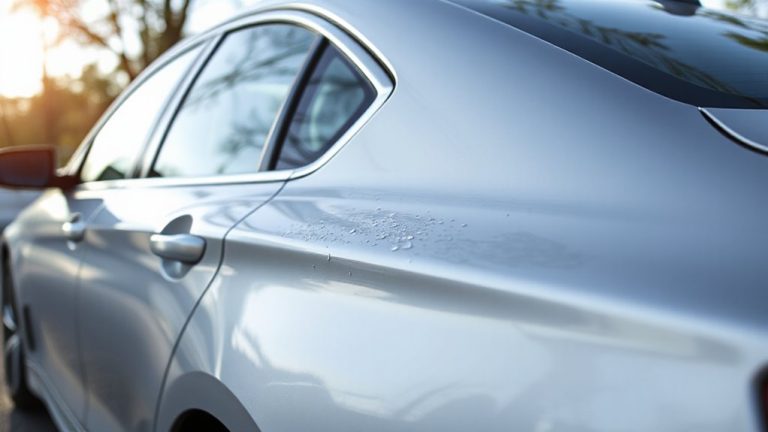
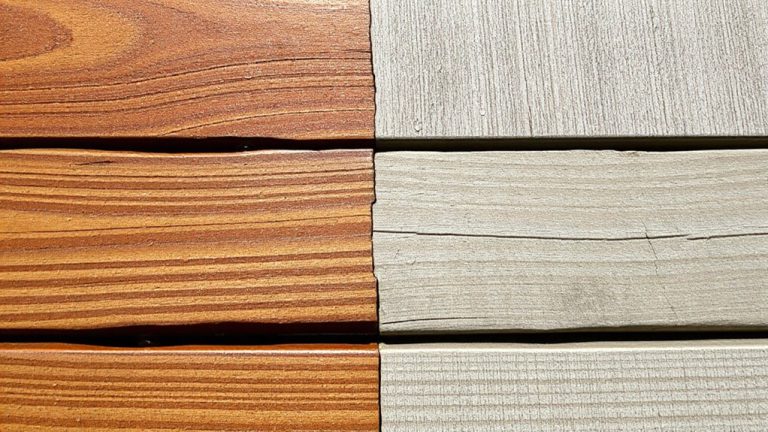
UV exposure breaks chemical bonds in your clear coat, degrading up to 30% of its 18–25 micron thickness over time. Without UV inhibitors, wavelengths between 290–400 nm cause chain scission, reducing cross-link density. Oxidation fractures polymer chains, producing a chalky surface when fragments exceed 0.5 mil depth. Gloss drops below 70 units from 90–100, with 30% less light reflectance. Ceramic coatings (9H hardness) block 95% of UV rays and last 2–5 years. You’ll discover effective restoration and long-term protection strategies next.
Notable Insights
- UV radiation breaks polymer bonds in clear coats, causing chain scission and reducing structural integrity over time.
- Oxidation from UV and oxygen exposure fractures polymer chains, leading to chalkiness and surface degradation.
- Visible damage includes fading, yellowing, and hazing due to micro-cracking and reduced gloss below 70 units.
- Ceramic coatings block 95% of UV rays and provide long-term protection with 9H hardness and hydrophobic properties.
- Polishing removes oxidized layers, while sealants or ceramics restore and prevent future clear coat degradation.
How Sun Damage Weakens Clear Coat
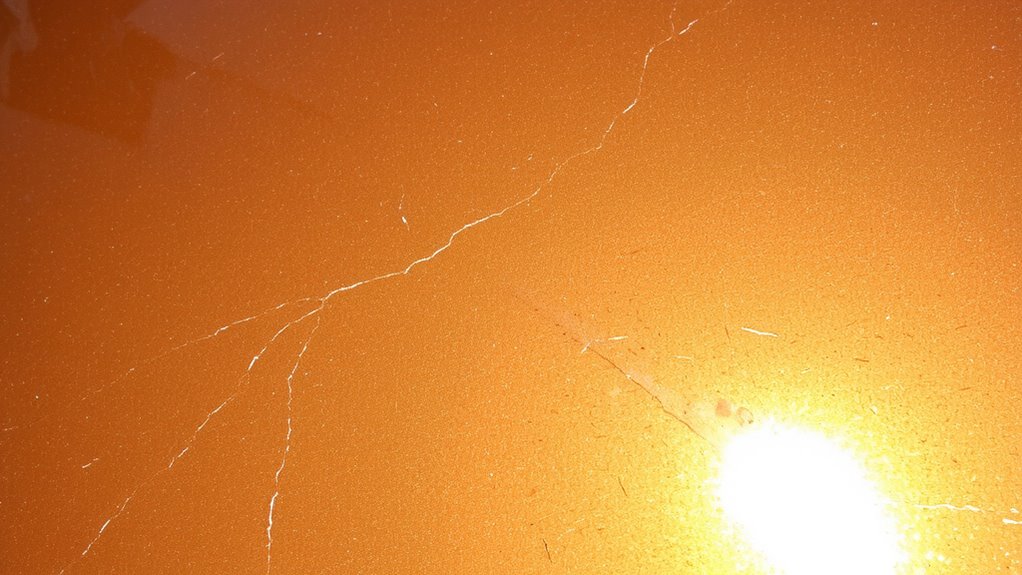
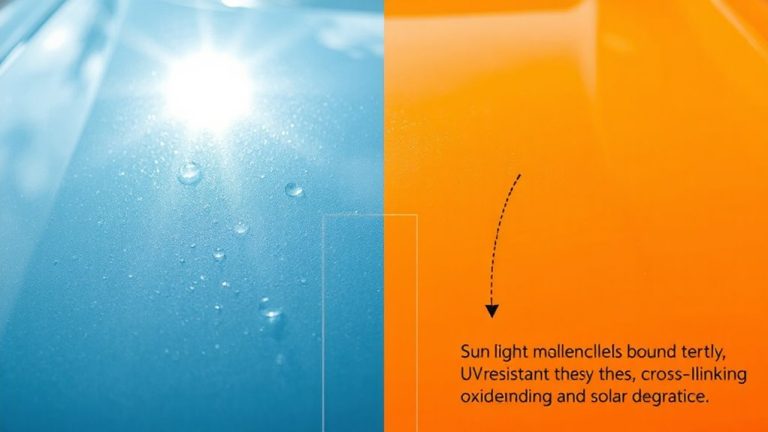
While UV radiation from the sun might seem harmless at first, it actually breaks down the chemical bonds in your clear coat over time. This molecular breakdown weakens the polymer structure, reducing its elasticity and impact resistance. As the matrix degrades, clear coat brittleness increases, making it more prone to microcracking under thermal stress. Standard clear coats are typically 18–25 microns thick; once degradation reaches 30% of this depth, structural integrity declines markedly. UV photons with wavelengths between 290–400 nm penetrate the surface, exciting electrons and initiating chain scission. This process accelerates with prolonged exposure, especially above 70°F. Without UV inhibitors or protective films, the resin matrix loses cross-link density, compromising gloss and durability. Prevention includes ceramic coatings that block 95% of UV radiation. These maintain hardness ratings of 9H and extend service life by up to 5 years. Regular cleaning with a waterless car wash kit helps preserve the clear coat by removing contaminants without introducing abrasive friction.
Why Oxidation Turns Clear Coat Chalky
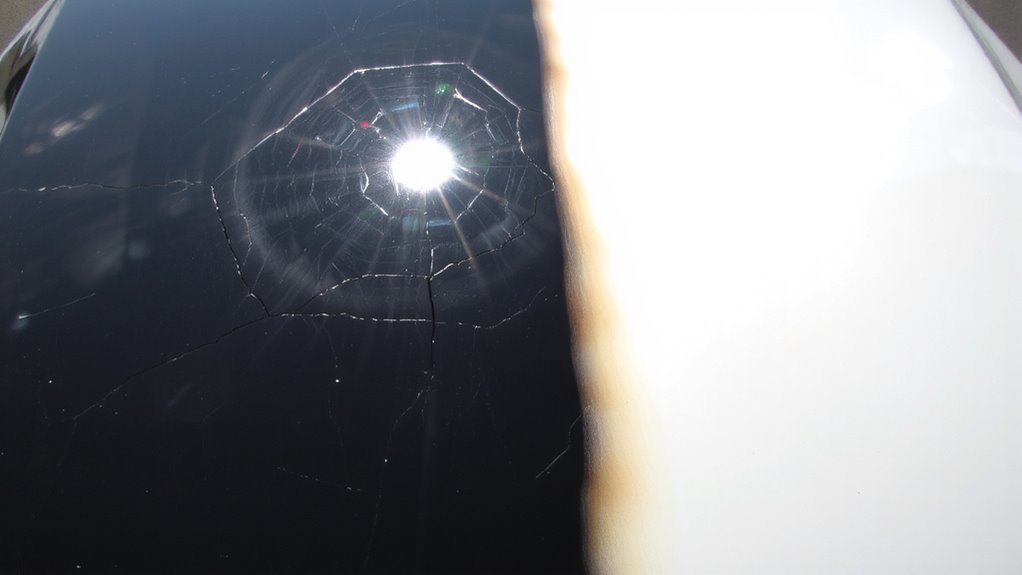
When your clear coat is exposed to oxygen and UV light over time, oxidation begins to take hold, gradually transforming the surface into a dull, chalky layer. This happens because UV radiation accelerates the chemical breakdown of polymers in the coating. The result is molecular degradation, where long polymer chains fracture into smaller, unstable fragments. These degraded molecules lose cohesion and reflect light unevenly, giving the surface a faded, matte appearance. Oxidation also draws plasticizers and oils to the surface, leaving behind a powdery residue when wiped. Most clear coats are 1.5 to 2.5 mils thick; once oxidation penetrates more than 0.5 mil, the damage becomes irreversible without refinishing. Unlike temporary surface grime, this chalkiness indicates permanent material failure. Prevention requires UV-resistant sealants or ceramic coatings that bond at the molecular level to slow degradation. Regular maintenance can delay, but not stop, this inevitable process. Choosing a high-quality clear coat spray paint can significantly enhance initial durability and UV resistance.
Signs Your Clear Coat Is Failing From UV Exposure
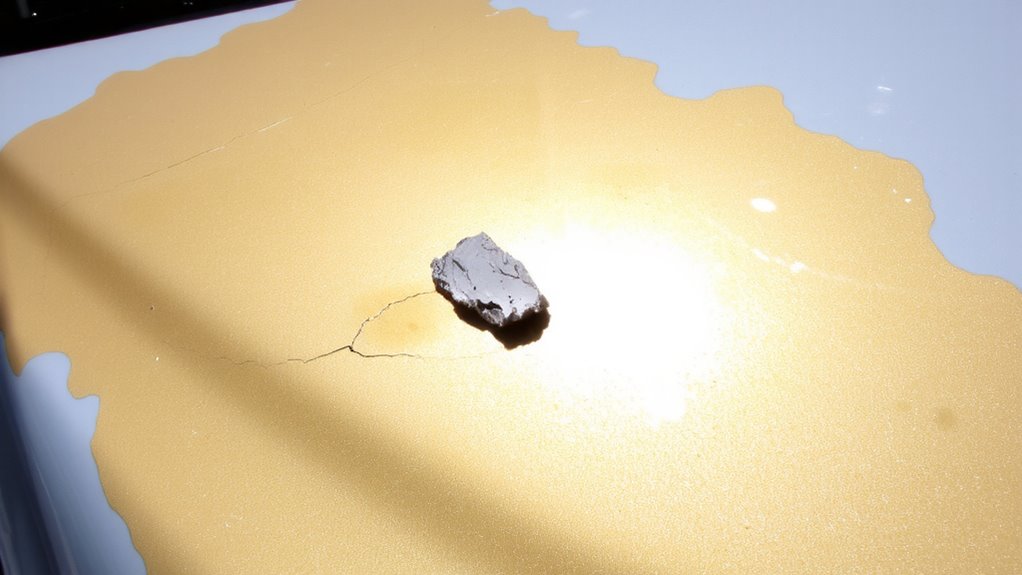
How can you tell if UV exposure is compromising your clear coat? Look for fading discoloration, especially on the hood, roof, and trunk where sun exposure is most intense. This yellowing or dulling occurs as ultraviolet radiation breaks down polymer chains in the acrylic or polyurethane matrix, reducing reflectivity. Surface hazing follows, creating a diffuse, foggy appearance caused by micro-cracking and oxidation at the nanometer scale. The once-glossy finish measures below 70 gloss units on a 60° glossmeter, well under the factory-standard 90–100. You might notice light scratches deepen due to reduced coating elasticity. Reflectance tests show up to 30% loss in visible light return. These changes mean UV damage has exceeded the clear coat’s UV absorber capacity, usually after 2–4 years of unsheltered exposure.
Best Ways to Protect Clear Coat From Sun Damage
If you want to preserve your clear coat’s integrity against solar degradation, consistent application of UV-resistant protective layers is essential. A ceramic coating offers long-term defense, typically lasting 2–5 years, with hydrophobic properties that repel water and contaminants. These coatings bond chemically to the paint surface, forming a hard, transparent layer that resists UV rays and thermal oxidation. Most quality ceramic coatings have a hardness rating of 9H on the pencil hardness scale, markedly tougher than untreated clear coat. Paint sealants, while not as durable, provide strong short- to mid-term protection-usually 6 to 12 months. They consist of synthetic polymers that fill microscopic pores in the clear coat, reducing UV penetration. Unlike waxes, sealants don’t degrade quickly under intense sunlight. For best defense, apply both: sealants annually and ceramic coatings every few years, following manufacturer specifications.
How to Restore Oxidized Clear Coat
Sun exposure weakens clear coat over time, leading to oxidation that dulls your vehicle’s finish and compromises protection. Restoring it requires proper paint correction and polishing techniques. Start with a thorough wash and clay bar treatment to remove surface contaminants. Use a dual-action polisher with a cutting pad and compound to remove 1–2 mils of the degraded clear coat layer. This abrasing process flattens micro-cracks and restores gloss. Follow with a finer polish and foam pad to refine the surface. Polishing techniques matter-apply moderate pressure and 1,200–1,800 RPM for uniform results. Finally, apply a ceramic coating or wax to seal the finish. Effective paint correction can recover up to 90% of original clarity. Immediate protection post-correction prevents rapid re-oxidation. For headlights suffering from similar UV damage, using a professional-grade headlight restoration kit can significantly improve clarity and safety.
On a final note
You must protect your clear coat from UV exposure and oxidation to preserve paint integrity. Prolonged sunlight degrades urethane-based clear coats, reducing gloss by up to 40% over five years. Oxidation creates a chalky surface when UV breaks down polymer chains. Use ceramic coatings with 9H hardness and UV inhibitors-they block 99% of UV radiation. Apply every 2–3 years for maximum protection.