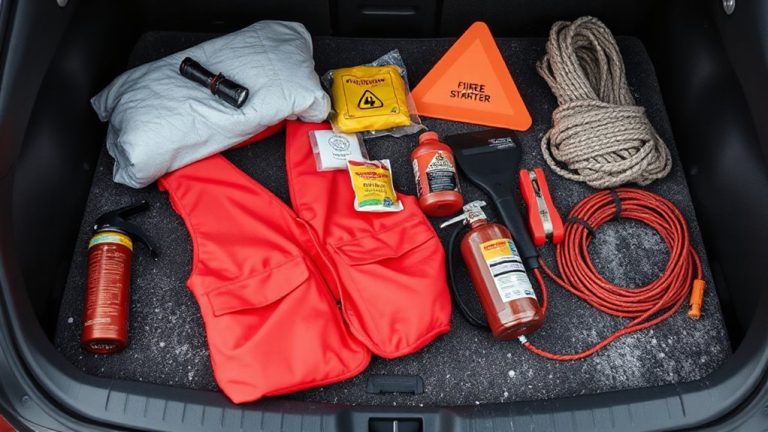
Remote Location Breakdowns: Preparing for the Unpredictable
Your vehicle’s most common remote failures include overheating above 220°F, often from low coolant or clogged radiators, and flat tires from underinflation below 20 psi. Alternator failure drops charging below 13.5 volts, while fuel pumps fail after 30,000 miles without clean filters. Differential leaks lose 0.5 quarts of gear oil per hour. You can use gum, wire, or vines for temporary fixes. Proper pre-trip checks reduce breakdown risks markedly-what you do before driving determines how well you survive when things go wrong.
Notable Insights
- Check coolant levels and radiator condition to prevent overheating in remote areas.
- Maintain proper tire pressure and inspect for damage to avoid blowouts off-road.
- Test the alternator and battery charge to ensure electrical system reliability far from help.
- Inspect differential seals and gear oil levels if planning extended 4×4 use on rough terrain.
- Carry emergency supplies and know how to use improvised tools for temporary repairs.
Spot the 5 Most Common Remote Breakdowns
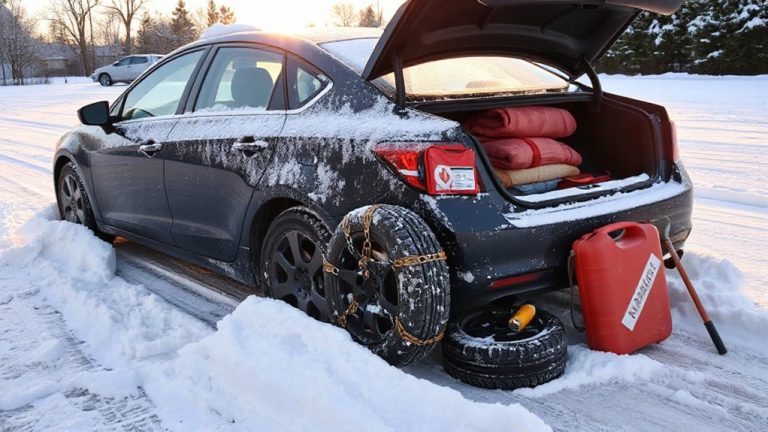
When operating in remote environments, you’re more likely to face equipment failures that ground operations if they aren’t anticipated. Vehicle overheating is one of the most frequent issues, often caused by clogged radiators or low coolant levels. Temperatures exceeding 220°F trigger engine shutdowns in most SUVs and trucks. A flat tire ranks second, especially on unpaved terrain where sidewall damage occurs at speeds over 30 mph. Standard all-terrain tires operate at 32–35 psi, but dropping below 20 psi increases blowout risk by 60%. Alternator failures follow, disrupting battery charge at 13.5 volts or lower. Fuel pump malfunctions appear next, cutting supply after 30,000 miles without filtration. Finally, differential seal leaks result from sustained 4×4 use on rocky inclines, losing 0.5 quarts of gear oil per hour. Recognizing these five failures helps maintain mobility when help is hours away. A well-stocked car emergency kit can provide critical tools and supplies to address these common breakdowns.
Build a Go-Everywhere Emergency Kit
Reliability isn’t just a goal-it’s a requirement when you’re miles from help. Pack layers of protection: start with an insulated thermal blanket (minimum 0.5 TOG rating) and add a moisture-wicking base layer and windproof outer shell. Include a compact sleeping bag rated to –10°C for emergency shelter. For hydration, use a 2-liter collapsible reservoir and a UV-C water purifier that neutralizes 99.9% of bacteria, viruses, and protozoa in 90 seconds. Alternatively, carry chlorine dioxide tablets (30 mg dose treats 1 liter in 30 minutes). Your kit must fit in a 28-liter waterproof roll-top backpack with padded straps. Include a lithium-powered flashlight (300 lumens, IPX7 rated), fire starters, and a signal mirror. Every item must serve multiple functions-your survival hinges on efficiency, weight, and proven performance in extreme conditions. Pack layers, purify water-every gram counts.
Fix Car Issues With No Tools
What if your car breaks down in the middle of nowhere-no tools, no help, just you and the machine? You’ll need improvised repairs and resourceful driving to survive. Stay calm. Assess the issue. Many failures can be temporarily fixed using what’s on hand.
| Symptom | No-Tool Fix |
|---|---|
| Flat tire (no spare) | Use sturdy branches to plug hole |
| Loose belt | Wrap vines or cloth tightly |
| Overheating | Tightly seal leak with gum |
| Broken hose clamp | Bind with wire from clothing |
| Dead battery | Push-start on flat, open terrain |
Improvised repairs won’t last, but they get you moving. Resourceful driving means reducing speed, avoiding inclines, and conserving fuel. Monitor temperature and listen for abnormal sounds. Every mile gained increases your chances. Success hinges on knowledge, not gear.
Stay Safe During a Remote Breakdown
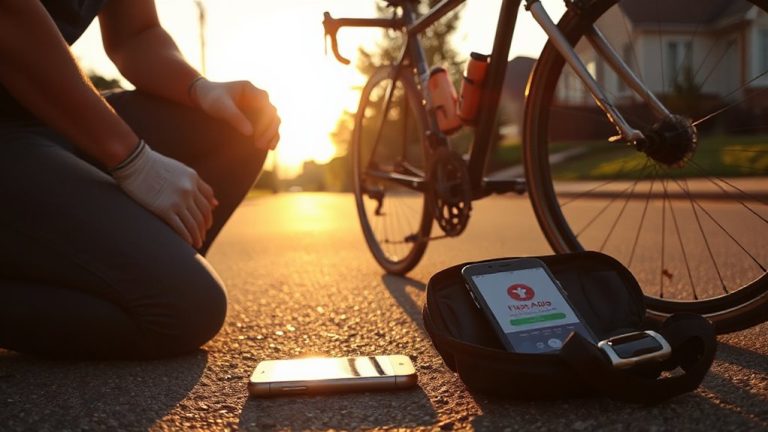
A remote breakdown demands immediate focus on personal safety and vehicle visibility. Turn on hazard lights immediately-these 12-volt incandescent or LED lamps flash at 60–120 cycles per minute, increasing detection distance by up to 400 feet at night. Move at least 100 feet from the vehicle if possible, especially on highways, to reduce collision risk. Wear a reflective safety vest; ANSI/ISEA 107-2020 Class 2 vests provide 201 square inches of reflective tape, boosting visibility in low light. Use emergency signaling tools: deploy red warning triangles or LED flares, which emit 360-degree illumination visible up to 0.5 miles away. Store flares in sealed, non-reactive containers to prevent accidental ignition. Prioritize personal protection by locking valuables out of sight and staying sheltered if weather or terrain is hazardous. Avoid hitchhiking or walking long distances. A well-prepared emergency kit enhances survivability during unexpected delays. For reliable visibility, consider choosing top-rated LED flares designed for durability and high visibility in all weather conditions.
Prevent Breakdowns With These Pre-Trip Checks
Your vehicle’s performance hinges on preparation-starting with a thorough pre-trip inspection. Check tire pressure when tires are cold; the recommended PSI is usually on the driver’s side door jamb or in the owner’s manual. Underinflated tires reduce fuel efficiency, increase wear, and risk blowouts. Overinflated tires decrease traction and lead to uneven wear. Verify all fluid levels, including engine oil, coolant, brake fluid, power steering fluid, and windshield washer fluid. Engine oil should meet API certification standards and match the viscosity grade specified by the manufacturer-typically 5W-30 or 10W-30. Coolant should be a 50/50 mix of antifreeze and water to prevent freezing and corrosion. Low brake fluid can compromise stopping power. Address leaks or low levels immediately. These checks take minutes but prevent catastrophic failures far from help. A reliable tire pressure gauge ensures accurate readings for optimal safety and performance.
On a final note
You now have the knowledge to handle remote breakdowns confidently. Always carry a 14-piece emergency kit with jumper cables, tire sealant, and a 10,000mAh portable power bank. Use a 12V air compressor to maintain tire pressure within the manufacturer’s PSI range. Stay visible with LED flares emitting 120 lumens. Perform pre-trip checks on fluid levels, battery voltage-must read at least 12.6V-and tread depth, which should exceed 4/32 inch.