Winter Travel Checklist: Ensure Your Vehicle Is Roadworthy Now
Check your tire pressure monthly-pressure drops 1 psi per 10°F drop in temperature. Make sure tread depth is at least 6/32 inch to prevent hydroplaning and maintain snow traction. Use winter-grade 5W-30 oil and a 50/50 coolant mix to protect your engine. Test your battery: it should read 12.6 volts at rest and deliver sufficient cold cranking amps. Confirm all lights, wipers, and defrosters work-wipers must clear streak-free, defrosters clear 80% of condensation in 5 minutes. Carry a winter emergency kit with thermal blankets, flares, jumper pack, and supplies for survival. Further details reveal even more ways to stay safe.
Notable Insights
- Check tire pressure and tread depth; maintain at least 6/32-inch for winter safety and prevent hydroplaning.
- Install winter-grade 5W-30 oil and ensure coolant is a 50/50 antifreeze mix to prevent freezing.
- Test battery voltage and charging system; replace if older than 3–5 years or below 12.6 volts.
- Replace worn wiper blades and ensure defrosters clear 80% of condensation within 5 minutes.
- Pack an emergency kit with thermal blankets, flares, jumper pack, and at least 2,000 calories per person.
Check Your Tires for Winter Traction and Pressure
You should check your tires before winter driving because traction and pressure drop when temperatures fall. Cold air reduces tire pressure by about 1 psi per 10°F drop. Underinflated tires wear unevenly and lessen grip. Tires need at least 6/32-inch tire tread depth for safe winter driving-below that, hydroplaning risk increases. Use a tread depth gauge; new tires start at 10/32 to 11/32 inch. For snowy roads, dedicated snow tires improve control. Their rubber stays flexible below 45°F and their deeper grooves evacuate slush efficiently. Snow tire performance peaks with tread depths above 8/32 inch. Studded tires add traction on ice but aren’t legal everywhere. All-season tires harden in cold weather, reducing grip. Check all four tires, including the spare, and rotate them per your vehicle’s schedule. Proper inflation and adequate tread depth maximize safety and fuel efficiency. A reliable tire tread depth gauge ensures accurate measurements for safe winter driving.
Top Off Critical Winter Fluids Now
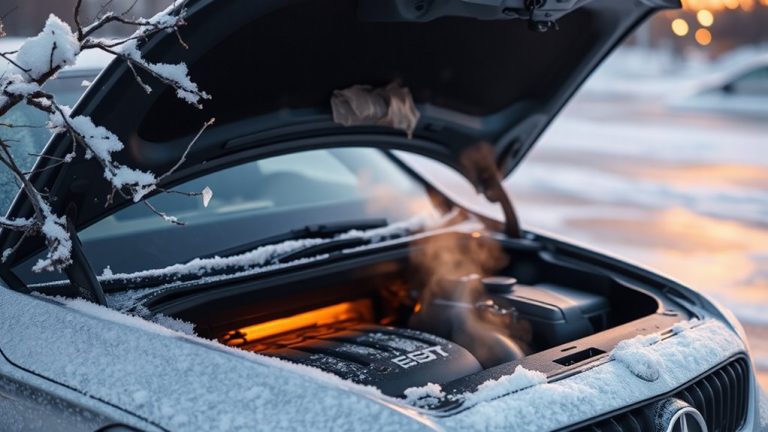
Cold weather affects more than just tire performance-it also impacts the fluids that keep your vehicle running reliably. You need proper fluid levels to maintain engine performance and prevent damage. Top off your engine oil with a winter-grade viscosity like 5W-30, which flows better in low temperatures. Check coolant levels and guarantee a 50/50 mix of antifreeze and water to prevent freezing down to -34°F. Low washer fluid reduces visibility; use a de-icing formula rated to at least -20°F. Inspect under the vehicle for fluid leaks-any damp spots may signal a failing gasket or hose. Brake fluid should be clear and at the “full” mark; moisture contamination reduces stopping power. Transmission fluid degrades over time, so refill if it’s dark or smells burnt. Maintaining these fluids guarantees smooth operation even in harsh winter conditions.
Test Your Battery Before Cold Weather Hits
Although battery failure often strikes without warning, it’s usually preventable with a simple test before temperatures drop. Cold weather reduces a battery’s power output, so check yours now. Most car batteries last 3–5 years; if your battery age exceeds that, replace it. Have a technician measure voltage and cold cranking amps (CCA) to verify it meets manufacturer specs. A healthy battery should read at least 12.6 volts at rest. The charging system should maintain 13.7 to 14.7 volts while running. Weak charging system output can lead to chronic undercharging, shortening battery life. Even a two-year-old battery can fail if the charging system isn’t functioning properly. Use a professional-grade tester to assess both components. Don’t wait for a winter morning failure-test early. For marine applications, consider a deep-cycle trolling motor battery to ensure reliable power in cold conditions.
Inspect Lights, Wipers, and Defrosters
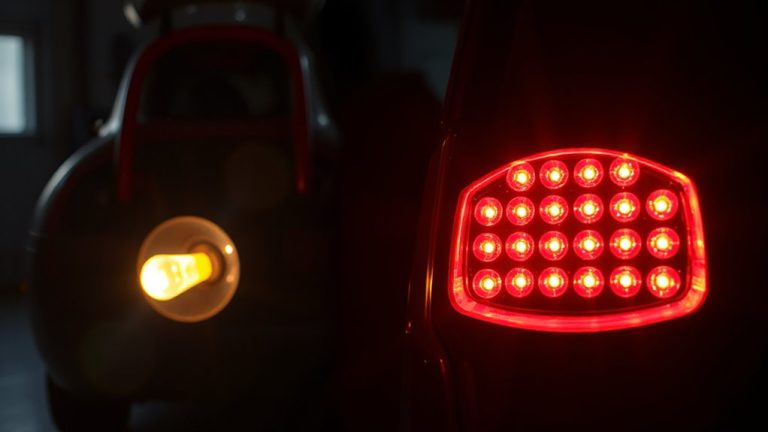
Safety starts with visibility-guaranteeing your lights, wipers, and defrosters are in top condition is critical for winter driving. Check all lights: headlights, brake lights, and turn signals. Adequate light brightness is essential; bulbs should emit at least 700 lumens per headlamp for proper nighttime illumination. Replace dim or flickering bulbs immediately. Misaligned headlights reduce visibility and can blind other drivers-adjust them to aim 1 inch down for every 10 feet from the ground. Inspect wiper blades for cracks or stiffness; replace if rubber shows signs of wear. Proper wiper alignment guarantees full windshield contact, preventing streaks and missed spots. Test wipers on low and high settings to confirm smooth operation. Defrosters must clear 80% of window condensation within 5 minutes. Verify both front and rear defroster grid lines are intact and heating evenly. These components work together to maintain visibility in snow, fog, and ice-essential for safe winter travel.
Pack a Winter Emergency Kit You Can Rely On
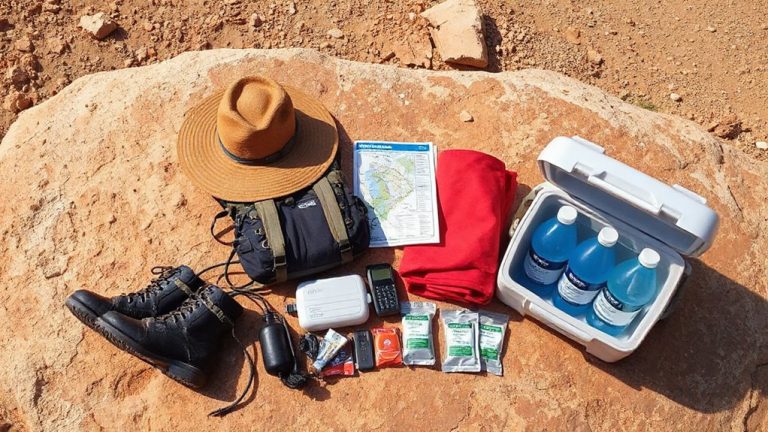
If winter weather strikes while you’re on the road, having a dependable emergency kit could mean the difference between a minor delay and a dangerous situation. You need thermal blankets made from metallized polyethylene, which reflect 90% of body heat and withstand temperatures down to -40°F. Include at least two per vehicle. Reflective flares, not chemical candles, provide 360-degree visibility up to 1 mile away and last 30 minutes-critical for signaling help in snowstorms. Add a 100-lumen flashlight with spare lithium batteries, rated for cold-weather performance. Store an ice scraper with rubber edge, traction mats (500-lb load capacity), and a 12-volt jumper pack (1000-amp peak). Include non-perishable food (2,000 calories minimum), water (one gallon per person), and a first-aid kit meeting ANSI Z308.1 standards. Keep everything in a waterproof, high-visibility bag under the seat. For comprehensive preparedness, consider assembling your own kit using guidance from top-rated car emergency kits.
On a final note
Your car must handle winter’s demands. Cold reduces tire pressure 1–2 psi per 10°F drop; maintain the manufacturer’s recommended 32–35 psi. Use antifreeze with a 50/50 mix to protect down to -34°F. Batteries lose up to 35% capacity below 32°F-guarantee 600 cold-cranking amps (CCA) minimum. LED bulbs last 25,000 hours and improve visibility. A winter kit with blankets, 2000-lumen flashlight, and traction mats guarantees safety.