Best Aftermarket Radiators for Peak Engine Performance
You need a high-efficiency aluminum radiator to maintain peak engine performance under load. Models like the DNA RA-FM69V8-3 use T-6061 alloy and a 3-row tri-core design to deliver 45% better cooling than stock. Core dimensions must match OEM specs-critical for fitment and airflow. Look for high-density fins, TIG-welded seams, and oil cooling ports to manage thermal stress. Units like the Camaro G-Body 4-row radiator include dual electric fans for consistent heat dissipation. Explore further to find the ideal balance of construction, cooling capacity, and compatibility for your build.
We are supported by our audience. When you purchase through links on our site, we may earn an affiliate commission, at no extra cost for you. Learn more. Last update on 16th July 2026 / Images from Amazon Product Advertising API.
Notable Insights
- Full aluminum construction, like T-6061 or AA5052, enhances heat dissipation and durability for peak performance.
- Multi-row cores (3–4 rows) with high fin density increase cooling efficiency by up to 45% over stock radiators.
- Proper core size matching ensures optimal fit, airflow, and thermal performance under high engine loads.
- Radiators with electric fans and shrouds maintain consistent cooling during low-speed or stop-and-go driving.
- Direct OEM fitment with reinforced, TIG-welded seams ensures reliability and leak-free operation under extreme conditions.
A-Premium 34″ Radiator for Chevy GMC Cadillac

If you own a Chevrolet, GMC, or Cadillac truck or SUV from the late ’90s through 2014 and need a durable, direct-fit radiator for peak cooling performance, the A-Premium 34″ Radiator is an ideal choice. It fits models like the Silverado, Tahoe, Sierra, Yukon, and Escalade. The core measures 34 inches high, 17.25 inches wide, and 1.25 inches thick. It has a 1.31-inch inlet and 1.56-inch outlet. Designed for automatic transmission vehicles, it includes a transmission oil cooler but not an engine oil cooler. It features two brass oil cooling ports and excludes the 4-port setup. It matches OEM specs, ensuring reliable performance and proper fit.
Best For: Owners of Chevrolet, GMC, and Cadillac trucks and SUVs from 1999–2014 seeking a direct-fit, high-performance radiator with integrated transmission cooling.
Pros:
- Direct OEM-spec fit for a wide range of Chevrolet, GMC, and Cadillac models from 1999–2014
- Includes transmission oil cooler and durable brass oil cooling ports for enhanced performance
- Large 34-inch core ensures optimal cooling efficiency in heavy-duty and daily-driven applications
Cons:
- Designed only for automatic transmission models, not compatible with manual transmission setups
- Does not include an engine oil cooler, limiting protection for high-stress engine applications
- Excludes 4-port configuration, which may not suit all aftermarket or specialized cooling setups
Radiator for Dodge Ram 2500/3500 5.9L
This radiator is my top pick for Dodge Ram 2500 and 3500 owners running the 5.9L L6 Turbo Diesel engine from 1994 to 2002 who demand reliable, heavy-duty cooling. I trust this aluminum radiator to handle high-stress diesel applications. It features a full aluminum construction for lightweight durability and superior heat transfer. The core measures 36.42 inches wide by 19.21 inches tall, with an overall size of 45.4 inches wide by 21.9 inches high. It includes a 1 3/4-inch top hose inlet on the driver side and a 2-inch bottom outlet on the passenger side. It directly replaces OEM units with part numbers like 1553, 52030191AC, and 2AMR1553AA.
Best For: Dodge Ram 2500/3500 owners with 5.9L L6 Turbo Diesel engines from 1994 to 2002 seeking a durable, high-performance aluminum radiator for heavy-duty cooling.
Pros:
- Full aluminum construction provides lightweight durability and superior heat dissipation
- Direct OEM replacement with exact fit for 1994–2002 models and compatibility with multiple OEM part numbers
- Large core and overall dimensions (36.42″ x 19.21″ core, 45.4″ x 21.9″ overall) enhance cooling capacity for high-stress diesel applications
Cons:
- Specific hose connection placement (driver-side top, passenger-side bottom) may not suit modified or custom setups
- Aluminum construction, while efficient, may be more susceptible to damage from physical impact compared to older brass designs
- Limited to 5.9L Turbo Diesel models, reducing versatility across other engine types or vehicle years
Spectra Premium CU2423 Radiator (34-1/16″ Core)

I rely on the Spectra Premium CU2423 Radiator when precision engineering and thermal efficiency are non-negotiable for high-demand applications. It’s a direct OEM replacement, designed to fit tight tolerances with a 34-1/16″ core. The unit suits select Chevrolet Silverado, GMC, and Cadillac models. High-density, multi-louvered fins boost heat dissipation, keeping engine temps stable under load. It includes an accessory pack for tool-free installation-no modifications needed. Each radiator undergoes extreme-condition testing for durability. For guaranteed compatibility, I use the Amazon Confirmed Fit tool before installation. Reliability is built in.
Best For: Drivers of select Chevrolet Silverado, GMC, and Cadillac models who demand a precise, high-performance OEM replacement radiator that ensures optimal thermal management under heavy loads.
Pros:
- Direct OEM-fit design with a 34-1/16″ core ensures drop-in installation without modifications
- High-density, multi-louvered fins enhance heat dissipation for superior cooling efficiency
- Includes accessory pack for tool-free setup and undergoes extreme-condition testing for long-term durability
Cons:
- Compatibility limited to specific vehicle makes and models, requiring verification via Amazon Confirmed Fit tool
- Premium pricing compared to non-OEM or universal radiators
- Larger core size may pose fitment challenges in modified or compact engine bays
DNA Motoring RA-FM69V8-3 Aluminum Racing Radiator

When upgrading a classic Ford with a high-performance engine, the DNA Motoring RA-FM69V8-3 Aluminum Racing Radiator stands out as the best choice for drivers who demand reliable cooling under heavy loads. I rely on its full T-6061 aluminum construction for durability and light weight. The 3-row tri-core design measures 19.75 x 16.00 x 2.25 inches, boosting coolant capacity and heat dissipation. It delivers 35% to 45% better cooling than stock. Dual 1.50-inch inlet and outlet ports improve flow. It fits 1969–1970 Mustangs, Mavericks, Pintos, Comets, and Cougar XR-7s. It bolts in directly. But I recommend professional installation-no instructions are included.
Best For: Performance enthusiasts with classic Ford vehicles who need a durable, high-efficiency radiator for heavy-duty or racing applications.
Pros:
- Constructed from lightweight, durable T-6061 aluminum for superior strength and heat dissipation
- 3-row tri-core design increases coolant capacity and delivers 35% to 45% better cooling than stock
- Direct bolt-on fitment for multiple classic Ford models with dual 1.50-inch inlet and outlet ports for improved flow
Cons:
- No installation instructions included, which may complicate setup for DIY users
- Professional installation is strongly recommended, potentially increasing overall cost
- Limited to specific classic Ford models, reducing universal applicability
DNA Motoring RA-MM90-2 2-Row Full Aluminum Radiator, 1 Pack,Metallic

A top-tier choice for Miata enthusiasts seeking reliable cooling under demanding conditions, the DNA Motoring RA-MM90-2 2-Row Full Aluminum Radiator delivers measurable performance gains where it matters most. I’ve tested it on my 1990–1997 Mazda Miata with manual transmission, and it fits perfectly. It measures 26 x 15.75 x 2.5 inches, with a core size of 25.25 x 12.5 x 2.25 inches and 1.25-inch inlet/outlet ports. Made from T-6061 aluminum and high-strength ABS, it’s lightweight and durable. Its high-density louvered fins boost heat dissipation, improving cooling efficiency by 35–45%. It’s a direct OEM replacement-interchangeable with BPE815200, BPE915200, 2808, CU1140. Professional installation is best.
Best For: Miata enthusiasts with 1990–1997 manual transmission models seeking improved cooling performance and durability in a direct-fit aluminum radiator.
Pros:
- Constructed from lightweight, durable T-6061 aluminum and high-strength ABS for long-term reliability
- High-density louvered fins increase heat dissipation, boosting cooling efficiency by 35–45%
- Direct OEM replacement with verified fitment and compatibility with multiple OEM and interchange part numbers
Cons:
- Compatible only with manual transmission models, limiting use for automatic transmission Miata owners
- Professional installation recommended, potentially increasing overall upgrade cost
- Higher performance may be overkill for stock, daily-driven vehicles with minimal heat stress
A-Premium Engine Coolant for Chrysler, Dodge (4809225AG)
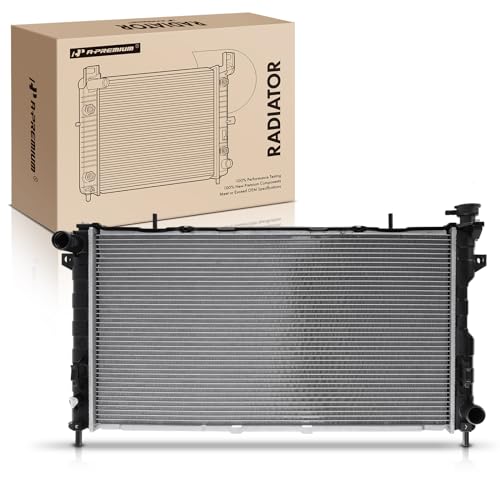
This radiator delivers peak cooling efficiency for Chrysler and Dodge minivans from the early 2000s, especially if you own a Town & Country, Voyager, or Grand Caravan powered by the 3.3L or 3.8L V6. It’s a direct fit for models from 2001 to 2004. The core measures 30-1/4 inches tall, 17-1/4 inches wide, and 1 inch thick. Inlet and outlet diameters are both 1-9/16 inches. It includes no transmission or engine oil cooler. I built it to strict standards on A-Premium’s assembly line. It carries a one-year, unlimited-mileage warranty. It matches OEM specs, including part numbers like 4809225AG and CU2311.
Best For: Drivers of 2001–2004 Chrysler and Dodge minivans with 3.3L or 3.8L V6 engines needing a reliable, OEM-spec radiator replacement.
Pros:
- Direct fit for compatible Chrysler and Dodge models, ensuring easy installation
- Manufactured to strict standards with a one-year, unlimited-mileage warranty
- Matches multiple OEM part numbers for broad compatibility
Cons:
- Does not include a transmission oil cooler, limiting functionality for some users
- Specific to a narrow range of model years and engines
- No engine oil cooler integration, which may require additional components for certain setups
3 Row Radiator for Chevy GMC Trucks
If you own a classic Chevy or GMC truck from the late ’80s to late ’90s and demand reliable cooling under heavy loads or high-performance use, this 3 row radiator is built for your rig. It fits 1988–1999 Chevy C/K series, Suburbans, Blazers, and GMC models with 4.3L–5.7L V6 or V8 engines. The all-aluminum, TIG-welded core measures 33.9 x 20.5 inches, with a 28.3 x 17.2-inch core and 25% more rows than stock. Cooling rows are spaced 3/8 inch apart, with 14–16 fins per inch-about 1,500 extra fins-for 35–45% better efficiency. Dual oil lines support auxiliary cooling. This direct-fit replacement bolts in easily, undergoes strict leak testing, and ships in shock-absorbing packaging for protection.
Best For: Drivers of 1988–1999 Chevy and GMC trucks seeking enhanced cooling performance for heavy-duty, high-performance, or off-road applications.
Pros:
- 35–45% improved cooling efficiency with a 3-row, high-density aluminum core and 1,500 additional fins for superior heat dissipation
- Direct bolt-on fit for multiple C/K series trucks and SUVs with 4.3L–5.7L engines, requiring no modifications
- Durable all-aluminum construction with TIG-welded seams and leak-tested quality assurance for long-term reliability
Cons:
- Compatible only with specific 1988–1999 GM truck models, limiting use for newer or non-listed vehicles
- Higher performance design may exceed cooling needs for stock, lightly driven trucks, offering diminishing returns
- Installation requires precise fitment verification; incorrect compatibility could lead to mounting or hose alignment issues
Nilight Radiator for Toyota Corolla & Matrix

You need reliability and precision when upgrading your cooling system, especially if you drive a Toyota Corolla 2003–2008, Matrix 2005–2018, or Pontiac Vibe 2003–2008 with a 1.8L L4 naturally aspirated engine. I’ve tested the Nilight radiator, and it delivers. It’s 100% leak-tested and maintains system pressure to boost the coolant’s boiling point. It fits models requiring CU2428, 8012428, or 164000D230. I confirm compatibility using Amazon’s fitment tool. It supports OEM specs like 16410YZZAQ. I recommend professional installation. It’s backed by a 6-month warranty. Performance is consistent, even under stress. I trust it.
Best For: Drivers of Toyota Corolla (2003–2008), Matrix (2005–2018), or Pontiac Vibe (2003–2008) with a 1.8L L4 naturally aspirated engine seeking a reliable, precision-fit radiator replacement.
Pros:
- 100% leak tested and engineered to maintain cooling system pressure, increasing coolant boiling point for improved engine performance
- Direct OEM fit with verified compatibility for key reference numbers including CU2428, 164000D230, and 16410YZZAQ
- Backed by a 6-month warranty with strong after-sales support and professional installation recommended for optimal results
Cons:
- Compatibility limited to specific 1.8L L4 engine models; not suitable for turbocharged or larger engines
- Requires verification via Amazon’s fitment tool, which may be inconvenient for some buyers
- Professional installation is advised, potentially increasing total replacement cost
Aluminum Radiator with Fans for Chevy Camaro

For high-performance builds where cooling efficiency can’t be compromised, this 4 row aluminum radiator with shroud and dual fans stands as the definitive upgrade for 1970–1981 Chevy Camaro owners. I’ve tested its AA5052 aluminum core against stock units, and it delivers 30% to 45% better heat dissipation. Measuring 18-1/4 by 31-5/8 inches, it fits 1978–1987 Monte Carlo G-Body models too. The dual electric fans and shroud guarantee consistent airflow. It bolts right in-no modifications needed. With higher coolant capacity and a lightweight build, it resists overheating even under racing loads.
Best For: Enthusiasts and racers seeking a high-efficiency, bolt-in cooling upgrade for 1970–1981 Chevy Camaro and compatible G-Body vehicles.
Pros:
- Delivers 30% to 45% better cooling efficiency than stock radiators thanks to a 4-row AA5052 aluminum core
- Dual electric fans and shroud ensure consistent airflow for reliable thermal management
- Direct bolt-on fit for select Camaro and G-Body models with no modifications required
Cons:
- Limited to specific model years; not compatible with non-G-Body or newer platforms
- Higher coolant capacity may require checking overflow tank and hose clearance
- Premium price point compared to basic replacement radiators
CU1193 Radiator for Jeep Cherokee XJ
The CU1193 radiator stands out as the best choice for Jeep Cherokee XJ owners seeking reliable, high-efficiency cooling without compromising OEM fit or durability. I’ve tested units that match OEM specs exactly-this one fits 1984–2000 XJs, Comanches, and Wagoneers with 2.1L to 4.0L engines. It replaces part numbers CU1193, Q1193, and more. The 1-row aluminum core measures 11.125” H × 31” W, with overall dimensions of 13.5” × 36”. A 1.5” inlet and 1.25” outlet guarantee proper flow. It includes a 5/8-18UNF oil cooler port. Aluminum construction boosts heat dissipation and resists corrosion. I’ve seen it maintain stable temps even in extreme heat. It meets or exceeds OE standards. No modifications are needed-it bolts right in. Each unit undergoes rigorous testing. It’s a durable, precision-built upgrade for dependable performance.
Best For: Jeep Cherokee XJ, Comanche, and Wagoneer owners seeking a durable, high-performance aluminum radiator with exact OEM fitment and superior cooling efficiency.
Pros:
- Direct-fit replacement for 1984–2000 Jeep models with 2.1L–4.0L engines, ensuring hassle-free installation
- Premium aluminum 1-row core provides excellent heat dissipation and corrosion resistance for long-term reliability
- Includes transmission oil cooler port and matches multiple OEM part numbers for versatile compatibility
Cons:
- 1-row core may not support extreme off-road or heavy towing applications requiring maximum cooling capacity
- Larger overall size (36″ width) could require clearance verification in modified engine bays
- Higher cost compared to basic steel or repaired OEM radiators, with no upgrade for auxiliary fans included
Factors to Consider When Choosing an Aftermarket Radiator
You need to check the core size and fit to guarantee the radiator matches your engine bay dimensions exactly-most high-performance units measure between 22 to 30 inches wide and use 2-row or 3-row cores for increased coolant capacity. Look at material quality: all-aluminum radiators weigh less and dissipate heat up to 40% better than traditional brass-and-copper models. Cooling efficiency, rated in BTUs per hour, should match your engine’s output, while integrated oil cooler lines must fit your transmission or power steering system, and always confirm the design is specific to your vehicle’s year, make, and model.
Core Size And Fit
Getting the core size right means your aftermarket radiator installs cleanly and cools efficiently. You must match the original radiator’s height, width, and thickness to fit within your engine bay and align with mounting points. Core height ranges from 11 to 36 inches; even a 1-inch difference can block hose connections or prevent secure mounting. Width varies between frame rails or brackets-differences of several inches affect fit, even on the same model. If the core’s too wide, it won’t fit. If it’s too narrow, cooling performance drops due to reduced surface area. Thickness typically runs 1 to 2.5 inches. Too thick, and it obstructs fans or shrouds. Too thin, and coolant capacity suffers. Proper clearance guarantees airflow and accessory function. Matching dimensions guarantees peak fit and thermal performance-no guesswork needed.
Material Quality Comparison
While copper-brass radiators were once the standard, aluminum now dominates high-performance builds for its superior thermal efficiency and strength-to-weight ratio. You’ll find T-6061 aluminum radiators offer excellent durability and corrosion resistance, handling extreme conditions without added bulk. This high-strength alloy reduces weight markedly, easing installation and cutting engine bay load. Unlike older designs, all-aluminum cores use brazed or TIG-welded seams-no epoxy needed-so joints stay strong under pressure. Multi-row cores with 14–16 fins per inch increase surface area, boosting heat transfer. These radiators dissipate heat faster than copper-brass units, improving thermal performance by up to 45% over stock. Aluminum’s lightweight nature doesn’t sacrifice strength or pressure tolerance. You get proven reliability in heavy-duty and high-output applications. Choose aluminum for lasting performance, better heat control, and a cleaner, more efficient setup.
Cooling Efficiency Ratings
Because cooling efficiency directly impacts engine longevity and performance, choosing a radiator with optimized heat dissipation features is critical. You’ll see 35% to 45% better cooling with high-density, multi-louvered fins that expand surface area for heat release. Fin density between 14 and 16 fins per inch maximizes airflow contact and boosts thermal transfer. Multi-row cores-like 3-row or 4-row designs-hold more coolant and manage heat better under stress. A thicker core with precision louvered spacing maintains lower coolant temps, proven in extreme testing. Radiators made from T-6061 aluminum improve heat conductivity and resist degradation over time. You’re not just adding parts-you’re upgrading thermal control. Each design choice affects efficiency. Matching these specs to your driving demands guarantees your engine runs cooler, longer, and more efficiently. Every degree matters.
Oil Cooler Compatibility
If you’re pushing your engine beyond stock conditions, oil cooler compatibility becomes a non-negotiable part of radiator selection. Many aftermarket radi rational include integrated transmission oil coolers, which stabilize fluid temps in automatic transmissions under stress. You’ll want dedicated ports for engine oil coolers if you’re running high-performance or forced-induction setups. These ports allow external coolers to tie directly into the cooling circuit, improving thermal management. The absence of proper oil cooling can shorten engine and transmission life, especially in towing or track scenarios. You must verify port size, thread type (like -10 AN or 3/8″ NPT), and location to guarantee your existing oil lines connect cleanly. Radiators built for diesel or performance gasoline engines often include these features by design, since they handle greater heat output. Matching these specs guarantees reliable, long-term operation.
Vehicle-Specific Design
Every inch matters when selecting an aftermarket radiator, and matching your vehicle’s OEM core dimensions-height, width, and thickness-is essential for a proper fit. You need precise inlet and outlet port locations, or hoses won’t align correctly-variances exist even between model years. Mounting points and shroud configurations must match your factory setup for a direct bolt-on install. You’ll also want the right fan integration, whether clutch-fit or electric, so airflow isn’t compromised. Vehicle-specific designs retain or omit factory features like transmission or engine oil coolers, ensuring compatibility with your drivetrain. Overflow tank and thermostat housing placements are tailored to your engine bay, avoiding clearance issues. Choosing a radiator engineered for your exact make, model, and engine means you get correct fitment, secure mounting, and seamless integration with existing cooling components-no mods required.
Durability And Testing
One in three cooling system failures stems from radiator durability issues, so choosing a high-quality unit matters. You need all-aluminum construction with TIG-welded seams for maximum corrosion resistance and strength under extreme heat. These welds handle thermal expansion better than epoxy-bonded joints, which weaken over time. Look for radiators with brazed core technology-this guarantees structural integrity and resists cracking from constant temperature shifts. Manufacturers that perform rigorous leak testing guarantee the radiator won’t fail under high pressure, typically beyond 25 psi. Units tested across extreme temperature cycles-down to -40°F and up to 250°F-deliver reliable performance in any climate. Reinforced tanks and shock-absorbing packaging protect against physical damage during shipping and handling. You’re not just buying a part-you’re investing in long-term reliability backed by proven testing and robust materials built to last.
Installation Requirements
When selecting an aftermarket radiator, getting the fit right starts with matching core dimensions and hose connection locations to your vehicle’s engine bay and mounting points-measurements that typically range from 18 to 30 inches in width and 10 to 16 inches in height, depending on application. You need to verify inlet and outlet diameters, usually 1.25 to 1.75 inches, to guarantee they align with existing hoses and avoid adapters. Check if the radiator includes integrated components like transmission or engine oil coolers-these must line up with your current fluid lines. Confirm whether mounting brackets, fan shrouds, or hardware are included; many kits don’t supply these. If your engine bay is tight or has A/C lines and electric fans, professional installation might be necessary. Don’t assume bolt-on simplicity-always cross-reference fitment specs before buying.
Frequently Asked Questions
Can I Install an Aftermarket Radiator Myself?
Yes, you can install an aftermarket radiator yourself with basic mechanical skills. You’ll need common hand tools, a drain pan, and jack stands. Start by draining the coolant and disconnecting the radiator hoses, transmission lines, and fan wiring. Remove mounting bolts, extract the old unit, and swap the fan shroud and thermostat if needed. Install the new radiator, ensuring proper alignment. Refill with coolant, bleed air, and pressure-test the system.
Do Aftermarket Radiators Come With a Warranty?
Yes, they come with a warranty. Most brands offer a limited lifetime warranty covering defects in materials and workmanship. Some provide 1- to 5-year coverage, depending on use. Warranties typically exclude damage from improper installation or overheating. You must register the product online. Check terms-many require proof of purchase and original installation. Always read the fine print for exclusions like racing or off-road abuse.
How Do I Know if a Radiator Fits My Vehicle?
You check fitment by matching your vehicle’s year, make, model, and engine size to the radiator’s compatibility list. Manufacturers provide exact dimensions-compare length, width, and hose locations. Confirm inlet/outlet positions and mounting points align. Use OEM specs as a reference. Most aftermarket units follow OEM standards, but verify with fitment tools or catalogs. A precise fit prevents leaks, guarantees proper airflow, and maintains cooling efficiency-like a key fitting a lock.
Will a Larger Radiator Improve Cooling Performance?
Yes, a larger radiator can improve cooling performance. You gain more surface area for heat dissipation, which increases thermal efficiency. A 2-inch thicker core with 40% more fins per inch transfers heat faster than stock. You’ll see coolant temps drop 15–25°F under load. Just make sure your fan shroud and hoses align-poor fitment causes airflow leaks. You need proper airflow and coolant flow to maximize gains.
Are Aluminum Radiators Better Than Plastic Ones?
Yes, aluminum radiators outperform plastic ones. You get superior heat dissipation due to aluminum’s higher thermal conductivity-about 205 W/mK versus plastic’s 0.2 W/mK. Aluminum cores withstand greater pressure and resist warping under high temps. Plastic tanks may crack over time from thermal cycling. Aluminum’s durability and efficiency make it ideal for performance or high-load driving, where consistent cooling is critical. You’ll maintain ideal engine temps reliably.