Best Sandpaper for Cars: Atosun 120-5000 Grit vs 3M Wetordry
You trust proven performance when refinishing car surfaces. Top choices like the Atosun 45PC and 3M Wetordry 03006 use silicon carbide on waterproof, electro-coated backing for reliable wet/dry use. Grits from 120 to 5000 allow progressive sanding, minimizing scratches. Sheets measure 9 x 3.6 inches; some include hook-and-loop or PSA for secure fit. These abrasives resist clogging, maintain sharpness, and deliver smooth finishes. Pros and DIYers rely on their consistency, durability, and precision-backed results across paint, metal, and clear coat. More details follow on ideal selection criteria.
We are supported by our audience. When you purchase through links on our site, we may earn an affiliate commission, at no extra cost for you. Learn more. Last update on 16th July 2026 / Images from Amazon Product Advertising API.
Notable Insights
- Silicon carbide sandpaper is trusted for cars due to its hardness, self-fracturing grains, and superior performance in wet or dry conditions.
- Progressive grit ranges from 120 to 5000 enable pros and DIYers to achieve flawless finishes through proper scratch refinement.
- Waterproof, tear-resistant backing with electro-coated or closed-coat designs prevents clogging and extends abrasive life during automotive sanding.
- Wet sanding with 1000+ grit paper reduces heat and dust, delivering smoother finishes ideal for clear coat and paint correction.
- Pre-cut sheets, custom sizing, and hook-and-loop formats offer versatility and ease of use for detailed or large-scale car refinishing.
Atosun 45PC Wet/Dry Sandpaper (120-5000 Grit)

If you’re tackling a detailed car paint correction or full-body refinishing, the Atosun 45PC Wet/Dry Sandpaper set is an ideal match. It includes 45 pieces across 15 grits-from 120 to 5000-giving you precise control through each sanding stage. Each 9 x 3.6-inch sheet uses waterproof silicon carbide, so it performs reliably wet or dry. The electro-coated surface resists flaking, while the soft back guarantees grip and prevents slipping. Tensile-resistant construction means the paper lasts longer, even under pressure. You can cut sheets to size, and the grit number is printed on the back for quick identification.
Best For: DIY enthusiasts, auto detailers, and woodworkers who need a comprehensive, durable sanding solution for both wet and dry applications across a wide range of materials.
Pros:
- Offers a full range of 15 grits from 120 to 5000 for progressive sanding and polishing
- Waterproof silicon carbide construction allows for reliable wet or dry use without flaking
- Soft-back design provides a secure grip and resistance to slipping during detailed work
Cons:
- Sheets may be too large for small, precision tasks without cutting to size
- High-grit sheets (above 3000) may wear quickly on aggressive materials
- Packaging does not include a storage case, which could lead to disorganization
3M Wetordry Sandpaper Assorted Grits (03006)
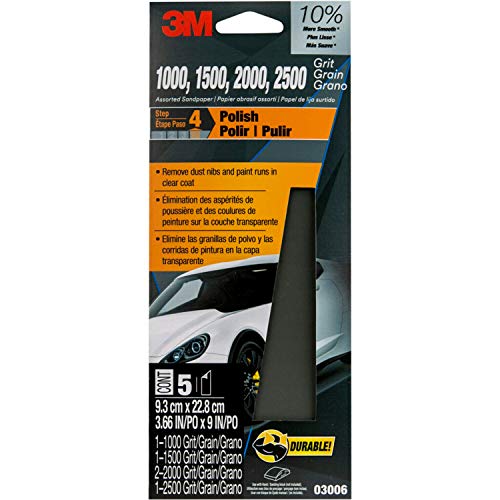
The 3M Wetordry Sandpaper Assorted Grits (03006) is my top pick for detail-oriented auto enthusiasts and professional finishers who demand precision across multiple sanding stages. It includes five sheets: 1000, 1500, 2500, and two of 2000 grit, enabling smooth progression from defect correction to final finishing. I use it wet or dry-no need to switch paper. It handles paint scuffing, featheredging, and pre-priming prep with ease. Silicon carbide grains self-fracture, exposing sharp edges that extend life. It delivers a 10% smoother finish than standard 3M paper, thanks to consistent scratch patterns. I’ve used it on clear coats, metal, and plastic without clogging.
Best For: Auto enthusiasts and professional detailers who need a versatile, high-performance sandpaper for multi-stage finishing on vehicles.
Pros:
- Offers a full range of assorted grits (1000–2500) for progressive sanding from defect removal to high-gloss finishing.
- Dual wet/dry capability provides flexibility without requiring paper changes, ideal for auto body and paint work.
- Silicon carbide abrasive self-fractures to maintain sharp cutting edges, enhancing durability and delivering a 10% smoother finish.
Cons:
- Higher grit options may wear quickly on aggressive material removal tasks better suited for lower grits.
- Limited quantity with only five sheets per pack may require frequent repurchasing for large projects.
- Premium pricing compared to basic sandpaper options may not suit casual or infrequent users.
48 PCS Assorted Grit Sandpaper Sheets
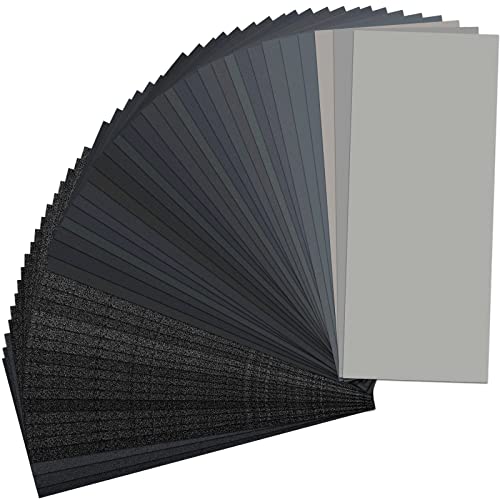
You’ll get the most out of this sandpaper set if you’re tackling detailed automotive finishes that demand precision across multiple stages. I rely on this 48-piece kit because it includes 16 grits-from 120 to 5000-giving me full control from heavy sanding to ultra-fine polishing. Each sheet is 9 x 3.6 inches, made with silicon carbide and electro-coated technology for even wear. The waterproof, tear-resistant backing handles wet or dry use without clogging. Grits are printed on the back for quick ID, and I often cut sheets to fit contours. It works on paint, metal, glass, and plastic-ideal for clear coat blending and scratch removal.
Best For: Automotive detailers and DIY enthusiasts who need a comprehensive range of grits for precision sanding, finishing, and polishing tasks on paint, metal, glass, and plastic.
Pros:
- Includes 16 assorted grits from 120 to 5000 for complete control over every sanding stage
- Waterproof silicon carbide construction allows for reliable wet or dry use without clogging
- Grits clearly printed on the back and sheets can be cut to size for custom applications
Cons:
- Larger sheet size may require cutting for use with smaller sanding tools or tight contours
- Very high grits (3000–5000) may be unnecessary for general-purpose users
- Premium pricing compared to basic sandpaper sets with fewer grit options
Fandeli Waterproof Sandpaper Assortment (36 Sheets)

For those tackling automotive finish work with precision, the Fandeli Waterproof Sandpaper Assortment delivers a level of versatility and durability that stands out in wet-sanding applications. I use its 36 sheets-measuring 9 x 3.6 inches-across curved body panels and tight edges with ease. The set includes grits from 120 to 2500, spaced across 11 levels, letting me progress smoothly from shaping to polishing. Silicon carbide grit cuts fast and lasts longer than aluminum oxide in water. Closed-coat design prevents clogging. The waterproof, FSC-certified paper resists tearing and slipping, even when soaked. I can cut sheets to size without fraying. Made in Mexico by Fandeli since 1927, these abrasives support sustainable forestry and perform reliably across metal, paint, and fiberglass. Grits are labeled on the back for quick ID.
Best For: Automotive detailers, woodworkers, and DIY enthusiasts who need a durable, versatile sandpaper set for precision wet or dry sanding across a range of materials.
Pros:
- Wide grit range (120–2500) allows for complete material removal to fine polishing in one assortment
- Waterproof silicon carbide sheets resist clogging and tearing, ideal for wet-sanding applications
- FSC-certified sustainable paper and clearly labeled grits enhance usability and environmental responsibility
Cons:
- Smaller sheet size (9 x 3.6 inches) may require frequent changes on large surfaces
- Higher grit sheets (2000–2500) are less effective on very coarse imperfections
- Premium pricing compared to standard sandpaper packs may deter casual users
Micro Detail Sander Paper Kit (70PCS)

Seven decades of sanding precision come packed in this 70-piece kit, and I rely on it when my car’s finish demands flawless correction in tight spots. The set includes 10 sheets each of 400, 600, 800, 1000, 1500, 2000, and 3000 grit wet-dry sandpaper-all precision-cut to fit the included 3.5” x 1” mini sanding block. Hook-and-loop backing guarantees fast changes. A+ grade silicon carbide resists clogging and static, delivering consistent scratch patterns. The polyurethane foam block offers precise pressure control. Ideal for curves, edges, and detailed auto bodywork. Works wet or dry. Backed by 24/7 support.
Best For: Detailers and craftsmen who need precision sanding in tight spaces, especially for auto bodywork, woodworking, or intricate surface finishing.
Pros:
- High-quality A+ grade silicon carbide abrasives provide durability, anti-static performance, and consistent scratch patterns
- Versatile 70-piece grit range (400–3000) enables progressive wet or dry sanding and polishing
- Ergonomic mini sanding block with hook-and-loop system allows quick changes and precise control in confined areas
Cons:
- Limited to small surface areas, not ideal for large-scale sanding projects
- Foam block may compress over time with heavy pressure, affecting uniformity
- Higher grit sheets (2000–3000) may wear quickly during aggressive polishing
Sand Paper 50PCS 13 Grits Assortment

This 50-piece sandpaper assortment delivers unmatched versatility for automotive enthusiasts and detailers who demand precision across multiple finishing stages. I rely on its 13 graded grits-120 to 5000-for seamless progression from aggressive shaping to mirror-like finishes. Each 9 x 3.6-inch sheet is printed with its grit number on the back, ensuring quick identification and efficient workflow. Made from waterproof silicon carbide, the papers resist tearing and clogging. Their electro-coated construction maintains sharpness during wet or dry use. I’ve used them on paint, metal, and plastic with consistent results. They’re ideal for sanding between paint layers or polishing headlights.
Best For: Automotive enthusiasts and detailers who need a versatile, multi-grit sanding solution for precise finishing tasks from coarse shaping to high-gloss polishing.
Pros:
- Wide range of 13 precision grits (120–5000) enables seamless progression from aggressive material removal to ultra-fine polishing.
- Waterproof silicon carbide construction allows for reliable wet or dry use on materials like paint, metal, plastic, and glass.
- Grit number printed on the back of each 9 x 3.6-inch sheet ensures quick identification and efficient workflow.
Cons:
- Smaller sheet size may require frequent replacement or cutting for larger surface areas.
- Higher grit papers (3000–5000) may wear out quickly on very hard surfaces.
- Lack of adhesive backing limits secure attachment to sanding blocks without additional fixtures.
24 PCS Sandpaper Variety Pack (12 Grits)

You get 24 sanding sheets with the PCS Sandpaper Variety Pack, covering 12 distinct grits from coarse 120 to ultra-fine 3000-two sheets per grit for ample use. Each sheet measures 9 x 3.6 inches and can be cut to fit small tools or tight areas. The sandpaper uses high-quality abrasive material that resists cracking and tearing, even under pressure. It works on metal, wood, plastic, glass, and auto body surfaces. You can use it dry or wet, making it ideal for paint correction, smoothing welds, or polishing. Grits progress evenly, allowing controlled material removal. The range supports every stage, from shaping to final finishing.
Best For: DIY enthusiasts, auto detailers, and woodworkers needing a versatile, durable sandpaper set for precision sanding and polishing across multiple materials.
Pros:
- Wide grit range from 120 to 3000 enables complete project progression from shaping to high-gloss finishing
- Durable construction resists tearing and cracking, suitable for both wet and dry sanding applications
- Can be cut to custom sizes for use in tight spaces or with different sanding tools
Cons:
- No adhesive backing, limiting compatibility with certain rotary or orbital sanders
- Packaging does not include storage organization for individual grits
- Higher grit sheets (2500–3000) may wear quickly on aggressive materials
VERONES 90-Pc Wet/Dry Sandpaper Assortment

Nine distinct grits in the VERONES 90-Pc Wet/Dry Sandpaper Assortment make it ideal for detail-oriented auto enthusiasts and professionals tackling multi-stage paint correction. Each of the 90 sheets-10 per grit-spans 400 to 3000, enabling progressive sanding from defect removal to final polishing. They’re made with silicon carbide, an abrasive known for hardness and thermal resistance, coated electrostatically for uniform particle alignment. The 8.85 x 3.54-inch papers handle wet or dry use without tearing. I use them wet for scratch refinement on clear coats, dry for rust removal. The included red sanding block adds control. Sheets cut to size, saving waste. Perfect for cars, metal, wood, or walls.
Best For: Detail-oriented auto enthusiasts and professionals needing a comprehensive grit range for multi-stage paint correction and precision finishing tasks.
Pros:
- Includes 90 sheets across nine graded grits (400–3000) for seamless progression from coarse defect removal to fine polishing
- Made with durable silicon carbide and electro-coated for uniform abrasion, suitable for both wet and dry applications without tearing
- Large sheet size allows custom cutting to fit specific tasks, reducing waste and enhancing versatility across materials like auto finishes, metal, wood, and walls
Cons:
- Higher grit sheets (2000–3000) may wear quickly on very hard surfaces, limiting reuse
- Sanding block is included but basic in design, potentially lacking ergonomic support for extended use
- No storage case provided, making organization and portability less convenient
Dura-Gold 80 Grit Sandpaper Roll (20 Yards)
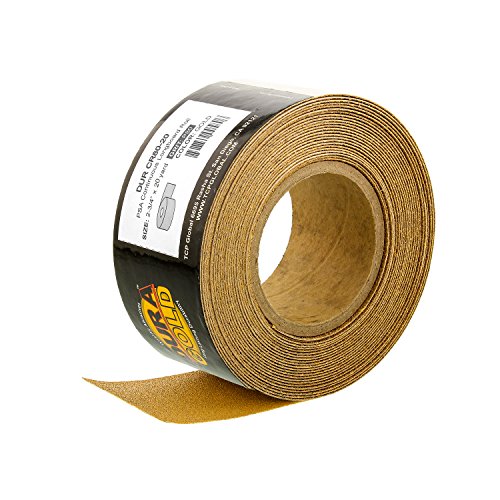
A continuous 20-yard roll of Dura-Gold 80 Grit sandpaper suits professionals and detail-oriented DIYers who demand consistent, aggressive material removal without frequent changeouts. It’s 2-3/4 inches wide, with a pressure-sensitive adhesive (PSA) backing that sticks securely to air files, longboards, and hand blocks. The premium blend of aluminum oxide, corundum, and zirconia alumina cuts fast and resists clogging. Its super-coated surface lasts longer than standard papers. I can trim it to any length, making it ideal for auto body shaping, metal prep, or paint cleanup. It’s efficient, durable, and built for serious sanding.
Best For: Professionals and detail-oriented DIYers who need a durable, high-performance sandpaper for aggressive material removal across auto body, metal, and woodworking applications.
Pros:
- Premium blend of aluminum oxide, corundum, and zirconia alumina provides fast, long-lasting cutting action
- Pressure-sensitive adhesive backing ensures quick, secure attachment to various sanding tools
- Can be trimmed to custom lengths, allowing versatile use across different surfaces and tasks
Cons:
- 80 grit may be too coarse for fine finishing or delicate sanding tasks
- Continuous roll format may be impractical for users needing pre-cut sheets
- PSA backing could lose adhesion if exposed to excessive dust or moisture over time
S SATC 100 PCS 6″ PSA Sanding Discs

This sandpaper pack delivers consistent performance for auto body technicians and DIY enthusiasts tackling medium to heavy material removal. I rely on these 100-pack 6-inch PSA discs for their 80-grit aluminum oxide abrasive, which stays aggressive without loading up. The strong adhesive backing guarantees no-slip use on my random orbital sander, even during prolonged dry sanding. They’re fracture-resistant, maintaining cutting power on metal, wood, plastic, and body filler. Each disc fits standard 6-inch tools and drill attachments, making them ideal for feather edging and blending on cars, boats, or RVs. They’re tough, economical, and built for repeated use on ferrous alloys.
Best For: Auto body technicians and DIY enthusiasts needing durable, high-performance sanding discs for medium to heavy material removal on wood, metal, plastic, and body filler.
Pros:
- Strong PSA adhesive ensures secure, no-slip attachment to standard 6-inch sanding tools and drill attachments
- 80-grit aluminum oxide abrasive provides aggressive, consistent cutting power without loading during dry sanding
- Fracture-resistant discs offer long-lasting durability and economical performance on ferrous alloys and diverse materials
Cons:
- Only suitable for dry sanding, limiting use in wet or dusty environments requiring moisture
- 80 grit may be too coarse for fine finishing tasks, requiring additional finer-grit discs for smoothing
- Adhesive may degrade with extended use on uneven surfaces, potentially reducing reusability
Factors to Consider When Choosing Sand Paper for Cars
You need to pick the right sandpaper for your car project, and grit range is where you start. Choose lower grits like 80–120 for heavy material removal and higher grits like 320–2000 for finishing or polishing clear coat; using the wrong grit can damage the surface or waste time. Also consider whether you’re working wet or dry, make sure the abrasive material matches your surface (like aluminum oxide for metal or silicon carbide for paint), check that the backing adhesive (PSA or hook-and-loop) fits your tool, and go for durable papers that resist clogging to save money over time.
Grit Range Selection
When removing defects from a car’s painted surface, selecting the correct grit range is critical to achieving a flawless finish. Start with coarse 80–180 grit to strip rust, deep scratches, and old paint-this removes material fast but leaves deep swirls. Never skip to finer grits here; you’ll waste time and risk uneven surfaces. Move to 320–600 grit to erase coarse scratches and level the surface, ensuring seamless shifts between repaired and original areas. This stage prepares the panel for refinement. Then use 1000–2000 grit to smooth featheredges, flatten orange peel, and prep clear coat for polishing. At this point, your surface should feel glass-smooth. Finish with 3000–5000 grit for ultra-fine leveling, eliminating micro-scratches and producing a mirror-like sheen. Each grit jump should be 1000 or less to avoid introducing new defects. Proper progression guarantees a professional, high-gloss result.
Wet Versus Dry Use
Silicon carbide sandpaper with waterproof backing dominates automotive finishing, especially once you reach 1000 grit and above. You should use wet sanding for fine finishing because it reduces heat and prevents clogging. Water acts as a lubricant, carrying debris away and minimizing surface scratches. This results in a smoother, more consistent finish than dry sanding. Dry sanding removes material faster, but it generates dust, increases friction, and risks uneven wear. You’ll also clog the paper quicker, shortening its life. Wet sanding extends paper durability and improves cutting consistency, especially on painted surfaces. For gloss finishes, pros always choose wet sanding above 1000 grit. The waterproof backing resists breakdown, while silicon carbide stays sharp when wet. You’ll achieve finer results with fewer imperfections. Use a spray bottle or soak the paper-both work. Just keep the surface wet.
Material Compatibility
Choosing the right sandpaper for automotive work means matching the abrasive material and construction to the specific surface and task. Use silicon carbide paper when wet sanding-it self-fractures to stay sharp and cuts efficiently even when soaked. It’s perfect for paint correction and glossy finishes. For aggressive material removal on metal or heavy paint, pick aluminum oxide-it’s tough and wears slowly. Always go for waterproof backing if you’re using wet techniques; it holds up against moisture and prevents disintegration. Opt for closed coat sandpaper to maximize cutting contact-its near-full grit coverage delivers fast, uniform results on automotive coatings. Fine grits from 1000 to 5000 are standard for finishing, progressively smoothing the surface. These grits refine clear coats to a mirror-like shine. Match the abrasive type and paper structure to your job stage, and you’ll guarantee effective, controlled results every time.
Durability And Lifespan
High-quality sandpaper stands up to the demands of automotive refinishing by combining durable materials with advanced construction. You’ll get longer use from silicon carbide abrasives because they self-fracture, exposing fresh cutting edges as you work. This means consistent cutting power without frequent paper changes. Waterproof backing prevents the paper from breaking down during wet sanding, a common step in auto finish work. It holds up to moisture that would destroy standard paper. Electro-coated grains resist flaking and tearing under heavy pressure, so the surface stays aggressive longer. Tensile-resistant backings endure repeated use on tough substrates like cured paint, metal, and body filler. Closed coat design covers nearly the entire surface with grit, boosting material removal and extending life. You’ll finish jobs faster with fewer paper swaps.
Adhesive Backing Type
A strong adhesive backing guarantees your sandpaper stays securely in place during demanding automotive sanding tasks. Pressure-sensitive adhesive (PSA) backing allows quick, tool-free attachment to sanding blocks or machine pads while ensuring no-slip performance. You’ll get consistent contact and even pressure distribution on both flat and curved surfaces when using orbital or rotary sanders. PSA-backed discs or sheets adhere firmly, minimizing movement during wet sanding and reducing the risk of swirl marks. The adhesive remains effective even after repeated attachment and removal, with no residue left behind. You can trim PSA sheets to custom sizes without losing edge grip. This durability supports multi-stage sanding processes, maintaining efficiency and protecting delicate paint surfaces throughout progressive grit changes. Strong, reliable adhesion means fewer interruptions and more precise finishes.
Sheet Size Flexibility
You can adapt sandpaper to fit virtually any automotive sanding task when sheet size flexibility is a design priority. Standard sheets measure 9 x 3.6 inches, fitting most sanding blocks and maintaining compatibility across tools. You can cut them into smaller pieces or custom shapes, giving you precision when working on tight contours, curved edges, or confined panels. Trimming allows efficient contour sanding on complex body surfaces without sacrificing control. Larger sheets cover more area per pass, reducing changeovers and speeding up big jobs like hood or door prep. Since uniform sizing runs across grits, switching from 80 to 180 grit stays seamless-no gaps in process. You maintain consistent pressure and coverage whether using full sheets or custom-cut sections. This scalability supports both broad finishing and detailed repair work, making size adaptability a practical necessity in auto refinishing.
Consistent Scratch Pattern
Sheet size flexibility lets you reach every contour, but surface quality depends on what the paper leaves behind-specifically, a consistent scratch pattern. You need uniform scratch depth and spacing to guarantee even abrasion across the surface. Inconsistent scratches create visible marks, forcing you to spend extra time correcting flaws before painting. High-quality sandpaper achieves consistency through precisely graded, evenly distributed abrasive grains securely bonded to the backing. This uniformity minimizes compounding effort later by reducing deep gouges or skipped areas. When moving through grit progressions-like 80 to 180 to 320-each step must refine the previous scratches without introducing new irregularities. A reliable scratch pattern enhances finish clarity and promotes a smoother paint base. You’ll use less polishing compound and achieve better results faster. Consistency isn’t accidental; it’s built into premium abrasives through tight manufacturing tolerances and advanced coating technology. Choose paper that guarantees it.
Ease Of Identification
While tackling multi-stage automotive sanding, quickly identifying the correct grit prevents costly mistakes and guarantees proper progression. You need clear, reliable markings to stay on track. Grit numbers are printed on the back of most sheets, giving you instant reference without flipping. Color-coded packaging or labels let you spot 80-grit (coarse) from 2000-grit (ultra-fine) at a glance. Reputable brands use high-contrast ink-often white or black-on dark backings for legibility in dim lighting. Engraved or embossed labels remain visible even after you cut a sheet into quarters. Consistent labeling across every sheet in a set guarantees you don’t skip steps, maintaining smooth progressions from heavy material removal to final polishing. Think of it like following a wiring diagram: one misidentified connection ruins the system. Clear identification keeps your finish flawless and your process efficient.
Frequently Asked Questions
Can I Reuse Sandpaper on Different Car Paint Jobs?
No, you shouldn’t reuse sandpaper on different car paint jobs. Once the abrasive grains wear down or clog, cutting efficiency drops markedly. Contaminants like old paint or clear coat transfer between surfaces, risking scratches. Most automotive sandpapers use aluminum oxide or silicon carbide, which dull after moderate use. For consistent results, replace sandpaper every 1–2 panels, depending on grit and workload. Reusing it compromises finish quality and increases labor time.
How Do I Store Wet/Dry Sandpaper After Use?
You store wet/dry sandpaper flat and dry after rinsing it thoroughly. Always wash off debris with water to prevent clogging. Shake it dry, then air-dry completely before storage-trapped moisture promotes rust and degrades adhesive. Keep sheets in a sealed plastic bag with low humidity to protect the abrasive surface. Store away from direct sunlight and extreme temperatures. Never fold or crumple-it ruins the grit alignment and reduces effectiveness on future jobs.
Is Higher Grit Always Better for Car Finishes?
No, higher grit isn’t always better for car finishes. You use coarse grits like 80–120 to remove deep scratches or old paint. Mid-grits like 320–400 smooth the surface for priming. Only then do finer grits like 600–2000 come in-each stage polishes micro-scratches. Jumping straight to high grit won’t fix deep flaws and wastes time. Match the grit to the job, not just the finish goal.
Can Sandpaper Remove Deep Scratches on Car Paint?
Yes, you can remove deep scratches with sandpaper, but only if you use the right process. Start with 1000–1500 grit wet sandpaper to level the scratch. Use water as a lubricant to prevent heat damage. After sanding, you must polish to restore shine. Sandpaper alone won’t leave a finished look. Deep scratches often need primer and repainting after sanding for full repair.
What’s the Best Way to Clean Sandpaper Residue off Cars?
You remove sandpaper residue by washing the surface with a pH-neutral car wash soap and microfiber wash mitt. The soap lifts oils and fine particles without stripping wax. Rinse thoroughly with low-pressure water to avoid driving grit into the paint. Dry using a clean, plush microfiber towel to prevent scratching. For stubborn residue, wipe gently with an IPA (isopropyl alcohol) solution at 10–30% concentration.