Managing Heat Soak in Carbureted Supercharged Engines During Drag Racing Passes
You lose power fast when heat soak raises intake temps over 150°F. Every 50°F increase cuts air density by 10%, starving your engine of oxygen. The supercharger and exhaust manifolds radiate over 1,000°F, heating the carb and fuel. Hot fuel vaporizes early, disrupting air/fuel balance. Use a phenolic heat shield to block 30% of conducted heat. Spray water mist between passes and keep underhood temps below 220°F. Upgrading to a -6 AN return-style fuel system stabilizes pressure-there’s more to optimizing thermal control efficiently.
Notable Insights
- Install a phenolic heat shield between the carburetor and intake manifold to reduce heat conduction by up to 30%.
- Use evaporative cooling with water mist on the intake, carb, and supercharger between passes to lower component temperatures.
- Upgrade to a return-style fuel system with -6 AN lines and a bypass regulator for consistent fuel pressure and cooling.
- Improve intercooler efficiency by cleaning cores and ensuring intake air stays below 150°F to maintain air density.
- Relocate fuel bowl vents with heat-resistant hoses away from exhaust sources to prevent fuel percolation and vapor lock.
Why Heat Soak Kills Power in Supercharged Carbureted Engines
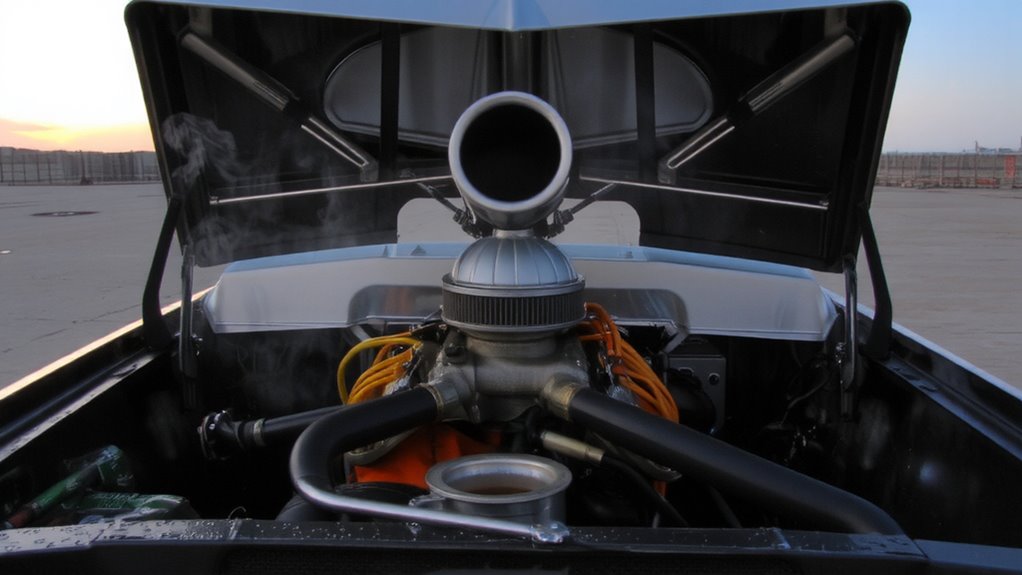
While supercharging increases horsepower by forcing more air into the engine, heat soak undermines those gains by raising the temperature of the intake charge. You lose power because hot air is less dense, reducing air density in the mixture. Lower air density means fewer oxygen molecules enter the cylinders, limiting fuel combustion and suppressing output. Thermal efficiency drops as the engine works harder to compress heated air, wasting energy. A supercharger can raise intake temperatures by 150°F or more after repeated passes, drastically affecting performance. For every 50°F increase, air density falls by about 10%, directly cutting potential horsepower. Unlike fuel-injected systems, carbureted setups lack precise charge-cooling control, making them more vulnerable. Heat soak doesn’t just linger-it actively degrades the combustion process. Managing it isn’t optional; it’s critical to maintaining consistent, peak engine output on the track.
Identifying Heat Sources: Where Thermal Buildup Occurs
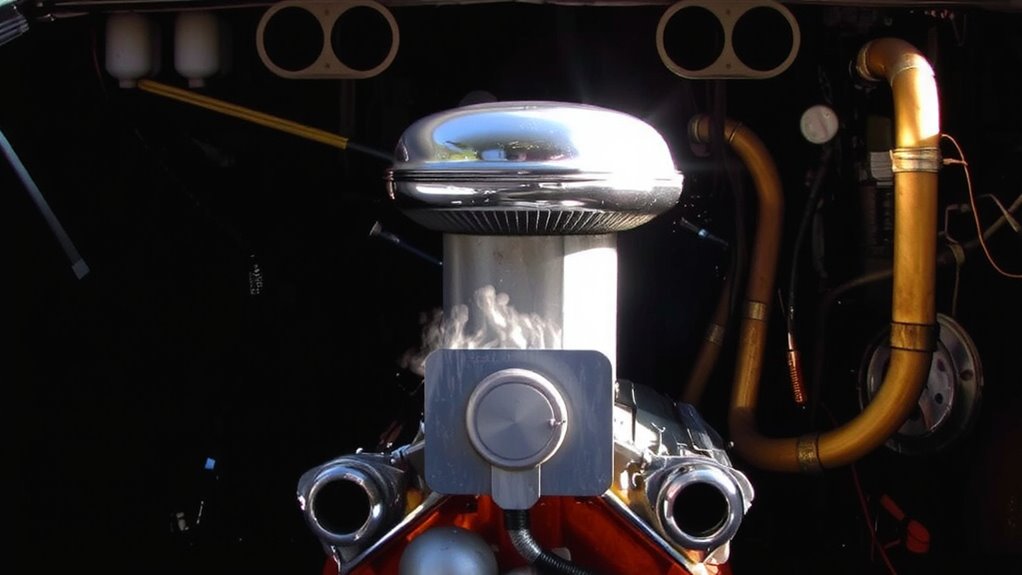
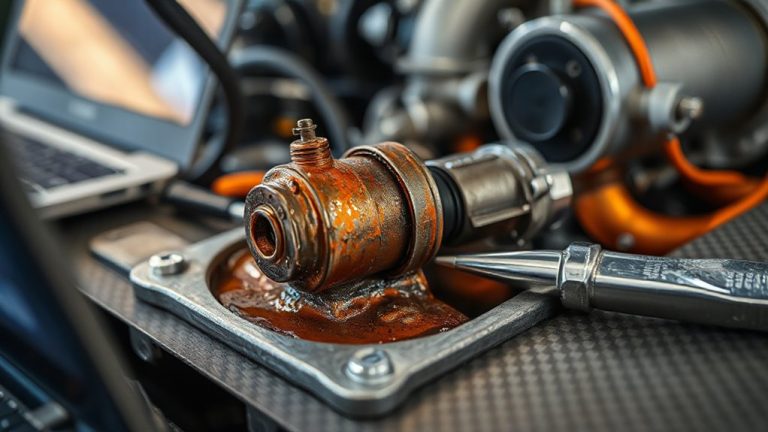
Where is all that heat really coming from? The primary culprit is exhaust manifold radiation. Your supercharger sits close to the exhaust headers, and those surfaces emit intense radiant heat-often exceeding 1,000°F during back-to-back passes. This energy transfers directly to the intake manifold and carburetor, soaking critical components. Intercooler inefficiency adds to the problem. Without efficient heat exchange, compressed air from the supercharger stays hot, sometimes reaching 180–220°F even with a functional intercooler. Most carbureted setups use air-to-air units with limited surface area or poor airflow routing, reducing cooling capacity by up to 40%. Heat also builds in the blower case itself, especially with prolonged idling between rounds. Even polished heat shields slow only a fraction of radiant energy. You’re fighting both conducted and radiant heat from multiple sources. Each degree counts-thermal buildup starts long before you stage.
How Intake and Carb Temperature Affect Fuel Delivery
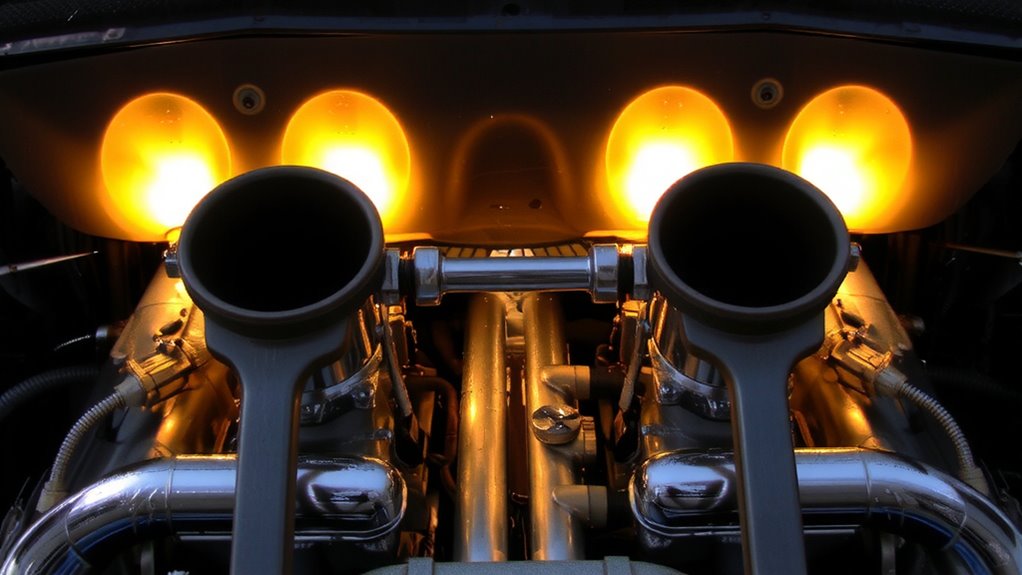
Why does your carburetor start acting up after a few hot runs? Heat alters fuel behavior in the intake and carb, disrupting delivery. High carb temperatures thin fuel, unbalancing air/fuel ratios. Meanwhile, excessive heat reduces air density, skewing metering despite consistent jetting. You can experience lean spikes-even with proper setup-due to vapor pressure changes in the float bowl.
| Condition | Effect on Fuel Delivery |
|---|---|
| Hot intake | Fuel vaporizes early, pooling in runners |
| Cold carb body | Risk of carb icing in humid conditions |
| High underhood heat | Increased fuel percolation and bubble formation |
| Intake turbulence | Inconsistent signal to booster, erratic fuel curve |
Carb icing may seem counterintuitive, but sudden pressure drops across the venturi cool metal below dew point. Intake turbulence disrupts pressure signals, making metering erratic. Both hurt consistency.
Cooling Strategies Between Drag Racing Passes
After several hot runs, rising underhood temperatures start compromising fuel control, and that’s when cooling strategies become your best defense. You need active cooldown routines to protect mixture stability. Spray water mist over the intake, carb, and supercharger housing-this simple track hydration boosts evaporative cooling and drops surface temps fast. If you’re running an intercooler, inspect it between runs; clogged fins or oily residue block airflow, so clean cores with degreaser to maintain efficiency. Intercooler maintenance guarantees maximum heat transfer and prevents intake air from spiking above 150°F. Use a thermal gun to monitor key spots-target underhood temps below 220°F before re-staging. Even 10 minutes of fan-assisted ventilation reduces soak-back markedly. Proper airflow management and moisture application act like an emergency heat dump. These steps keep critical components stable and ready for repeat performance.
Fuel Management Tweaks to Combat Vapor Lock and Lean Spikes
How do you keep fuel flowing smoothly when underhood heat turns your race-ready setup into a vapor-prone hazard? Start by upgrading your fuel bowl venting system. Proper venting reduces pressure buildup and minimizes vapor formation inside the bowl. Use external vents with heat-resistant hoses routed away from exhaust components. You should also install a phenolic heat shield between the carburetor and intake manifold-it can cut conducted heat by up to 30%. For consistent jet block flow, switch to billet metering blocks with stagger-drilled passages that resist clogging from varnish. Pair this with braided stainless steel fuel lines and an in-line 10-micron filter. Run a -6 AN return-style fuel system with a bypass regulator to maintain constant pressure. These tweaks guarantee stable AFR, even after back-to-back runs.
On a final note
You must minimize heat soak to maintain consistent performance. Thermal buildup in the intake manifold and carburetor increases air temperature, reducing air density and causing fuel to vaporize prematurely. Use heat wrap on the supercharger and intake, and allow 10–15 minutes between passes for cooling. Run 98-octane fuel with a vapor pressure of ≤8 psi to resist vapor lock. Monitor air/fuel ratio with a wideband O2 sensor; maintain 12.8:1 under power.