Maximizing Brake System Performance Through Regular Maintenance Tasks: Tips for Ensuring Efficient Stopping Power With Clean, Lubricated Components in Your Vehicle’s Braking Mechanism
You keep your brake system performing at peak efficiency by maintaining clean, lubricated components. Inspect pads every 10,000 miles; replace them at 3 mm thickness to prevent rotor damage. Lubricate slide pins with synthetic grease rated to 400°F, ensuring even pressure and smooth caliper movement. Flush brake fluid every two years-moisture reduces DOT 4’s boiling point from 446°F to 311°F. Warped rotors exceed 0.001-inch runout; clean slides and maintain proper clearances prevent fade. There’s more to maintaining peak efficiency than just friction.
Notable Insights
- Replace brake fluid every two years to prevent moisture buildup and maintain optimal boiling point.
- Clean and lubricate slide pins with high-temperature grease to ensure even brake pad wear and smooth caliper movement.
- Inspect brake pads every 10,000 miles and replace when thickness drops below 3 mm to preserve stopping power.
- Check for rotor warping and ensure runout stays under 0.001 inch to prevent vibration during braking.
- Replace pads in axle pairs and upgrade to quality pad and rotor kits for balanced, efficient braking performance.
Why Brake Maintenance Prevents Costly Repairs
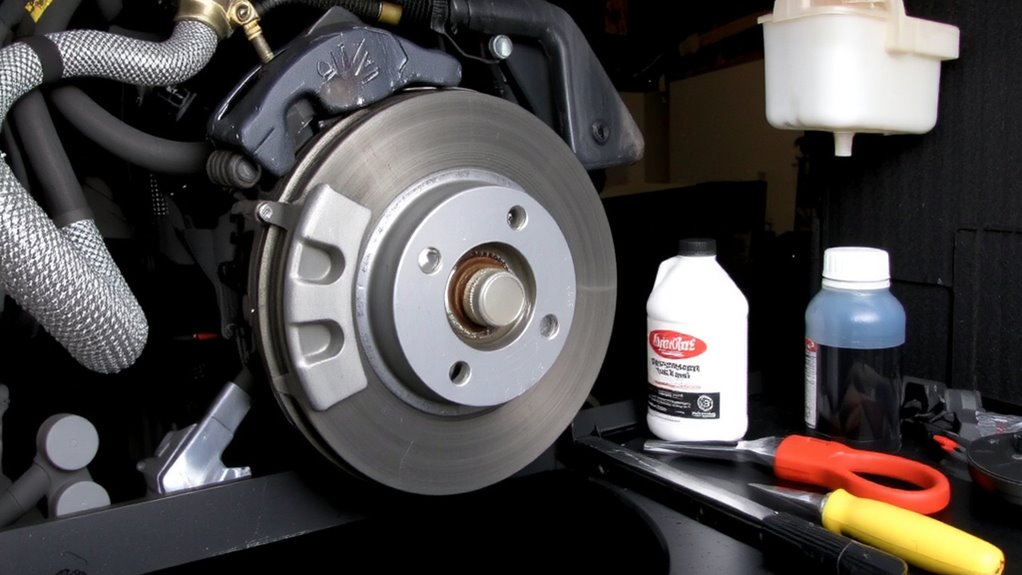
While ignoring brake maintenance might seem like a time-saver now, it’s a shortcut that leads straight to major repairs. You risk brake corrosion, especially in humid or salty environments, which eats away at calipers and lines. Corroded components weaken structural integrity and reduce hydraulic efficiency. Moisture exposure accelerates rust on steel brake lines, potentially causing leaks at pressures over 800 psi. Rotor warping is another consequence-excessive heat from dragging brakes deforms rotors beyond the 0.001-inch runout tolerance. Warped rotors lead to pulsating pedals and uneven pad wear. Regular lubrication of slides and pins prevents binding, maintaining even pressure distribution. Replacing brake fluid every two years removes moisture, preserving boiling points above 400°F. Preventative upkeep avoids rotor replacement costs, which can exceed $300 for a full axle. Maintenance isn’t optional-it’s a mechanical necessity for system longevity and peak performance under load.
Spot the Warning Signs of Brake Wear
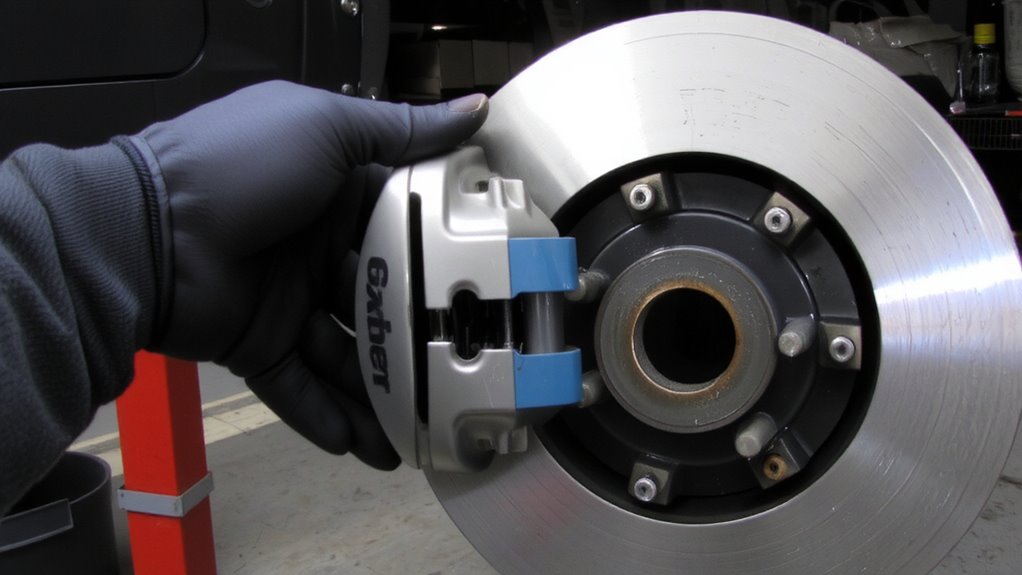
A subtle change in how your brakes respond could be your first indication of wear. You may notice increased pedal travel or a spongy feel, suggesting air in the lines or fluid degradation. Pay attention to brake noise analysis-consistent squealing often points to worn pad indicators, while grinding suggests metal-on-metal contact. Vibration during braking typically signals warped rotors or uneven thickness. Conduct regular rotor thickness measurement to guarantee they meet the manufacturer’s minimum specs, usually stamped on the rotor hub. Most standard rotors start at 12 mm and shouldn’t fall below 10 mm. If below, replacement is required. Uneven wear affects stopping power and pad life. Early detection prevents damage to calipers and wheel hubs. These signs mean immediate inspection is critical, not optional. Ignoring them compromises safety and increases repair costs. Upgrading to high-performance best brake rotors can improve heat dissipation and overall braking efficiency.
Check Brake Pads: When to Inspect and Replace
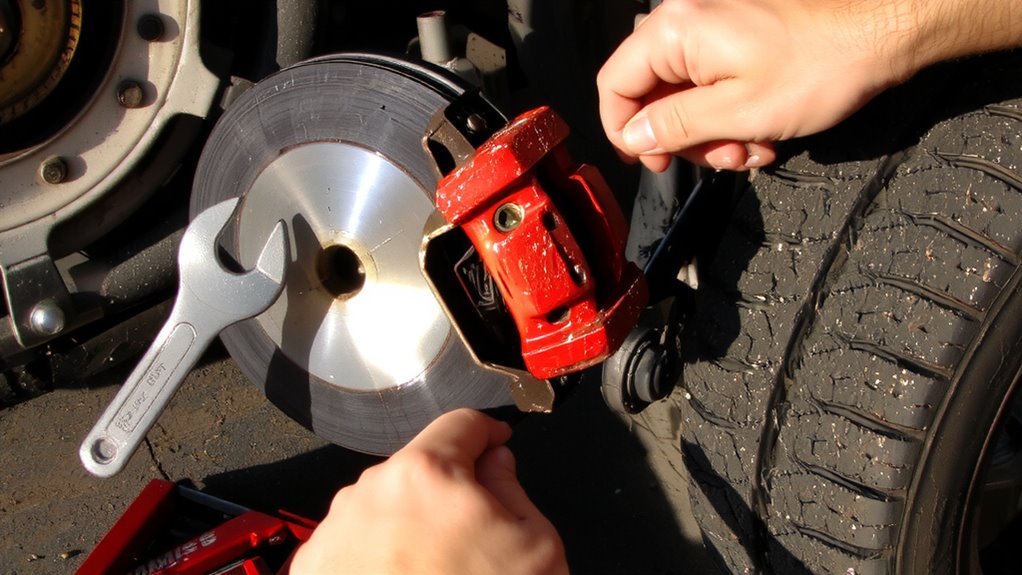
Brake pads are your first line of defense against reduced stopping power, and recognizing when to inspect and replace them keeps your system functioning safely. You should check brake pad thickness every 10,000 miles. Most manufacturers design pads with a minimum safe thickness of 3 millimeters. Once pads wear below this threshold, stopping performance drops markedly. Use a caliper or visual inspection through the wheel to measure thickness accurately. Noise detection is a key indicator-listen for squealing or grinding sounds during braking. Squealing typically comes from wear indicators, small metal tabs that contact the rotor when pad material is low. Grinding suggests metal-on-metal contact, which damages rotors. Replace pads in pairs on the same axle to maintain balance. Don’t wait until symptoms are severe; proactive replacement preserves braking efficiency and prevents costly rotor repairs. For optimal performance, consider upgrading to a top-rated brake pad and rotor kit that balances durability and stopping power.
Clean and Lubricate Slide Pins Easily
Dirty or seized slide pins are a leading cause of uneven brake pad wear and reduced braking efficiency, so cleaning and lubricating them regularly is essential. Brake dust buildup accelerates corrosion, restricting pin movement and promoting uneven caliper movement. This leads to excessive heat and premature pad wear. Use a wire brush and brake cleaner to remove grime, then dry thoroughly. Apply a high-temperature synthetic grease compatible with rubber boots. Best Brake Grease Picks can help you choose a high-performance product tailored to your vehicle’s specifications.
| Component | Specification |
|---|---|
| Slide Pin Diameter | 8–12 mm, depending on vehicle |
| Lubricant Operating Temp | -40°F to 400°F |
| Recommended Grease Type | Silicone or DOT-approved synthetic |
Inspect boots for tears to avoid moisture intrusion. Proper lubrication guarantees smooth, consistent caliper sliding action, improving pad contact and stopping power. Neglecting this step compromises braking performance and safety.
Change Brake Fluid for Reliable Performance
Every two years, most drivers should replace their brake fluid to maintain peak system performance-moisture absorption degrades fluid over time, reducing its boiling point and compromising safety. Brake fluid types like DOT 3, DOT 4, and DOT 5.1 are glycol-based and hygroscopic, meaning they attract moisture contamination from the atmosphere. Over time, absorbed water lowers the fluid’s boiling point; DOT 4, for example, starts at 446°F dry but can drop to 311°F when saturated. This increases the risk of vapor lock under heavy braking. Moisture contamination also accelerates internal corrosion in calipers, master cylinders, and ABS modules. You must bleed the system thoroughly to remove old fluid. Always use the brake fluid type specified in your owner’s manual. Never mix DOT 5 (silicone-based) with other types. Regular fluid changes guarantee consistent pedal feel and reliable stopping power.
Stop Brake Fade With These 4 Checks
When pushing your vehicle hard, brake fade can sneak up quietly-robbing stopping power just when you need it most. First, monitor brake temperature; sustained heat above 500°F degrades pad compounds and fluid efficiency. Use infrared sensors or thermal paint to track heat cycles. Second, inspect pad and rotor friction balance; mismatched materials reduce bite and increase wear. OEM specs typically require ±10% coefficient consistency. Third, check for warped rotors-runout exceeding 0.003 inches causes pulsation and uneven contact. Fourth, guarantee caliper slides move freely; seized hardware leads to uneven pressure and localized overheating. Lubricate guide pins with silicone-based grease rated to 400°F. These checks maintain friction balance under stress, preserving modulation and response. Preventive verification every 15,000 miles guarantees peak performance. Consistent brake temperature management and balanced friction materials are critical for sustained stopping power.
On a final note
You keep your brakes reliable by staying proactive. Regular maintenance prevents costly rotor or caliper damage. Inspect pads every 12,000 miles; replace if thickness drops below 3mm. Clean and lubricate slide pins annually with silicone-based grease to guarantee even pad movement. Flush brake fluid every two years-moisture reduces boiling point from 400°F to under 200°F. These checks stop brake fade and maintain stopping distance under 140 feet from 60 mph.