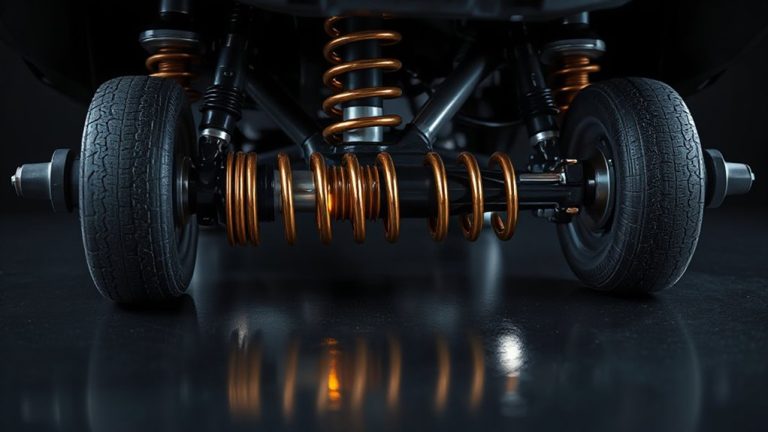
The Ultimate Guide to Selecting and Installing Aftermarket Suspension Systems: Enhancing Handling, Comfort and Style
You want better handling, comfort, and style, and aftermarket suspensions deliver. Coilovers give 1–3 inches of adjustable ride height with threaded bodies and damping control. Air ride systems offer real-time adjustments up to 4 inches for lift or lowering. Lift kits boost ground clearance 2 to 6 inches using reinforced springs or spacers. Upgraded systems reduce body roll by up to 40%, improve traction, and enhance ride quality. Choose based on load needs, terrain, and vehicle specs-like 46mm forged shocks or spring rates matched to weight. Proper tools, torque specs, and alignment are critical. Skip shortcuts to avoid uneven wear or failure. There’s more to get right.
Notable Insights
- Choose coilovers for precise ride height and damping control, ideal for improved handling and sporty aesthetics.
- Opt for air suspension to enable on-the-fly ride height adjustments and support heavy loads safely.
- Select lift kits with reinforced components to gain 2–6 inches of clearance for off-road capability.
- Match spring rates and damping to your driving needs, ensuring compatibility with vehicle weight and usage.
- Always follow torque specs and perform post-installation alignment to ensure safety, performance, and tire longevity.
What Aftermarket Suspension Options Exist: Coilovers, Air Ride & Lift Kits
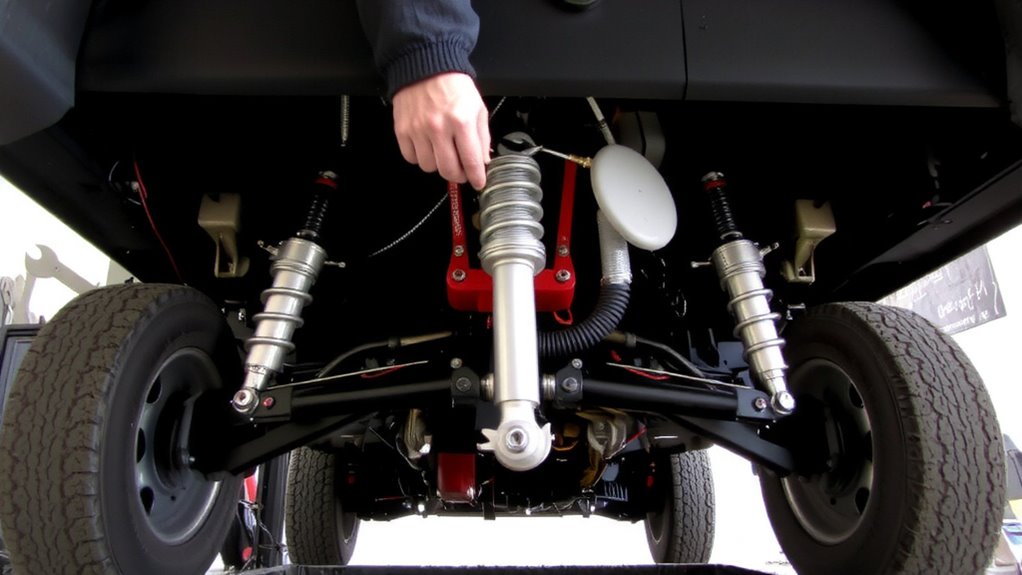
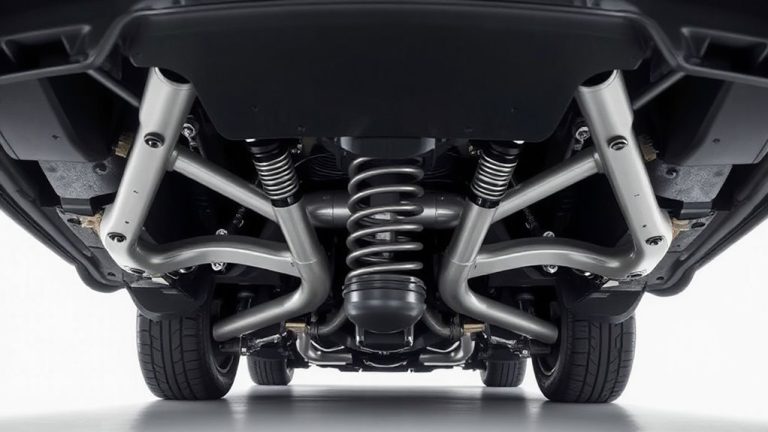
Aftermarket suspension systems give you control over ride height, handling, and comfort beyond what stock setups offer. Coilovers combine coil springs and shock absorbers into one unit, allowing precise adjustment of lift height and ride firmness. Most let you lower the vehicle by 1 to 3 inches, with threaded bodies for fine-tuning damping. Air ride systems use air springs instead of coils, enabling on-the-fly changes to lift height and ride firmness via compressors and valves. You can adjust ride height from ground clearance of 4 inches up or down, ideal for varying loads or road conditions. Lift kits increase lift height by 2 to 6 inches using reinforced springs, spacers, or extended arms. They maintain factory ride feel but alter geometry, requiring alignment. Each system serves specific performance goals-coilovers for track precision, air ride for adaptability, lift kits for off-road dominance.
Benefits of Upgrading Your Suspension: Ride, Handling & Style

You already know the options-coilovers, air ride, and lift kits-each reshaping your vehicle’s height and responsiveness in distinct ways. Upgrading improves ride quality by replacing worn components with precision-tuned shocks and springs. You’ll experience reduced sway during cornering, thanks to stiffer anti-roll bars and better suspension geometry. Improved traction results from maintaining consistent tire contact, especially on uneven surfaces. Coilovers offer adjustable damping and ride height, often spanning 1–3 inches of adjustment. Air ride systems let you change ride height on demand, enhancing both comfort and aerodynamics. Lift kits increase ground clearance-typically 2 to 6 inches-ideal for off-road stability. Upgraded suspensions also sharpen steering response and reduce body roll by up to 40% compared to stock. These changes enhance not only performance but also visual stance, giving your vehicle a more aggressive, purposeful look.
Choosing the Right Aftermarket Suspension for Your Driving Needs
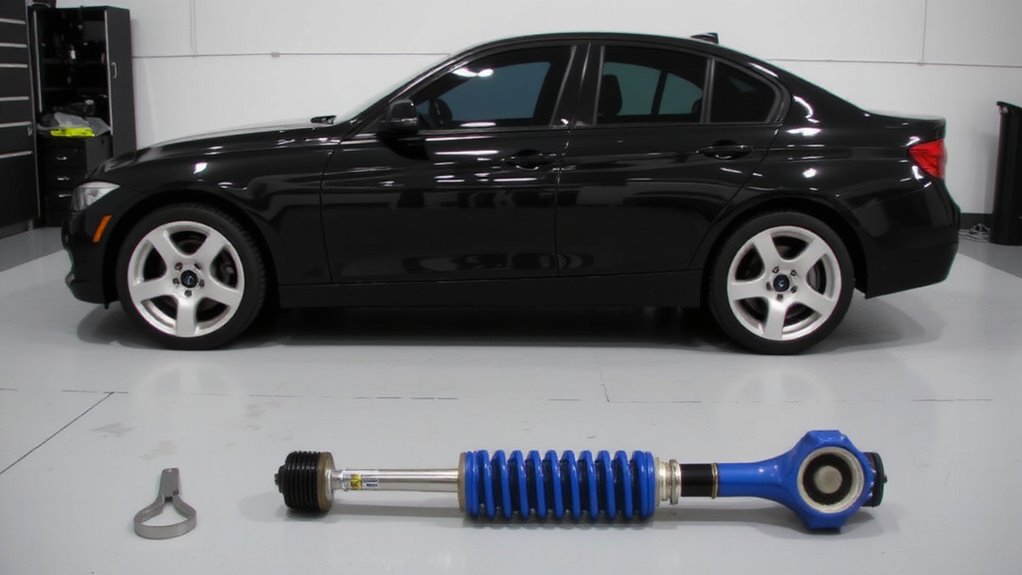
How do you match suspension performance to your daily drive? Consider your typical driving terrain first. If you face rough roads or off-road trails, opt for heavy-duty coilovers with 2-inch lift kits and adjustable dampening. For city or highway driving, prioritize performance struts with lower spring rates for smoother rides. Load capacity matters if you tow or carry heavy cargo-choose air suspension systems rated for at least 1,500 lbs over your vehicle’s GVWR. Check specifications: look for forged alloy shocks with 46mm pistons and nitrogen gas charging for durability. Match spring rates to weight distribution-higher rates stabilize heavy loads. Avoid under-spec’d kits; they compromise control and safety. Your suspension must balance responsiveness and compliance. Think of it like footwear-soft soles for pavement, rugged boots for trails. Match your kit to real-world demands, not just aesthetics. Trusted brands like King, Fox, and Old Man Emu offer best off-road suspension systems engineered for extreme conditions and long-term reliability.
How to Install Aftermarket Suspension: Tools, Steps & Safety
Selecting the right aftermarket suspension sets the foundation, but proper installation guarantees it performs as designed. You’ll need jack stands, a hydraulic jack, torque wrench, spring compressors, and basic hand tools. Always disconnect the battery before starting. Remove wheels and suspension components carefully, noting factory positions. When installing new shocks or struts, follow manufacturer-specified torque settings to avoid component failure. Over-tightening bolts can damage threads or mounting points; under-tightening risks loosening under load. Once installed, reattach all hardware and lower the vehicle gradually. Afterward, perform alignment checks-camber, caster, and toe settings must match specs to make certain of even tire wear and precise handling. Improper alignment accelerates tire wear and reduces stability, especially in cornering. Finalize with a test drive at low speeds to verify operation. Safety depends on precision-never skip torque settings or alignment checks. Upgrading to high-performance off-road shocks can significantly improve ride quality and control on uneven terrain.
Common Mistakes When Installing Aftermarket Suspension
While gaining better handling and ride quality is often the goal, skipping critical steps during installation can compromise both safety and performance. You must follow factory torque specifications precisely-improper torque settings lead to loose fasteners, component failure, or damaged suspension parts. Always use a calibrated torque wrench; guesswork risks structural integrity. Mounting bolts for coilovers, for example, typically require 80–100 ft-lbs, depending on the vehicle. Incorrect alignment angles cause uneven tire wear and unstable tracking. After installation, your camber should generally be within ±0.5 degrees of factory spec, with toe adjusted to ±0.15 degrees. Neglecting a post-install alignment invalidates performance gains. You’ll also reduce tire life and increase steering resistance. Double-check all connections, verify ride height, then schedule professional alignment. Precision guarantees peak geometry, safety, and longevity. Cut no corners-your suspension must work as a unified system. Upgrading to high-performance shocks for Jeep Wrangler JK can significantly improve off-road stability and ride comfort when properly installed.
On a final note
You’ve made the right choice upgrading your suspension. Coilovers offer precise damping control, typically adjustable in 30-way increments. Air ride systems provide variable ride height, supporting 70–120 psi for dynamic clearance. Lift kits add 2–6 inches of ground clearance with reinforced control arms. Proper installation guarantees alignment specs-caster ±0.5°, camber ±1.0°-are met. Always torque fasteners to OEM specs. Your ride, handling, and stance now perform as one unified system.