Securing Valuables Left in Vehicles During Prolonged Indoor Storage Periods
Remove all valuables before storing your vehicle long-term-unattended cars attract thieves like vacant homes. Store essentials in hidden compartments (4–8 inches deep, made of ABS or aluminum) behind trim or floorboards. Use tinted windows (15%–20% VLT) with UV and shatter resistance to block visibility. Install GPS trackers with real-time alerts, motion-sensing alarms (<1-second response), and encrypted kill switches. Record serial numbers, store proof of ownership in encrypted cloud storage, and verify your storage unit has 8-foot anti-climb fencing, biometric access, 1080p surveillance, and individual unit alarms-layered security guarantees maximum protection when every detail matters.
Notable Insights
- Remove all valuables before long-term storage to eliminate theft and pest attraction risks.
- Use hidden, factory-installed compartments with tinted windows to discreetly secure essential items.
- Install GPS trackers and motion-sensor alarms with encrypted, hidden wiring for real-time protection.
- Maintain climate-controlled storage at 50–60% humidity to prevent mold and material degradation.
- Photograph and document remaining items, storing records in encrypted cloud storage with proof of ownership.
Remove All Valuables Before Long-Term Storage
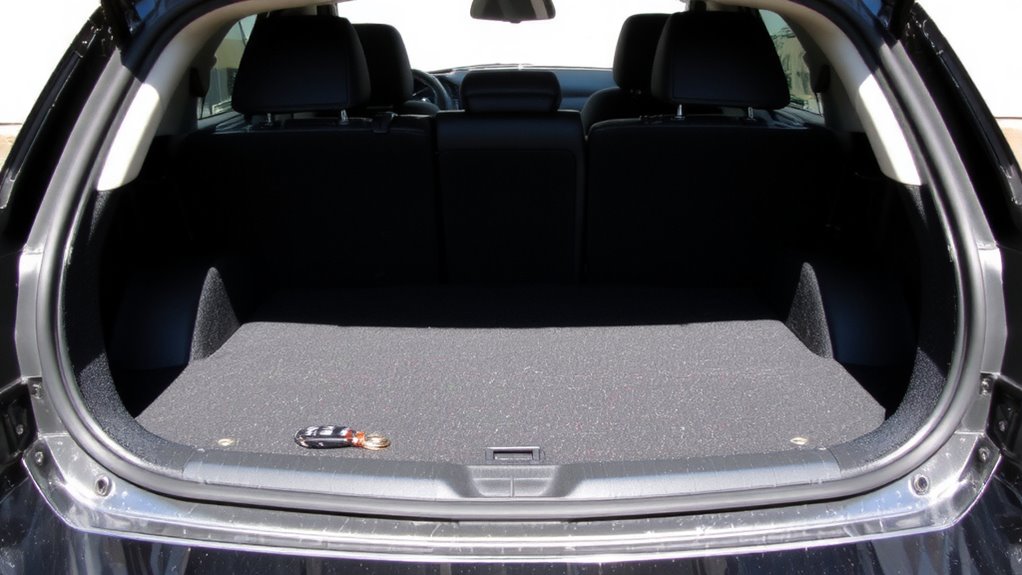
A vehicle left unattended for weeks or months becomes a stationary target, not just for theft but for damage. You must remove all valuables before long-term storage to prevent loss and maintain interior integrity. Interior cleaning eliminates organic residues that attract pests, which can chew wiring or upholstery. Vacuum crevices and wipe surfaces with pH-balanced cleaners to preserve materials. Residual food particles or stains can degrade over time, especially under fluctuating temperature and humidity. Climate control in storage environments should maintain 50–60% humidity and 60–70°F to inhibit mold and metal corrosion. Electronic devices left inside may suffer battery leakage or screen degradation under these conditions. Even garage-stored vehicles experience thermal cycling that stresses plastics and adhesives. Removing personal items reduces theft temptation and insurance complications. Empty compartments also allow full access for detailing and inspection. Prevention through complete evacuation and thorough interior cleaning guarantees vehicle readiness and preservation during inactivity.
Stash Essentials in Discreet, Secure Spots
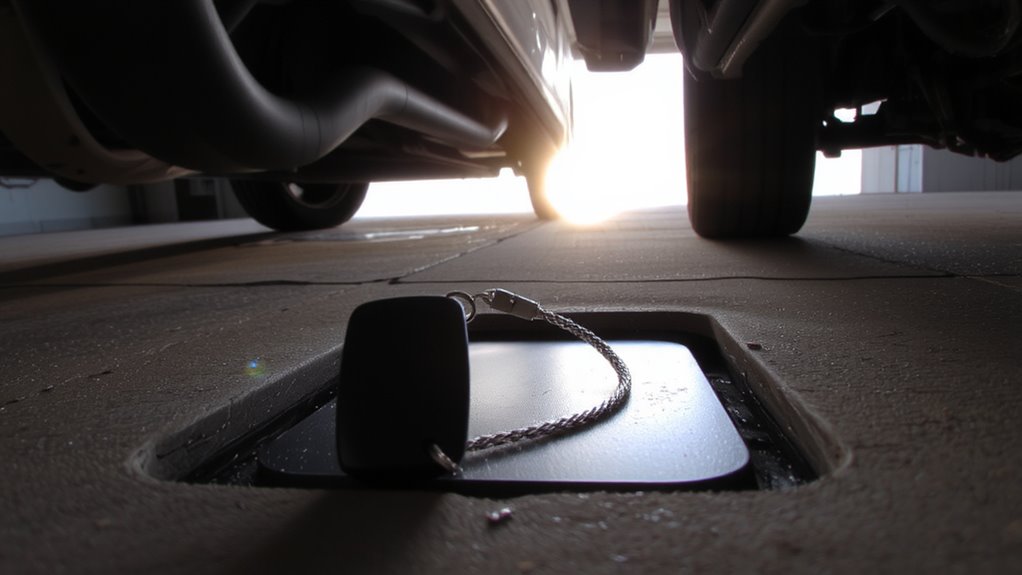
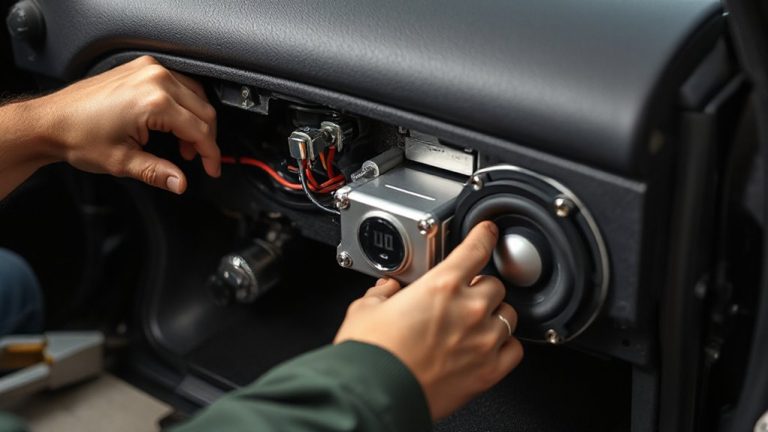
You’ve cleared everything out for storage-now it’s time to think about what you might need to leave behind when the vehicle remains in regular use. Essential items should be stored in discreet, secure spots to deter theft. Use factory-installed or aftermarket hidden compartments, which are built into consoles, beneath floorboards, or behind trim panels. These secure zones typically measure 4–8 inches in depth and are constructed from rigid ABS plastic or aluminum, offering resistance to forced entry. Pair concealed storage with tinted windows that meet local VLT (Visible Light Transmission) standards-typically 15% to 20% for side and rear windows-to block exterior visibility. Tint film layers include UV inhibitors and shatter resistance up to 200 psi. Together, hidden compartments and tinted windows reduce visual access and delay unauthorized discovery. Always anchor items to prevent movement during transit. Maintain minimal interior clutter to avoid signaling valuable contents.
Add Alarms and Anti-Theft Devices
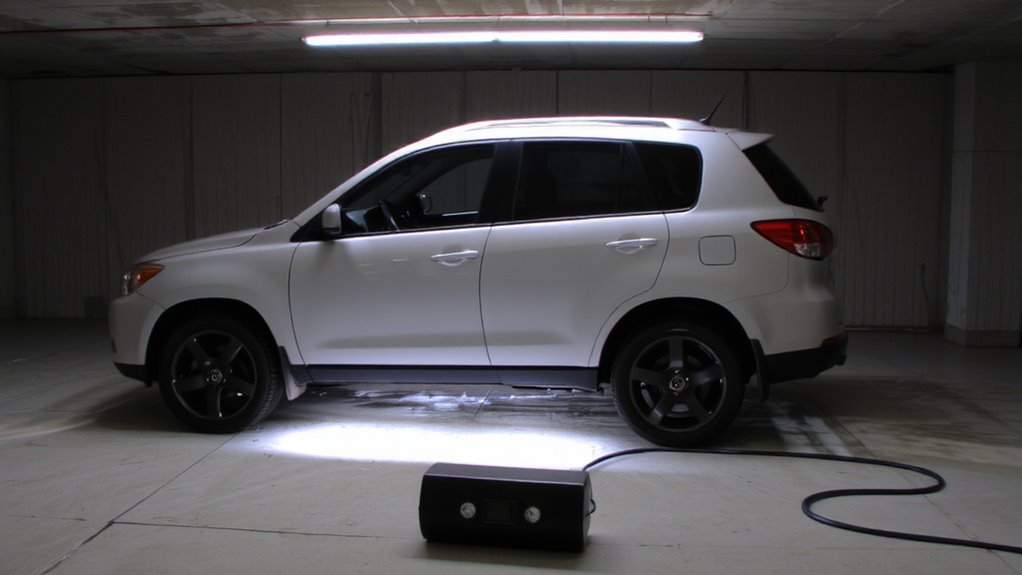
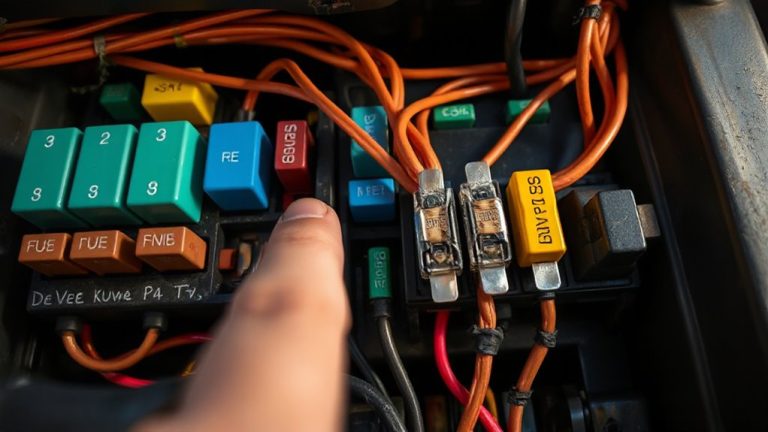
While visible deterrents help, integrating alarms and anti-theft devices markedly increases your vehicle’s resistance to unauthorized access. Modern alarms trigger when motion sensors detect interior movement. These sensors use infrared or ultrasonic technology to monitor cabin space. GPS trackers provide real-time location data, aiding swift recovery if theft occurs. Many systems offer smartphone alerts and remote immobilization. Systems with integrated kill switches offer an additional layer of protection by disabling the engine circuit upon unauthorized tampering.
| Device Type | Detection Method | Response Time |
|---|---|---|
| Factory Alarm | Door/ignition sensors | <2 seconds |
| Aftermarket Siren | Vibration & tilt | 1–3 seconds |
| Motion Sensors | Infrared beams | <1 second |
| GPS Trackers | Satellite & cellular | Real-time |
| Steering Locks | Mechanical resistance | Immediate |
Choose devices with low false-alarm rates and strong encryption. Install GPS trackers with hidden wiring to prevent detection. Use systems with backup power to maintain function during battery disconnection.
Record and Insure What’s Left Behind
What if your vehicle’s contents vanish overnight? You’ll need solid documentation practices to prove what was lost. Photograph every item left inside, noting serial numbers, make, model, and value-this record is critical. Store digital copies in encrypted cloud storage with timestamps. Receipts, appraisals, and original packaging further strengthen your case. Without proof, insurance coverage may not apply. Review your policy: standard auto insurance often excludes personal belongings, so you may need a rider or separate property policy. Confirm coverage limits, deductibles, and exclusions for stored vehicle contents. High-value items like tools or electronics require scheduled personal property endorsements. These specify exact items and agreed values, avoiding depreciation disputes. Proper documentation practices and verified insurance coverage work together-like a failsafe system-to guarantee you’re compensated accurately and efficiently if theft occurs. Protect yourself before it happens.
Verify Your Storage Unit’s Security
A locked car won’t always protect your belongings, just like a rented storage unit doesn’t guarantee safety by default. You must verify your storage facility’s security measures before leaving valuables unattended. Look for 24/7 surveillance cameras with night vision and motion detection-these deter intruders and record evidence. High-resolution IP cameras (1080p or higher) provide clear footage for at least 30 days. Confirm the facility maintains digital access logs, which track every entry and exit using key-coded or biometric systems. Logs should timestamp each event and link to user accounts, enabling audit trails. Perimeter fencing, at least 8 feet high with anti-climb features, adds another layer. On-site security personnel increase responsiveness. Choose facilities with enclosed, climate-controlled units and individual unit alarms. Always inspect the location in person and request proof of camera coverage and log retention policies-your valuables depend on it.
On a final note
You secure your vehicle properly only when all valuables are removed. Store essentials in locked, concealed compartments rated UL 758 Class 2. Add motion-sensing alarms with 110-decibel output and GPS trackers updating every 30 seconds. Document items with serial numbers and update insurance for stored contents. Choose storage units with 24/7 surveillance, 12-foot perimeter fencing, and access logs. These measures reduce theft risk by up to 80%. Prevention remains the strongest safeguard.