Exploring the Inner Workings of a Four-Wheel Drive Drivetrain: Understanding How Power Is Distributed Across All Wheels
You get power to all four wheels through a coordinated 4WD system that starts at the transfer case. It splits torque 50:50 front and rear using a chain-driven mechanism, with low-range gearing at ~4.0:1 for off-road control. Drive shafts-often steel or carbon fiber-transmit power to axles, while differentials split torque side to side, up to a 5:1 bias in locking units. Real-time sensors adjust distribution, sending 30–60% front torque based on grip. Further details reveal how each component adapts under load.
Notable Insights
- Power is sent to all four wheels via a transfer case that splits torque between front and rear axles, typically in a 50:50 ratio.
- The transfer case provides high and low gear ranges, with low range multiplying torque for improved off-road traction and control.
- Drive shafts transmit power from the transfer case to the front and rear differentials using durable U-joints or CV joints.
- Differentials distribute torque side-to-side, allowing wheels to rotate at different speeds during turns and enhancing maneuverability.
- Limited-slip or electronic locking differentials redirect power to wheels with grip, optimizing traction during slip conditions.
What Is a Four-Wheel Drive Drivetrain and How Does It Work?
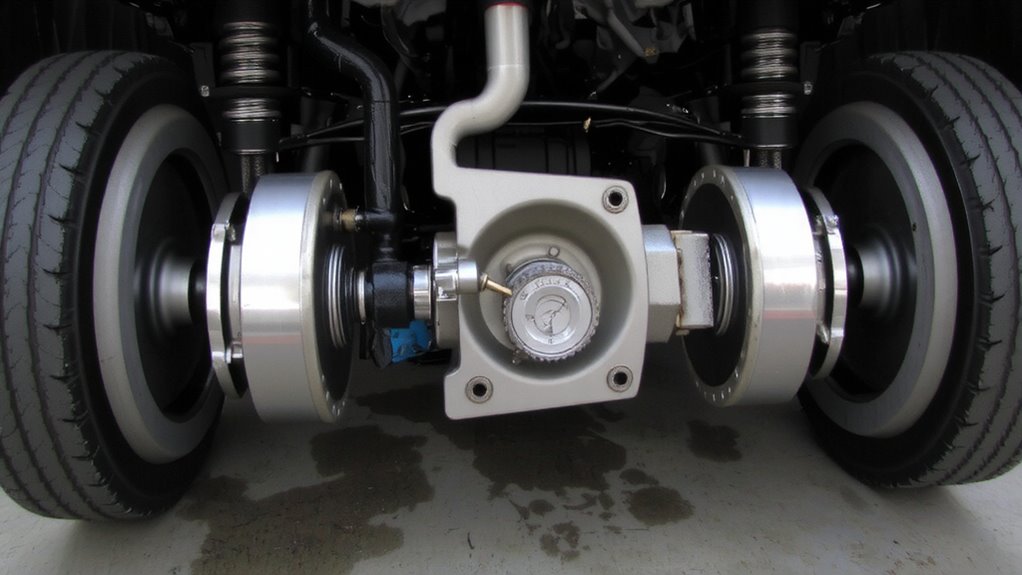
Think of traction as the grip your tires have on the road, and a four-wheel drive (4WD) drivetrain gives you more of it by sending engine power to all four wheels instead of just two. You engage 4WD manually or automatically when road conditions demand extra grip. Power flows from the transmission to a transfer case, which splits torque between front and rear axles. Each axle uses differential gear ratios-often between 3.23:1 and 4.88:1-to optimize torque delivery. Some systems include limited-slip differentials, which help maintain traction by restricting wheel spin when one tire loses grip. Limited slip shifts power to the wheel with more traction, improving control. Gear ratios affect both acceleration and fuel efficiency, with lower ratios providing more low-end torque for off-road obstacles. You benefit from enhanced stability on slippery or uneven terrain.
How the Transfer Case Splits Power in a 4WD System
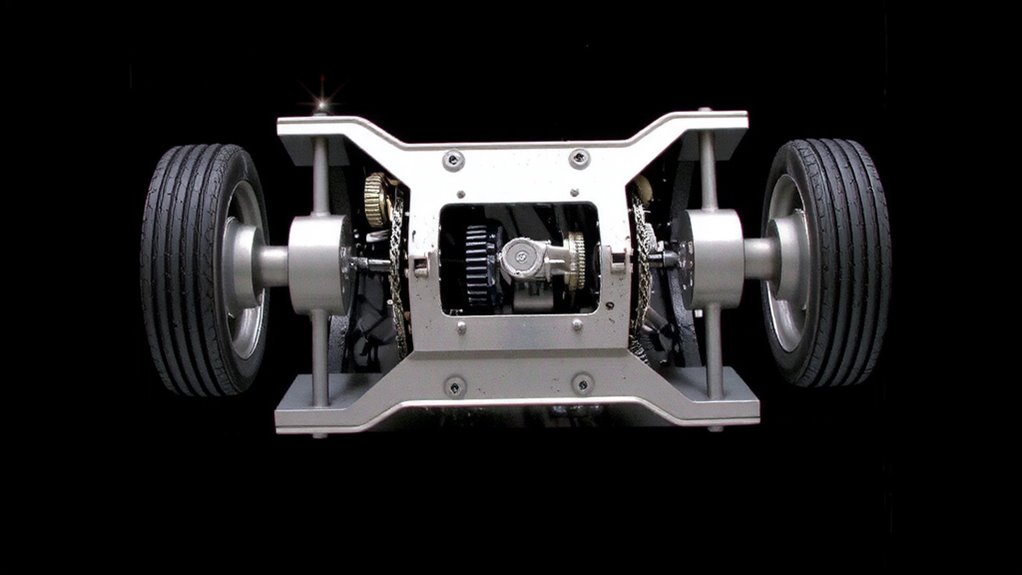
The transfer case is the core component that enables four-wheel drive functionality by distributing engine power to both the front and rear axles. It receives torque from the transmission and splits it, typically in a 50:50 ratio, to maintain balanced traction. Inside, a chain drive connects the input and output shafts, offering durability and smooth power transfer under load. Some models use gears instead, but chain drives are common due to their flexibility and reduced noise. The transfer case also provides an additional gear ratio, often ranging from 2.7:1 in high range to 4.0:1 in low range, enhancing torque for off-road conditions. This low-range gearing multiplies engine output, improving control and crawling ability. You select between modes manually or electronically, depending on driving conditions. The system operates efficiently, ensuring reliable power split without driver intervention.
How Differentials Distribute Torque to Individual Wheels
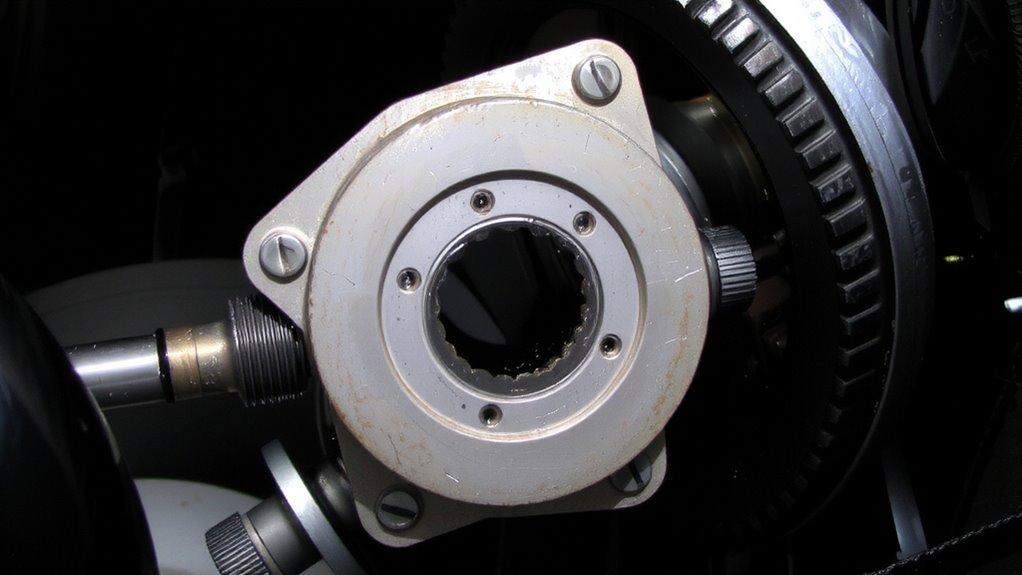
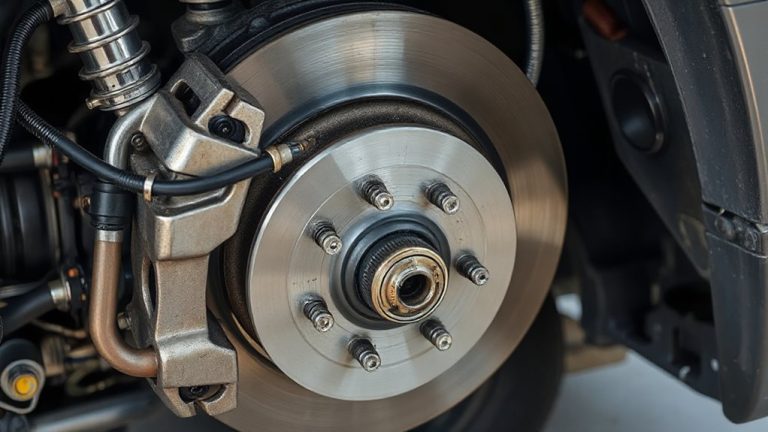
While power reaches both axles through the transfer case, it’s the differentials that manage how torque is sent to individual wheels. Each differential splits torque between left and right wheels, allowing them to rotate at different speeds during turns. Open differentials deliver equal torque to both wheels, but when one loses traction, wheel slip occurs and most torque goes to the spinning wheel. That’s where torque biasing becomes critical. Limited-slip or locking differentials actively redirect torque to the wheel with grip, improving control. Torque biasing ratios in performance differentials can reach 2:1 to 5:1, depending on design. Without this ability, you’d struggle in low-traction conditions. Differentials use gear sets, clutches, or electronic controls to regulate output. Some modern systems respond in milliseconds. They monitor wheel speed and automatically adjust to prevent excessive slip. This guarantees power goes where it’s needed most.
How Drive Shafts Transmit Power in 4WD
Power takes center stage the moment the transfer case splits engine output to front and rear axles-drive shafts make that delivery happen. You rely on these shafts to transfer torque efficiently and with minimal energy loss. Modern drive shaft materials like high-strength steel, aluminum, and carbon fiber offer a balance of durability and reduced weight-carbon fiber shafts, for instance, can be 40% lighter than steel, improving response and fuel efficiency. Precision matters: shaft balancing techniques, including welded counterweights and computer-aided dynamic balancing, reduce vibration at high RPMs. An unbalanced shaft can cause driveline harmonics, leading to premature U-joint wear. Drive shafts typically operate between 3,000 and 6,000 RPM, depending on gear ratios and speed. They’re supported by carrier bearings to maintain alignment. Constant velocity (CV) or universal joints (U-joints) accommodate suspension movement while maintaining consistent power flow to axles.
Real-World Power Distribution: 4WD in Off-Road and Slippery Conditions
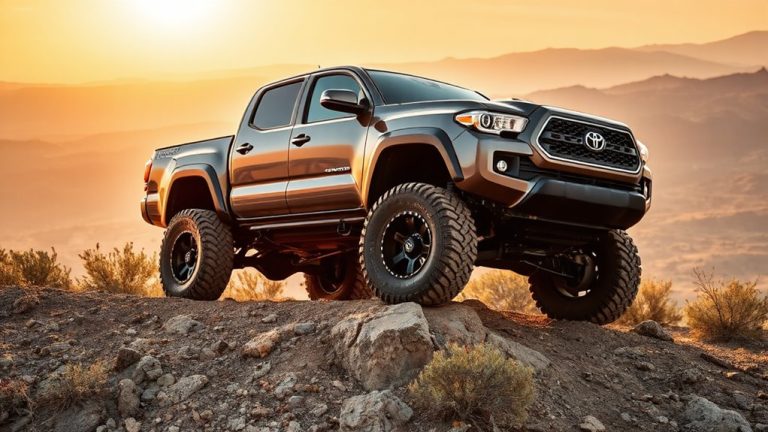
Picture tackling a muddy trail where traction shifts by the inch-your 4WD system responds instantly, splitting torque between front and rear axles as conditions demand. Traction control works alongside torque biasing to direct power where it’s needed most. Without intervention, wheels on slick surfaces spin freely, wasting energy. But with modern systems, sensors detect slip within milliseconds, applying brakes to slipping wheels and shifting torque to those with grip.
| Condition | Front Torque % | Rear Torque % |
|---|---|---|
| Dry Pavement | 40 | 60 |
| Slippery Gravel | 50 | 50 |
| Off-Road Mud | 30 | 70 |
Torque biasing enables this dynamic distribution, optimizing forward momentum. Traction control fine-tunes the process by managing wheel slip. Together, they maintain stability and propulsion. These systems operate seamlessly, ensuring maximum efficiency across terrain types. You stay in control, while the drivetrain handles complexity beneath you.
How Different 4WD Systems Manage Power Distribution
How do 4WD systems actually decide where to send power? Modern systems use sensors and software to monitor wheel speed, throttle input, and road conditions. In full-time 4WD, a center differential splits power evenly-typically 50/50 front to rear-but can vary in advanced setups. When wheels slip, traction control engages automatically, braking spinning wheels and redirecting torque to those with grip. Part-time 4WD lacks a center differential and locks front and rear driveshafts together, best for low-traction scenarios. For maximum control, electronic locking differentials let you manually lock the front, rear, or both axles, ensuring both wheels on an axle receive equal power regardless of grip. These systems work together seamlessly, improving stability and off-road capability. Whether automatic or driver-activated, traction control and electronic locking enhance performance where terrain challenges grip.
On a final note
You now understand how a 4WD drivetrain delivers power to all four wheels. The transfer case splits torque between front and rear axles, typically 50:50. Differentials distribute power side-to-side, with open, limited-slip, or locking types affecting traction. Drive shafts transmit rotational force using universal joints. In low grip, electronic traction control or mechanical lockers enhance wheel articulation. Systems like part-time or full-time 4WD adapt torque distribution for terrain, optimizing control and stability.