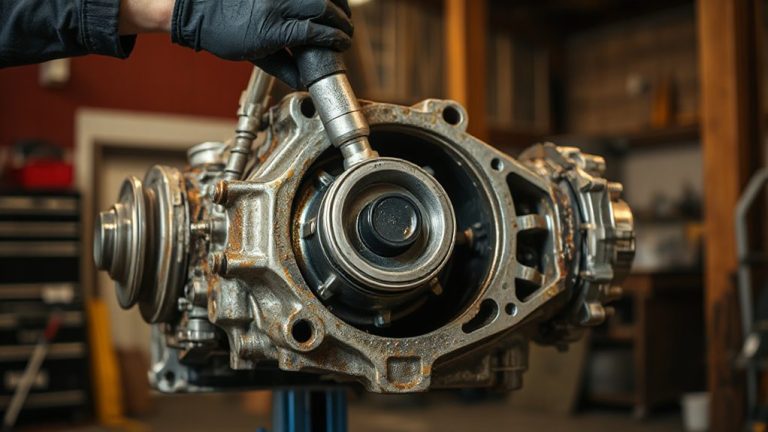
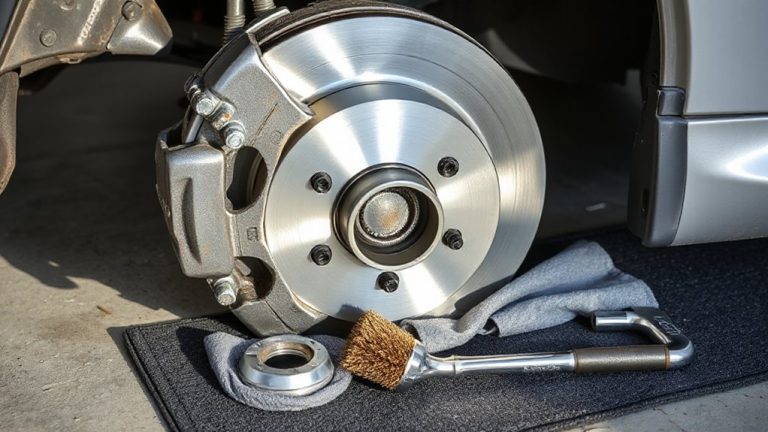
How to Select the Right GL-4 Gear Oil Weight for High-Performance Sports Car Transmissions
Always check your car’s manufacturer specs before choosing a GL-4 gear oil-using the wrong type risks synchronizer damage. Opt for 75W-90 in cold climates or for smoother cold starts, as it flows better at low temperatures. Choose 80W-90 for high-heat conditions, where its thicker film protects under heavy loads. Never use GL-5-it corrodes brass components. Synthetic GL-4 offers superior thermal stability and shear resistance, especially for track use. The right choice depends on your driving environment and factory requirements-further details reveal exactly how to match each factor precisely.
Notable Insights
- Always consult your car manufacturer’s specifications to ensure GL-4 oil meets OEM viscosity and API requirements.
- Choose 75W-90 for better cold-weather performance and smoother cold-start shifts in sports cars.
- Opt for 80W-90 in high-temperature or high-load conditions to maintain film strength and thermal stability.
- Use synthetic GL-4 oil for track use, as it offers superior shear and thermal resistance under extreme RPM.
- Never mix GL-4 with GL-5 oil to prevent sulfur-induced damage to brass synchronizers in synchronized transmissions.
Check Your Car’s Gl-4 Oil Specification
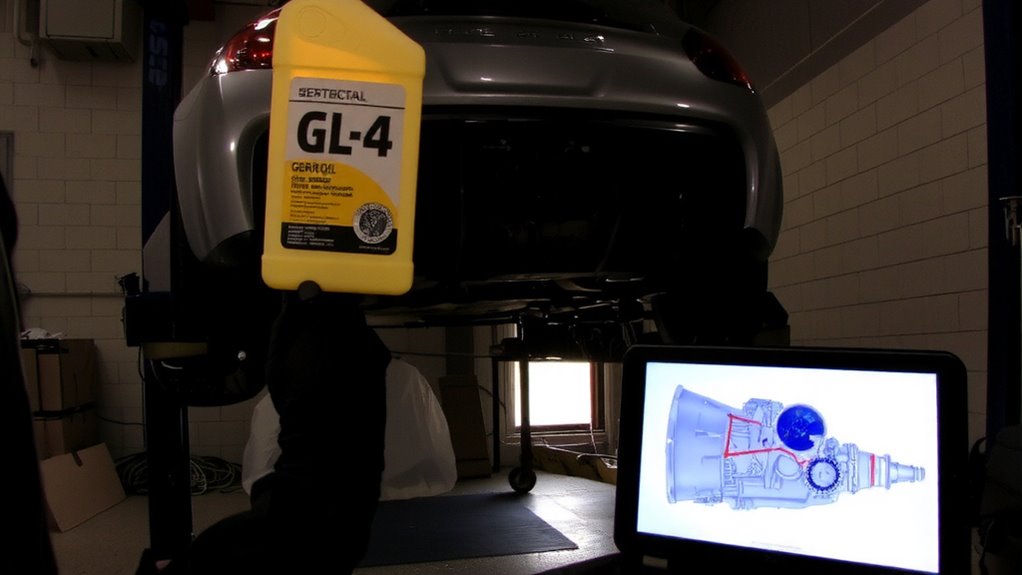
Why risk damage by guessing what your transmission needs? Always check your car’s manufacturer specifications before selecting GL-4 gear oil. Using the wrong oil compatibility can lead to premature wear or failure. GL-4 oils are formulated for synchronized manual transmissions, especially in high-performance sports cars. They contain moderate pressure additives suited for brass synchronizers, unlike GL-5 oils that can corrode them. Confirm your manual specifies GL-4-never assume. Viscosity grades like 75W-90 or 80W-90 must match OEM requirements exactly. These grades define flow at low temperatures and film strength at operating heat. A proper grade guarantees smooth shifting and long gear life. Always verify viscosity index and API service ratings on the product data sheet. Mismatches risk poor lubrication, increased friction, and heat buildup. Your transmission relies on precise oil compatibility and correct viscosity grades-don’t compromise them.
Match Oil Weight to Climate and Driving Style
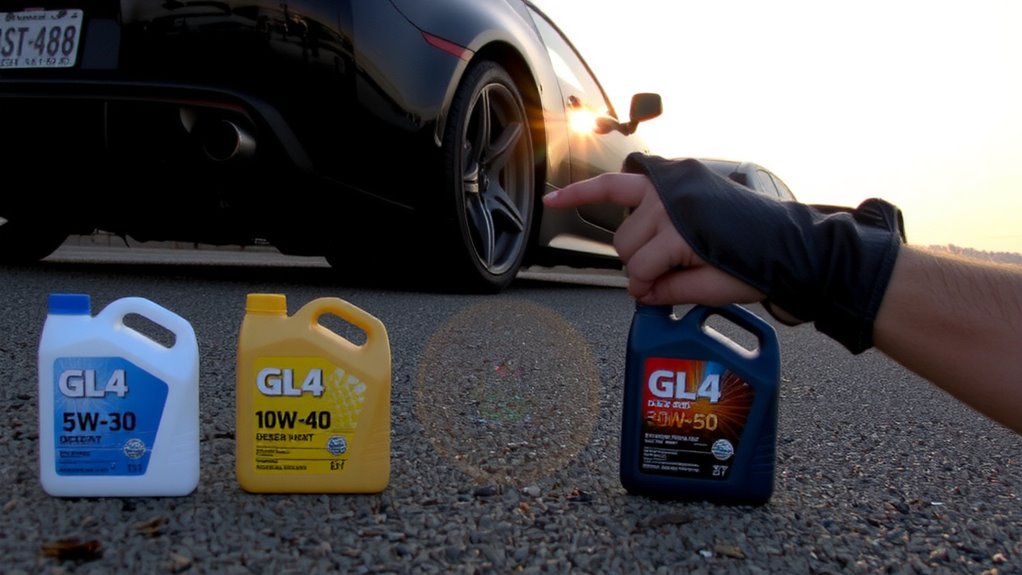
While your sports car’s factory specs set the baseline, your local climate and driving habits demand a closer look at gear oil weight. If you drive hard or live in a hot region, high temperatures challenge the oil’s thermal stability, increasing the risk of viscosity breakdown. Thicker oils like 80W-90 resist thinning under heat, maintaining film strength during aggressive shifts. In colder climates, lighter oils such as 75W-90 flow faster at startup, ensuring immediate lubrication. Your driving style directly impacts stress on the transmission-track use generates more heat than daily commuting. Oils with superior thermal stability sustain performance through repeated heat cycles. Choose a weight that balances cold-weather fluidity and high-temperature resilience. Matching oil weight to your environment and usage prevents premature wear. The right choice supports consistent shift response and long-term gearbox health.
Compare 75W-90 Vs 80W-90 for Shift Quality
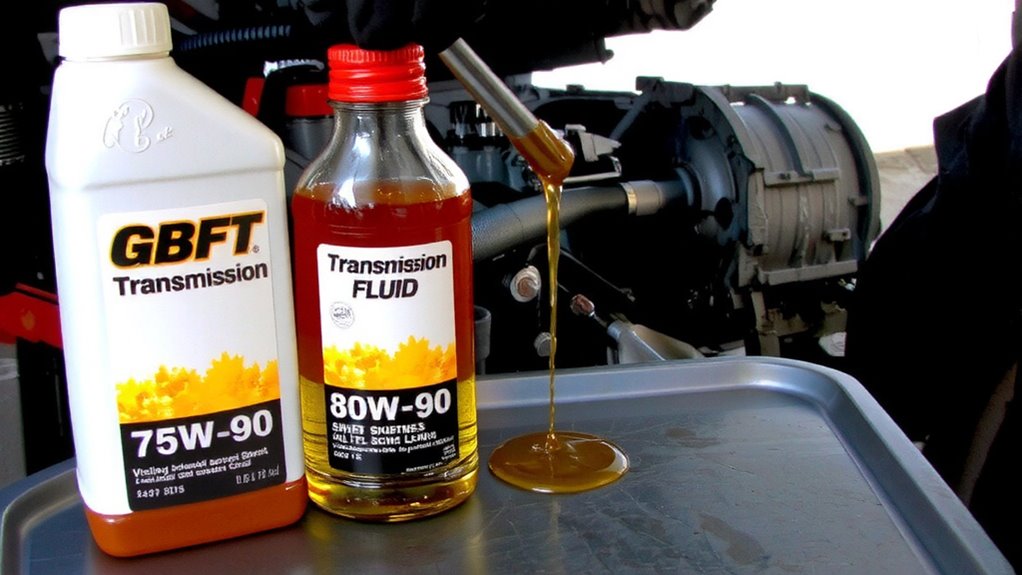
The 75W-90 and 80W-90 gear oils both meet GL-4 specifications, but their viscosity differences directly influence shift quality under real-world conditions. At operating temperature, both oils maintain a 90-weight viscosity, ensuring consistent film strength and gear protection. However, the 75W-90 has a lower cold-temperature viscosity, flowing faster at startup. This reduces initial shift effort, especially in cold climates. You’ll notice smoother, lighter gear changes during the first few minutes of driving. In contrast, 80W-90 is slightly thicker when cold, increasing shift effort and potentially amplifying gear noise during cold operation. The added viscosity can dampen noise slightly once warmed, but the trade-off is stiffer shifting. For track-focused or cold-weather driving, 75W-90 offers superior shift quality. If you prioritize durability over easy shifting, 80W-90 may suit you.
Avoid These Gl-4 Oil Mistakes That Kill Gearboxes
If you’re not careful, using the wrong GL-4 gear oil can do serious damage to your transmission. Choosing an oil that doesn’t match your gearbox’s design leads to poor lubrication and overheating. Oil degradation occurs faster when viscosity ratings don’t align with operating temperatures. For example, using a low-quality 80W-90 in a high-load environment accelerates wear. Additive breakdown is another risk-over time, extreme pressure additives deplete, reducing protection against pitting and scoring. Extended drain intervals worsen this issue, especially in frequent high-stress driving. Never mix GL-4 with GL-5 oils; the higher sulfur content in GL-5 attacks yellow metals like brass synchronizers. Always check OEM specifications-using the wrong formulation risks irreversible damage. Even slight deviations from recommended standards compromise performance. Protect your gearbox by selecting the correct GL-4 oil and changing it at manufacturer-recommended intervals to prevent premature failure.
Use Synthetic Gl-4 for Track and High Rpm
Performance under extreme conditions demands more than just durability-it requires precision engineering from the ground up. You need synthetic GL-4 gear oil when pushing your sports car on track or at high RPM. Synthetic benefits include superior thermal stability, maintaining viscosity between 150°C and 175°C without breakdown. Conventional oils shear more easily, but synthetics resist mechanical stress with shear stability up to 10% better under ASTM D6278 testing. For track durability, use a high-viscosity-index (VI >180) full synthetic formulation. It flows reliably at -30°C cold starts and protects at sustained 120°C+ operating temps. These oils contain advanced anti-wear additives like zinc dialkyldithiophosphate (ZDDP), safeguarding synchronizers and bearings under rapid shifts. Unlike GL-5, GL-4 maintains lower sulfur content to protect yellow metals in synchronized gearboxes. You get consistent lubrication, reduced frictional losses, and extended gearbox life-critical when赛道 runs demand absolute reliability.
On a final note
Always follow your manufacturer’s GL-4 specification to avoid transmission damage. Use 75W-90 for colder climates-it flows faster at low temperatures, improving shift response. In hotter conditions, 80W-90 maintains better film strength above 100°C. Synthetic oils offer superior thermal stability and oxidation resistance, critical for high-RPM track use. Never substitute GL-5-its additives corrode yellow metals in synchronizers.