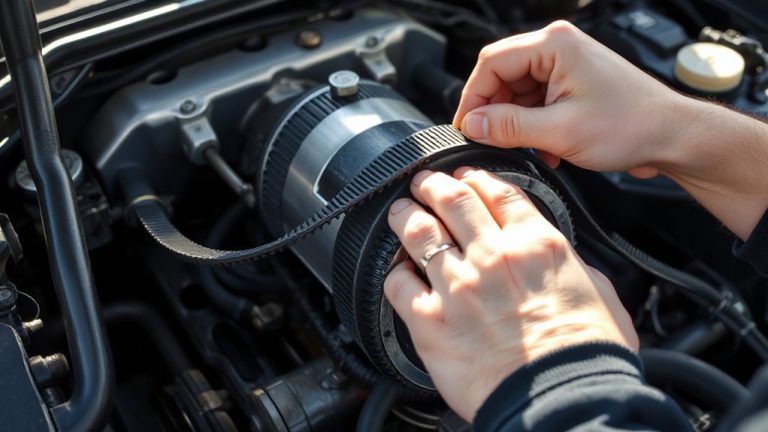
Understanding Catalytic Converters: the Role They Play in Reducing Emissions From Your Vehicle’s Engine and Maintaining Fuel Efficiency
Your catalytic converter reduces up to 90% of harmful emissions like carbon monoxide, hydrocarbons, and nitrogen oxides. It uses platinum, palladium, and rhodium coated on a ceramic honeycomb to trigger chemical reactions above 400°F. These reactions convert pollutants into less toxic gases such as CO₂, nitrogen, and water vapor. A clogged unit increases exhaust backpressure beyond 1.25 psi, forcing your engine to work harder and cutting fuel economy by up to 20%. Oxygen sensor errors from a failing converter also disrupt fuel metering. Ideal performance depends on clean fuel and avoiding contaminants like lead or oil additives. Longevity typically exceeds 100,000 miles with proper maintenance, and monitoring OBD-II codes like P0420 helps catch issues early. Understanding these systems reveals how efficiently your vehicle manages emissions and power.
Notable Insights
- Catalytic converters reduce harmful emissions by converting pollutants like CO, hydrocarbons, and NOx into less toxic gases.
- They use precious metals to trigger chemical reactions that require high operating temperatures above 400°F.
- A clogged converter increases exhaust backpressure, reducing engine efficiency and lowering fuel economy by up to 20%.
- Oxygen sensor data can be compromised by a failing converter, causing incorrect air-fuel mixtures and poor performance.
- Regular maintenance and using proper fuel help prevent contamination and extend the converter’s lifespan beyond 100,000 miles.
What a Catalytic Converter Is and How It Works
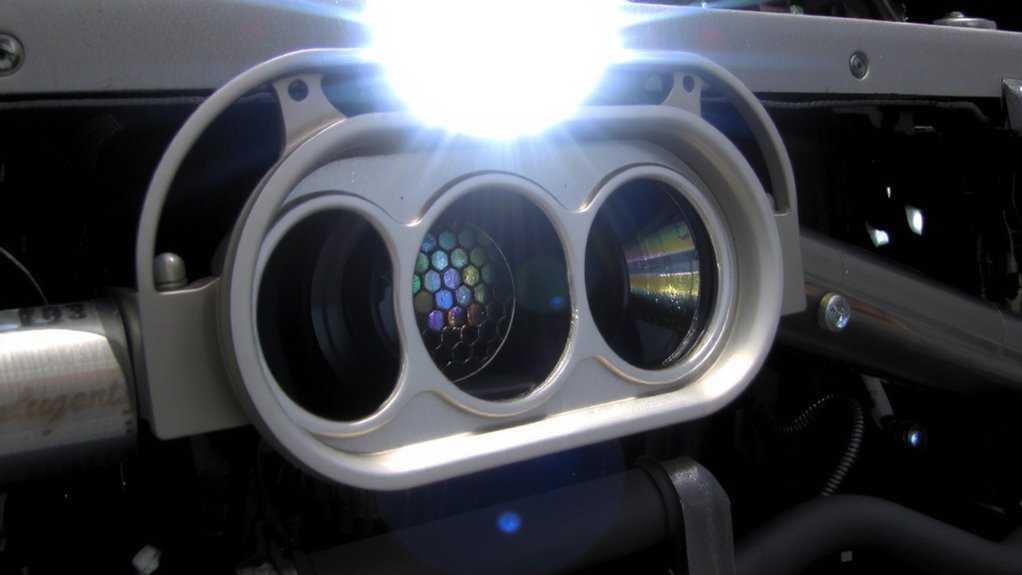
A catalytic converter is your car’s emission control workhorse, quietly turning harmful exhaust gases into less toxic substances before they exit the tailpipe. It sits in the exhaust system, usually near the engine, where it treats hot exhaust gases. Inside, a ceramic or metallic honeycomb structure is coated with precious metals-platinum, palladium, and rhodium. These materials trigger a chemical reaction that breaks down pollutants like carbon monoxide, hydrocarbons, and nitrogen oxides. The design guarantees minimal backpressure, maintaining proper exhaust flow for engine efficiency. Channels in the substrate maximize surface area, allowing more contact between gases and catalysts. Operating temperatures range from 400°F to 1,600°F for peak performance. Without sufficient heat, the chemical reaction won’t start. Modern converters light off within minutes of engine start. They’re built to last 100,000 miles under normal conditions. High-flow aftermarket catalytic converters can offer improved exhaust efficiency and durability for performance-oriented vehicles.
How Catalytic Converters Clean Your Car’s Exhaust
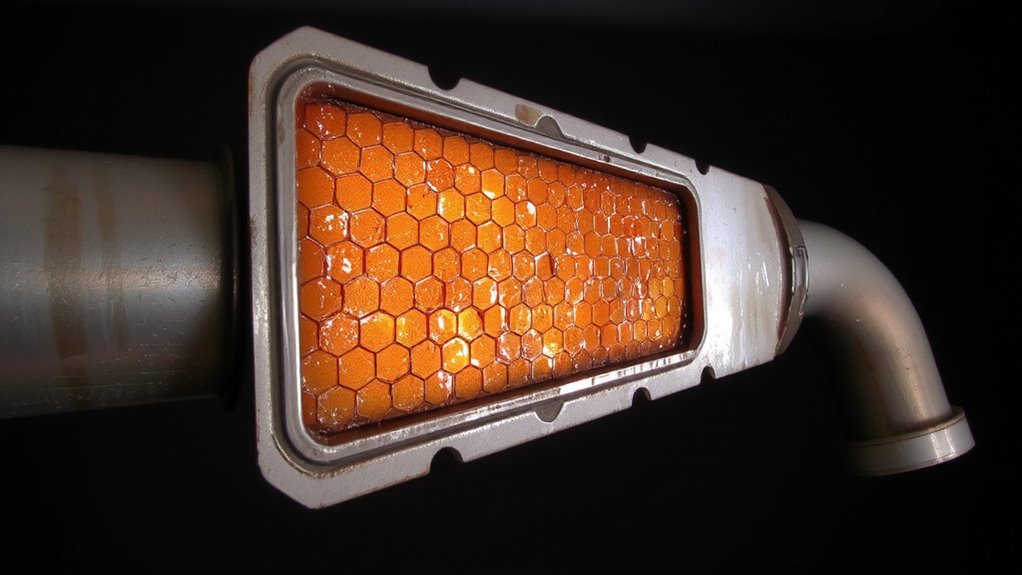
When your engine fires up, the exhaust gases flowing into the catalytic converter are anything but clean-packed with carbon monoxide, unburned hydrocarbons, and nitrogen oxides. Inside the converter, precious metals like platinum, palladium, and rhodium trigger chemical reactions that transform these harmful pollutants. The honeycomb-like ceramic core provides a large surface area, maximizing contact between gases and catalysts. In the reduction stage, nitrogen oxides break down into nitrogen and oxygen. Next, in the oxidation stage, carbon monoxide and hydrocarbons convert into carbon dioxide and water vapor. These chemical reactions occur efficiently at temperatures above 400°F, which the exhaust stream quickly reaches during normal operation. Emission control is optimized when the air-fuel ratio stays near stoichiometric, monitored by oxygen sensors. Modern converters can reduce over 90% of key pollutants, meeting strict federal standards.
Why a Failing Catalytic Converter Hurts Fuel Efficiency
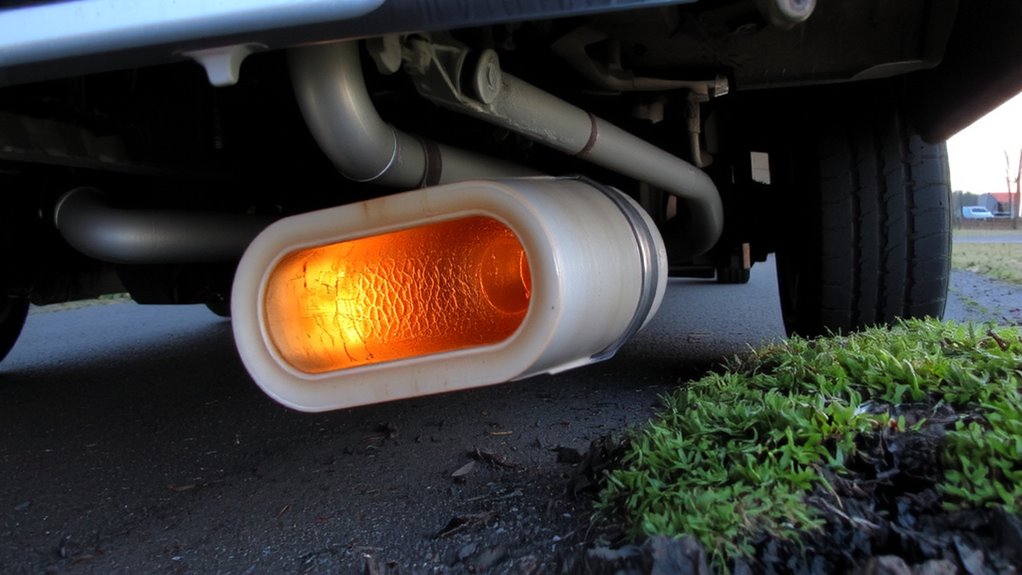
Though you might not notice it right away, a failing catalytic converter can quietly drag down your fuel efficiency. A clogged converter creates back pressure buildup in the exhaust system, restricting exhaust flow. This forces your engine to work harder, increasing fuel consumption. Normal back pressure should be under 1.25 psi at idle; higher readings indicate blockage. The converter’s failure also leads to oxygen sensor imbalance, skewing air-fuel ratio data. An inaccurate signal causes the engine control unit to miscalculate fuel injection, often resulting in a rich mixture. Engines running rich can see fuel economy drop by up to 20%. Over time, uncorrected inefficiencies strain the engine and increase emissions. Proper catalytic function guarantees exhaust gases flow freely and sensor feedback remains accurate, maintaining peak combustion. Addressing early performance losses protects efficiency and prevents long-term damage.
7 Common Signs of a Bad Catalytic Converter
If you’re noticing unexplained drops in performance or failing emissions tests, a faulty catalytic converter could be to blame. You may experience sluggish acceleration due to restricted exhaust flow from a clogged converter. Rattling noises under the vehicle often indicate broken internal substrates, typically ceramic honeycomb structures rated to handle temperatures up to 1,800°F. These components degrade over time, reducing conversion efficiency of harmful gases like CO, NOx, and hydrocarbons. A sulfur smell, similar to rotten eggs, suggests unburned fuel entering the exhaust system. This occurs when the converter can’t properly oxidize hydrogen sulfide due to catalyst poisoning, often from leaded fuel or engine misfires. Oxygen sensor data may show erratic voltage swings, confirming downstream inefficiency. The onboard diagnostic system might trigger a P0420 code-indicating low catalyst efficiency. These signs require immediate inspection.
How to Maintain Your Catalytic Converter Long-Term
While designed to last over 100,000 miles under ideal conditions, your catalytic converter depends on proper engine operation and routine maintenance to reach its full lifespan. Regular inspections help detect issues like exhaust leaks or sensor failures early. Have your OBD-II system scanned annually to catch trouble codes affecting converter efficiency. Address check engine lights immediately, as misfires can overheat and damage internal substrates. Use only fuel rated for your engine-proper fuel use prevents carbon buildup and contamination from leaded or high-ethanol blends. Avoid aftermarket oil additives that contain silicon or phosphorus; they coat the catalyst and reduce conversion efficiency. Maintain healthy oxygen sensors and air-to-fuel ratios to prevent unburned hydrocarbons from entering the exhaust. A clogged or melted substrate restricts exhaust flow, increasing backpressure-measurable above 1.25 psi at idle indicates a problem. Protect your converter by fixing engine issues promptly.
On a final note
You rely on your catalytic converter to reduce harmful emissions and maintain engine efficiency. It transforms toxic gases like carbon monoxide and nitrogen oxides into less harmful substances-CO₂, nitrogen, and water vapor-using platinum, palladium, and rhodium catalysts. A failing unit restricts exhaust flow, increasing backpressure by up to 3 psi, which reduces fuel economy by 10–15%. Keep it functioning with timely maintenance and emission checks.