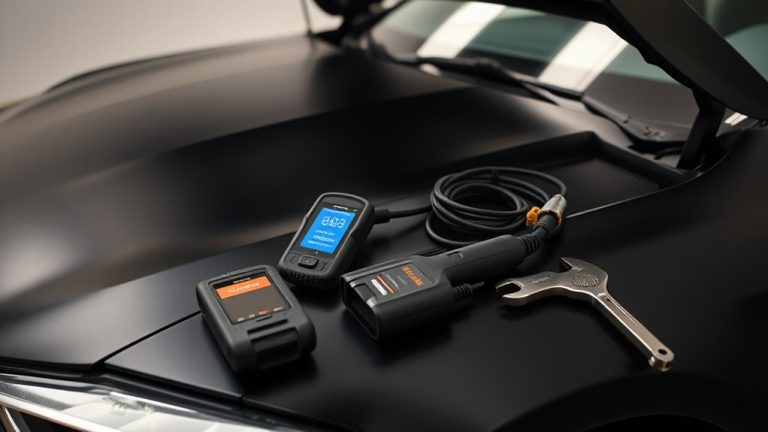
Maximizing Power Steering System Performance Through Regular Maintenance Tasks: Tips for Ensuring Efficient Operation With Clean, Lubricated Components in Your Vehicle’s Power Assist Mechanism
You should check your power steering fluid monthly to prevent contamination and pump wear. Replace fluid every 30,000–60,000 miles or when it turns dark brown. Maintain belt tension between 90–120 pounds to guarantee pump efficiency. Inspect hoses for cracks or bulges, and replace those over five years old. Monitor steering rack boots and joint play, and lubricate zerks every 15,000 miles-these steps keep your system running cleanly and smoothly. There’s more to optimizing your setup than just fluid.
Notable Insights
- Check power steering fluid monthly to prevent contamination and maintain optimal hydraulic performance.
- Replace fluid every 30,000 to 60,000 miles or when discolored to avoid pump and valve damage.
- Maintain belt tension between 90–120 pounds to ensure efficient pump operation and prevent slippage.
- Inspect hoses regularly for cracks, bulges, or leaks and replace every five years or as needed.
- Examine steering rack boots, joints, and linkages monthly for wear, leaks, or excessive play.
Why Power Steering Maintenance Prevents Costly Repairs
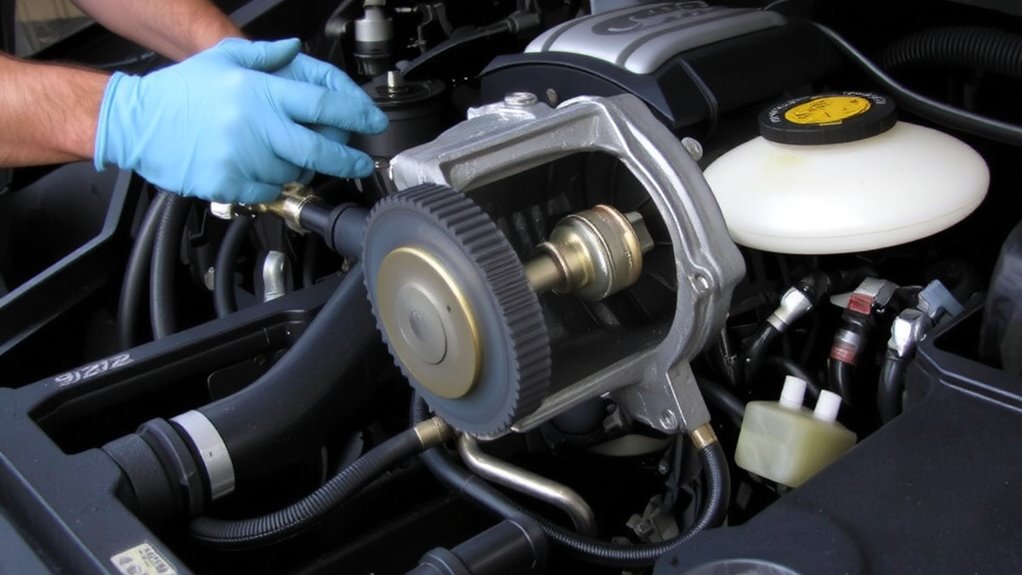
One in three premature power steering failures stems from neglected maintenance, and skipping routine care often leads to expensive repairs down the road. You should check fluid levels monthly to prevent fluid contamination, which degrades hydraulic performance and accelerates pump wear. Contaminants like dirt and metal particles reduce lubricity, increasing friction and heat in the steering rack. Replace power steering fluid every 30,000 to 60,000 miles, depending on manufacturer specifications. Also, inspect belt tension regularly; a loose belt causes slippage, reducing pump efficiency and generating inconsistent assist. Ideal belt tension typically falls between 90 and 120 pounds of force, measurable with a tension gauge. Over-tightening accelerates pulley and bearing wear. Maintaining correct belt tension guarantees steady pump operation and prolongs system life. These steps preserve steering precision, minimize strain on components, and avoid costly pump or rack failure. Preventive maintenance isn’t optional-it’s critical engineering practice.
Signs of Leaks and Failing Power Steering Hoses
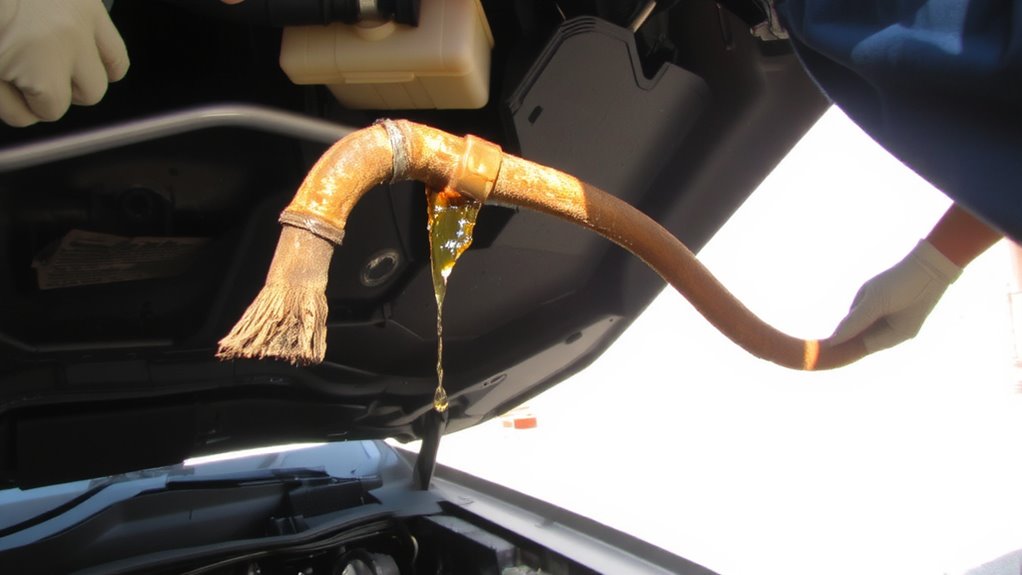
A telltale sign of deteriorating power steering hoses is the presence of fluid leaks, which often appear as reddish or brownish puddles beneath the engine compartment or along the hose routing. These stains indicate hose degradation, often caused by heat, age, or exposure to road contaminants. As hoses weaken, cracks and soft spots develop, compromising structural integrity. Fluid contamination accelerates this process, as dirt and metal particles reduce lubricity and increase internal wear. You might notice stiff steering or squealing noises when turning-early symptoms of insufficient pressure due to leaks. Most power steering hoses operate under 500–1,500 psi; even minor damage can cause pressure drops. Inspect hoses regularly for bulges, abrasions, or swelling. Replace any hose showing visible wear or more than five years old, especially if equipped with crimped-end fittings, which don’t tolerate corrosion well. Prevention beats repair.
When to Change Power Steering Fluid
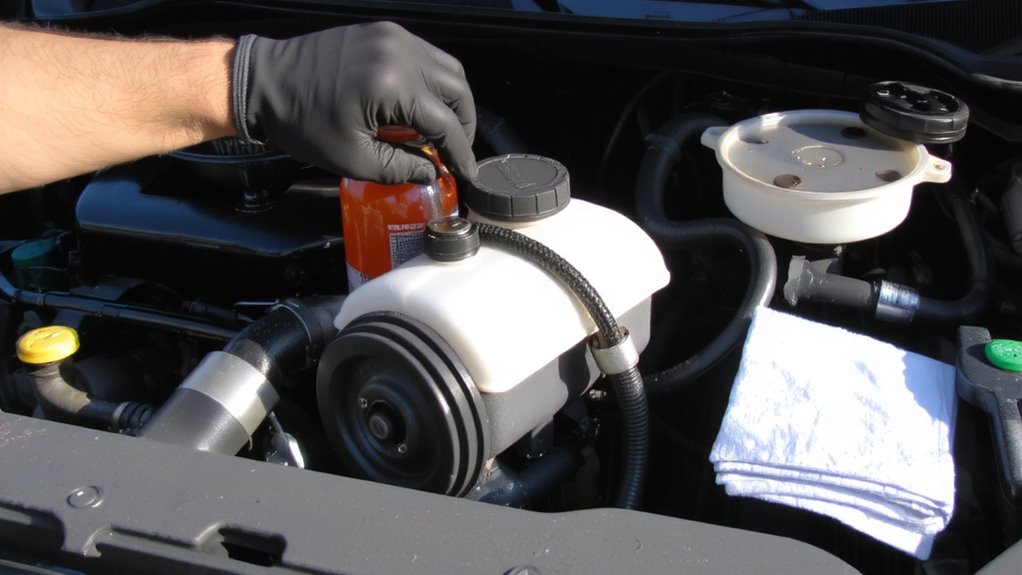
Fluid condition directly affects system pressure and component longevity, just as leaks compromise hose integrity. You should change your power steering fluid when the fluid color turns dark brown or black, indicating thermal breakdown. Fresh fluid is typically red or amber, allowing for easy visual assessment. A high contamination level, including metal particles or sludge, impairs valve function and increases wear. Most manufacturers recommend a fluid change every 50,000 to 100,000 miles, but severe driving conditions warrant intervals as frequent as 30,000 miles. Oxidation reduces lubricity, raising internal pump pressure beyond the designed 700–1,200 psi range. Using the correct fluid specification, such as ATF+4 or CHF-11S, guarantees compatibility with seals and internal components. Always flush old fluid completely to prevent cross-contamination. Maintaining clean fluid extends pump life and sustains responsive steering feel.
Inspecting Steering Rack, Joints, and Connections
While the steering rack remains out of sight beneath the vehicle, its condition directly determines steering precision and safety. You should inspect the steering rack boots monthly for tears or leaks-any damage can lead to contamination and accelerated component wear. Check the tie rod ends and steering linkage for play exceeding 1/8 inch, as excess movement impairs steering alignment. Worn joints often produce clunking noises during turns or over bumps. Inspect all mounting brackets and bolts to verify they’re torqued to factory specs-typically 40–65 lb-ft, depending on model. Misaligned or loose connections reduce steering response and increase tire wear. Grease zerks on serviceable joints should be lubricated every 15,000 miles. Consistent inspection helps detect early signs of component wear, maintaining straight tracking and proper steering alignment. These steps preserve control and extend system life.
Monthly Habits for Long-Lasting Steering Performance
You just checked the steering rack, joints, and connections-now build on that foundation with routine monthly habits that sustain precision and durability. Check pump belt tension regularly; it should deflect 1/2 inch when pressed with 10 pounds of force. A loose belt slips, reducing hydraulic pressure and steering responsiveness. Inspect the power steering fluid monthly-top off with manufacturer-specified fluid if low, and look for leaks or contamination. Monitor steering wheel alignment; if your vehicle drifts or pulls, realignment may be needed. Misaligned wheels cause uneven tire wear and strain on the steering rack. Perform a visual inspection of hoses and connections for cracks or wear. Rotate your tires every 5,000 to 7,500 miles to promote even wear and consistent steering response. These habits protect system integrity, extend component life, and maintain ideal control.
On a final note
You prevent expensive repairs by maintaining your power steering system. Regular fluid changes every 30,000 to 60,000 miles preserve hydraulic efficiency and reduce pump wear. Clean, lubricated components minimize friction and seal degradation. Inspect hoses for cracks or swelling; replace if leaking. Check rack-and-pinion joints for play exceeding 0.1 inches. Monthly checks catch issues early, ensuring precise steering response and system longevity.