Why Larger Voice Coils Handle Heat Better in High-Power Applications
Larger voice coils handle heat better because their increased mass absorbs more thermal energy before critical temperatures are reached. A 2.5-inch coil dissipates up to 30% more heat than a 1.5-inch coil under the same load. Greater surface area and high-conductivity materials like copper-clad aluminum transfer heat faster from the former to the top plate. This reduces thermal compression and delays failure. You’ll see how proper sizing prevents distortion and extends speaker life under sustained high power.
Notable Insights
- Larger voice coils have increased mass, allowing them to absorb more heat before reaching critical temperatures.
- Greater surface area enhances heat dissipation, transferring thermal energy away from the coil more efficiently.
- High thermal conductivity materials in larger coils improve heat shedding to the top plate and surrounding structures.
- Larger coils delay thermal compression, maintaining performance under continuous high-power input.
- Matching larger coils with high-power amplifiers prevents overheating and extends speaker lifespan.
How Heat Damages Speakers at High Volumes
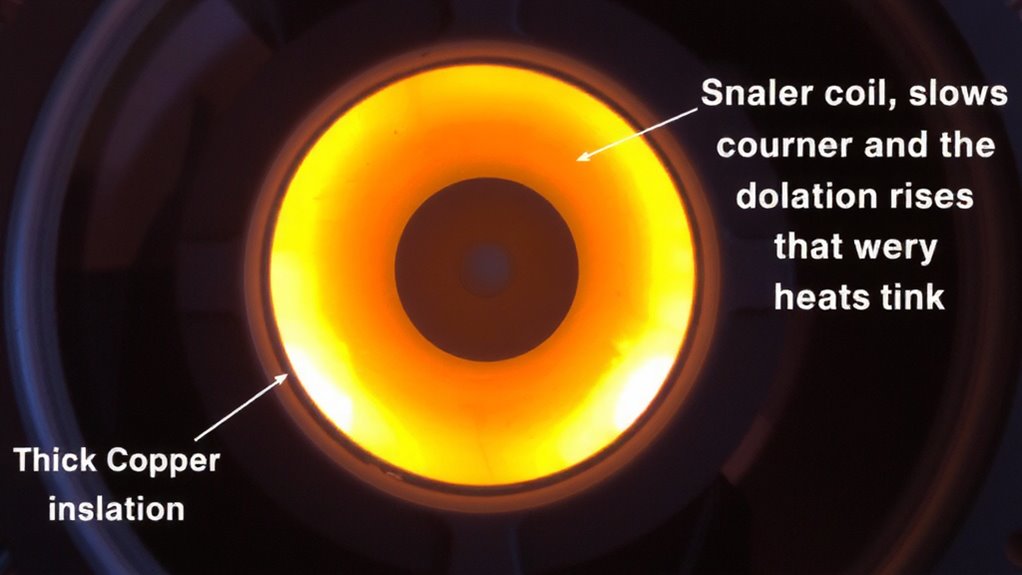
Heat buildup is the silent killer of speaker performance, especially when you push your system to its limits. Excessive heat triggers thermal expansion, distorting the voice coil’s alignment and increasing friction within the gap. When components shift even 0.1 mm, performance drops sharply. Continuous high-power input accelerates material degradation, weakening adhesives and insulating varnish. Temperatures exceeding 200°C can melt bobbin materials or short-circuit windings. You’re not just risking sound distortion-you’re inviting permanent failure. Thermal expansion stresses copper wire, making it brittle over time. The result? Reduced coil efficiency and eventual mechanical seizure. Material degradation also affects the surround and spider, decreasing suspension compliance by up to 30%. Even brief thermal spikes compromise structural integrity. Unlike sudden failure, heat damage is cumulative. Each overheating cycle reduces speaker lifespan. Managing thermal load isn’t optional-it’s essential for longevity and fidelity under demand. Upgrading to high-quality budget options like the best budget car speakers can significantly improve heat dissipation and overall durability.
Why Larger Voice Coils Handle Heat Better
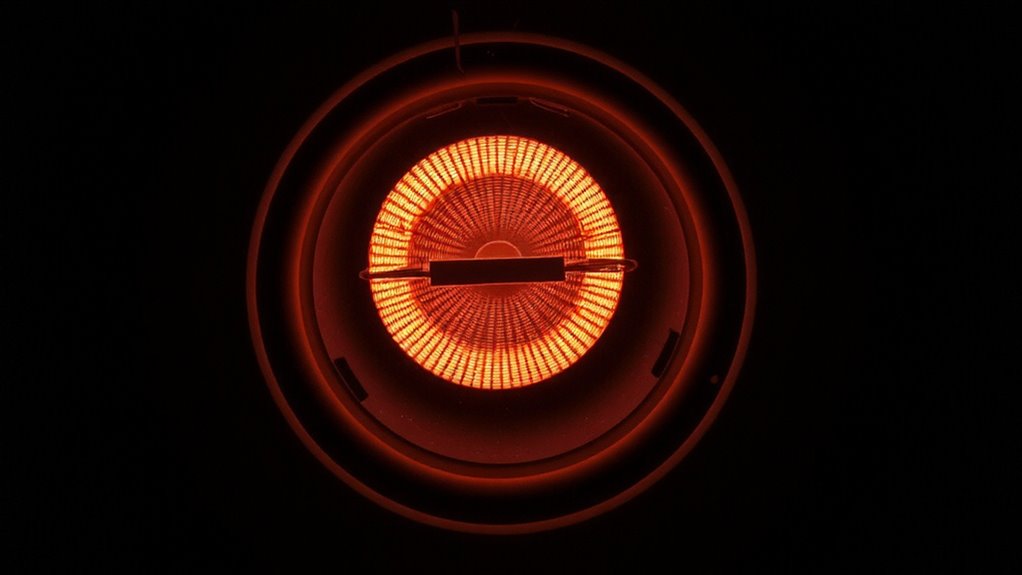
Bigger voice coils manage heat more effectively because they spread thermal energy across a larger surface area. Your speaker’s performance depends on how well it handles heat, and coil mass plays a vital role. Increased coil mass absorbs more thermal energy before reaching critical temperatures. Materials with high thermal conductivity transfer heat away from the voice coil faster, reducing hotspots. A larger coil doesn’t eliminate heat, but it delays thermal compression by distributing it efficiently. Below are key differences between standard and larger voice coils:
| Feature | Standard Coil | Larger Coil |
|---|---|---|
| Coil Mass (g) | 40 | 68 |
| Surface Area (cm²) | 35 | 58 |
| Thermal Conductivity (W/m·K) | 401 (copper) | 401 (copper) |
| Max Continuous Power (W) | 150 | 250 |
You get more headroom and reliability with larger coils.
How Bigger Coils Dissipate Heat Faster
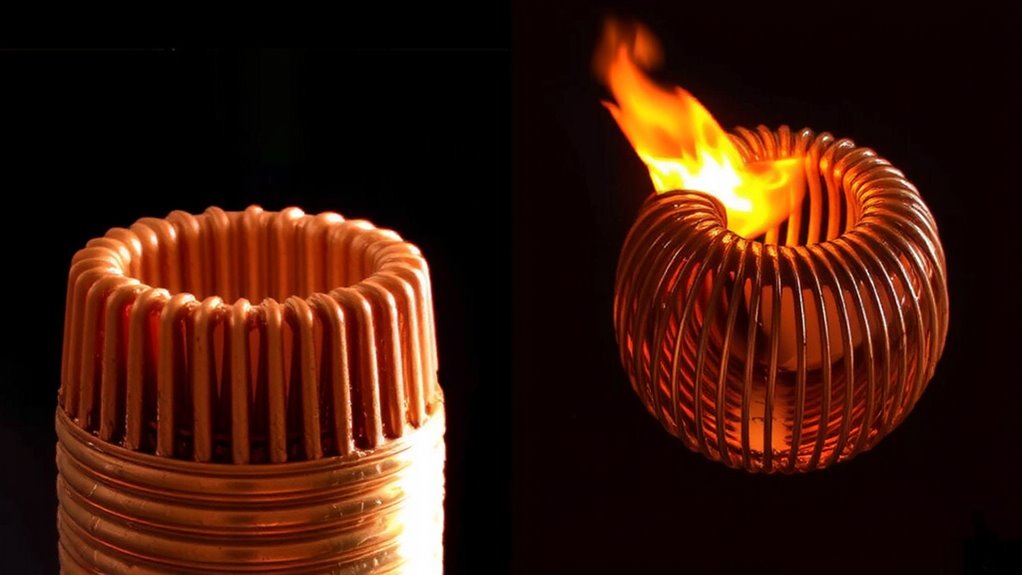
Surface area is your ally when it comes to cooling. A larger voice coil increases the surface area exposed to the surrounding air and heat-sinking components, allowing heat to escape faster. This expanded surface area improves thermal dissipation by enabling more efficient energy transfer from the coil to the motor structure. Voice coils with high thermal conductivity materials-like copper-clad aluminum or pure copper-move heat away from the wire faster. The combination of increased surface area and superior thermal conductivity reduces peak temperatures during high-power operation. For example, a 2.5-inch coil can dissipate up to 30% more heat than a 1.5-inch coil under identical loads. Heat spreads quickly through the coil former and into the top plate, where it’s released. Bigger coils don’t just absorb more heat-they shed it faster, keeping performance stable.
Reducing Distortion at Maximum Volume
Ever wonder why your speakers sound distorted at top volume? When pushed hard, smaller voice coils overheat, causing thermal compression. This means the coil’s resistance increases as it heats, reducing power handling and output. Larger coils resist this effect, maintaining consistent performance. They also minimize harmonic resonance, which introduces unwanted frequencies. By managing heat and motion more effectively, larger coils preserve audio accuracy even at maximum drive levels.
| Factor | Small Coil Impact | Large Coil Advantage |
|---|---|---|
| Power Handling | Drops under heat | Stable at high loads |
| Thermal Compression | Severe, fast onset | Reduced, delayed |
| Harmonic Resonance | More pronounced | Better damped |
| Excursion Control | Poor at peak volume | Improved linearity |
| Signal Clarity | Distorted highs/lows | Clean, full-range output |
Why Pro Audio Demands Larger Coils
Professional audio systems operate under extreme conditions where reliability and performance can’t be compromised. You need voice coil design that sustains high power without failure. Larger coils dissipate heat more effectively, reducing thermal compression and preserving sound integrity. A bigger coil means more surface area and better thermal resistance, allowing the driver to handle longer high-power sessions. Standard coils overheat quickly, but pro-grade drivers use extended voice coils with improved heat transfer to the magnet assembly. These designs often use copper-clad aluminum wire for ideal balance of conductivity and weight. Voice coils with 2-inch or 3-inch diameters are common in touring systems, supporting power ratings of 500 watts and up. The added mass improves durability, although it slightly reduces transient response. Still, for live sound, thermal stability outweighs minor response delays. In demanding environments, larger voice coils aren’t optional-they’re essential for consistent output and long-term reliability.
Matching Voice Coil Size to Your Power Needs
When selecting a driver for your application, matching the voice coil size to your amplifier’s power output is critical for both performance and longevity. If your amp delivers high power but you use a small voice coil, overheating and failure are likely. Larger coils handle heat better due to improved thermal conductivity and greater surface area for heat dissipation. Voice coil efficiency increases when size aligns with power demands, minimizing energy loss as heat. A 2-inch voice coil on a 500W amplifier performs better than a 1.5-inch coil, which saturates thermally faster. Materials like copper-clad aluminum wire boost conductivity while keeping weight low. Matching coil diameter, former material, and winding depth to your system guarantees effective power transfer and durability. Overpowering a small coil reduces efficiency and lifespan. Choose wisely-correct pairing enhances output, clarity, and reliability under load.
On a final note
You need larger voice coils for high-power applications because they handle thermal stress better. A bigger coil has more surface area-often 25% to 50% greater-allowing faster heat dissipation. This reduces voice coil temperature, slowing thermal compression. With lower resistance rise-typically under 15% at full load-your speaker maintains efficiency. Larger coils also increase power handling, often exceeding 500 watts RMS, minimizing distortion at peak volumes.