Utilizing Torque Screwdrivers When Terminating Lug Connectors on Panels
You must use a torque screwdriver to guarantee proper lug termination on panels. Accurate torque-typically 14–25 lb-ft per UL 486A-B-prevents overheating from under-torquing and thread damage from over-torquing. Choose a tool with ±3% accuracy, lithium-ion power for 500+ cycles, and a slim 6-inch head for tight spaces. Set torque precisely in inch-pounds or Newton-meters using a digital display. Always follow a 5-step process: strip, insert, align, tighten steadily until the click, and never re-torque. Calibration every 5,000 cycles ensures lasting reliability-and there’s more to get right.
Notable Insights
- Use a torque screwdriver with ±3% accuracy to ensure proper lug connection integrity on panel terminals.
- Set torque according to manufacturer specifications, typically 14–25 lb-ft based on conductor size and UL 486A-B standards.
- Apply torque steadily with a slow, controlled motion to avoid over-tightening and ensure accurate click engagement.
- Verify full wire insertion into the lug barrel and proper alignment on the terminal stud before torquing.
- Calibrate the torque screwdriver every 5,000 cycles or quarterly to maintain accuracy and compliance with ISO 6789.
Why Torque Screwdriver Accuracy Matters for Lugs
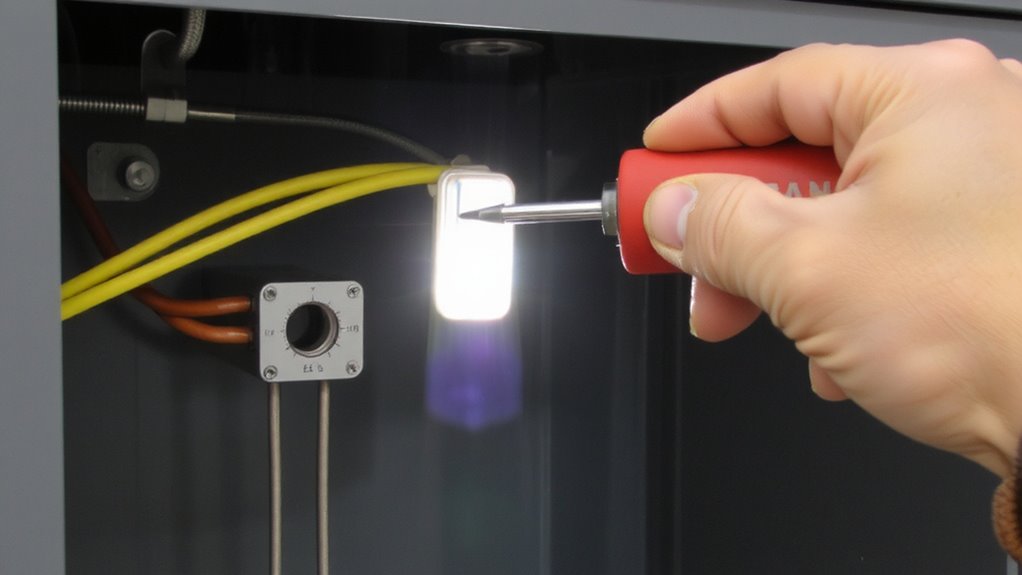
While it might seem like a minor detail, getting the torque right on lug connectors can make the difference between a secure connection and a costly failure. You need accurate torque to guarantee connection integrity and maintain electrical safety. Under-torquing leads to loose connections, increasing resistance and generating excess heat. Over-torquing strips threads or cracks insulation, risking short circuits. Both compromise system reliability. UL 486A-B standards specify torque values between 14–25 lb-ft for common lugs, depending on conductor size. A precision torque screwdriver ensures you hit those values consistently, typically within ±4% accuracy. This repeatability prevents connection degradation over time. Without it, thermal cycling can loosen joints, creating fire hazards. Proper torque directly supports long-term performance. You’re not just tightening a bolt-you’re securing circuit efficiency, minimizing downtime, and protecting equipment. Accurate tools aren’t optional. They’re essential for compliance, safety, and operational continuity in every electrical installation.
Choose the Right Torque Screwdriver for Panels
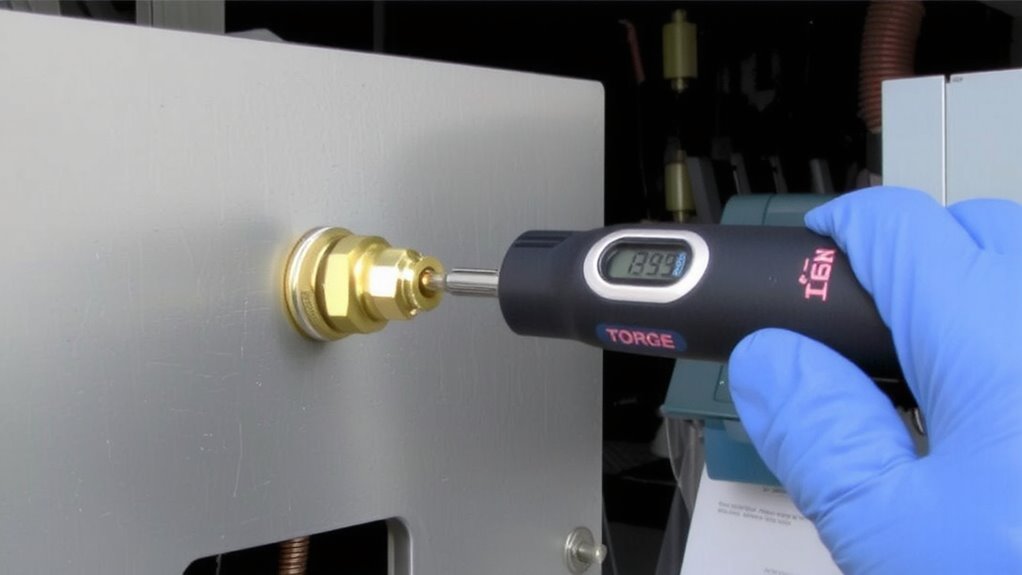
How do you guarantee every lug in your electrical panel is tightened to exact specifications? You choose a torque screwdriver calibrated for precision, typically within ±3% accuracy. Look for models with an ergonomic design-rubberized grips and balanced weight reduce hand fatigue during repetitive use. A digital display lets you set torque values in inch-pounds or Newton-meters, commonly between 10–150 in-lb for panel lugs. Battery life matters: lithium-ion cells should power at least 8 hours of continuous use, or 500+ cycles per charge. Opt for screwdrivers with low-battery indicators and quick USB-C charging. Models with audible alerts and stall mechanisms prevent over-tightening. Make certain the tool fits confined panel spaces-select a slim, 6-inch head for access behind breakers. A built-in calibration check ensures long-term reliability. Your tool isn’t just convenient-it’s a critical control point in electrical safety.
How to Torque Lug Connectors in 5 Steps
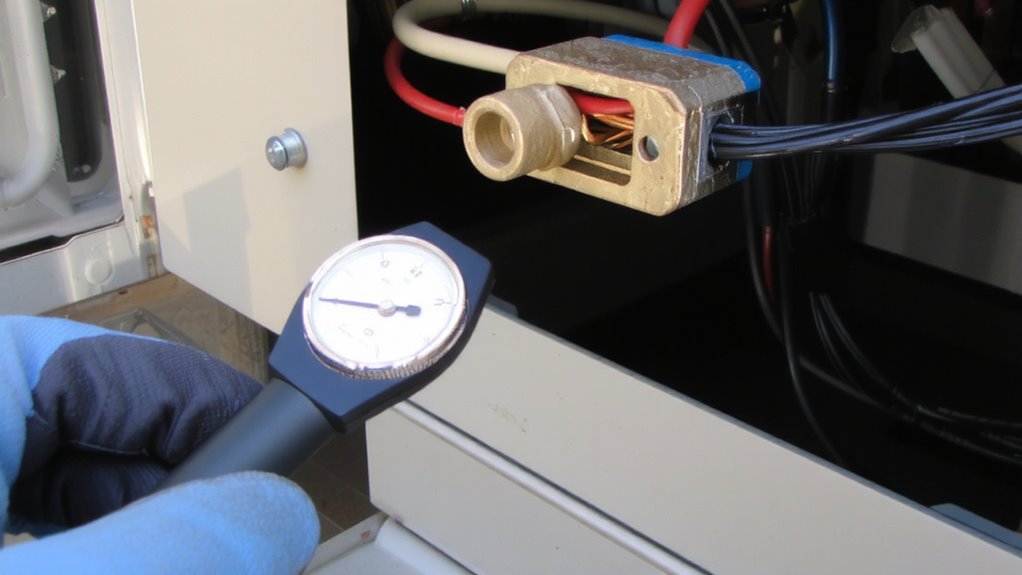
You need the right process to guarantee every lug connector is secure and compliant. First, strip the wire to match the barrel length of the lug-typically 1/2 inch for 6 AWG copper. Second, insert the wire fully into the lug; incomplete insertion risks poor conductivity. Third, secure proper alignment of the lug on the terminal stud-misalignment causes uneven pressure and potential arcing. Fourth, place the torque screwdriver bit squarely on the set screw to prevent cam-out. Use a calibrated tool set to the manufacturer’s specification, usually 25–30 in-lbs for small lugs. Fifth, tighten steadily until the tool clicks, confirming secure seating. Do not re-torque. Verify contact surfaces are clean and flat. Each step ensures electrical integrity and safety. Repeat for all phases. Final inspection should show no wire strands exposed and uniform orientation across connections.
Top Torque Screwdriver Mistakes (And How to Avoid Them)
Using the correct torque is just as important as following the right steps when securing lug connectors. Over tightening risks damaging threads or deforming the lug, compromising electrical continuity. Under tightening consequences include overheating, arcing, and potential fire hazards. Avoid these issues by selecting the right tool and using it properly.
| Mistake | Solution |
|---|---|
| Using incorrect torque setting | Always follow manufacturer specs (e.g., 25–30 lb-in for 10 AWG lugs) |
| Not calibrating screwdriver | Calibrate every 5,000 cycles or quarterly |
| Applying force too quickly | Use slow, steady pressure-ramp time ≥2 seconds |
| Over tightening risks | Set limit on torque screwdriver; use audible click models |
| Under tightening consequences | Verify snug engagement before final torque |
Always use precision tools and adhere to torque specs.
Verify and Record Torque Settings
When working with lug connectors, verifying torque settings before final assembly guarantees both electrical integrity and mechanical reliability. You must confirm the manufacturer’s specified torque value, typically between 15–25 lb-ft, depending on bolt size and material. Incorrect torque compromises material compatibility, leading to deformation or thread stripping, especially with aluminum or dissimilar metals. Use a calibrated reference tool to validate your torque screwdriver’s output accuracy within ±3%. Record each setting to support traceability and quality audits. Documentation also helps assess long-term performance and reduces environmental impact by minimizing rework and material waste. Properly torqued connections resist vibration and thermal cycling, preventing loosening and arcing. You’ll guarantee system safety and longevity by adhering to published specifications for steel, aluminum, or copper lugs. Never assume settings-always verify, then record.
Keep Your Torque Screwdriver Calibrated
Regular calibration is essential for every torque screwdriver used in lug connector applications, as even slight deviations can impact connection integrity. You need torque consistency to guarantee secure, reliable electrical connections and prevent overheating or failure. Without regular calibration, your tool’s accuracy drifts, risking under- or over-tightening. Torque consistency directly depends on calibration frequency-typically every 5,000 cycles or quarterly, whichever comes first. Follow manufacturer guidelines and industry standards like ISO 6789, which require calibration traceable to national standards. Use a certified calibration station with measurement uncertainty under ±1%. Check accuracy daily with a torque verifier if working on critical connections. A properly calibrated screwdriver maintains precision within ±3% of the set value. Skipping calibration compromises safety and performance. Make calibration frequency a non-negotiable part of your tool maintenance routine.
On a final note
You must torque lug connectors correctly to guarantee electrical integrity. Under-torquing causes overheating; over-torquing damages threads or lugs. Use a calibrated screwdriver set to the manufacturer’s specification-typically 4–8 Nm for small lugs, up to 25 Nm for larger ones. Follow steps precisely, verify each connection, and record values. Calibration every 5,000 cycles maintains accuracy.