Common Misconceptions About “Lifetime” Manual Transmission Oils – Debunked
Your “lifetime” manual transmission fluid won’t last your car’s lifetime under real-world use. It’s formulated to maintain viscosity-like staying within 10% of 7.5–8.5 cSt for SAE 75W-90-under ideal conditions. Daily driving generates heat over 220°F, accelerating oxidation and shearing down additives. Stop-and-go traffic, towing, and cold starts degrade fluid faster. Metal wear, sludge, and poor shifting signal breakdown. You’re risking major damage by assuming it never needs changing-find out when and how often it should be replaced.
Notable Insights
- “Lifetime” oil refers to the transmission’s expected lifespan, not oil that never degrades.
- Normal driving conditions don’t reflect real-world stress, making “lifetime” claims unrealistic.
- Heat from stop-and-go traffic accelerates oxidation, breaking down “lifetime” fluid prematurely.
- Aggressive driving and towing exceed safe temperatures, depleting additives and thinning viscosity.
- Discolored fluid, rough shifts, and burnt smells mean “lifetime” oil needs replacement.
What “Lifetime” Transmission Oil Really Means
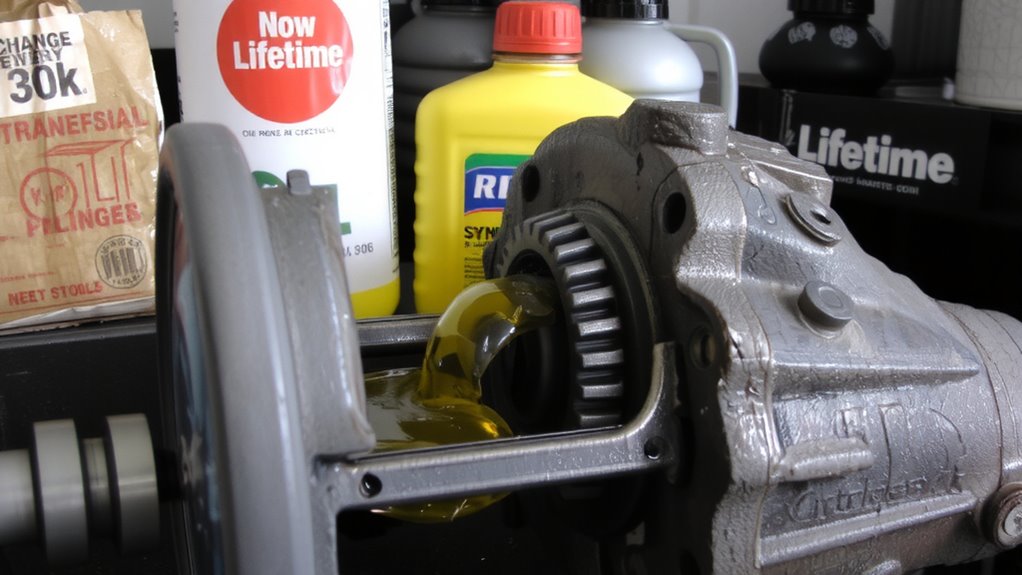
What exactly does “lifetime” mean when it comes to transmission oil? It refers to the expected service life of the transmission, not the oil itself. Manufacturers assume normal operating conditions and use oil chemistry designed to resist degradation over time. However, extreme temperatures and mechanical stress still accelerate wear. Over years, oxidation causes viscosity breakdown, reducing the fluid’s ability to lubricate effectively. Proper viscosity-often SAE 75W-90 or 80W-90-is critical for gear protection and smooth shifting. Once viscosity drops more than 10%, metal-to-metal contact increases markedly. Additives deplete, and shear forces compromise molecular stability. “Lifetime” doesn’t mean indestructible. Even under ideal conditions, oil chemistry evolves. Without replacement, long-term damage becomes inevitable. You’re relying on fluid performance beyond its engineered limits. Plan maintenance accordingly.
How Daily Driving Ruins “Lifetime” Fluid
You might think your daily commute is easy on the car, but every stoplight and pothole adds up. “Lifetime” fluid isn’t immune to the constant thermal cycles and mechanical loads of regular driving. Urban sprawl forces longer trips with repeated acceleration and braking, increasing transmission heat. Temperatures can exceed 220°F, accelerating fluid oxidation. Most “lifetime” oils are designed for ideal conditions, not daily stress. Cold starts worsen this-oil thickens at low temperatures, delaying lubrication to critical components like synchronizers and bearings. Without proper flow, metal-on-metal wear occurs in the first 30 seconds of operation. Over time, viscosity degrades, and additive packages deplete below effective levels. Contaminants like clutch dust and moisture accumulate. Even under OEM specs, these factors reduce fluid efficiency. Real-world driving exceeds laboratory test models. “Lifetime” doesn’t mean maintenance-free-it means “under perfect conditions.” Your driving isn’t perfect. Neither is the fluid’s lifespan.
Driving Habits That Shorten Oil Life
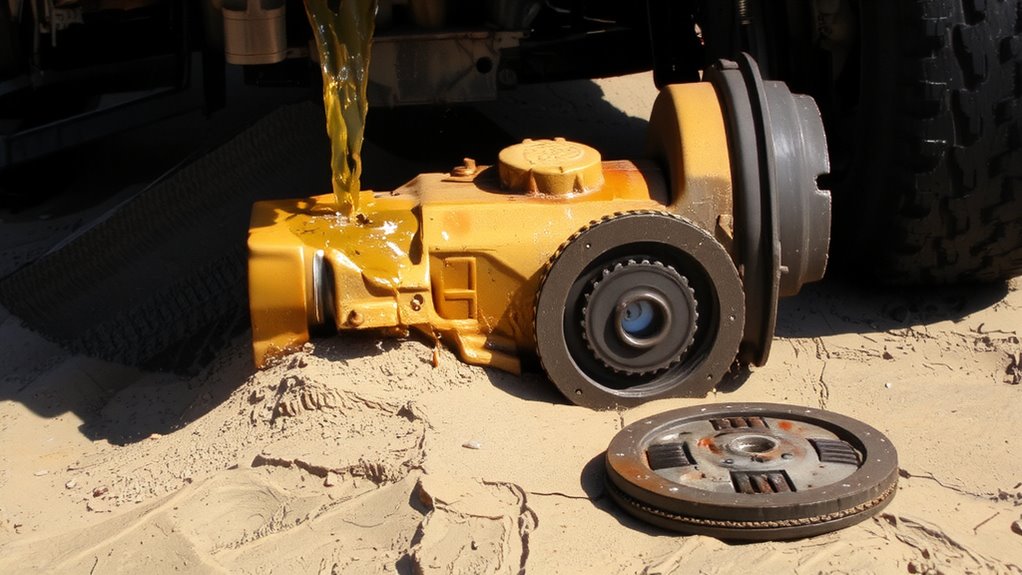
While smooth driving can extend component longevity, aggressive habits drastically reduce transmission fluid life. Aggressive acceleration spikes transmission temperatures by up to 50°F per event, accelerating fluid oxidation. Most OEM-rated “lifetime” oils begin degrading at 260°F, with viscosity dropping beyond acceptable limits after sustained thermal stress. Frequent towing compounds this, keeping fluid temps above 220°F for extended periods-ideal for sludge formation. Thermal breakdown alters additive chemistry, depleting anti-wear agents like ZDDP prematurely. You’re not just stressing gears; you’re cooking the fluid meant to protect them. Even under normal use, shear forces degrade polymer additives over time-aggressive driving speeds this exponentially. Short trips with heavy loads prevent proper fluid circulation, creating hot spots within the sump. These conditions mimic 100,000-mile wear in under 40,000 miles. Your driving style directly determines oil service life, regardless of manufacturer claims.
Signs Your Transmission Needs a Fluid Change
If your transmission fluid has darkened to a deep brown or black hue, it’s a clear indicator of thermal degradation and oxidized additives. This discoloration means the fluid’s viscosity has likely broken down, reducing its ability to lubricate internal components effectively. You may notice gear slippage, where engine RPM rises without corresponding power delivery to the wheels. That happens because worn fluid can’t maintain proper hydraulic pressure. Rough shifting often accompanies this, with jerky or delayed engagement between gears. These symptoms suggest the synchronizers and clutch components aren’t receiving adequate protection. Foam or a burnt smell confirms advanced deterioration. Check the fluid level using the dipstick when the engine is warm and running. If levels are low or the consistency is gritty, a change is overdue. Ignoring these signs accelerates wear, compromising transmission longevity.
The Real Risks of Skipping Fluid Changes
Ignoring regular transmission fluid changes risks irreversible damage to critical drivetrain components. Fluid degradation occurs over time, even in “lifetime” oils, reducing lubricity and increasing wear on synchronizers and gears. As oxidation breaks down additives, the fluid loses its ability to maintain proper viscosity-typically dropping below the ideal 7.5–8.5 cSt range needed for effective film strength. This leads to metal-to-metal contact under high-load conditions, accelerating component fatigue. Neglected maintenance compounds these effects, allowing sludge and particulates to accumulate. These contaminants clog fluid channels and impair heat dissipation, raising operating temperatures beyond the safe 93°C (200°F) threshold. Prolonged exposure to excess heat further hastens chemical breakdown, creating a destructive feedback loop. Eventually, gear tooth spalling, bearing failure, or complete transmission seizure can occur-all preventable with timely service.
When and How to Change “Lifetime” Transmission Fluid
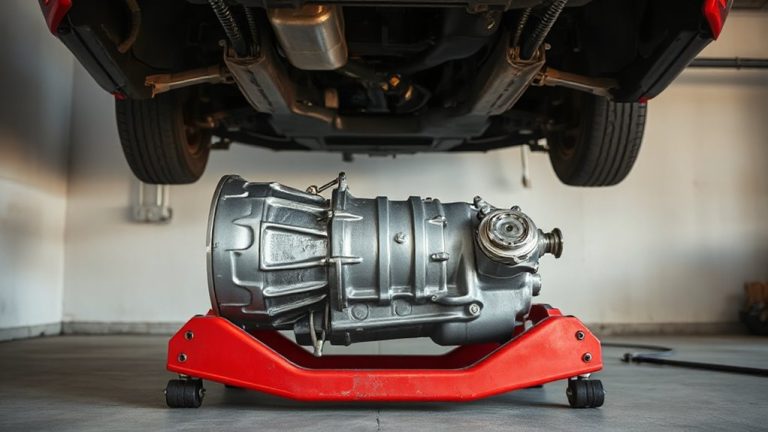
You can’t ignore the reality that even transmission fluids labeled “lifetime” require eventual replacement. Fluid contamination from clutch wear particles and moisture buildup degrades performance over time. Extreme weather accelerates oxidation, reducing lubricity and film strength. Manufacturers often define “lifetime” as 100,000 to 150,000 miles under ideal conditions-rarely the case in daily driving. You should inspect fluid every 50,000 miles. If it smells burnt or appears dark, replace it. For most manual transmissions, use API GL-4 rated fluid with a viscosity of 75W-80 or 75W-90, as specified in your owner’s manual. Draining and refilling guarantees complete exchange-usually 2 to 3 quarts. Use a hand pump to refill through the fill plug until fluid reaches the bottom edge. Prevent premature failure with timely service.
On a final note
You should change your “lifetime” transmission fluid every 100,000 miles under normal conditions. Severe driving-like towing, frequent stop-and-go, or high ambient temperatures-requires changes as early as 50,000 miles. “Lifetime” refers to the warranty period, not component longevity. Neglect leads to increased wear, reduced shift quality, and potential failure. Synthetics last longer but still degrade due to heat and contamination.