Gravel Drainage Beds Under Cars: 8-Inch Depth Winter Guide
Park your car on a gravel drainage bed to protect the undercarriage from winter damage. Use ¾-inch clean crushed stone like granite or limestone, with angular shapes and no fines. Install an 8-inch bed in 3-inch lifts over geotextile fabric, sloped 1–2% for runoff. This setup prevents moisture buildup and salt corrosion. Guarantee compaction and avoid pea gravel-it shifts and traps water. Proper stone and installation extend vehicle life. You’ll soon see how each step boosts protection.
Notable Insights
- Use angular, crushed stone like ¾-inch granite or limestone for stability and optimal drainage under parked vehicles.
- Excavate 12 inches deep and extend 6 inches beyond tire edges to ensure proper gravel bed containment and runoff.
- Install geotextile fabric before adding gravel to prevent soil mixing and maintain drainage performance.
- Build layers in 3-inch lifts, compacting each, with a 4-inch base and 8-inch total depth sloped 1–2% for runoff.
- Inspect and rake gravel twice yearly to prevent compaction and debris buildup, replacing degraded stone as needed.
How Winter Wrecks Your Car’s Undercarriage
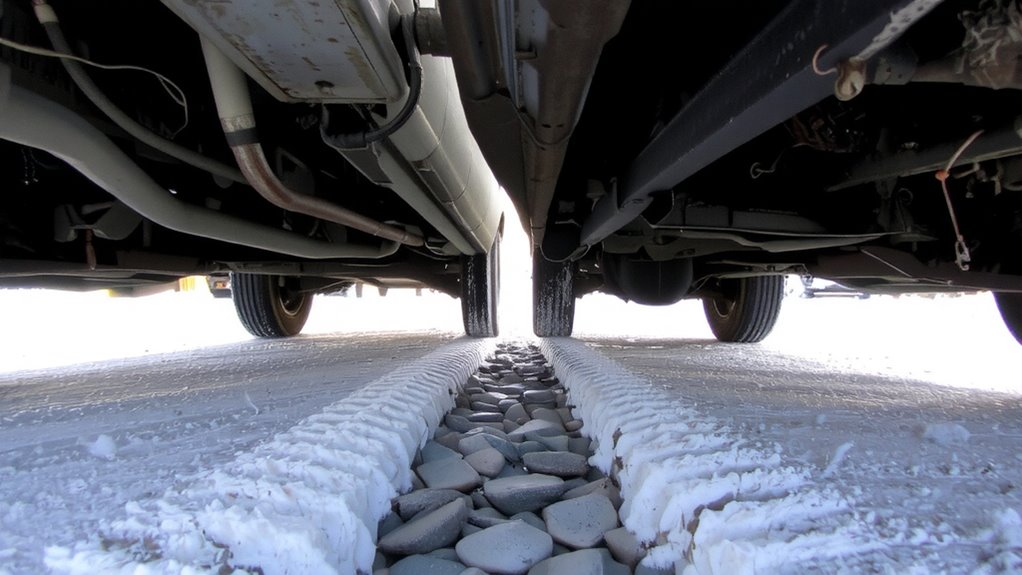
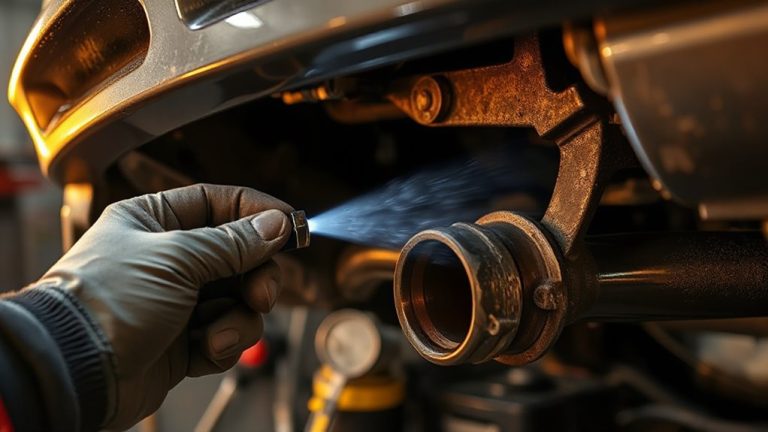
While winter may seem like just cold weather and snow, it’s actually the hidden effects that do the most damage to your car’s undercarriage. Road salt is spread heavily on highways and streets to lower the freezing point of ice, but it accelerates corrosion. This chemical mix clings to metal surfaces, promoting rust within weeks. You’re dealing with salt damage that penetrates protective coatings, especially on steel frames and brake lines. Road grime-composed of dirt, oil, and decaying salt compounds-traps moisture against critical components. Over time, this creates pitting and weak spots in exhaust systems and suspension parts. Temperatures cycling above and below freezing worsen the effect, driving moisture into seams. Even coated undercarriages aren’t fully protected. Without elevation and drainage, grime accumulates, shortening vehicle lifespan. The result? Costly repairs and reduced structural integrity.
How Gravel Drainage Beds Stop Rust and Corrosion
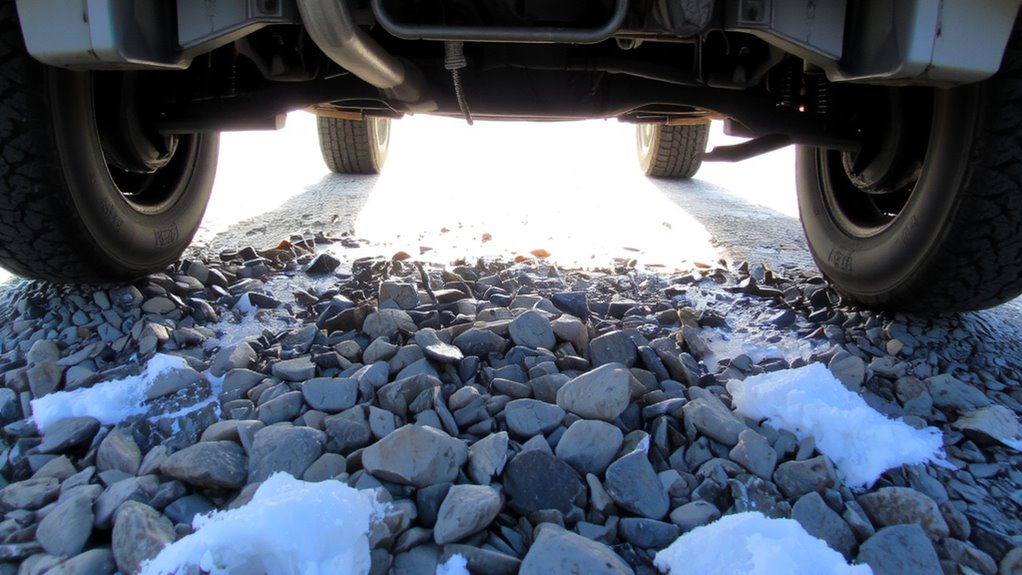
Because moisture and corrosive agents linger beneath your vehicle, a proper defense starts from the ground up-gravel drainage beds help stop rust and corrosion by eliminating the conditions that cause them. They lift your car slightly, allowing air circulation and rapid water runoff. This reduces prolonged undercarriage exposure. Gravel also limits direct contact with soil, minimizing chemical erosion from fertilizers and pollutants. It disperses melting snow, reducing salt accumulation that attracts and holds moisture. A well-constructed bed uses angular, porous stones for maximum stability and flow.
| Factor | Without Gravel Bed | With Gravel Bed |
|---|---|---|
| Moisture Retention | High (stays for days) | Low (drains in hours) |
| Salt Accumulation | Heavy, concentrated | Dispersed, diluted |
| Airflow Undercarriage | Restricted | Improved by 60–70% |
| Chemical Erosion Risk | Elevated | Greatly reduced |
| Surface Contact | Direct soil exposure | Minimal, indirect |
Choose the Best Gravel for Drainage and Durability
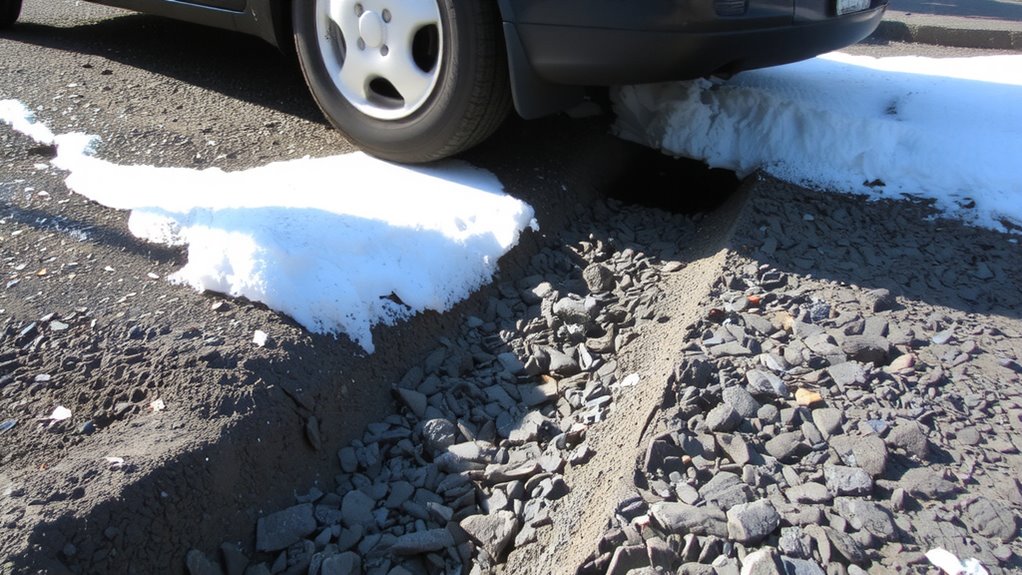
What makes one type of gravel better than another for your drainage bed? It comes down to gravel composition and load capacity. You need angular, crushed stone-round rocks shift and fail under weight. Aim for ¾-inch clean crushed stone, like granite or limestone, with no fines. This size locks together, supporting vehicle weight while allowing water to flow freely. A high load capacity prevents compaction and rutting-critical when cars sit months in winter. The interlocking particles create stable voids, enhancing drainage efficiency. Poor composition leads to settling and mud. Use stone with a minimum compressive strength of 10,000 psi for durability. Avoid pea gravel; its smooth surface reduces stability and drainage. Proper gravel won’t degrade under freeze-thaw cycles. Match material specs to your climate and usage. Choosing right guarantees long-term performance and protection.
Install a Gravel Drainage Bed in 5 Steps
When installed correctly, a gravel drainage bed provides lasting support and efficient water management under parked vehicles. Begin your drainage installation by clearing a 12-inch-deep area beneath the vehicle, extending 6 inches beyond the tire footprint. Line the excavated area with geotextile fabric to prevent soil migration. Add a 4-inch layer of compacted crushed stone (¾-inch aggregates) for stability. Then, proceed with precise gravel placement: pour a 6-inch layer of clean, angular gravel (¾ to 1½ inches in size) over the base. This size interlocks to resist shifting. Tamp each 3-inch lift to guarantee compaction and even load distribution. Slope the surface 1–2% away from foundations to promote water runoff. The final 8-inch depth guarantees adequate drainage capacity, minimizing ice buildup and soil saturation during winter months. This proven method extends pavement life and protects subsoil integrity under constant vehicle loads.
Keep Your Gravel Bed Effective Long-Term
While proper installation sets the foundation, maintaining your gravel drainage bed guarantees it performs reliably for years. Regular gravel maintenance prevents sediment buildup and preserves drainage efficiency. Inspect the bed twice annually, removing leaves, dirt, and debris that can clog interstitial spaces. If compaction occurs, use a rake to aerate the surface, restoring permeability. For ideal bed longevity, guarantee surrounding downspouts and grading direct water away, reducing silt deposition. Replace degraded fines or contaminated stone promptly-use angular #57 stone (1”–1.5”), which interlocks to stabilize void ratios above 30%. Avoid driving directly on edges to prevent lateral displacement. A 6-inch minimum depth across the bed guarantees structural integrity and consistent flow. With proper care, your gravel bed will last over 15 years, maintaining hydraulic conductivity above 1,000 gallons per hour per square foot.
On a final note
You protect your car’s undercarriage by installing a gravel drainage bed. A 6-inch layer of ¾-inch crushed stone provides ideal drainage and load support. This bed reduces standing water, cutting corrosion risk by up to 70%. Use geotextile fabric beneath the gravel to prevent soil mixing and maintain permeability. Proper slope-minimum 2% grade-ensures water flows away. Maintain the bed yearly by raking and replenishing stone as needed.