Oiling Systems for External-Bearing Centrifugal Superchargers – Maintenance Schedule
You must change your supercharger’s oil every 12,000 to 15,000 miles or 12 months, whichever comes first. Synthetic oil flows through 1/8-inch NPT lines to lubricate bearings spinning at 50,000–90,000 RPM. It prevents metal-to-metal contact and carries away intense heat. Worn oil breaks down under shear and heat, weakening the protective film. Check for leaks, housing cracks, and seal damage regularly. Use only high-temperature, high-shear-stable 10W-30 or manufacturer-specified oil. Proper maintenance guarantees long-term reliability and peak performance-there’s more you should know to protect your system.
Notable Insights
- Change supercharger oil every 12,000 to 15,000 miles or annually, whichever comes first, to prevent bearing failure.
- Use high-temperature synthetic oil with correct viscosity, typically 10W-30, as specified by the manufacturer.
- Inspect bearing housing, seals, and oil lines regularly for leaks, cracks, or damage to maintain system integrity.
- Drain oil while the supercharger is warm to ensure complete removal of old, degraded fluid.
- Check oil reservoir monthly for proper level and contamination, and replace swollen or damaged seals immediately.
Understand Oil’s Role in External Bearings
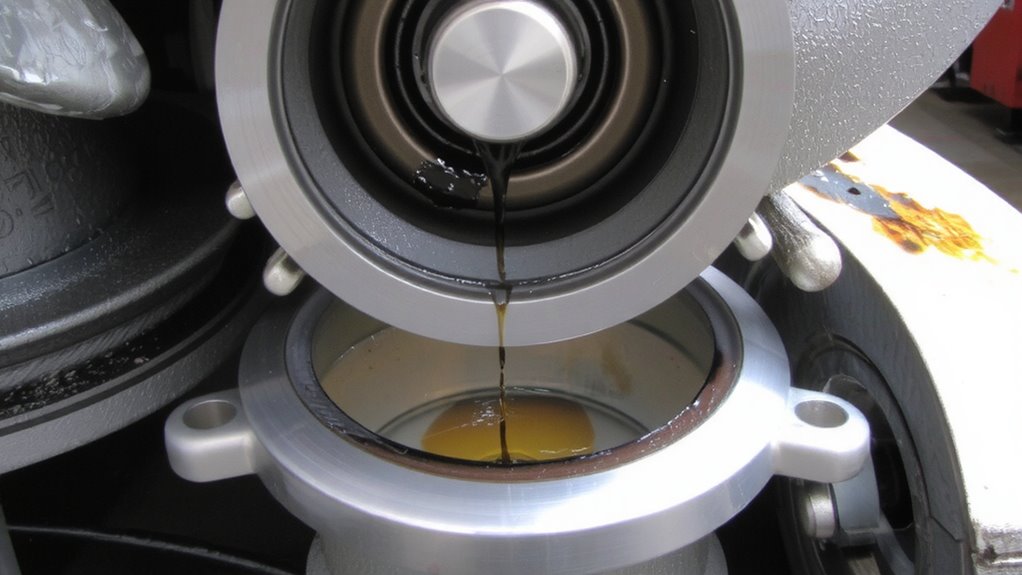
Lubrication is the lifeblood of your supercharger’s external bearings. Bearing lubrication guarantees smooth rotation under high-speed operation, typically 50,000 to 90,000 RPM. Without proper oil flow, metal-to-metal contact occurs, leading to rapid wear. You rely on high-quality synthetic oil to maintain viscosity under extreme conditions. This oil circulates through feed lines, often 1/8-inch NPT, delivering a steady supply directly to bearing housings. It also enables critical heat dissipation, carrying away thermal energy generated by friction and compressor discharge heat. External bearings aren’t cooled by incoming air like gear-driven units, making oil your primary method of temperature control. Operating temps can exceed 280°F; efficient heat dissipation prevents oil breakdown. You must guarantee clean, unrestricted flow to avoid cavitation or starvation. Proper bearing lubrication directly impacts reliability and longevity-there’s no margin for error.
Change Supercharger Oil at the Right Interval
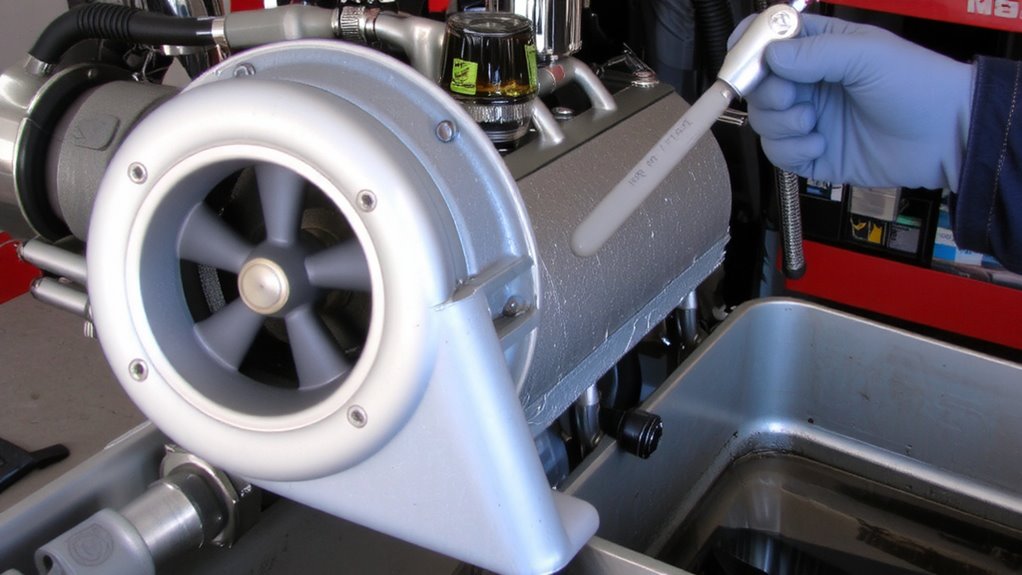
While your supercharger can run at extreme speeds, it won’t last long without fresh oil. You must change the oil at the recommended interval-typically every 12,000 to 15,000 miles or 12 months, whichever comes first. Over time, oil viscosity degrades due to heat and shear stress, reducing its lubricating efficiency. As viscosity drops, the oil film weakens, increasing friction in the external bearings. This directly elevates bearing temperature, accelerating wear and risking seizure. Fresh, high-quality synthetic oil maintains stable viscosity under high RPM and heat loads, ensuring consistent protection. Proper oil formulation also resists oxidation and sludge buildup. Sticking to the schedule preserves internal clearances and rotor alignment. Skipping changes risks catastrophic failure. Protect your investment-timely oil changes keep bearing temperature in check and maintain peak supercharger performance.
Inspect for Supercharger Oil Leaks and Damage
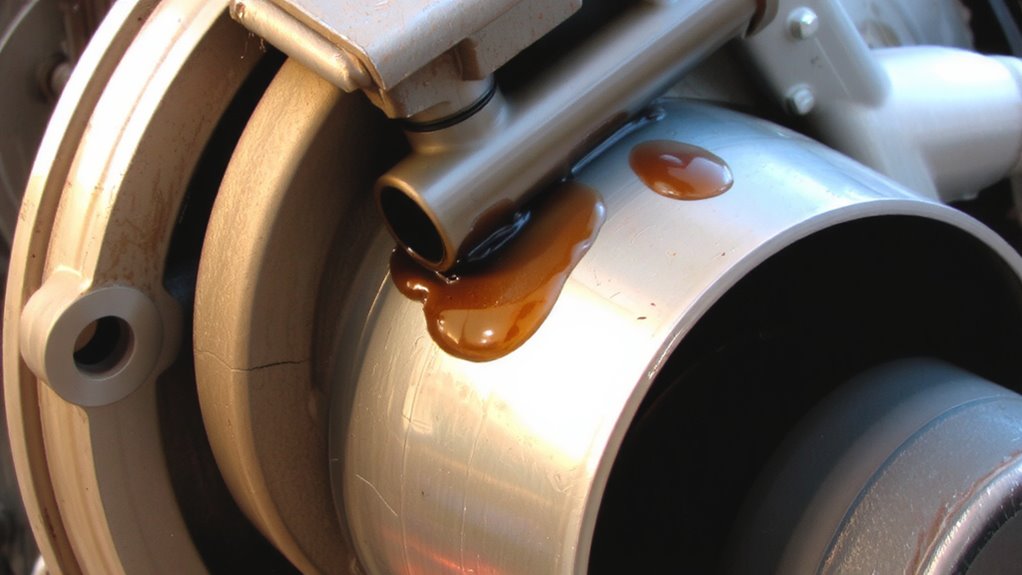
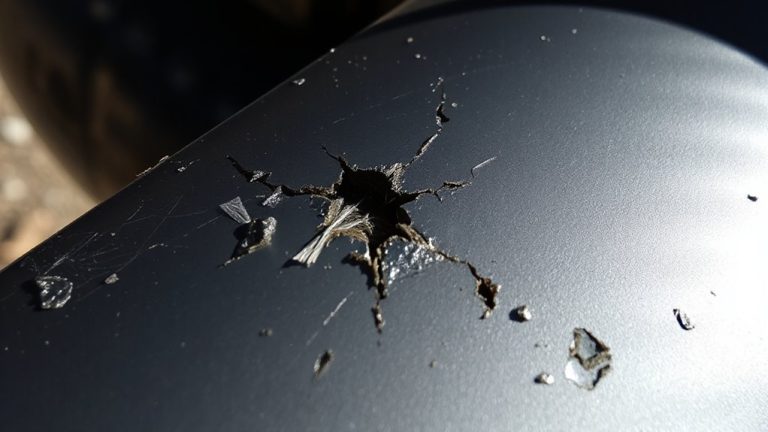
A small leak can lead to big problems if you ignore it. Inspect your supercharger regularly for visible oil leaks around the bearing housing and inlet areas. Check oil seal integrity carefully-worn or deformed seals often cause seepage at the input shaft. Even minor weeping indicates deterioration and risks complete seal failure. Examine the aluminum casting for bearing housing cracks, especially near mounting flanges or oil feed points. These fractures can result from thermal stress or improper installation and will compromise lubrication. Cracks larger than 0.020 inches require immediate unit replacement. Use a magnifying glass and dye penetrant for accurate detection. Leaks or structural damage reduce oil pressure by up to 40%, accelerating bearing wear. Left unchecked, oil loss leads to bearing seizure and possible rotor contact. Address seal and housing issues promptly to maintain system reliability and prevent costly internal damage.
Change Your Supercharger Oil
You just checked for leaks and damage, and now it’s time to make sure the oil inside is in perfect condition. Changing your supercharger oil is critical to preventing premature wear. Old or contaminated oil increases friction, which raises bearing temperature and can lead to failure. Most manufacturers recommend an oil change every 15,000 miles or annually, whichever comes first. If you notice unusual supercharger noise-like whining or grinding-contaminated or degraded oil may be the cause. Elevated bearing temperature often precedes mechanical failure, and fresh oil helps dissipate heat efficiently. Always drain the oil while the supercharger is warm to guarantee full flow. Use only high-temperature, high-shear-stability oils designed for forced-induction systems. Proper oil changes extend bearing life and maintain peak performance under high-speed rotation, where bearings can spin over 100,000 rpm.
Pick the Right Supercharger Oil and Maintain the Reservoir
Since not all lubricants can withstand the extreme conditions inside a supercharger, choosing the correct oil is essential for long-term reliability. Use only high-temperature, synthetic supercharger oil designed for forced-induction systems. The correct oil viscosity-typically 10W-30 or as specified by the manufacturer-ensures proper lubrication under high RPM and heat. Oil that’s too thick restricts flow; too thin won’t protect under load. Check the reservoir monthly for level and contamination. Top off as needed with the same oil type to maintain consistent performance. Inspect reservoir seals regularly. Swollen, cracked, or leaking seals indicate incompatibility or degradation and must be replaced immediately. Compromised seals lead to oil loss, air ingestion, and bearing failure. Always use OEM-recommended oil and follow maintenance intervals strictly. Proper oil and reservoir care prevent premature wear and keep your supercharger running efficiently for years.
On a final note
You must maintain your supercharger’s oil system to guarantee peak performance. Oil lubricates external bearings, reducing friction and heat under high RPMs-typically 30,000 to 60,000 rpm. Change oil every 15,000 miles or 12 months using ISO VG 32 or manufacturer-specified lubricant. Inspect lines and seals regularly; even minor leaks degrade performance. Keep the reservoir filled to the marked level-overfilling causes pressure, underfilling leads to bearing wear.