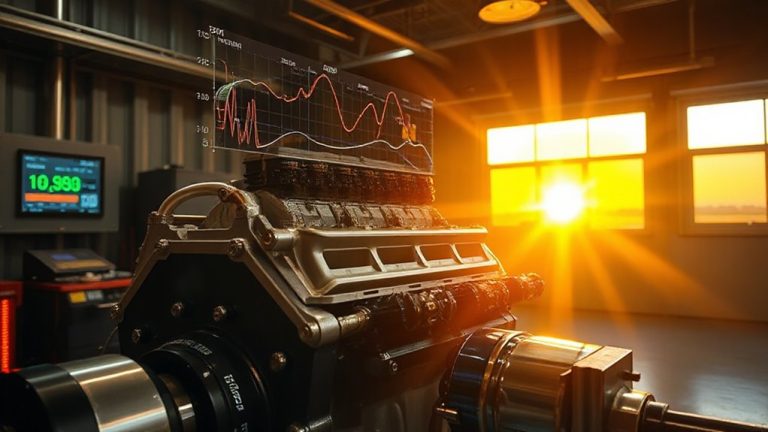
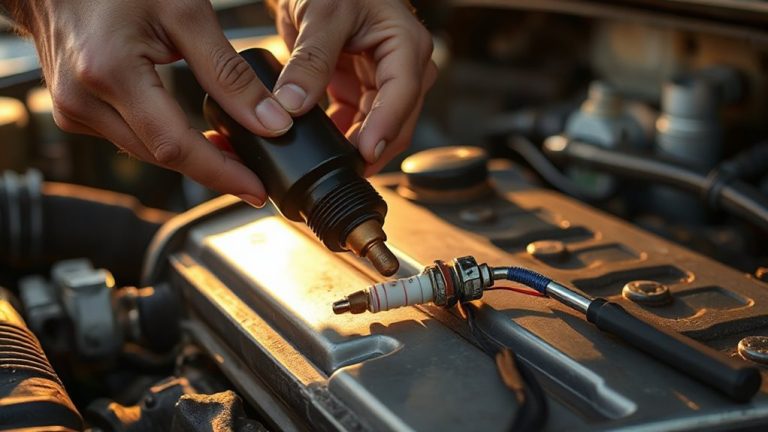
Maximizing Fuel Efficiency Through Proper Air Intake Filter Maintenance: Keeping Your Vehicle’s Engine Running Clean for Increased Power and Reliability
A dirty air filter restricts airflow by up to 20%, disrupting your engine’s 14.7:1 air-to-fuel ratio. Your engine control unit compensates by reducing fuel, lowering efficiency. This incomplete combustion increases fuel consumption by as much as 10%. Restricted airflow also raises intake vacuum, increasing pumping losses and engine strain. Replacing a clogged filter restores proper airflow, combustion efficiency, and fuel economy. You’ll see improved performance, reliability, and long-term savings. There’s more to gain by staying on top of this simple maintenance.
Notable Insights
- A clean air filter ensures optimal airflow, maintaining the ideal 14.7:1 air-to-fuel ratio for efficient combustion.
- Restricted airflow from a dirty filter reduces engine efficiency and increases fuel consumption by up to 10%.
- Regular inspection and replacement every 12,000–15,000 miles prevent power loss and maintain fuel economy.
- In dusty or urban environments, replace the filter more frequently to avoid accelerated contamination and engine strain.
- Using OEM or properly matched aftermarket filters ensures correct airflow, sensor accuracy, and long-term engine reliability.
Why a Dirty Air Filter Wastes Fuel
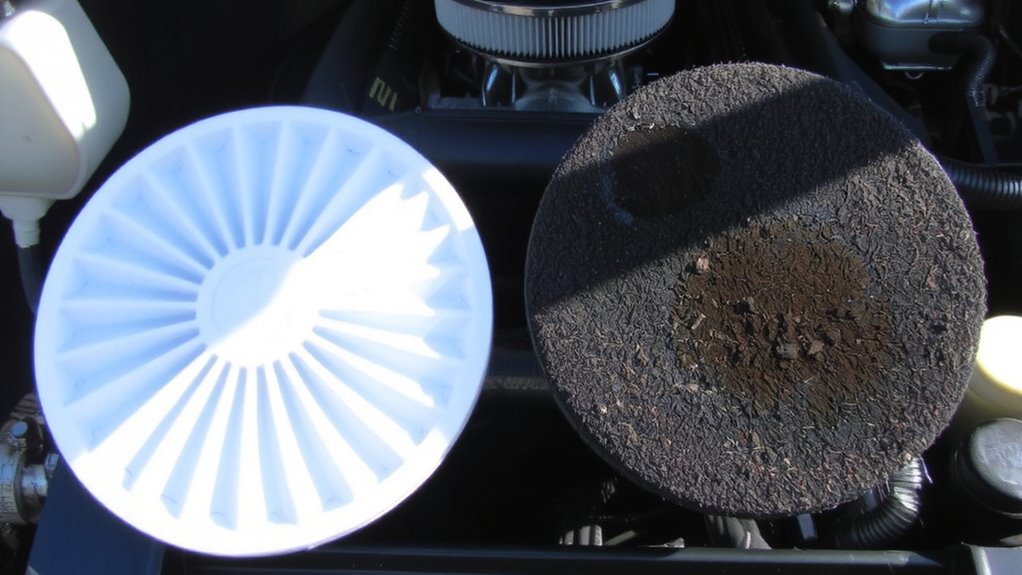
When your engine doesn’t get enough clean air, it can’t burn fuel efficiently-simple as that. A dirty air filter creates airflow restriction, limiting oxygen needed for complete fuel combustion. Modern engines rely on a precise air-to-fuel ratio, typically 14.7:1 for gasoline. Restrict airflow, and the engine control unit compensates by injecting less fuel, reducing power and economy. Even a 20% airflow reduction can increase fuel consumption by up to 10%. Your engine works harder to pull air through a clogged filter, raising intake vacuum and pumping losses. Over time, incomplete fuel combustion leads to carbon buildup, harming performance. Standard paper filters last 12,000–15,000 miles; heavy conditions shorten that. Synthetic filters may extend service to 30,000 miles. Without proper airflow, efficiency drops-no matter your driving style. Clean air means cleaner burns and better mileage.
7 Signs You Need a New Air Filter
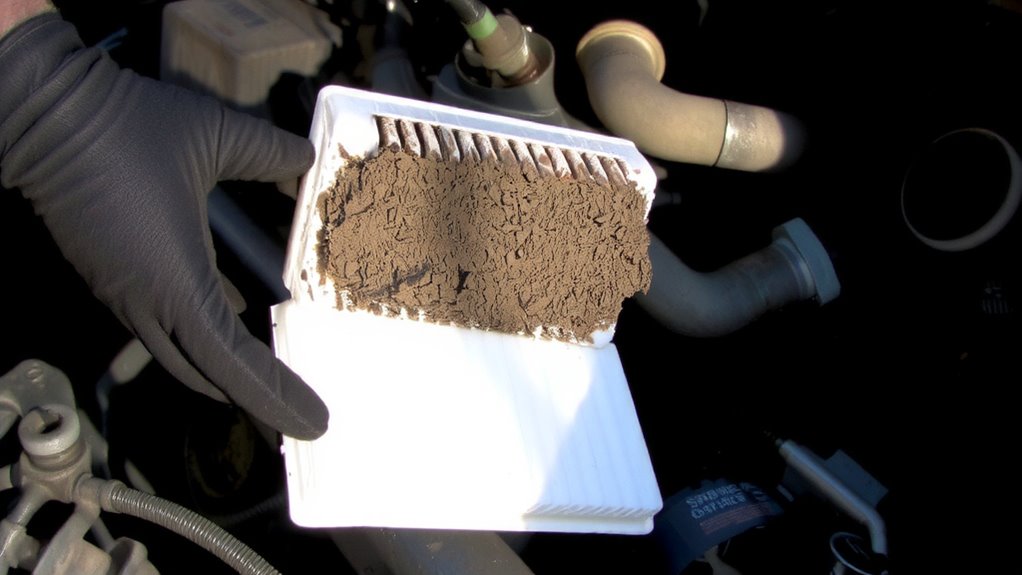
If you’ve noticed your car isn’t running as smoothly as it used to, a clogged air filter might be the culprit. Reduced airflow restricts combustion efficiency, directly impacting performance and fuel economy. A dirty filter forces your engine to work harder, increasing strain on internal components. You may also experience engine misfires, especially during acceleration, due to an imbalanced air-fuel mixture. Ignoring these signs can lead to long-term damage and higher emissions.
| Symptom | Possible Cause |
|---|---|
| Decreased acceleration | Reduced airflow to intake manifold |
| Rough idling | Disrupted air-fuel ratio |
| Engine misfires | Incomplete combustion cycles |
| Black exhaust smoke | Excess unburned fuel |
| High fuel consumption | Poor combustion efficiency |
Inspect your filter every 12,000 miles. Replace it if it appears dark and clogged with debris.
When to Replace It: By Car, Climate, and Driving
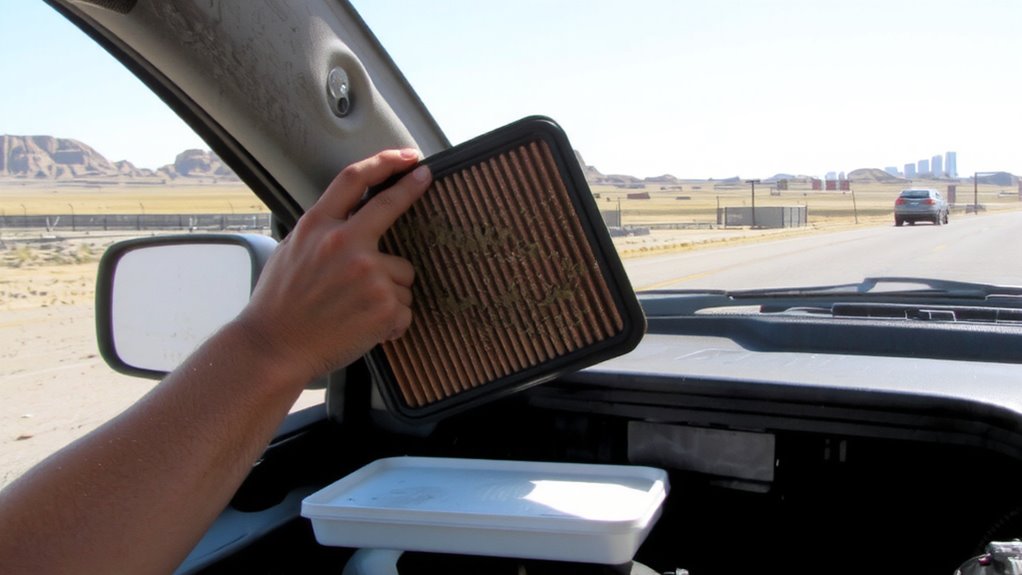
A clean air filter keeps your engine breathing efficiently, but how often you need to replace it isn’t one-size-fits-all. Your car’s manufacturer typically recommends replacing the air filter every 12,000 to 15,000 miles under normal conditions. However, driving in dusty or urban areas accelerates contamination, increasing airflow restriction and reducing combustion efficiency. In harsh climates-like deserts or places with high pollen-you should inspect it every 6,000 miles and likely replace it sooner. Stop-and-go traffic and frequent short trips also promote moisture and debris buildup. Performance vehicles or trucks towing heavy loads demand stricter adherence due to higher airflow demands. Ignoring conditions that impair airflow cuts fuel economy by up to 10% and strains engine components. Always consult your owner’s manual for exact intervals, but err on the side of caution in severe environments to maintain peak engine performance and longevity.
How to Check and Swap Your Air Filter
Ever wonder how a five-minute check under the hood could boost your fuel economy? Checking your air filter is simple and critical for maintaining proper air flow and engine performance. Locate the air filter housing-usually a black plastic box near the engine with a snap-on lid. Open it and remove the filter. Hold it up to a light; if you can’t see light through the pleats, it’s clogged. Most filters measure 8” x 8” x 2” or 11” x 6” x 1.5”, depending on your vehicle. Replace it with an exact fit-check your owner’s manual for specifications. A clean filter restores air flow, improving combustion efficiency. Restricted air flow forces the engine to work harder, reducing fuel economy by up to 10%. Swapping it takes under five minutes and costs $15–$30. Do it every 12,000 to 15,000 miles, or as conditions demand.
OEM vs. Aftermarket: Which Air Filter Wins?
You just replaced your air filter and restored proper airflow, but now you’re choosing between OEM and aftermarket options. OEM filters match factory specs, ensuring reliable fit and OEM durability. Aftermarket brands often promise increased airflow and aftermarket performance, but results vary by design and material. Consider your driving needs before deciding.
| Feature | OEM Filter | Aftermarket Filter |
|---|---|---|
| Filtration Efficiency | 99%+ as tested | 90–98%, depending on brand |
| Material | Precision cellulose | Foam, cotton, or synthetic |
| Airflow Resistance | Optimized for stock tune | Lower resistance, may require tuning |
OEM units are calibrated for consistent fuel efficiency and engine protection. Aftermarket filters may enhance breathability but can compromise sensor readings if not properly calibrated. Choose based on verified data, not claims. Top high-flow air filters are designed to balance performance and filtration, making high-flow air filters a key consideration for performance-oriented drivers.
What Happens When You Install a Fresh Filter
When the old, clogged air filter is swapped out for a clean one, your engine immediately benefits from unrestricted airflow. Improved airflow allows for ideal air-to-fuel ratios, typically 14.7:1 in gasoline engines, enhancing combustion efficiency. You’ll notice smoother acceleration and reduced engine strain, especially under load. A fresh filter eliminates the restriction caused by accumulated dust and debris, which can impede up to 30% of airflow in severely blocked units. This reduction in intake resistance supports consistent cylinder scavenging and volumetric efficiency. Over time, maintaining clean filtration reduces carbon buildup and wear on internal components. That directly contributes to extended engine longevity. OEM-specified filters capture particles as small as 5–10 microns, protecting sensitive parts like valves and pistons. Proper filtration doesn’t just restore performance-it sustains it. With every mile, a clean filter defends critical systems, ensuring reliable operation and peak mechanical integrity under diverse driving conditions.
How a Clean Air Filter Saves Money Over Time
A clean air filter pays for itself over time by boosting fuel economy and reducing long-term repair costs. When your engine gets clean, unrestricted airflow, it operates more efficiently, requiring less fuel to produce the same power. Improved fuel economy means fewer trips to the pump and measurable savings over thousands of miles. A clogged filter forces the engine to work harder, increasing wear on components like spark plugs and pistons, which can lead to expensive repairs. Regular filter maintenance prevents these issues, ensuring consistent performance and long term savings.
| Maintenance Interval | Fuel Economy Impact | Estimated Annual Savings |
|---|---|---|
| Every 12,000 miles | Up to 10% increase | $150 |
| Every 15,000 miles | Up to 7% increase | $100 |
| Every 30,000 miles | Up to 4% increase | $50 |
| Never replaced | Up to 14% decrease | -$200 |
On a final note
You keep your engine running efficiently by maintaining a clean air filter. A clogged filter restricts airflow, reducing fuel economy by up to 10% and increasing emissions. Replacing it every 12,000–15,000 miles restores ideal air-fuel mixing. A clean filter improves throttle response and prevents premature wear. Using the correct OEM-specified filter guarantees proper fit and filtration efficiency, typically filtering particles as small as 5 microns. You save fuel and extend engine life.