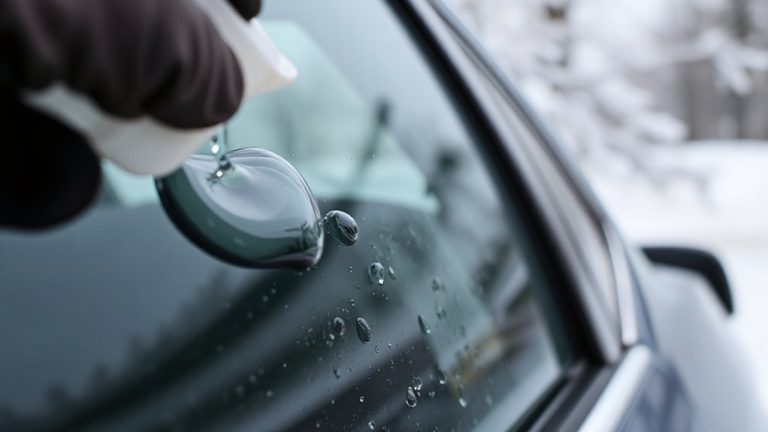
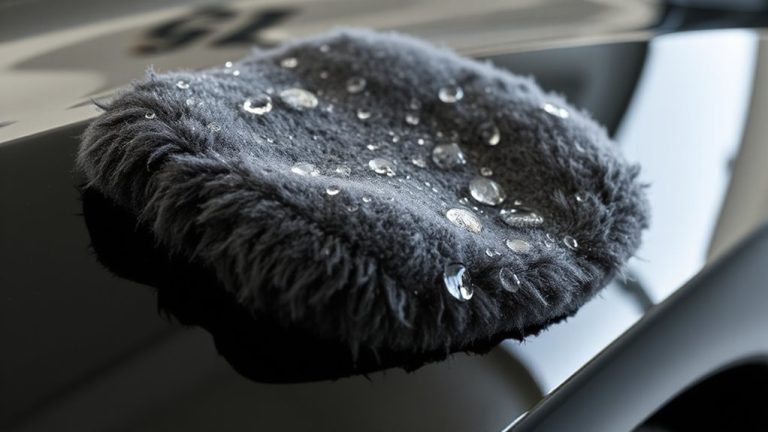
The Importance of Drying From Top to Bottom on Coated Vehicles
Always dry coated vehicles from the top down to follow gravity’s natural water flow. This method reduces swirl marks by up to 40% compared to random drying. Starting high prevents runoff from recontaminating cleaned panels. Use a 350–400 GSM microfiber towel folded into quarters, flipping to clean sections frequently. Avoid bottom-up drying-it increases friction and traps contaminants. Proper technique preserves hydrophobic properties and optical clarity. The right tools and method maintain coating integrity. You’ll discover even more precision-driven steps next.
Notable Insights
- Drying from the top down follows gravity’s flow, preventing water runoff from recontaminating already-dried surfaces.
- Starting at the highest point reduces streaks and missed spots, ensuring a more consistent finish on coated surfaces.
- Top-to-bottom drying minimizes contact time between contaminants and the coating, preserving its hydrophobic properties.
- Working downward prevents spreading dirt from lower, grime-prone areas onto clean upper panels.
- This method increases drying efficiency by up to 40%, reducing the risk of water spots and surface damage.
Dry Coated Vehicles From the Top Down
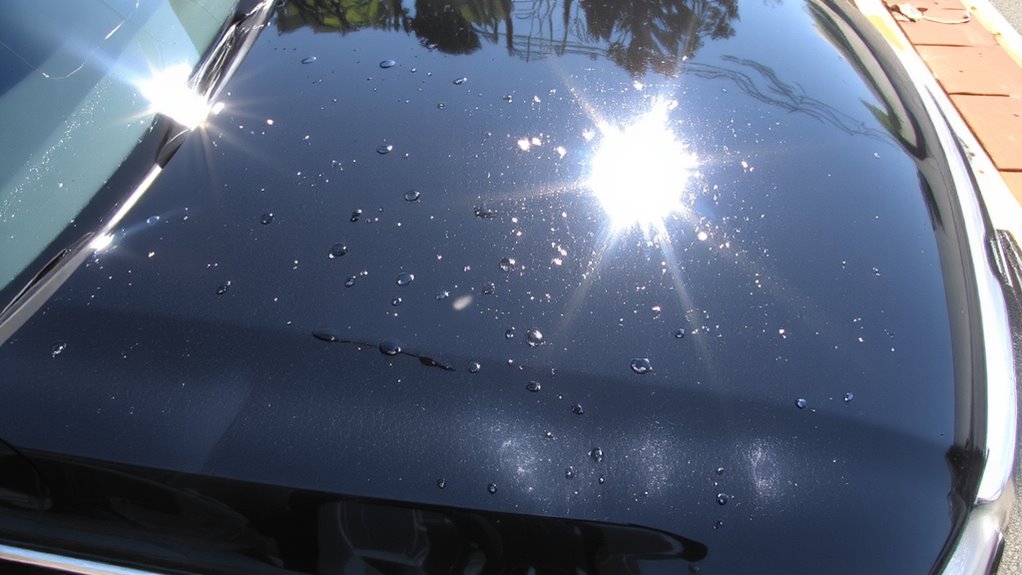
When drying a coated vehicle, always start at the highest point and work your way down to prevent streaks and missed spots. Gravity influences water flow, pulling moisture downward along the surface. Beginning at the top guarantees runoff is managed before it dries, preserving the coating’s finish. Surface tension causes water to cling to treated surfaces, especially on hydrophobic coatings with contact angles above 110°. A high-quality microfiber towel-measuring at least 1600 mm² and with a plush 360 GSM pile-reduces drag and effectively lifts water without marring. Work panel by panel using straight, overlapping passes. Avoid circular motions; they redistribute contaminants. The top-down method follows natural drainage patterns, increasing drying efficiency by up to 40% compared to random drying. This approach maximizes coverage, minimizes effort, and maintains the integrity of the coating’s protective layer. For optimal results, consider a microfiber towel kit that includes multiple towels designed for different drying tasks.
Avoid Bottom-Up Drying to Prevent Swirls
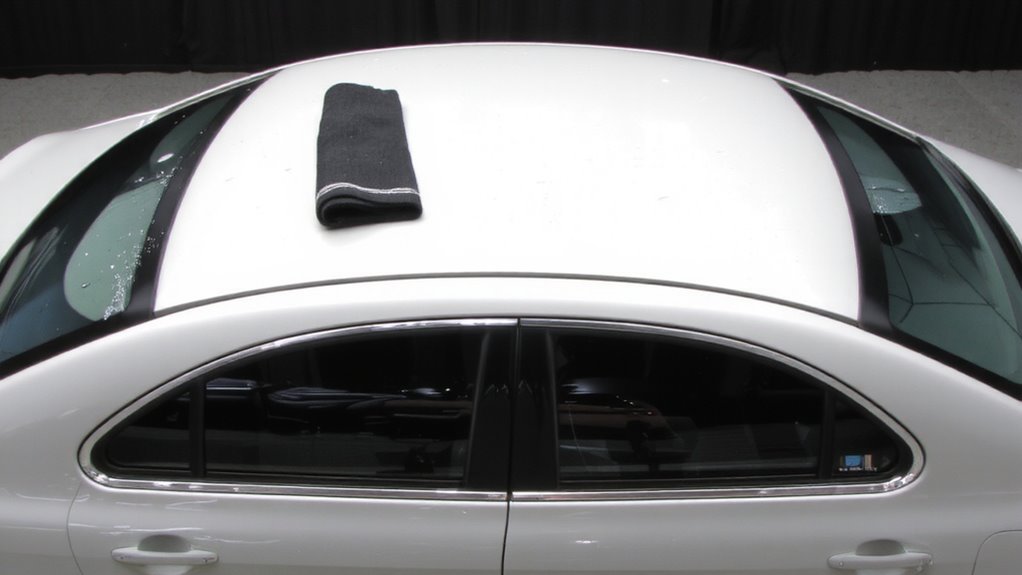
Drying from the bottom up might seem logical if you’re cleaning from the ground level, but doing so defeats the physics of water movement and risks damaging your coated finish. Gravity pulls water downward, concentrating contaminants and moisture on lower panels. When you dry upward, you work against this flow, increasing contact time and drag. This elevates the risk of swirls due to uneven pressure distribution across the microfiber towel. Surface tension holds water droplets in place, especially on hydrophobic coatings, making them harder to remove from lower surfaces without force. Applying force increases friction, and inconsistent pressure distribution during bottom-up drying causes microscopic shear on the clear coat. These conditions promote swirl formation, particularly on dark-colored vehicles. Always dry top-down to align with natural water runoff. This method minimizes resistance, reduces needed pressure, and maintains towel cleanliness longer, preserving your coating’s integrity and optical clarity. Using a high-quality car drying towel ensures superior absorbency and reduces the likelihood of introducing scratches or marring during the drying process.
Use the Flip-Fold Towel Technique
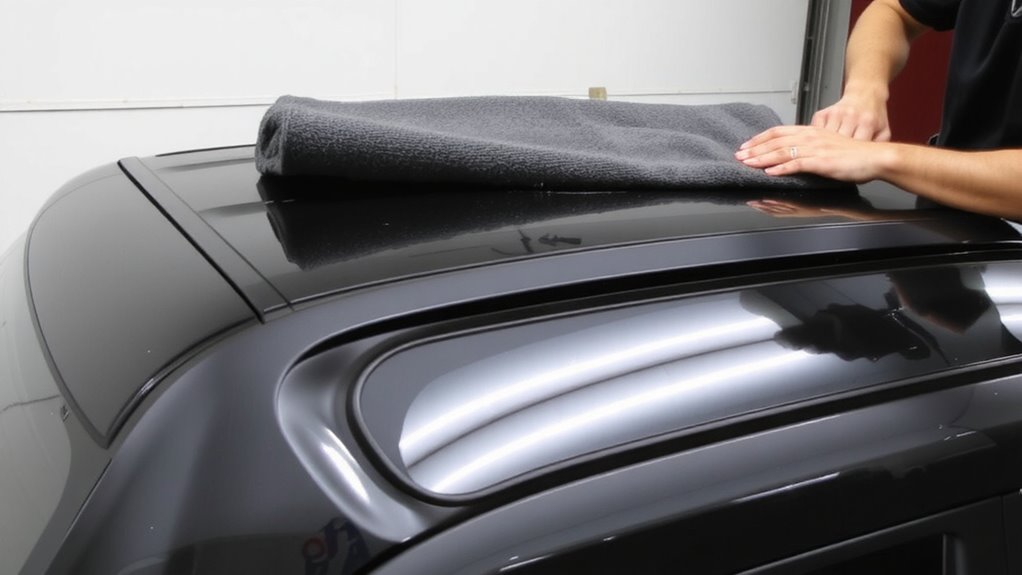
Your microfiber towel’s effectiveness hinges on how you manage its surface area and contamination exposure. The flip-fold technique maximizes clean contact by folding the towel into quarters, exposing fresh sections as you work. You use one side until visibly soiled, then flip it to reveal a clean side-this is towel rotation. Each fold delivers uncontaminated fibers, reducing the chance of reintroducing grit. Maintain edge awareness: avoid dragging the towel’s edges, which collect more dirt and increase swirl risk. High-pile, 70/30 split microfiber towels (360–400 GSM) offer ideal absorbency and softness. Rotate every few panels to preserve surface integrity. This method guarantees consistent drying with minimal contact degradation. Think of it like using a clean sponge for each quadrant-efficiency through segmentation. Proper technique extends towel life and protects your coating’s finish. Execute each motion with control and purpose.
Choose Safe Drying Tools for Ceramic Coatings
Surface preservation begins with selecting tools that match the delicate nature of ceramic coatings. You need drying tools offering microfiber safety and ideal coating compatibility. Use only 100% ultra-soft, non-abrasive microfiber towels with a minimum GSM of 320. High-density fibers reduce swirl risks and trap water efficiently. Look for plush, split-fiber construction-this increases absorbency and minimizes surface contact pressure. Avoid chamois or cotton towels; they’re porous and can embed contaminants, compromising coating integrity. Safe tools often feature bonded edges to prevent fraying and linting. Verify that materials are pH-neutral and chemically inert to protect the coating’s hydrophobic layer. Always wash drying towels separately with a mild, solvent-free detergent. Properly maintained microfiber maintains performance over 300+ washes. Your choice directly impacts long-term gloss and protection. Pick wisely-tool quality isn’t an upgrade. It’s a necessity.
Stop Water Spots Before They Form
Even as water evaporates, it leaves behind minerals that can etch into ceramic coatings if not managed properly. You must act before spots form. Water beading is a sign of healthy coating performance, but beads left to air-dry risk mineral deposition. The trapped moisture evaporates slowly, concentrating contaminants on the surface. Your drying method directly impacts drying efficiency-how quickly and completely you remove water. High drying efficiency minimizes contact time between mineral-laden water and the coating. Use a clean, absorbent microfiber towel with a GSM of 350–400 for maximum water pickup. Work top to bottom, following the vehicle’s natural water flow. This guarantees you don’t spread contaminants from lower, dirtier sections to clean upper panels. Immediate, systematic drying preserves hydrophobic properties. It also maintains surface clarity and prevents permanent etching. Prevent water spots with discipline, not chance. For optimal results, choose a best microfiber towel that combines superior absorbency with a lint-free finish.
Skip These Common Drying Mistakes
While water may seem harmless, drying your coated vehicle the wrong way can compromise its protection and appearance. An improper grip stresses the coating and risks micro-scratches. Hold the microfiber towel with flat fingers, palm down, to distribute pressure evenly-this minimizes surface contact flaws. A rushed technique leaves behind water channels, inviting mineral deposits and water spots. You need a 70/30 fold in the towel to maximize absorption without abrasion. Use straight-line motions, not circles, to prevent redistributing contaminants. Each stroke should overlap the previous by half an inch for full coverage. Never let the towel dry on the surface; replace it when dampness exceeds 60%. Coated surfaces are slick, so friction decreases markedly-control matters more than force. Proper drying preserves hydrophobic properties and extends coating life up to six months. Skip shortcuts; precision keeps the finish flawless.
On a final note
Dry coated vehicles from top to bottom to minimize surface contaminants. Starting at the roof guarantees dirty water flows downward, away from already-dried areas. Bottom-up drying risks dragging grime across clean surfaces, creating micro-scratches. Use a plush, 100% polyester microfiber towel with a 70/30 split weave for maximum absorption. Fold it into quarters, using each section once. This technique reduces swirls by limiting particle contact. Prevent water spots by drying in shade below 75°F.