Why Using a pH-Neutral Tire Dressing Preserves Coating Integrity
Using a pH-neutral tire dressing protects your ceramic coating by maintaining a balanced chemical environment. Acidic (pH <5) or alkaline (pH >9) dressings trigger hydrolysis, breaking siloxane bonds in the SiO₂ layer. This degrades the cross-linked matrix, reducing coating thickness and lifespan by up to 30%. pH-neutral formulas (6.5–7.5) prevent etching, hazing, and delamination. They avoid solvent-induced oxidation and preserve hydrophobicity. Non-silicone, water-based options prevent residue buildup. Your coating stays intact, layer by layer. There’s more to discover about long-term preservation.
Notable Insights
- pH-neutral dressings (6.5–7.5) prevent chemical degradation of the ceramic coating’s SiO₂ layer.
- They avoid disrupting the cross-linked polymer matrix, maintaining coating durability and adhesion.
- Neutral pH minimizes hydrolysis, protecting siloxane bonds from premature breakdown.
- These dressings reduce risk of hazing, dulling, or peeling caused by acidic or alkaline reactions.
- Free of harmful solvents and silicones, they preserve hydrophobic properties and coating longevity.
Why Tire Dressing Can Damage Ceramic Coatings
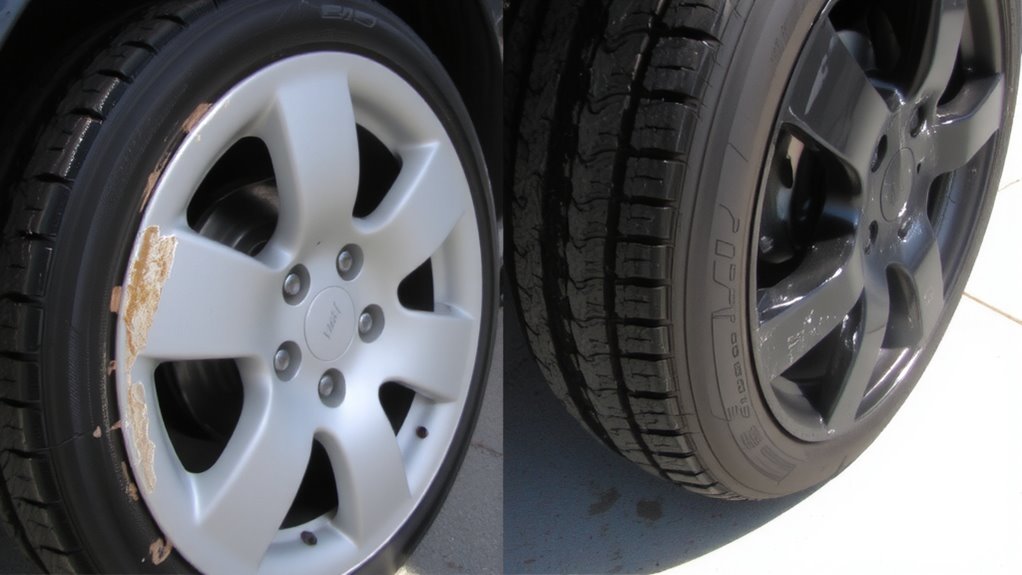
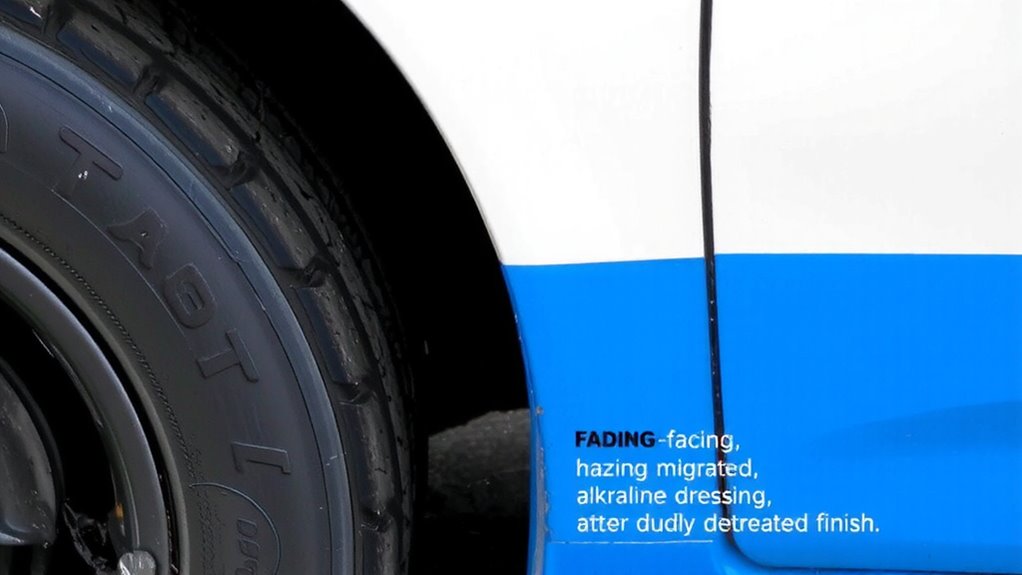
While many overlook the chemical interaction between tire dressings and ceramic coatings, using the wrong product can compromise the coating’s durability. Harsh dressings often contain solvents that trigger chemical etching on coated surfaces. These reactions visibly degrade the cross-linked SiO₂ layer, reducing its thickness from the standard 90–120 microns. You’ll notice hazing or dull spots near wheel wells-early signs of damage. Some formulations also migrate upward during application, depositing active agents onto adjacent painted surfaces. This can lead to tire discoloration bleeding onto lower panels, especially with silicone-based or petroleum-derived products. The discoloration isn’t just cosmetic; it indicates underlying coating breakdown. Even brief exposure to high-pH dressings (above 9.0) accelerates this deterioration. Always check product specifications: anything outside pH 6.0–8.0 risks degrading the silica matrix. Proper application technique and chemically compatible dressings prevent unintended damage.
Why pH Balance Protects Your Car’s Coating
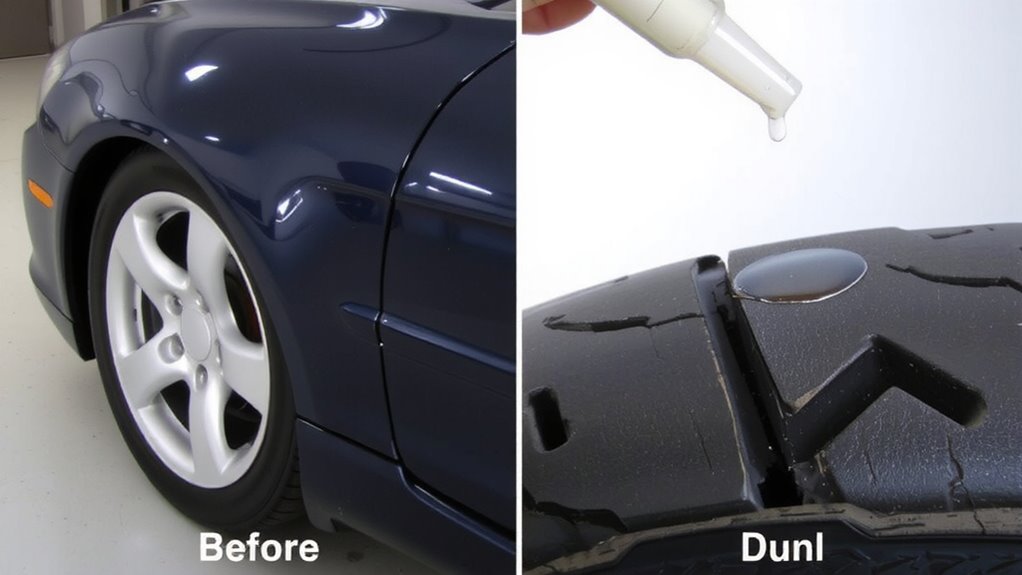
Your coating’s longevity depends on maintaining a stable chemical environment, and pH balance plays a critical role. An unbalanced pH can trigger a chemical reaction that disrupts molecular stability, weakening the coating’s protective layer. Maintaining neutrality prevents unwanted interactions between dressing and coating.
| pH Level | Effect on Coating |
|---|---|
| 3–5 (acidic) | Risk of etching and degradation |
| 6–8 (neutral) | Preserves molecular stability |
| 9–11 (alkaline) | May cause hazing or delamination |
| >11 | High risk of chemical reaction |
pH-neutral dressings (typically 6–8) avoid altering the coating’s surface energy. This guarantees long-term hydrophobic performance and resistance to environmental contaminants. You’re not just dressing tires-you’re protecting a precision-applied sacrificial layer engineered for durability. Stick to neutral to maintain integrity. For best results, choose a pH-neutral tire dressing that’s specifically formulated to be safe for use on coated surfaces.
How Acidic or Alkaline Dressings Break Down Coatings
Though they might seem harmless, acidic or alkaline tire dressings can compromise coating integrity through direct chemical interaction. These dressings trigger unwanted chemical reactions with silica or ceramic layers, destabilizing the coating’s cross-linked polymer matrix. Your coating, typically 2–5 microns thick, relies on molecular stability for protection. When exposed to pH levels below 5 or above 9, hydrolysis accelerates, breaking siloxane bonds essential for durability. This leads to molecular erosion, where surface molecules degrade layer by layer. Over time, even infrequent use of high-pH dressings causes measurable thinning-up to 30% reduction in coating lifespan according to accelerated weathering studies. The damage is irreversible and cumulative. Unlike physical abrasion, this degradation occurs at a microscopic level, invisible until performance declines. Using a pH-neutral dressing (ideally between 6.5 and 7.5) prevents these reactions, preserving coating structure and maximizing service life without unwanted side effects.
Signs Your Coating Is Degrading From Wrong Dressing
Coatings degrade silently when exposed to improper tire dressings, and the first signs often go unnoticed until significant damage has occurred. You might first notice coating discoloration-dull, hazy, or yellowed surfaces-indicating chemical breakdown. This happens when pH levels outside the 6.5–7.5 range compromise the coating’s cross-linked polymer structure. The silicone or solvents in non-neutral dressings accelerate oxidation, especially on silica-rich ceramic layers. Tread cracking can follow, particularly in tire sidewalls where flexing is constant. These microfractures aren’t just cosmetic; they signal compromised elasticity and reduced UV resistance. When dressings contain high volatile organic compounds (VOCs), they evaporate unevenly, leaving behind residues that stress the coating. You’ll see peeling or flaking within weeks, especially after repeated applications. Surface energy measurements drop, reducing hydrophobic performance. Your coating loses up to 40% of its intended lifespan when mismatched with aggressive dressings. Early detection helps mitigate further degradation. Choosing a pH-neutral tire dressing can prevent these issues while maintaining long-term tire and coating health.
How pH-Neutral Formulas Keep Coatings Intact
When properly formulated, pH-neutral tire dressings preserve coating integrity by maintaining a balanced chemical environment. You avoid corrosive shifts in acidity or alkalinity that degrade protective layers. These dressings guarantee surface compatibility, meaning they won’t react with ceramic, quartz, or polymer coatings typically rated at pH 6.5 to 7.5. Their formulation supports material stability by excluding aggressive solvents like toluene or strong alkalis that compromise cross-link density. Instead, they use inert carriers and emulsifiers that evaporate cleanly, leaving no residue. The absence of extreme pH reduces hydrolysis risk-a chemical breakdown caused by water and pH imbalance. Think of it like using distilled water instead of bleach on sensitive surfaces. You maintain coating hardness (typically 9H) and contact angle (90+ degrees). No etching, hazing, or premature wear occurs. Proper pH balance means long-term protection without unintended damage. You keep your finish intact, predictable, and durable-exactly as engineered.
How to Choose a Coating-Safe Tire Dressing
While appearance matters, prioritizing chemical compatibility guarantees long-term protection. Choose a pH-neutral tire shine (pH 6.5–7.5) to prevent coating degradation. Avoid dressings with petroleum distillates or high volatile organic compounds (VOCs), which compromise SiO₂ or ceramic layers. Opt for water-based, non-silicone formulas that resist sling and UV damage without leaving greasy residue. Check product labels for coating manufacturer endorsements-many specify approved tire dressings. Use dedicated application tools like microfiber brushes or foam pads to guarantee even coverage and reduce cross-contamination. Incompatible applicators can transfer solvents to painted surfaces, risking hazing. A 100% acrylic polymer-based dressing offers durability, lasting up to 6 weeks per application. Always verify compatibility with a spot test on inconspicuous areas. Quality tire shine maintains aesthetics without sacrificing protection-don’t assume shine intensity reflects performance.
How to Apply Tire Dressing Safely on Coated Vehicles
You’ve selected a pH-neutral, coating-safe tire dressing-now it’s time to apply it without risking damage to your vehicle’s protective layers. Begin with cold tires and guarantee proper tire inflation-typically 32–35 psi, as over-pressurization distorts sidewalls and affects application accuracy. Clean tires thoroughly; grime or oils prevent even adhesion. Using an applicator pad or brush, apply a thin, uniform layer to the sidewall only-avoid contact with wheel faces or paint. Dressing migration onto coated surfaces can compromise bond strength, especially with repeated exposure. Check tread depth-minimum 4/32” guarantees structural integrity and reduces spray-back during driving. Excess product attracts dust and may sling onto lower panels. Allow 10–15 minutes to cure in dry, shaded conditions. Reapplication every 3–6 weeks maintains appearance without build-up.
On a final note
Using a pH-neutral tire dressing preserves your ceramic coating’s integrity. Non-neutral dressings alter surface chemistry, accelerating hydrophobic layer degradation. pH levels outside 6.5–7.5 disrupt silica-siloxane bonds in coatings, reducing longevity by up to 40%. A pH-balanced formula prevents etching, hazing, or delamination. Apply only solvent-free, water-based dressings with a pH of 7±0.5. This maintains contact angles above 90°, ensuring sustained bead-up and stain resistance across treated surfaces.