Grounding All Fixed Metal Equipment Including Shelving and Compressor Tanks
You must ground all fixed metal equipment, including steel shelving and compressor tanks, to prevent electric shock and fire. Ungrounded metal can energize during faults or accumulate static, creating spark risks. Bond shelving frames with 6 AWG copper and guarantee compressor tank resistance is below 1 ohm. Use listed clamps and clean contact surfaces to guarantee continuity. NEC Article 250.4(A)(4) requires grounding non–current-carrying metal parts. Proper grounding directs fault current safely, stabilizes voltage, and reduces fire risk-understanding the full scope guarantees complete protection.
Notable Insights
- Ground steel shelving units using 6 AWG copper wire to prevent static buildup and electric shock hazards.
- Bond compressor tanks directly to the grounding electrode system with a listed clamp and clean metal contact.
- Ensure all fixed metal equipment is bonded to the equipment grounding conductor per NEC Article 250.4(A)(4).
- Clean paint, rust, or coatings from contact points to achieve effective metal-to-metal electrical continuity.
- Use 6 AWG copper conductors and stainless steel hardware rated for bonding in wet or corrosive environments.
Why Ungrounded Metal Causes Shocks and Fires
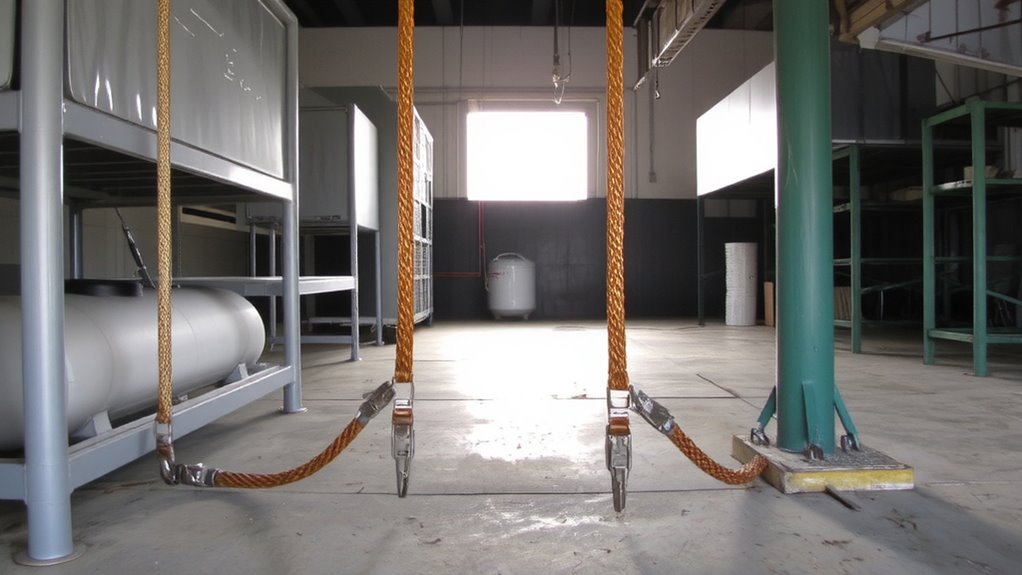
When electrical equipment lacks a proper ground connection, you’re at greater risk of shock or fire, even if everything seems to be working normally. Without grounding, stray currents have no safe path to earth, increasing touch voltage on metal surfaces. Corrosion buildup at connection points raises resistance, degrading ground integrity over time. A resistance above 25 ohms, per NEC standards, is insufficient for effective fault dissipation. Voltage drift occurs when ungrounded systems lack a stable reference point, allowing potentials to fluctuate unpredictably. This instability can exceed insulation ratings, leading to arcing or component failure. Ungrounded compressor tanks or metal shelving may energize at line voltage during internal faults. Grounding conductors, sized to NEC Table 250.122, guarantee low-impedance paths. Bonding all fixed metal parts eliminates potential differences. You prevent energy accumulation capable of igniting flammable materials or delivering lethal shocks.
The Hidden Danger of Static and Fault Currents
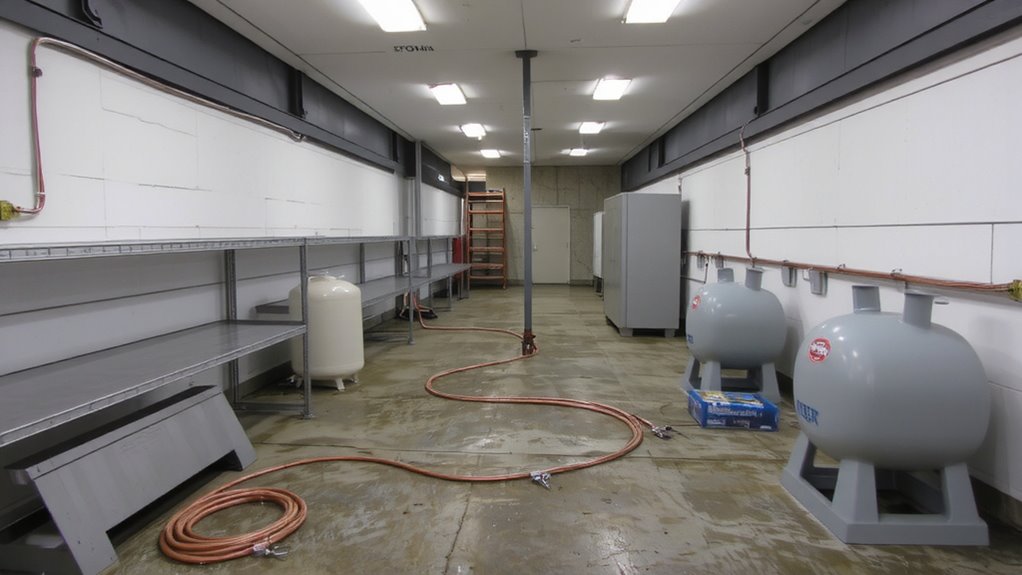
Even though your equipment operates smoothly, unseen static discharges and fault currents can still build up to dangerous levels. Static buildup occurs when insulating materials generate charge through friction-like conveyor belts moving or fluids flowing through pipes. Without grounding, this charge accumulates on metal surfaces, risking sudden sparks that can ignite flammable vapors. Fault propagation happens when a short circuit in one piece of equipment energizes nearby conductive parts. Ungrounded shelving or compressor tanks become live, increasing electric shock risk. A proper grounding system uses copper conductors (minimum 6 AWG) bonded to earth electrodes with resistance below 25 ohms, per NEC standards. This path safely dissipates both static and fault currents. Grounding interrupts fault propagation and prevents static buildup by stabilizing electrical potential across all metal components-protecting personnel and equipment.
Which Metal Equipment Must Be Grounded
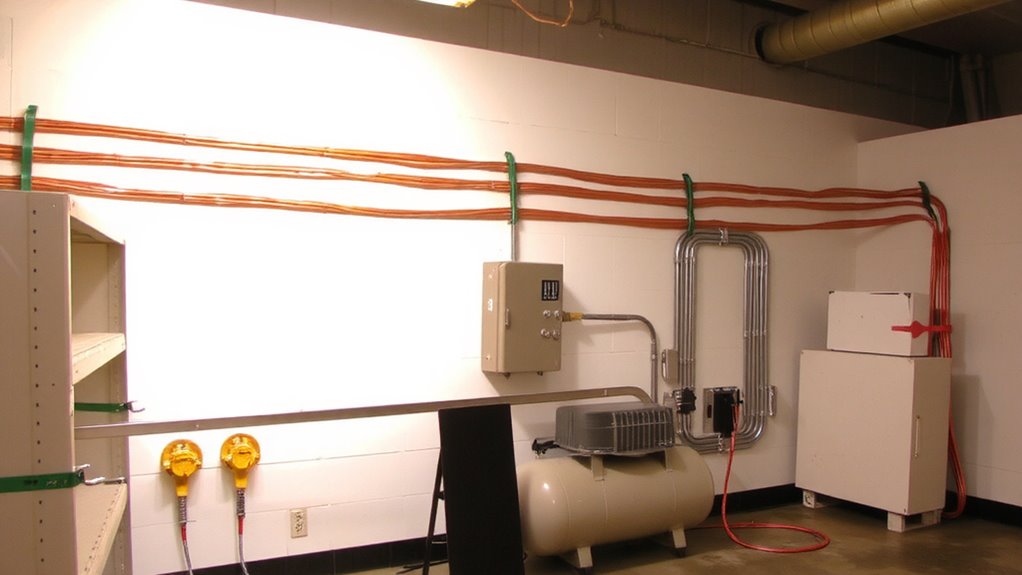
Metal equipment that can carry stray current or accumulate static charge must be grounded to protect lives and systems. You must ground fixed metal units like shelving, compressor tanks, conduit, and motors. Ungrounded equipment risks shock, fire, and equipment damage. Even painted or powder-coated surfaces aren’t safe-surface coatings don’t guarantee electrical isolation. Over time, metal corrosion can compromise conductivity, making grounding even more critical.
| Equipment Type | Grounding Requirement | Risk if Ungrounded |
|---|---|---|
| Steel shelving units | Required | Static buildup, shock |
| Compressor tanks | Required | Explosion, equipment fault |
| Metal conduit runs | Required | Fault current transmission |
You can’t rely on structural attachment alone-active grounding guarantees safety and compliance. Electrical isolation fails when corrosion bridges gaps or when humidity lowers resistance. Always verify continuity with a multimeter.
How to Ground Shelving and Compressor Tanks
To guarantee safety and code compliance, grounding steel shelving and compressor tanks starts with selecting the right components and following precise installation steps. You must guarantee shelving conductivity by bonding all interconnected metal frames with 6 AWG copper wire. This wire maintains continuity across joints, eliminating potential voltage gradients. For compressor tanks, measure tank resistance with a multimeter; it should be less than 1 ohm to confirm effective grounding. Connect the tank directly to the grounding electrode system using a listed grounding clamp and 6 AWG copper conductor. Avoid paint or rust interference-scrape contact surfaces clean for solid metal-to-metal connection. You’ll secure connections tightly with stainless steel hardware rated for electrical bonding. Proper grounding prevents shock hazards and dissipates static or fault currents efficiently-like a controlled pressure release in a hydraulic system. Always verify connections post-installation to maintain system integrity.
NEC Rules for Grounding Metal Equipment
The National Electrical Code (NEC) sets strict requirements for grounding metal equipment to protect against electrical faults and guarantee system reliability. You must bond all fixed metal equipment-like shelving and compressor tanks-to the equipment grounding conductor system. This guarantees effective fault protection by providing a low-impedance path for fault current. Equipotential bonding reduces voltage differences between conductive surfaces, minimizing shock risk. NEC Article 250.4(A)(4) mandates that non–current-carrying metal parts be bonded to maintain continuity. Use copper conductors, minimum 6 AWG for grounding electrode conductors unless otherwise specified. Bonding jumpers must handle fault current without overheating. The connection point must be accessible and corrosion-resistant. Proper grounding guarantees protective devices trip quickly during a fault. You’re required to use listed clamps and connectors rated for wet locations if applicable. This compliance isn’t optional-it’s essential for safety and code approval.
On a final note
You must ground all fixed metal equipment to prevent shocks and fires. Ungrounded shelving and compressor tanks can accumulate static or fault currents, creating dangerous voltage potentials. Bond each unit to the equipment grounding conductor using 6 AWG copper wire. Per NEC Article 250, connect to a grounded service panel or electrode. Grounding guarantees fault current has a low-impedance path, enabling overcurrent devices to trip quickly-protecting both people and systems.