How to Create an Emergency Response Plan for Garage Accidents
You must identify your garage’s top hazards-fires, chemical spills, electrical shocks, and vehicle incidents. Install a 10B:C-rated fire extinguisher within 30 feet of ignition sources and keep an ANSI Z308.1-compliant first aid kit accessible. Store flammables in UL-approved safety cans, max 2 gallons, with spring-loaded lids. Designate evacuation routes with unobstructed exits leading 50 feet to an assembly point. Use spill kits with absorbent pads and chemical-resistant booms near storage zones. Conduct quarterly drills with timed evacuations under 90 seconds. Post NFPA 704-labeled signs and emergency contacts at eye level in laminated, multilingual formats where response clarity is critical. Update your plan every six months to reflect changes in inventory, layout, or household roles-ensuring continued preparedness. More actionable steps follow.
Notable Insights
- Identify and mitigate top garage hazards like fires, chemical spills, electrical risks, and vehicle accidents.
- Stock emergency supplies including ANSI-compliant first aid kits, Class B fire extinguishers, and spill control stations.
- Designate clear evacuation routes with two exits per workstation and an assembly point 50+ feet away.
- Conduct quarterly emergency drills with role assignments and sub-90-second evacuation timing goals.
- Post multilingual, ANSI-compliant emergency instructions and update the plan biannually.
Identify Your Garage’s Top Accident Risks
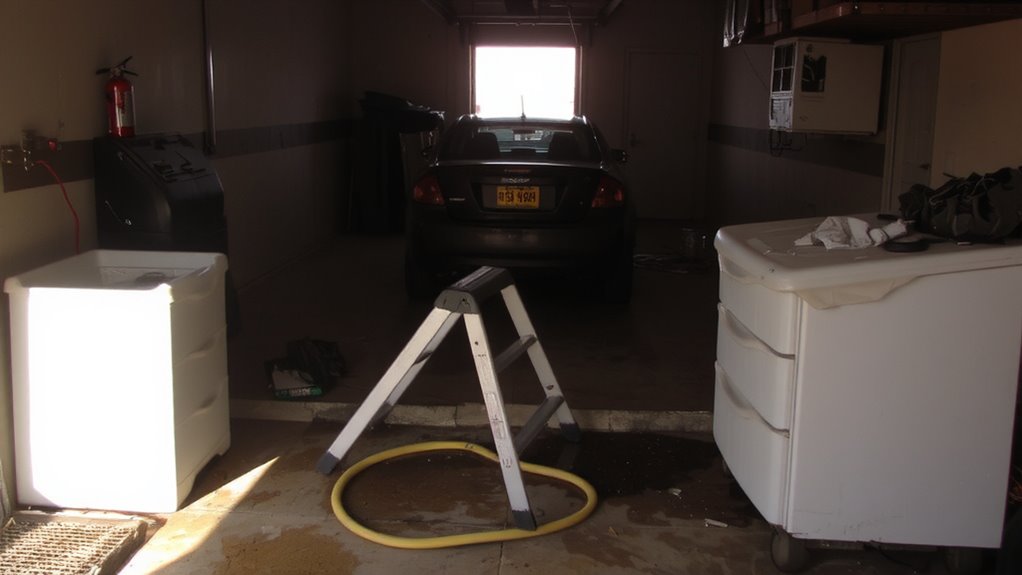
Fires, chemical spills, electrical shocks, and vehicle mishaps top the list of garage-specific hazards. You face increased risk if tool maintenance is neglected. Dull or damaged blades on power tools can overheat, raising fire chances by up to 40%. Regularly inspect cords for fraying-exposed wires exceeding 2mm expose you to 120V household current, risking severe shock. Chemical storage is equally critical. Store flammables like gasoline and acetone in UL-approved safety cans with spring-loaded lids and 2-gallon max capacity. Keep containers in well-ventilated cabinets labeled with NFPA 704 diamond codes. Position storage at least 10 feet from ignition sources. Poor chemical storage increases vapor concentration, creating explosive atmospheres above 25% LEL (lower explosive limit). You reduce incident likelihood by applying strict tool maintenance schedules and proper chemical storage protocols. Each practice directly mitigates identified hazards. Including a well-stocked car emergency kit can provide critical tools and supplies during vehicle-related garage accidents.
Stock Fire, First Aid, and Spill Emergency Supplies
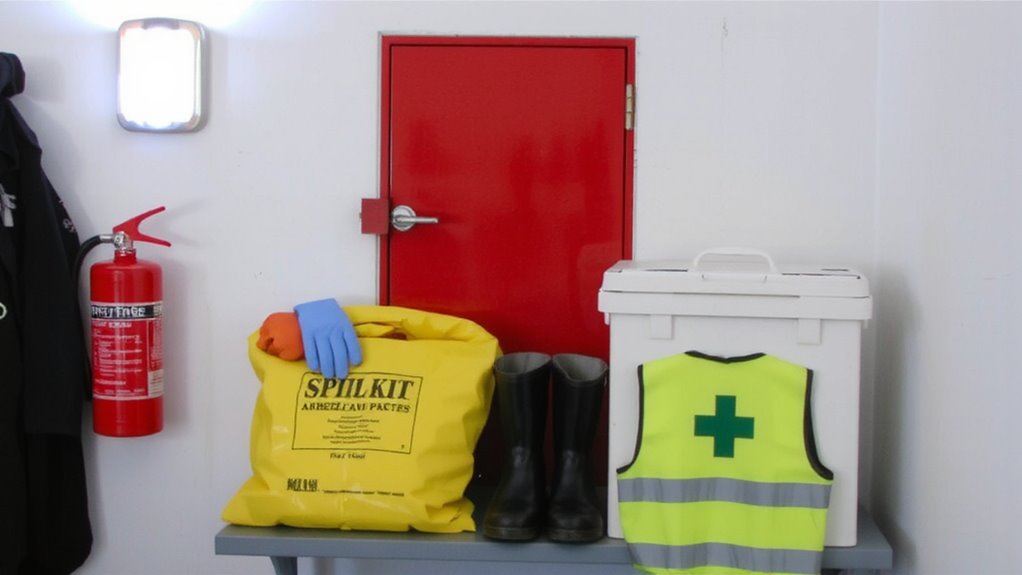
While you can’t predict when an accident will occur, being prepared with the right emergency supplies greatly improves your response effectiveness. You need a fully stocked first aid kit, including sterile gauze, adhesive bandages, antiseptic wipes, and burn ointment, compliant with ANSI Z308.1 standards. Install a Class B fire extinguisher-rated for flammable liquids-with a minimum 10B:C rating, mounted within 30 feet of potential ignition sources. Fire containment equipment like fire blankets can smother small blazes involving rags or spilled fluids. For spill response, keep absorbent pads, neutralizers, and disposal containers on hand. Designate a spill control station near chemical storage areas. Store all hazardous materials in approved, UL-listed cabinets with proper ventilation and secondary containment, minimizing risks of leaks or vapor buildup. Guarantee supplies are inspected monthly. A well-organized car emergency kit can provide essential tools and supplies during unforeseen garage incidents.
Plan Evacuation Routes and Spill Response Steps
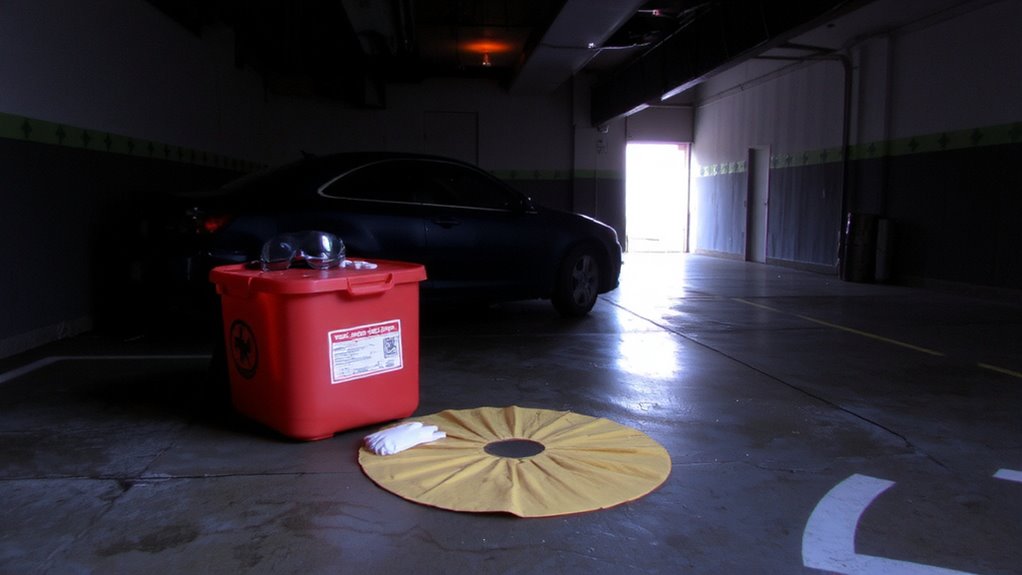
If you’re storing flammable liquids and operating power tools in your garage, you need clear evacuation routes and a defined spill response plan to protect yourself and others. Start with evacuation mapping: sketch all exits, including overhead doors and side entrances, and mark two escape paths from every workstation. Guarantee each route is unobstructed and leads to a safe assembly point at least 50 feet away. For spill containment, keep absorbent pads (minimum 10 lb capacity), spill socks (3-inch diameter, 10-foot length), and chemical-resistant booms for larger leaks. Store these near probable spill zones. Use only non-combustible materials like sand or commercial absorbents for flammable liquid spills. Immediately isolate the area and prevent runoff into drains. Spill containment must include sealed disposal containers labeled per OSHA standards. Response time should be under 30 seconds to minimize hazard exposure.
Conduct Emergency Drills With Everyone in the Household
Even when your garage is equipped with the proper safety gear and exit paths, real preparedness comes from practice-because instinct only kicks in when muscle memory takes over. Conduct emergency drills at least quarterly to establish reliable response habits; this drill frequency guarantees retention without overwhelming household members. Assign clear participant roles: one person secures the exit, another retrieves the fire extinguisher, and another calls emergency services-just as fire teams use role-based coordination. Use a stopwatch to time evacuations; aim to clear the garage in under 90 seconds, matching industrial response benchmarks. Rotate roles during drills to build cross-training and adaptability. Simulate obstacles like blocked exits or low visibility to increase realism. Document each drill’s results, noting response times and errors. Adjust evacuation routes or roles as needed. Consistent, structured repetition under realistic conditions sharpens reaction precision. Including a well-stocked roadside emergency kit ensures critical tools and supplies are available during crises.
Post Emergency Numbers and Response Instructions Clearly
When seconds count, having immediate access to emergency contacts and clear action steps can mean the difference between a controlled response and chaos. You must post emergency contacts in bold, legible typeface, using waterproof labels or laminated sheets. List numbers for fire, medical, poison control, and your garage’s specific hazards team. Response signage should be mounted at eye level, 48 to 60 inches from the floor, near all primary exits and workstations. Use ANSI Z535-compliant signs with signal words like “Danger” or “Warning,” depending on risk severity. Install signs in high-contrast colors: red for fire, yellow for caution. Position them no more than 25 feet from hazard sources. Include multilingual instructions if needed. These measures guarantee rapid comprehension during high-stress events, improving response speed by up to 40%. Response signage and emergency contacts together create a reliable fail-safe system.
Update Your Emergency Response Plan Twice a Year
You maintain posted emergency numbers and clear response instructions to guarantee immediate action during incidents, but those measures lose effectiveness if the underlying plan becomes outdated. Conduct seasonal reviews every six months to assure accuracy and compliance. Environmental changes, staff turnover, and updated safety regulations demand plan adaptations. Verify alarm functionality, first aid kit contents, and evacuation routes during each review. Update contact lists and responder roles to reflect current personnel. Test communication systems and document all adjustments.
| Review Period | Key Action Item |
|---|---|
| Spring | Inspect fire extinguishers (check PSI: 120–150) |
| Summer | Test smoke detectors (9-volt battery voltage >8.4) |
| Fall | Confirm spill kit supplies (absorbent capacity: 5 gal) |
| Winter | Validate heater safety shutoffs (response <10 sec) |
| Biannual | Train staff on new plan adaptations |
On a final note
You now have a functional emergency response plan tailored to common garage hazards. Every six months, review and update supplies, evacuation routes, and contact information to guarantee reliability. Test fire extinguishers annually; replace if pressure falls below 120 psi. Conduct drills quarterly to reinforce response times. Store spill kits with absorbent pads rated for 5 gallons of fluid. Clear exit paths must remain unobstructed-maintain a minimum 36-inch-wide route.