Why Using a Rinseless Wash in Water-Scarce Areas Benefits Coating Care
You save water and protect your ceramic coating with a rinseless wash in dry climates. Traditional washing uses 80–140 gallons per session; rinseless needs just 1–2 gallons. Its pH-neutral formula (6.5–7.5) won’t degrade silica-based coatings. Surfactants encapsulate dirt, reducing swirls. Low surface tension and high-lubricity solution prevent marring. Microfiber towels trap grime safely. No high-pressure rinse means no mineral deposits or coating stress-ideal for arid regions. Next, discover how application accuracy enhances protection.
Notable Insights
- Rinseless wash uses only 1–2 gallons of water per vehicle, preserving scarce water resources while maintaining coating integrity.
- Its neutral pH (6.5–7.5) prevents degradation of ceramic coatings during cleaning in low-water environments.
- Encapsulation technology lifts dirt without abrasion, reducing swirl marks and preserving hydrophobic layer performance.
- Eliminates high-pressure rinsing, which can degrade coating over time, especially with limited water access.
- Prevents mineral deposits from tap water, maintaining coating gloss and water-beading properties post-wash.
Why Traditional Car Washing Fails in Dry Areas
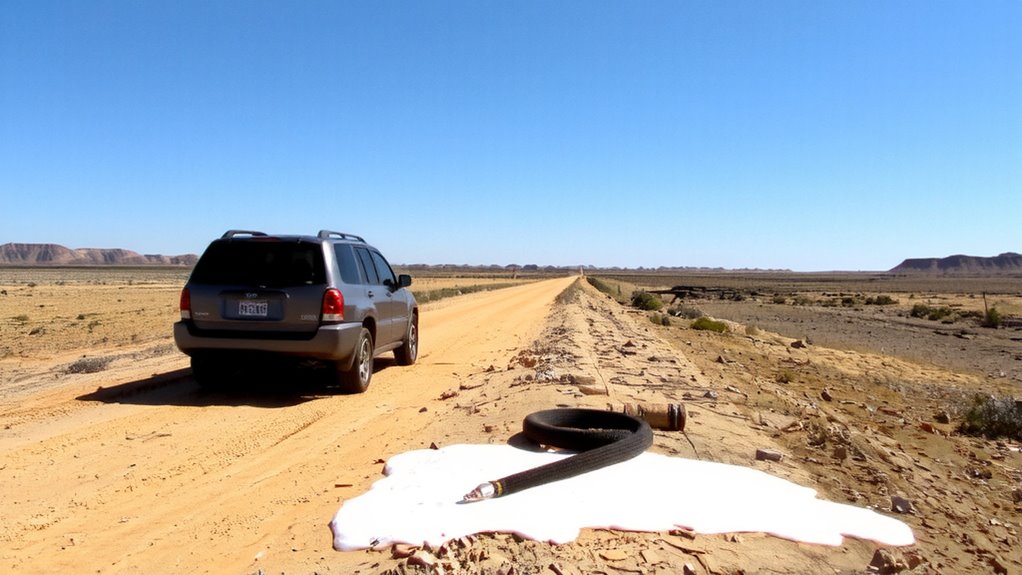
Why waste hundreds of gallons of water just to clean your car when resources are already stretched thin? Traditional car washing consumes 80–140 gallons per wash, making it unsustainable in dry regions. This level of water waste strains municipal supplies and aquifers, especially in areas with prolonged droughts. A standard garden hose delivers 5–10 gallons per minute-rinsing alone uses more water than some households consume daily. The environmental impact includes runoff laden with detergents, heavy metals, and oil, which seep into soil or drain into fragile ecosystems. Unlike targeted cleaning methods, traditional washing offers no water recovery or filtration. You’re not just cleaning your car; you’re accelerating resource depletion. In water-scarce areas, every gallon counts. Shifting away from conventional washing isn’t optional-it’s a practical necessity for conservation. Efficiency, not excess, must guide vehicle maintenance. Upgrading to a waterless car wash kit can drastically reduce water usage while maintaining coating integrity and surface protection.
How Rinseless Wash Protects Ceramic Coatings
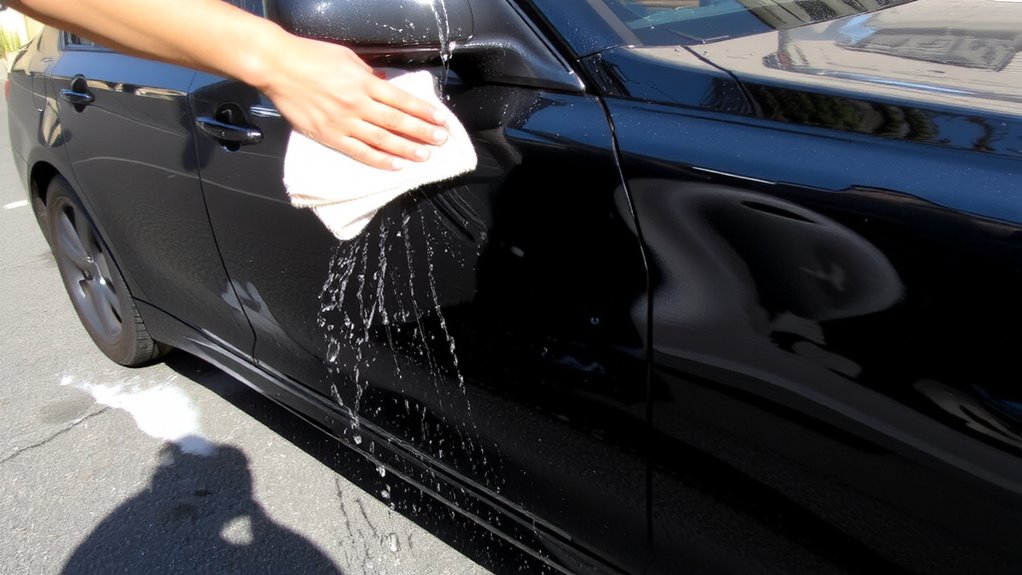
Rinseless wash solutions aren’t just about saving water-they’re engineered to preserve advanced surface treatments like ceramic coatings. These formulas maintain a neutral pH balance, typically between 6.5 and 7.5, preventing degradation of the coating’s silica matrix. Harsh detergents disrupt this stability, but rinseless wash avoids that risk. Their low surface tension-often below 30 dynes/cm-allows the solution to encapsulate dirt particles without needing high-pressure rinsing. This means contaminants lift away gently, minimizing micro-scratches and swirl marks.
| Property | Benefit |
|---|---|
| Neutral pH balance | Prevents breakdown of ceramic layer |
| Low surface tension | Lifts dirt without scratching |
| Non-abrasive surfactants | Safeguards coating integrity |
| Quick encapsulation | Traps grime in solution |
| No mineral residue | Leaves no water spots or etching |
You maintain long-term hydrophobic performance and gloss retention with every wash. A well-designed best hitch cover can also contribute to vehicle protection by shielding the receiver from environmental contaminants.
How Rinseless Wash Works (No Bucket Needed)
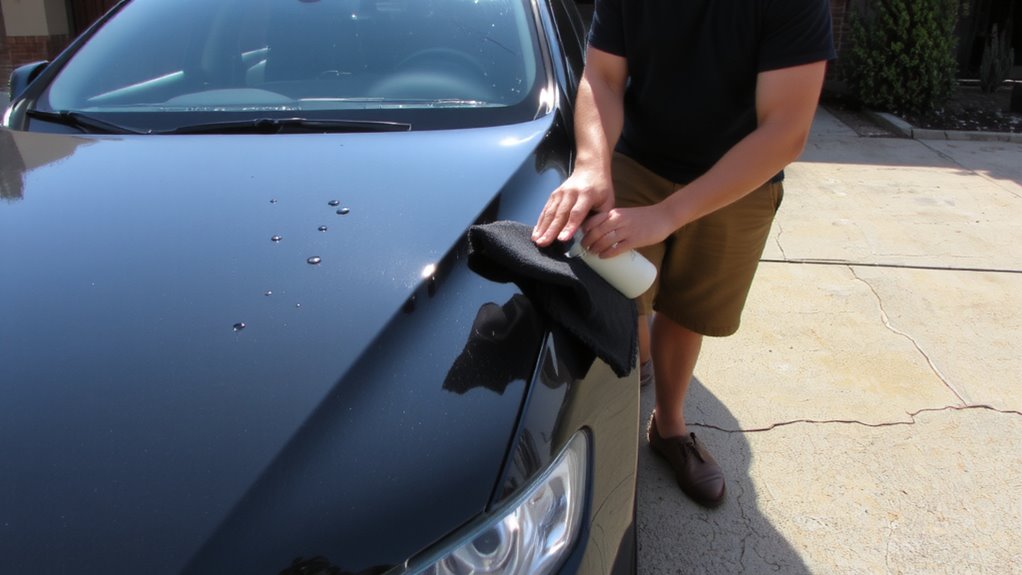
Though you might assume cleaning a vehicle without rinsing sounds impractical, modern rinseless wash formulas make it possible through advanced surfactant chemistry. These surfactants encapsulate dirt and lift it from the surface without scratching. You apply the solution via direct application, spraying it lightly onto a section of the vehicle. The concentrated formula requires only 1–2 ounces per application, minimizing water use. Microfiber technology plays a critical role: high-pile, plush microfiber towels trap suspended particles effectively. Each towel holds up to 1/3 of its weight in water and contaminants. You work in small sections, using a folded microfiber to maximize clean surfaces. The process eliminates the need for a bucket, reducing water consumption to less than a gallon per vehicle. Lubricity remains high throughout, preventing marring. This method delivers consistent decontamination while preserving coating integrity. A Best Car Wash Soaps & Buying Guide can help you choose a high-quality rinseless wash that ensures optimal coating protection and cleaning performance.
Wash a Coated Car Without Rinsing: Step-by-Step
When the goal is preserving a coated surface while minimizing water use, a proper rinseless wash technique becomes essential. Begin by misting the surface lightly with water-too much creates runoff; too little hinders lubrication. Apply rinseless wash solution via pump sprayer, ensuring even coverage. Use a high-density microfiber wash mitt for foam application, working panel by panel to lift contaminants without marring the coating. Rinseless formulas contain surfactants that encapsulate dirt, reducing scratching risk. After washing, use a dedicated drying technique: start with a clean, plush microfiber towel and squeegee excess moisture, then buff dry with a low-pile, 100% chenille towel (400+ GSM). Avoid sun-exposed surfaces to prevent spotting.
| Effort Level | Water Saved | Coating Protection |
|---|---|---|
| Low | 80% less | High |
| Moderate | 75% less | Moderate |
| High | 70% less | Low |
| Ideal | 90% less | Maximum |
Prevent Scratches When Using Rinseless Wash
A successful rinseless wash starts with the right tools and technique to keep scratches at bay. Use only high-quality, plush microfiber towels with a weight of at least 360 gsm for effective microfiber safety. These trap contaminants instead of dragging them across the paint. Fold each towel into quarters to expose clean surfaces frequently, minimizing marring. Solution concentration is critical-mix 2 ounces of rinseless shampoo per gallon of water. This ratio lifts dirt without residue while preserving your coating. Apply the solution liberally so surfaces stay wet during wiping. Never allow the soap to dry. Work in small 2×2 foot sections, using moderate, even pressure. Deionized water boosts cleaning efficiency in hard water areas. Avoid paper towels or cotton rags-they lack the fiber density needed for scratch prevention. Proper method guarantees a scratch-free finish every time.
Best Rinseless Washes for Coated Cars (2024)
Performance, protection, and precision define the top rinseless washes for coated cars in 2024. You need solutions that preserve hydrophobic layers without stripping protection. Chemical Guys Nonsense! Premium Spray-and-Wipe is pH-neutral, uses 0.5 oz per gallon, and lifts grit with lubricating polymers. Poorboy’s World Eco-Friendly Rinseless Wash Concentrate offers eco friendly alternatives with biodegradable surfactants and a 512:1 dilution ratio. It bonds to contaminants via electrostatic lift, reducing scratching risks. Optimum No Rinse Wash & Shine, at 2 oz per 3 gallons, delivers exceptional product longevity-each bottle lasts up to 40 washes. Its non-ionic surfactants encapsulate dirt without harming SiO₂ or ceramic coatings. Autoglym Rinse Free Wash uses Cationic Polymer Technology to leave a scratch-resistant, glossy finish. All formulas work in direct sunlight and require only microfiber towels. These concentrates balance cleaning power and coating safety, ensuring consistent results across varied environmental conditions.
Why Rinseless Wash Saves Water Without Damage
You’re already using rinseless washes designed to protect coatings without compromising cleanliness, but their real advantage extends beyond shine and safety-it’s about water conservation. A single gallon of rinseless wash solution, diluted at 4 ounces per gallon, can clean an entire vehicle using just 1–2 gallons of water. Traditional washing uses 40–140 gallons. This drastic reduction supports water conservation in drought-prone regions. The surfactant-based formula encapsulates grit, preventing marring while lifting contaminants. Microfiber towels paired with the solution guarantee debris is trapped, not dragged. These systems are pH-balanced (6.5–7.5), preserving ceramic and wax coatings. From an environmental impact standpoint, less wastewater means fewer detergents entering ecosystems. Each use reduces runoff carrying oil, heavy metals, and phosphates. Rinseless washes offer a technically efficient, eco-conscious alternative-delivering maximum cleaning with minimal resource expenditure and measurable reduction in ecological strain.
On a final note
You conserve water without compromising coating integrity. A single 16-ounce bottle of rinseless wash makes up to 64 gallons of cleaning solution, reducing usage by over 90% versus traditional methods. These pH-neutral formulas contain surfactants and lubricity agents-typically 5–10% concentration-that lift contaminants safely. Proper application with microfiber towels prevents marring. Rinseless wash delivers consistent, scratch-free cleaning while preserving ceramic coating hydrophobicity and gloss.