How to Remove Road Film From Windshields Without Harming Coated Wiper Zones
Use a pH-neutral, silica-free cleaner and a 200,000-split-fiber-per-inch microfiber cloth to safely remove road film. Apply diluted isopropyl alcohol (10%) or a vinegar-water mix (1:1) to avoid degrading the hydrophobic coating. Wipe in straight lines under low pressure, rinsing with distilled water to prevent mineral deposits. These steps preserve the coating’s 110° contact angle and prevent microfractures, maintaining water sheeting efficiency. Further details reveal advanced maintenance strategies for long-term clarity.
Notable Insights
- Use pH-neutral cleaners like diluted isopropyl alcohol or vinegar-water mix to safely dissolve road film without damaging hydrophobic coatings.
- Apply gentle cleaners with a high-quality microfiber cloth to minimize scratching and preserve the coated wiper zone.
- Avoid abrasive tools or scrubbing pads that can degrade the thin hydrophobic layer within the wiper’s arc.
- Rinse with distilled water to prevent mineral deposits that reduce water sheeting and coating effectiveness.
- Test coating integrity monthly with a water-bead test and seek professional detailing if uneven sheeting indicates degradation.
What Road Film Is and Why It Damages Windshield Coatings
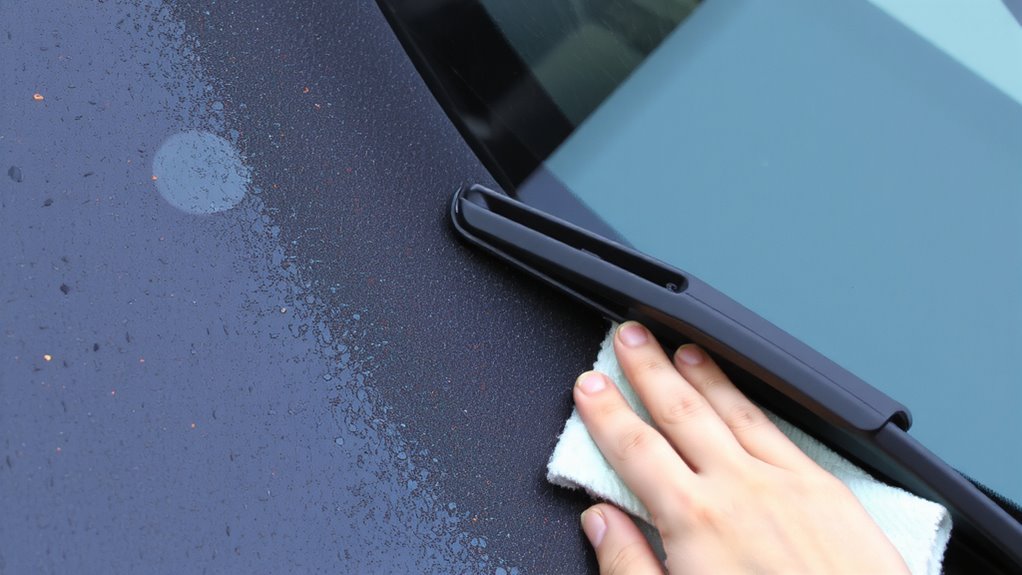
Road film-the gritty, greasy layer that builds up on your windshield during regular driving-is more than just an eyesore. It contains airborne pollutants, brake dust, and insect residues that bond to glass under heat and pressure. Over time, chemical abrasives in rainwater or improper cleaners react with this residue, accelerating degradation of factory-applied hydrophobic coatings. These coatings, typically 0.5 to 2 microns thick, lose integrity when exposed to repeated temperature effects, such as rapid cooling after high-heat exposure. Thermal cycling causes microfractures, allowing road film to penetrate beneath the coating. Once compromised, water sheeting performance drops by up to 70%, reducing visibility in rain. The film also increases surface adhesion, making future removal more aggressive. Avoid stiff scrubbers or solvent-heavy products; they strip coatings faster. Instead, understand that prevention relies on recognizing how environmental exposure and improper care combine to weaken what’s meant to protect your view.
How to Identify Coated Wiper Zones Before Cleaning
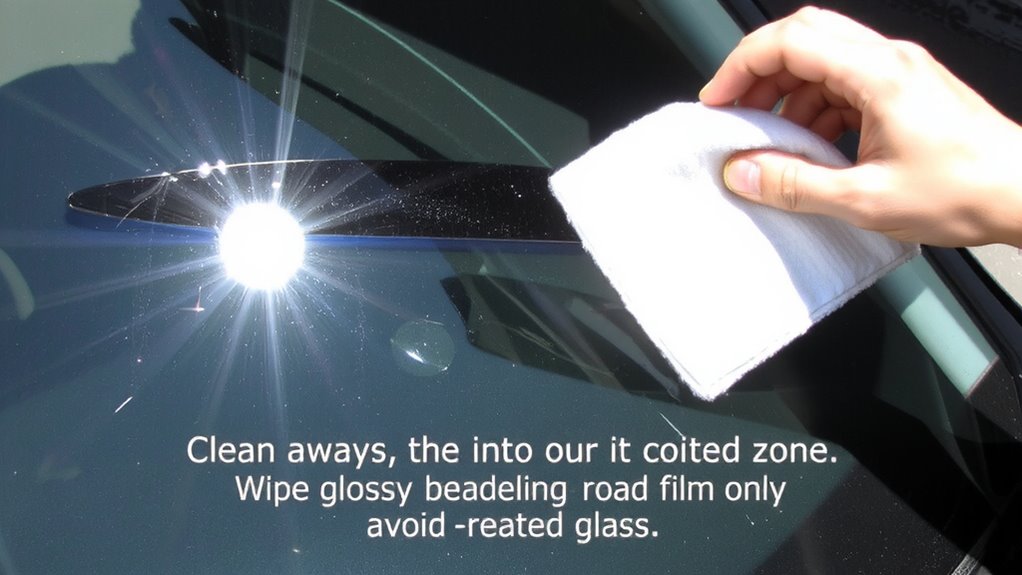
Your windshield’s coated zone is typically the area most often swept by the wipers, and recognizing it early guarantees you don’t accidentally damage the hydrophobic layer during cleaning. This zone usually spans 12 to 18 inches vertically and matches the arc of your wiper blade type-conventional, beam, or hybrid. Check your vehicle manual or inspect the glass for slight color variations indicating windshield tinting, which often borders but doesn’t overlap the coated section. The coating appears slightly glossy under direct light and beads water when wet. Avoid mistaking tinted strips at the windshield’s top for the wiper zone; those are UV shields, not hydrophobic coatings. Never scrub beyond the wiping arc when treating road film. Use a soft microfiber cloth to test a small area-coated surfaces resist smearing. Confirming the exact boundaries prevents degradation of the factory-applied silicon-based layer designed to enhance visibility and wiper efficiency.
Best Gentle Cleaners for Removing Road Film
A properly formulated cleaner dissolves stubborn road film without compromising delicate windshield coatings. Choose cleaners with natural ingredients or tested DIY solutions to avoid harsh chemicals. These maintain hydrophobic properties in coated wiper zones while effectively cutting through grime.
| Cleaner Type | Recommended Use |
|---|---|
| Diluted isopropyl alcohol (10%) | Safe for frequent use, evaporates quickly |
| Vinegar-water mix (1:1) | Non-toxic, ideal for light buildup |
| Baking soda paste | Mild abrasive, use sparingly |
| Commercial silica-free sprays | pH-balanced, preserves coating integrity |
| Citrus-based solvents | Biodegradable, effective on oily residues |
These options balance effectiveness with coating safety. Use soft microfiber cloths to apply. Avoid ammonia or alcohol-heavy formulas above 15%, as they degrade coating layers over time. Always verify compatibility with your windshield’s manufacturer specs. Prioritize solutions proven to remove contaminants without altering surface tension or wettability.
How to Clean Road Film Without Damaging the Coating
Start by evaluating the condition of your windshield’s protective coating before applying any cleaner. Use a water-bead test: if water forms uneven droplets, the coating may be degrading. Apply only pH-neutral cleaners (pH 6–8) to prevent chemical erosion. Microfiber cloths with a split-fiber density of 200,000 fibers per inch reduce scratching. Wipe in straight lines, not circles, to minimize buffing marks. Cleaning frequency should average every two weeks; more often in high-pollution areas. Overcleaning increases abrasion risk and accelerates coating wear. Use distilled water for rinsing to prevent mineral deposits. Avoid cleaners with ethanol or ammonia-they compromise hydrophobic layers. Consider the environmental impact: choose biodegradable formulas with zero volatile organic compounds (VOCs). These reduce air and water contamination. Coating thickness typically ranges 1–2 microns; aggressive pads or polishes remove up to 0.5 microns per wash. Preserve longevity with gentle, consistent care.
Mistakes That Worsen Road Film and Coating Damage
While you might think a quick wipe removes road film, using improper tools can embed contaminants and accelerate coating breakdown. Using abrasive tools like steel wool or gritty sponges creates micro-scratches, degrading hydrophobic layers designed to shed water. These coatings typically measure 1–2 microns thick; even light abrasion can reduce their lifespan by 50%. Instead, use microfiber cloths with a soft, open-cell structure to lift debris without scratching. Ignoring coating fading leads to poor visibility and more frequent cleanings. UV exposure and chemical exposure degrade coatings over time, reducing contact angles from 110° to below 90°, impairing water beading. A faded coating no longer repels contaminants, letting road film bond stronger. Inspect the wiper zone monthly by spraying water-uneven sheeting indicates deterioration. Replace or recoat early to maintain performance. For optimal results, consider applying one of the best car windshield treatments to restore hydrophobicity and clarity.
When to Call a Pro for Stubborn Road Film
If the road film still won’t budge after thorough cleaning, it’s likely bonded beyond what DIY methods can safely remove. At this point, a professional inspection is essential to assess whether the residue has etched into the glass or compromised the hydrophobic coating. Technicians use calibrated light sources and surface profilometers to measure film depth and coating integrity. Attempting aggressive scraping risks micro-scratches that scatter light and reduce visibility. Professionals employ specialized tools like non-abrasive polymer lifters and precision-controlled steam units that loosen contaminants without contact. These tools operate at temperatures between 180°F and 212°F, enough to dissolve hydrocarbon deposits but safe for surrounding treated zones. Applying industrial chelating agents requires training to avoid overspray. Only certified detailers should perform such treatments. When in doubt, schedule a professional inspection before permanent damage occurs.
On a final note
You’ve removed road film safely. Use only pH-neutral cleaners below 9.0 to protect hydrophobic coatings. Avoid abrasive pads or ammonia-based formulas. Microfiber cloths with 600-thread count guarantee scratch-free cleaning. Wipe in straight motions, not circles, to preserve wiper zone integrity. Rinse thoroughly with distilled water to prevent mineral deposits. For persistent buildup, professional quartz decontamination may be required. Regular maintenance preserves visibility and coating lifespan.